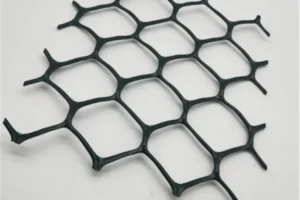
On firm subgrade, plan 4–6 in (100–150 mm) of compacted aggregate above the geogrid for cars. On medium/soft soils, use 6–12 in (150–300 mm). Keep minimum 4 in cover over the grid, build in 6–8 in lifts, and add 2–4 in in freeze–thaw zones. Always adjust for load, soil, and drainage.
Why Base Depth Matters?
U want a driveway that doesn’t rut, pump fines, or heave in winter. The right base depth over a driveway grid (geogrid for driveways) spreads wheel loads, locks aggregate, and cuts base thickness versus a non-reinforced section—often with better performance and lower lifetime cost.
How Geogrid Reduces Base Thickness?
- Interlock: The gravel grid confines aggregate so it behaves like a stiffer slab.
- Load spread: Wheel loads distribute wider and deeper, reducing subgrade stress.
- Rutting control: Less lateral movement = fewer ruts and potholes.
- Base optimization: Typical base can be reduced ~25–50% vs unreinforced sections (project-specific).
Pro Tip: Never skimp below 4 in compacted cover over the grid. Below that, interlock drops and the grid can telegraph.
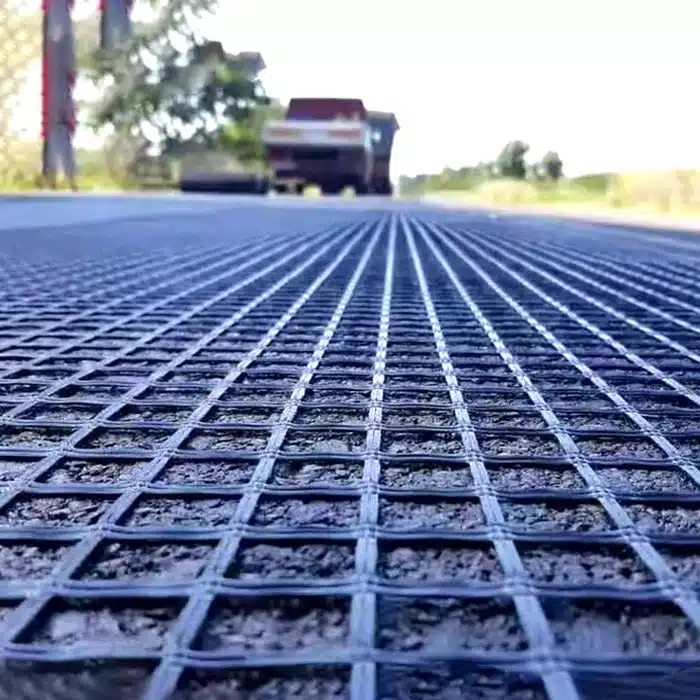
Sizing Chart—Base Depth Above Geogrid
Use this quick guide to pick the compacted aggregate thickness above the geogrid. Assumes well-graded crushed aggregate, 95% compaction, and proper drainage.
| Subgrade Condition (CBR) | Passenger Cars | Light Trucks/SUVs | Occasional Delivery Truck | Notes |
|---|---|---|---|---|
| Firm (≥8 CBR) | 4–6 in | 6–8 in | 8–10 in | Good drainage; minimal fines |
| Medium (4–8 CBR) | 6–8 in | 8–10 in | 10–12 in | Most residential sites |
| Soft (2–4 CBR) | 8–10 in | 10–12 in | 12–16 in | Use separator geotextile |
| Very Soft (<2 CBR) | 12–16 in | 14–18 in | 18–24 in | Consider staged fills or subgrade improvement |
Without geogrid, expect +30–50% thicker bases for the same performance.
Cold climates: add 2–4 in for frost and verify drainage.
Layer Stack
- Subgrade: Proof-roll; undercut soft spots.
- Separator geotextile (as needed): Stops fines pumping in silts/clays.
- Geogrid for driveways: Roll tight, orient per manufacturer.
- Base aggregate (compacted): 4–12 in per table, placed in 6–8 in lifts.
- Surface course: 1–2 in fines (e.g., 3/8” minus) or your chosen top aggregate.
- Edge restraint: Timber, curb, or pinned edging to lock shoulders.
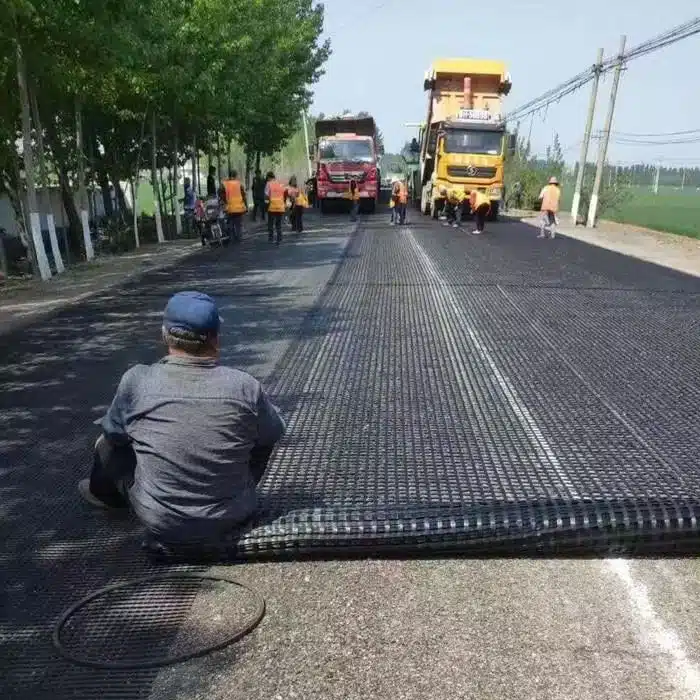
How to Gravel a Driveway with a Driveway Grid (Step-by-Step)
- Set grade & drainage
- Target 1–2% crossfall. Route water away from the drive.
- Excavate
- Depth = base (table) + surface course + tolerance. Remove organics.
- Prepare subgrade
- Proof-roll. If pumping occurs, undercut/replace or use a separator geotextile.
- Place geogrid
- Tension flat, overlap 12–18 in at seams, pin per 1–2 m grid or per spec.
- First lift of aggregate
- Place 6–8 in, do not drive directly on bare grid; track over with a thin cushion or place from the edge.
- Compact
- Plate compactor or roller to 95%. Moisture-condition if dusty/dry.
- Build to thickness
- Repeat lifts to reach chart thickness. Keep crown.
- Top course & finish
- 1–2 in fines. Compact. Install edge restraint.
Pro Tip: If U see rut depth >½ in during construction traffic, the base is thin or under-compacted. Add material and re-compact before surfacing.
Material Specs That Work
- Aggregate: Angular, well-graded crushed stone (e.g., ¾” minus). Avoid rounded pea gravel.
- Separator: Non-woven geotextile for silts/clays; woven for strength where needed.
- Geogrid: Biaxial driveway grid for general load spreading; uniaxial where pullout is directional (rare in driveways).
Cost & Time Signals
- Geogrid: Typically a small % of total, but can save 25–50% base thickness.
- Aggregate: Biggest line item—depth × area.
- Labor: Saved via fewer import loads and faster compaction.
- Lifecycle: Less maintenance from rutting and washboarding.
Common Adjustments
- Steep grades (>8%): Add +2 in to base; consider check-berms and tighter edge restraint.
- Clayey sites: Always use a separator geotextile; keep water out with ditches and downspout controls.
- Frequent heavy trucks: Use the “Occasional Delivery Truck” column or step one class up.
FAQ
How deep should the base be for a geogrid driveway?
Use 4–6 in on firm soils for cars, 6–8 in on medium soils, 8–12 in on soft soils. Add depth for heavier vehicles and frost.
Can U place gravel directly on the driveway grid?
Yes—place a thin cushioning layer first, then build in 6–8 in lifts and compact. Avoid driving on bare grid.
Do U still need geotextile if U use geogrid?
Often yes on silts/clays. The geotextile separates, the geogrid reinforces—different jobs.
What aggregate is best over a gravel grid?
Angular, well-graded crushed stone. Rounded material reduces interlock and rut resistance.
Will geogrid stop potholes?
It reduces rutting and fines pumping, which are pothole precursors. U still need correct drainage and compaction.
Ready for a Spec-Matched Package?
Tell us soil type (or CBR), driveway size, vehicle loads, climate, and U’ll get a base-thickness recommendation, BOM, and pricing—optimized for your site.