If you’re asking “Where can I find reputable geosynthetics suppliers?”, you’re not just shopping for products—you’re protecting your project, your reputation, and your budget.
In 2026, the gap between high‑quality geosynthetics and cheap, non‑compliant material has never been bigger. The wrong geomembrane, geotextile, or GCL can mean leaks, failures, claims, and costly rework. The right geosynthetics manufacturer gives you certified materials, consistent performance, and real engineering backup when something goes wrong on site.
In this guide, you’ll quickly learn:
- Which certifications (like ISO 9001, GAI‑LAP, ASTM/GRI compliance) actually matter
- How to choose between a direct factory and a local distributor
- Where to find trusted geosynthetics suppliers and global manufacturers for landfill, mining, road, and environmental projects
By the end, you’ll know exactly how to shortlist, verify, and select reputable geosynthetics suppliers—and where to source specification‑grade material with confidence.
What “Reputable” Actually Means in Geosynthetics
When I talk about reputable geosynthetics suppliers, I’m not talking about who has the nicest brochure. I’m talking about who can give you traceable quality, consistent performance, and defensible documentation when a project is audited or a failure is investigated.
Below is exactly what I look for when I vet any geosynthetics manufacturer or supplier.
Manufacturing Experience & Track Record
A reliable geosynthetics company shows a clear history in the industry, not just a new name on a website.
Key checkpoints:
- Years in geosynthetics only (not just plastics in general)
- Installed area of geomembranes, geotextiles, GCLs, geocomposites
- Application experience: landfill, mining, ponds, roads, tunnels, etc.
- Repeat business with major EPCs, mining companies, and landfill operators
| Item | What I Want to See |
|---|---|
| Operating history | ≥ 8–10 years in geosynthetics |
| Core products | Geomembrane, geotextile, GCL, geocomposites, geogrid |
| Export / project markets | Multiple regions, not one local project only |
| Failure / claim history | Transparent, with clear corrective actions |
Core Certifications to Look For
Certifications don’t guarantee perfection, but no serious supplier is missing these.
Must-have certifications:
- ISO 9001 – documented quality management system
- ISO 14001 – environmental management (strong plus)
- GAI-LAP accredited lab – independent lab accreditation for geosynthetics testing
- CE marking (for Europe) – compliance with EU standards
- IGS membership – member of the International Geosynthetics Society
| Certification / Membership | Why It Matters |
|---|---|
| ISO 9001 | Consistent production, traceable procedures |
| GAI-LAP lab | ASTM / GRI tests verified by an accredited body |
| CE mark (where applicable) | Required for many EU infrastructure projects |
| IGS member | Shows technical engagement with the global community |
In‑House ASTM / GRI Testing & QC Labs
For HDPE geomembrane, GRI GM13 compliance and robust ASTM testing are non‑negotiable.
A reputable factory should:
- Run in‑house QC labs with calibrated equipment
- Test each batch to ASTM and GRI standards (e.g., GRI GM13 for HDPE geomembranes)
- Keep retained samples and test records for every production lot
- Allow third‑party or client‑witnessed testing on request
| QC Element | What I Expect |
|---|---|
| Test standards | ASTM, GRI GM13, GRI GM17, etc. |
| Lab capability | Tensile, OIT, density, puncture, melt flow |
| Traceability | Batch / roll numbers linked to test reports |
| External verification | Cooperation with independent labs |
Documentation: TDS, MDRs, and Transparency
If a supplier cannot provide clean, complete documentation, I walk away.
Essential documents:
- Technical Data Sheets (TDS) for each product
- Material Data Records (MDRs) or Mill Test Certificates per batch
- Quality manuals and QC procedures on request
- Clear COA (Certificate of Analysis) with actual test values, not just “typical properties”
| Document Type | What I Check For |
|---|---|
| TDS | Full properties, test methods, tolerances |
| MDR / COA | Lot-specific values, test dates, lab name |
| Installation guidelines | Clear handling, welding, and testing instructions |
| MSDS / SDS | Proper material safety and handling information |
Real Project References & Third‑Party Testimonials
A reputable geosynthetics supplier can prove their products work on serious projects.
What I ask for:
- Project lists for landfill, mining, pond lining, and infrastructure works
- Contactable references (consultants, contractors, or owners)
- Third‑party reports – CQA/CQC reports, independent lab tests, site photos
- Evidence of long‑term performance, not just trial installations
| Proof of Reputation | Why It’s Critical |
|---|---|
| Project reference list | Confirms real-world use |
| Third-party CQA reports | Independent verification of quality |
| Testimonials / case studies | Shows performance under actual site conditions |
| Repeat clients | Indicates trust and consistent supply |
Bottom line:
A reputable geosynthetics manufacturer or supplier is defined by verified certifications, in‑house and independent testing, complete documentation, and real project performance you can check—not by marketing claims or the lowest price.
Direct Factory vs Distributor for Geosynthetics
Key differences between manufacturers and distributors
When you’re sourcing geosynthetics, who you buy from changes everything:
Manufacturers / factories
- Produce HDPE geomembranes, geotextiles, GCLs, geogrids, geocomposites, drainage nets in-house.
- Control resin selection, extrusion, weaving, coating, and ASTM / GRI testing.
- Can customize: thickness, roll width/length, color, textured vs smooth, special UV or chemical resistance.
- Provide primary technical data, project design help, and direct QA/QC documentation.
Distributors / resellers
- Buy from one or more geosynthetics manufacturers and resell to local markets.
- Focus on stock availability, local warehousing, and small order service.
- Often carry a mix of brands and product grades (premium + economy).
- Technical support depends on how strong their relationship is with the original factory.
When it makes sense to buy direct from a geosynthetics factory
Go direct to a geomembrane supplier or geotextile manufacturer when:
- You have medium to large volume demand: landfills, mining pads, waste ponds, canals, large infrastructure.
- You need project-specific specs: GRI GM13 / GM17, special tensile/tear, custom roll dimensions, or tailored nonwoven geotextiles for drainage.
- You care about traceability & certifications: ISO 9001, CE, GAI-LAP tested geomembranes, IGS member factories.
- You want factory-direct pricing and are ready to handle container-level shipments and import paperwork.
Pros and cons of working with local distributors
Pros of local distributors / resellers
- Fast lead times on standard items: pond liners, small-area geomembrane rolls, common woven/nonwoven geotextiles.
- Lower initial spend: you can buy partial truckloads, even a few rolls.
- Easier site support: local visits, quick replacements, simple returns.
- Useful if your team is new to geosynthetics and wants a local point of contact.
Cons
- Higher price per m² vs factory-direct, especially on big projects.
- Limited custom fabrication and fewer options on specialized geosynthetics like GCLs or complex geocomposite drainage systems.
- Technical data sheets and test reports may be second-hand and less detailed.
How pricing, lead times, and MOQs change by supplier type
Pricing
- Direct factory: best rate for bulk geomembrane and wholesale geotextile rolls; big savings as volume grows.
- Distributor: higher unit price, but cheaper if you only need a small area or mixed products quickly.
Lead times
- Factory: production + shipping. Typically 3–6 weeks depending on spec and destination port.
- Distributor: often ex-stock or within a few days locally.
MOQs (Minimum Order Quantities)
- Factory: usually 1×20’ or 40’ container worth of geomembrane or geotextile, or agreed tonnage.
- Distributor: flexible—can be a few rolls or even cut lengths for small jobs.
Why direct geosynthetics factories in China are gaining traction
China-based geosynthetics manufacturers are increasingly chosen by engineers and EPC contractors worldwide because:
- Massive production capacity for HDPE geomembranes, GCL, geogrids, and geocomposites keeps prices competitive and supply stable.
- Many factories now run ISO 9001 systems, use ASTM / GRI GM13 standards, and operate GAI-LAP accredited labs for quality control.
- Strong export experience: they know how to handle global shipping, documents, and standards for landfill lining, mining pads, and pond lining projects.
- Ability to supply full system packages (geomembrane + geotextile + drainage geocomposites + geogrid) from one source, simplifying procurement.
If you’re running a large international project and can work with container volumes, a direct geosynthetics factory in China often delivers the best balance of cost, quality, and customization.
Top Reputable Geosynthetics Manufacturers Worldwide
When I look at geosynthetics manufacturers worldwide, I focus on a short list of essentials: real production capacity, testing capability, traceable quality, and solid project history. Big brand name alone doesn’t mean much if the product can’t pass ASTM / GRI tests on a consistent basis.
How to evaluate global geosynthetics manufacturers
Before adding any geosynthetics supplier to your vendor list, I’d check:
- Product scope: HDPE / LLDPE geomembranes, woven and nonwoven geotextiles, GCL, geocomposites, geogrids, drainage nets.
- Standards: ASTM-tested geomembranes (GRI GM13 / GM17), ISO 9001, ISO 14001, CE for relevant markets, and preferably IGS membership.
- Lab strength: In-house QC lab capable of full index and performance testing, or cooperation with a GAI-LAP accredited lab.
- Application experience: Landfill lining, mining pads, ponds, reservoirs, roads, and tunnels – not just “general use.”
- Technical support: Ability to issue geosynthetics technical data sheets, QC reports, and installation guidance, not just a price list.
Leading geomembrane and geotextile manufacturers by capacity
High-capacity geomembrane suppliers and geotextile manufacturers usually show it clearly:
- Multiple HDPE geomembrane lines (7–8 m+ width, high output).
- Nonwoven geotextile production with a wide GSM range and consistent needle-punching.
- Ability to handle bulk geomembrane and wholesale geotextile rolls for infrastructure and environmental containment projects.
These are the suppliers that can realistically support large landfill, mining, or lagoon contracts without long delays.
Suppliers for landfill and mining geomembranes
For landfill liner suppliers and geosynthetics for mining projects, I’d only consider manufacturers that:
- Produce GRI GM13 geomembrane with long-term performance data.
- Have real references in hazardous waste landfills, tailings dams, heap leach pads, and leachate ponds.
- Can provide full MDRs (material data reports) and traceability for each roll.
You can see the kind of technical expectations landfill engineers have in a typical landfill geosynthetics application overview.
Manufacturers focused on GCLs and geocomposite drainage
Geosynthetic clay liner suppliers and geocomposite drainage manufacturers need a different type of expertise:
- GCL manufacturers must control sodium bentonite quality, water absorption, and peel strength.
- Geocomposite drainage suppliers should offer consistent bonding between geonet and geotextile, with lab-tested transmissivity under load.
- For tunnels, roads, or retaining walls, I’d ask for previous geocomposite drainage system projects plus third-party test reports.
What to check on a geosynthetics factory profile
When I open a geosynthetics factory profile, I look for:
- Year established and plant size.
- Number and type of production lines (geomembrane, geotextile, GCL, geogrid, drainage net).
- Export markets and key project references.
- Clear photos/videos of factory, warehouse, and lab.
- Downloadable geosynthetics technical data sheets and test reports.
If any of this is missing, I consider that a risk.
Spotlight on MJY as a Benchmark Geosynthetics Manufacturer
I’ll use MJY as a benchmark example of what I expect from a serious geosynthetics manufacturer.
MJY factory scale, lines, and export markets
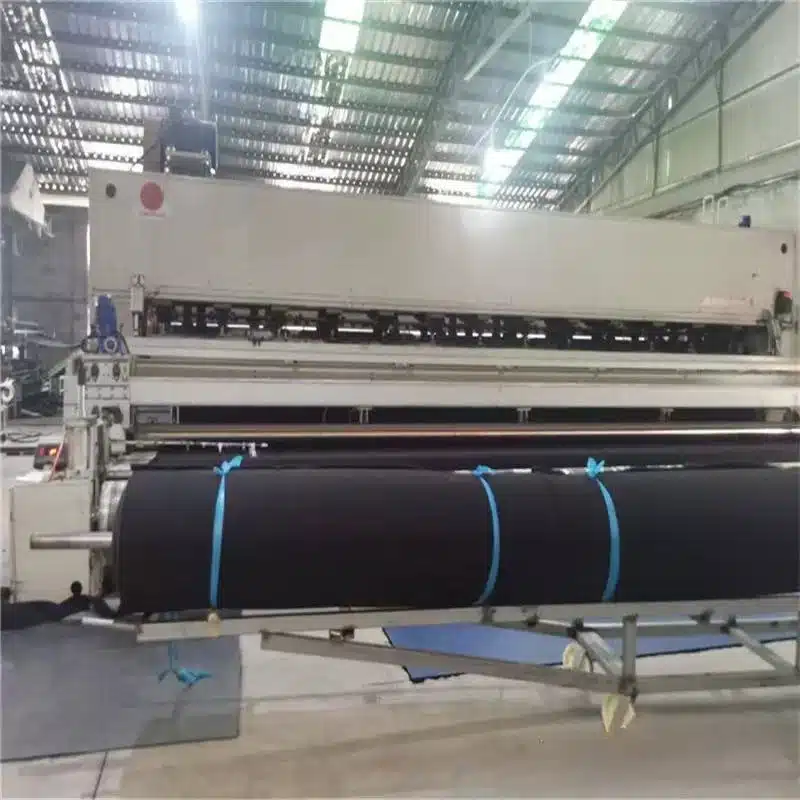
MJY runs multiple modern production lines for:
- HDPE / LLDPE / PVC geomembranes.
- Nonwoven and woven geotextiles.
- Bentonite GCL and different geocomposite drainage products.
The factory is set up for global geosynthetics exports, with containerized shipping to North America, Europe, the Middle East, Africa, and Asia-Pacific. This matters when you need predictable lead times and consistent quality across multiple projects.
MJY product range
MJY’s portfolio is built to cover full containment and infrastructure packages:
- Geomembranes: HDPE, LLDPE, textured and smooth, for landfill, ponds, and mining.
- Geotextiles: Nonwoven geotextile (filtration, separation, protection) and woven geotextile for road bases and soil reinforcement. If you’re new to woven, the basics in this guide on the purpose of woven geotextile fabric match how we design and use it.
- GCL: Geosynthetic clay liners for secondary containment, landfill caps, and water barriers.
- Geocomposites: Drainage geocomposites, drainage nets, and composite liners for walls, tunnels, and podium decks.
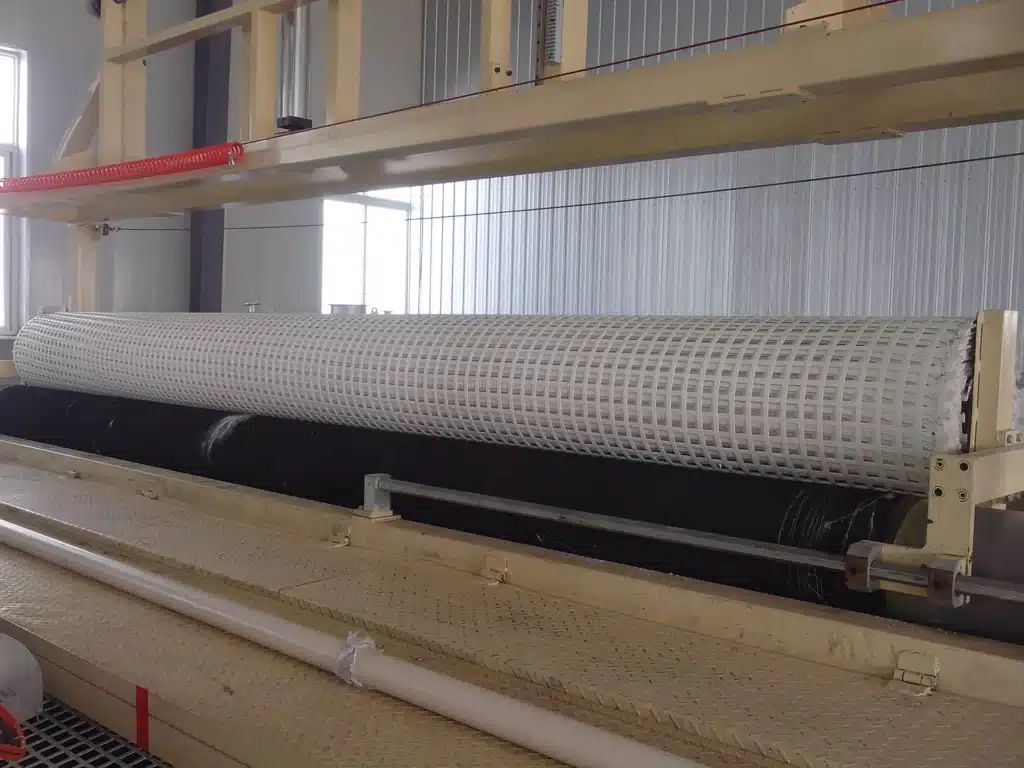
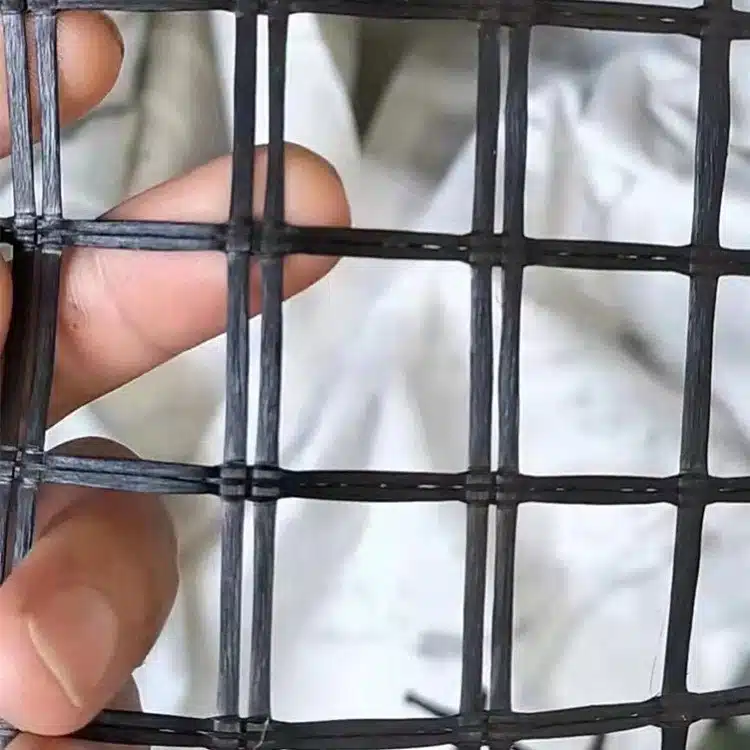
- Reinforcement: Geogrids and related soil reinforcement geosynthetics for roads, slopes, and retaining structures. (We also support engineers on how to install geogrid correctly with practical guidance.)
MJY certifications and in-house testing
MJY operates under ISO 9001 with a strict quality management system:
- In-house lab running ASTM, GRI, and EN test methods on each batch.
- Routine verification against GRI GM13 for HDPE geomembranes.
- CE-compliant products for appropriate markets.
- Full traceability from resin to finished roll through internal coding.
That means you’re not just buying resin thickness – you’re buying verified performance.
MJY case studies and project references
What really matters is whether the material performs in the field. MJY has:
- Landfill cells using HDPE geomembrane + GCL + geocomposite drainage.
- Mining heap leach pads and evaporation ponds in harsh climates.
- Agricultural ponds, aquaculture liners, and industrial containment.
- Road and rail projects using nonwoven geotextiles and geogrids for separation and reinforcement.
I always encourage engineers and contractors to ask us directly for project references similar to their own application. That’s the fastest way to see if a geosynthetics supplier is truly reputable or just trading material.
Red Flags for Low-Quality Geosynthetics Suppliers
When I choose geosynthetics suppliers, I’m ruthless about red flags. If you see the issues below, walk away fast.
1. Pricing & Quotation Warning Signs
Be careful with pricing that looks “too good” compared to other geosynthetics manufacturers. Common traps:
- Unrealistic low prices on HDPE geomembrane, GCL, or geotextiles with no clear spec list.
- Vague quotations – missing thickness, resin type, standard (e.g. GRI GM13), roll size, test standards (ASTM).
- No breakdown of unit price, freight, and taxes – makes it easy to hide downgraded materials.
A reliable geomembrane supplier will clearly state resin grade, standards, and full technical specs in every quote.
2. No Certifications, No Test Reports, No Traceability
Certified geosynthetics suppliers always show their paperwork:
- No ISO 9001, no CE for relevant markets, not an IGS member – that’s a concern.
- Can’t provide ASTM and GRI test reports for geomembrane, geotextile, GCL, or geocomposites.
- No batch number / roll ID / QC records on labels – zero traceability if something fails on site.
For critical work like landfill lining, mining, or pond liner projects, this is non‑negotiable.
3. Poor Communication & Weak Technical Support
Low‑quality geosynthetics suppliers are exposed fast when you ask technical questions:
- Slow replies or copy‑paste answers to design or installation questions.
- No engineer or tech team to discuss soil reinforcement, slopes, or compatibility with local standards.
- Can’t share geosynthetics technical data sheets or installation guidelines promptly.
If they can’t support you during design, they definitely won’t support you when something goes wrong.
4. Only Stock Products, No Real Customization
Serious projects rarely use “one‑size‑fits‑all” products:
- Supplier only offers stock geomembrane rolls and standard geotextile weights, no custom width, thickness, or packaging.
- No ability to do custom geomembrane fabrication, special roll lengths, or composite products (e.g. geotextile + drainage net).
Good geotextile manufacturers and geocomposite drainage suppliers are flexible on specs, not just pushing what’s in stock.
5. How to Avoid Counterfeit or Mislabeled Geomembranes
Counterfeit or downgraded geomembranes are a real risk, especially when buying bulk geomembrane from unknown exporters:
- Always demand third‑party ASTM test reports showing full compliance with GRI GM13 (for HDPE geomembrane) or equivalent standards.
- Check sample vs. data sheet: thickness, density, carbon black content, tensile strength, elongation.
- Verify the factory’s name and address on roll labels, packing lists, and certificates – they must match the contract.
- For big orders of landfill liners, pond liners, or mining liners, send random samples to an independent GAI‑LAP accredited lab for verification.
If a supplier refuses testing, hides documents, or keeps pushing you to “trust their quality”, that’s your signal to move on.
Checklist to Vet Any Geosynthetics Supplier

If you’re serious about geomembranes, geotextiles, GCLs, or any geosynthetic liner, you need a simple but strict vetting checklist. Here’s exactly how I screen geosynthetics manufacturers and suppliers before I trust them with a project.
Step‑by‑step supplier screening workflow
Use this basic flow:
- Shortlist
- Check website, product range (geomembranes, geotextiles, GCL, geocomposites, geogrids), export markets, and years in business.
- Pre‑qualification
- Ask for key documents: ISO certificate, test reports, product data sheets, project references.
- Technical review
- Compare their products vs your project specs (e.g., GRI GM13 HDPE geomembrane, needle‑punched nonwoven geotextile, geosynthetic clay liner, drainage composites).
- Sampling & testing
- Order samples and send them to an independent lab if it’s a critical job (landfill, mining, ponds, tailings).
- Commercial check
- Review pricing, Incoterms, payment terms, MOQs, and lead times.
- Quality & factory check
- Do a virtual factory tour or on‑site audit before placing large or long‑term orders.
- Trial order
- Start with a smaller order to test quality, communication, and delivery performance.
Verifying ISO, GAI‑LAP, CE, IGS and other certifications
Never just “trust” a logo on a PDF. Verify everything:
- ISO 9001 (and 14001/45001 if available)
- Ask for the full certificate and check:
- Name matches the company
- Valid dates
- Scope covers geosynthetics manufacturing (not something unrelated)
- Verify on the certifying body’s website.
- Ask for the full certificate and check:
- GAI‑LAP accredited lab (for geomembranes/GCLs)
- Confirm the lab is listed on the official GAI‑LAP website.
- Make sure the test report shows GRI GM13 / GM17 / GCL specs with sample IDs tied to your order.
- CE marking (for EU projects)
- Ask for DoP (Declaration of Performance) for each product.
- IGS membership
- Check if the company is listed as a member of the International Geosynthetics Society.
If a “certified geosynthetics supplier” refuses to share raw certificates or gives expired documents, walk away.
Requesting samples and independent lab testing
For any critical application (landfill liners, mining ponds, industrial containment), I always:
- Request production samples, not “lab specials”:
- Geomembrane roll pieces with clear labeling (resin type, thickness, batch, date).
- Geotextile / GCL off‑cuts with GSM and structure indicated.
- Ask for in‑house ASTM/GRI test reports for:
- HDPE geomembrane: tensile, tear, puncture, OIT, density, carbon black content, thickness.
- Geotextiles: tensile, CBR puncture, permittivity, AOS.
- GCL: swelling index, fluid loss, shear strength, peel strength.
- Cross‑check with an independent lab for big projects or new suppliers:
- Send your own sample to a third‑party lab that runs ASTM and GRI standards.
- Confirm they actually meet the specified GM13 or project requirements.
Reviewing warranties, guarantees, and service terms
Don’t just compare price per square meter; compare protection:
- Product warranty
- Length of warranty (typical 5–10+ years for HDPE geomembranes in normal conditions).
- What’s covered: manufacturing defects only, or performance in certain conditions?
- Quality guarantees
- Replacement policy for off‑spec rolls.
- Clear process for claims (photos, test reports, deadlines).
- Service terms
- Technical support during design and installation.
- On‑site or remote guidance, especially for complex systems like geogrids, gravel grid systems, or geocell reinforcement.
- Contract basics
- Penalties for late delivery (if critical).
- Clear definition of acceptance criteria (ASTM/GRI‑based).
If the warranty is vague, verbally promised, or not in writing, you’re taking all the risk.
Assessing logistics, lead times, and shipping options
A great geomembrane supplier is useless if they can’t deliver on time:
- Lead times
- Standard production time for:
- HDPE geomembranes (1.0–2.0 mm, black)
- Nonwoven geotextiles (200–800 g/m²)
- GCLs and geocomposites
- Rush order options and capacity for large volumes.
- Standard production time for:
- Shipping options
- FOB, CIF, DAP options depending on region.
- Experience shipping to your country (customs, documentation, fumigation if needed).
- Packaging & handling
- Roll dimensions, palletizing, loading plans.
- Protection against UV and transport damage.
- Traceability
- Each roll should have labels with batch, roll number, specs, and QC reference.
For international orders from a direct geosynthetics factory in China, I always check they have a history of exporting to similar markets and project types.
Questions to ask during factory audits or virtual tours
When you visit a geosynthetics manufacturer (in person or via video), don’t just watch; ask direct questions:
- Production & capacity
- How many production lines for: geomembranes, geotextiles, GCL, geocomposites, geogrids?
- Monthly capacity for standard products and peak season performance.
- Quality control
- What in‑house lab equipment do you have? (OIT testers, tensile machines, carbon black testers, thickness gauges, permeability setups, etc.)
- How many tests per batch? Do you keep retain samples?
- Standards and specs
- Which standards do you follow: ASTM, GRI GM13/GM17, EN, ISO?
- Can they customize specs for specific applications (mining, landfill, road reinforcement, retaining walls with geogrid systems, etc.)?
- Traceability & documentation
- Can you trace a roll back to the raw material lot and QC report?
- How long do you store QC records?
- Projects & references
- Ask to see project photos, reference letters, or contact details of repeat clients in your region or industry.
If they avoid showing the lab, hide production lines, or can’t answer basic ASTM/GRI questions, that’s a major warning sign.
Regional Geosynthetics Supplier Options
You can find reliable geosynthetics suppliers in every major region, but the best option depends on your project size, lead time, and budget. Here’s how I look at it globally.
Geosynthetics Suppliers in North America
North America has a mature network of geosynthetics manufacturers and distributors with strong compliance on ASTM and GRI.
What you’ll typically find:
- Products: HDPE geomembrane, LLDP geomembrane, nonwoven geotextile, woven geotextile, geogrids, GCLs.
- Advantages:
- Fast delivery and local stock
- Strong technical support and onsite assistance
- Easy warranty and after-sales service
- Trade-off: Usually higher price than factory-direct imports.
| Factor | Local NA Supplier | Direct Factory (e.g. MJY) |
|---|---|---|
| Lead time | Very fast (ex-stock) | 3–6 weeks incl. shipping |
| Price per m² | Higher | Lower (factory-direct) |
| Tech support | Onsite / local | Remote / engineering team |
Geosynthetics Manufacturers in Europe
Europe is strong in high-spec civil and environmental geosynthetics with strict CE and ISO compliance.
- Use cases: Road/rail infrastructure, landfill caps, tunnel waterproofing, coastal works.
- Advantages:
- CE certified geomembrane and geotextile
- Strong traceability and documentation
- Good for EU public and FIDIC-type projects
- Trade-off: Highest price segment; more rigid specifications.
When your specification is more open, mixing EU design + factory-direct geomembranes can cut cost without sacrificing performance.
Geomembrane & GCL Suppliers in Middle East & Africa
In the Middle East and Africa, most large projects rely on a mix of local stockists plus imports from Europe and Asia (especially China).
- Strong demand in: Landfill lining, mining heap leach pads, oil & gas lagoons, evaporation ponds.
- What works best in practice:
- Source bulk geomembrane rolls and GCLs from a global exporter (like MJY).
- Use local distributors for accessories (geomembrane welding rods, geonet, geogrid) and installation support.
- Key checks: Heat resistance, UV stability, and sand/rock puncture resistance for harsh climates.
Asia-Pacific Geosynthetics Factories & Exporters
Asia-Pacific, especially China, is the production hub for HDPE geomembrane, geotextile, GCL, and geocomposite drainage at global scale.
- Why the region is so strong:
- Large-scale HDPE geomembrane factories with high output
- Competitive pricing on ASTM tested geomembranes (GRI GM13 standard)
- Widely used in mining, landfill, and pond lining worldwide
- What to do as a buyer:
- Focus on ISO 9001 geosynthetics factories with in-house testing
- Ask for full technical data sheets and test reports
- Confirm experience in your application (mining, landfill, pond, etc.)
For more background on typical products in this region, I suggest reading this overview of geosynthetics for environmental construction projects.
Geosynthetics Suppliers for Australia & New Zealand
Australia and New Zealand rely on a mix of local converters/distributors plus imports.
- Common projects: Tailings dams, farm and irrigation ponds, landfill cells, coastal protection.
- Typical setup:
- Imported rolls from Asia or Europe
- Local fabrication of custom liners and job-specific panels
- Strong focus on UV stability and chemical resistance
- Good approach: Use a global exporter for bulk material and local installers for welding, QA/QC, and CQA reporting.
How Global Shipping from China-Based Factories Like MJY Works
From my side as a manufacturer, exporting geosynthetics is a standard, streamlined process.
Typical process when you buy factory-direct from MJY (China):
- Specification confirmation
- Thickness, resin type, GRI/ASTM standards, roll size, packaging, project drawings.
- Quotation & contract
- FOB/CIF/DDP pricing, MOQ, payment terms, lead time.
- Production & quality control
- We run in-house ASTM/GRI testing on each batch and share test reports before shipment.
- Logistics setup
- We arrange seafreight (FCL most common), handle export docs (CO, packing list, invoice, BL).
- Port & on-site handling
- Your local forwarder or customs broker manages import clearance and inland transport.
Typical timelines (for planning):
| Step | Time frame |
|---|---|
| Production | 7–15 days after deposit |
| Booking & loading | 3–7 days |
| Sea transit (Asia–NA/EU/ME) | ~18–35 days by container ship |
| Total door-to-port | About 3–6 weeks |
When done right, factory-direct geomembrane pricing plus proper logistics can save you a meaningful percentage per square meter while keeping quality and documentation aligned with international standards.
Why Engineers Choose MJY as a Long-Term Geosynthetics Partner
When engineers look for geosynthetics suppliers, they want stable quality, real technical backup, and zero drama on site. That’s exactly how we’ve built MJY.
MJY Experience, Capacity & Production Capabilities
We run MJY as a factory-first geosynthetics manufacturer, not just a trading company.
Quick snapshot:
| Item | MJY Capability (Typical) |
|---|---|
| Years in geosynthetics | 10+ years export + project experience |
| Main production lines | HDPE/LHDPE geomembrane, geotextile, GCL, geocomposites |
| Annual geomembrane output | Large-scale, container-based supply for global projects |
| Max geomembrane thickness | Common spec: 0.5–3.0 mm (GRI GM13 / GM17 options) |
| Standard roll widths | 5–8 m (custom on request) |
We build capacity around landfill, mining, pond lining, and infrastructure so our production fits the way civil projects actually run: big volumes, tight schedules, consistent specs.
MJY Full Geosynthetics Product Portfolio
You can source almost the full geosynthetics package from one place:
- HDPE / LLDPE geomembranes (GRI GM13 / GM17 compliant, ASTM tested)
- Nonwoven & woven geotextiles for separation, filtration, and protection
(if you’re new to these, this quick guide on what geotextile material is helps) - Geosynthetic clay liners (GCLs) for secondary containment and landfill caps
- Geocomposite drainage (geonet + geotextile) for leachate and subgrade drainage
– see how geonets are used in drainage applications - Geogrids for soil reinforcement and base stabilization
- Custom fabricated liners for ponds, tanks, and irregular shapes
One supplier = fewer compatibility issues, simpler documentation, and clearer accountability.
MJY In-House Lab Testing & Quality Assurance
We treat lab testing as part of production, not an optional extra.
- In-house QA lab for routine ASTM and GRI testing (tensile, tear, puncture, OIT, carbon black, density, etc.)
- Batch-based test reports tied to each roll / lot number
- Compliance-focused: GRI GM13 / GM17, ISO 9001 quality management, CE where required
- Full traceability from raw resin to finished geomembrane roll
You get test reports, certificates, and technical data sheets with every project, so your specs and approvals are covered.
Engineering Support, Design Help & CAD Services
We don’t just ship rolls; we help you close design gaps and reduce site risk.
- Pre-design support: material selection, thickness recommendations, design life and chemical compatibility
- Layout drawings & CAD support: liner panel layout, overlap plans, anchor trench suggestions
- Detailing help: penetrations, sumps, slopes, seams, and interface layers
- On-site / remote guidance: installation tips, welding parameters, trial weld procedures
This kind of engineering support is often what keeps change orders and delays under control.
MJY Global Project References & Application Examples
We supply geosynthetics for:
- Municipal & hazardous landfills
- Heap leach pads & tailings dams in mining
- Farm and industrial ponds (water, wastewater, effluent)
- Secondary containment & bunds
- Road, rail, and foundation works using geotextile and geogrid
With projects delivered in Asia, Middle East, Africa, Europe, North & South America, we can usually share similar reference projects to what you’re designing now—helpful for owner approval and risk review.
How to Request Quotes, Samples & Technical Data from MJY
We keep the process straightforward:
Send your project brief
- Location, application (landfill, pond, mining, etc.)
- Required materials (geomembrane, geotextile, GCL, geocomposites)
- Specs: thickness, strength class, standards (ASTM, GRI, EN)
- Approx. quantities and schedule
Get a tailored proposal
- Technical recommendation + alternative options
- Unit pricing (factory-direct), incoterms, and lead time
- QA documentation list and warranty terms
Request samples & TDS
- Physical samples of geomembrane / geotextile / GCL
- Technical data sheets, test reports, and certificates for review
Lock in logistics
- We arrange global shipping from China (FCL/LCL)
- Support with packing plans, loading diagrams, and customs docs
If you’re an engineer, EPC contractor, or liner installer and want a long-term geosynthetics partner rather than a one-off supplier, MJY is set up for that kind of relationship.
Frequently Asked Questions About Geosynthetics Suppliers
Who are the largest geosynthetics manufacturers in the world?
The biggest geosynthetics manufacturers are usually the ones with:
- Large annual production capacity for HDPE geomembranes, geotextiles, GCL, and geocomposites
- Multiple plants worldwide (North America, Europe, Asia)
- Full product portfolios covering geomembrane, geotextile, geogrid, drainage composites, and GCL
You’ll see global players dominating landfill, mining, and infrastructure projects because they can handle:
- Long-term multi-year supply contracts
- Strict specs like GRI GM13 geomembrane, ISO 9001, and CE requirements
Are Chinese geosynthetics factories reliable?
Yes—if you choose correctly. Chinese geosynthetics manufacturers range from world-class to very low-end. Reliable Chinese factories usually have:
- ISO 9001 certified quality management
- In-house ASTM/GRI testing labs for HDPE geomembrane and geotextile
- Export track record for mining, landfill, and pond lining projects in the US, EU, Middle East, and Africa
- Transparent technical data sheets, test reports, and project references
The advantage of a strong direct geosynthetics factory in China is:
- Competitive factory-direct geomembrane pricing
- Flexible custom geomembrane fabrication and MOQ
- Ability to ship bulk geomembrane rolls and wholesale geotextile rolls globally
How do I source GAI-LAP accredited geomembranes and GCLs?
If you specifically need GAI-LAP accredited testing (often for landfill and mining projects), do this:
- Ask suppliers:
- “Do you use a GAI-LAP accredited lab for geomembrane and GCL testing?”
- “Can you provide GAI-LAP test reports for GRI GM13 geomembrane or GCL?”
- Check their documentation:
- Look for GRI GM13 / GRI GM17 compliance on HDPE or LLDPE geomembranes
- Confirm GCL index properties tested per ASTM standards
For basic background, it helps to understand what geomembrane is and how it differs from geotextile; this guide on what is geomembrane and its typical specs is a good starting point.
What are typical minimum order quantities (MOQs) from factories?
MOQs depend on the product and whether you buy from a factory or local distributor:
- HDPE / LLDPE geomembrane (industrial rolls):
- Direct factory: often 1 x 20ft container (usually 10–18 tons depending on thickness)
- Nonwoven / woven geotextile:
- Direct factory: often full container load of mixed grammages
- GCL and geocomposite drainage:
- MOQs tied to 1 full pallet or full container, varying by project spec
Distributors may let you buy single rolls, but the price per m² will be higher.
What are standard lead times for large geomembrane and geotextile orders?
Typical lead times (after deposit & spec confirmation):
- Standard HDPE geomembrane (e.g., 1.0–2.0 mm):
- Factory: ~ 7–21 days production + sea freight time
- Nonwoven geotextile manufacturers (common GSM):
- Factory: often ready stock or 7–15 days
- Custom thickness / special widths / textured geomembrane:
- Add another 7–10 days
For big projects, I always lock in:
- Production schedule in writing
- Shipping plan (port, transit time, Incoterms)
If you’re still deciding which material fits your project, a simple overview of geomembrane vs geotextile applications can help you choose faster.
How do I compare quotes from different geosynthetics suppliers?
Don’t just look at price per m². Line up the offers on equal terms:
- Standard & spec
- HDPE geomembrane: same thickness, density, and GRI GM13 / ASTM requirements
- Geotextile: same GSM, strength, and pore size
- Certifications & testing
- ISO 9001, CE, IGS membership
- In-house lab vs external lab, and test reports available
- Packaging & logistics
- Roll length, width, core type, palletizing
- FOB vs CIF price, freight included or not
- Service and support
- Technical support (design, details, shop drawings)
- Warranty terms, installation guidance, and after-sales
Once everything is aligned on spec and delivery terms, then compare:
- Total landed cost per m²
- Lead time
- Risk (supplier reliability, documentation, and communication quality)