What Exactly Is Non Woven Geotextile Fabric?
Non woven geotextile fabric is a permeable textile made from synthetic fibers bonded together to function mainly in filtration, separation, and drainage within civil engineering projects.
Nonwoven vs Woven Geotextile: Quick Comparison
| Feature | Nonwoven Geotextile | Woven Geotextile |
|---|---|---|
| Strength | Moderate tensile strength | High tensile strength |
| Filtration | Excellent filtration & drainage | Limited filtration capability |
| Cost | Generally lower cost | Typically higher cost |
| Structure | Random fiber web (needle-punched or spunbond) | Interlaced yarns (woven) |
| Flexibility | Highly flexible, conforms well | Less flexible, stiffer |
Why Nonwoven Geotextile Dominates Civil Engineering
Non woven geotextiles have become the go-to fabric for projects like road stabilization, erosion control, and drainage systems because they combine effective filtration with flexibility and cost-efficiency. Their ability to prevent soil mixing while allowing water flow makes them ideal for modern infrastructure, especially in applications demanding consistent performance without complex installation. This combination of separation, filtration, and drainage functions at a reasonable price point keeps nonwoven fabrics ahead of woven alternatives in practical, everyday civil engineering use.
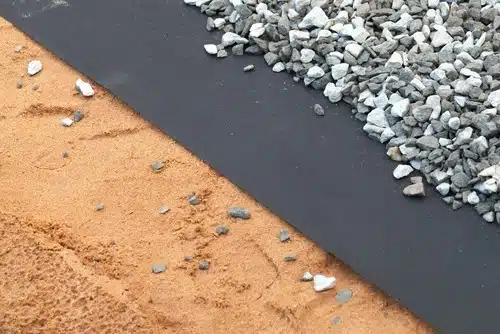
How Non Woven Geotextile Fabric Is Manufactured
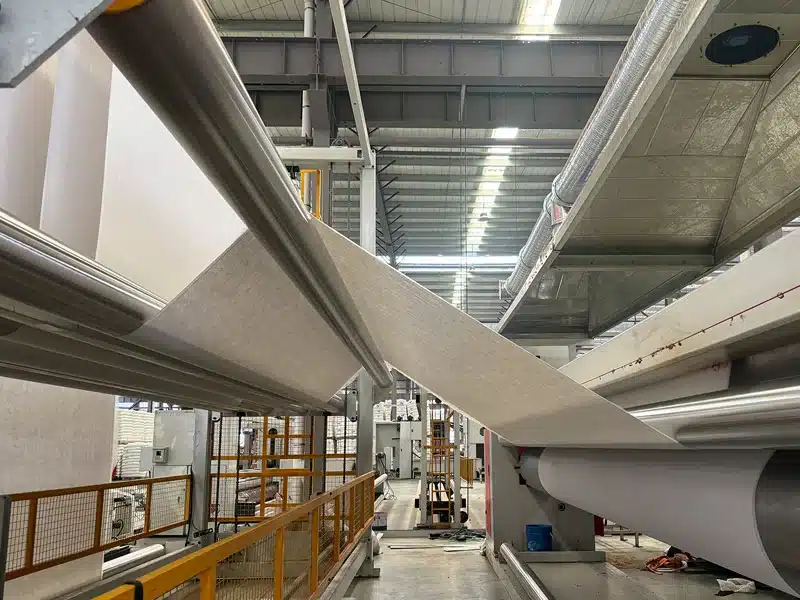
Non woven geotextile fabric is mainly made from two types of raw materials: polypropylene (PP) and polyester (PET). Polypropylene is popular for its chemical resistance, lightweight nature, and cost-effectiveness, making it ideal for general civil engineering projects. Polyester, on the other hand, offers higher tensile strength and better durability, especially in heavy-duty applications like road and railway construction.
There are two primary production methods for nonwoven geotextiles:
Needle-punched: This method mechanically entangles fibers using barbed needles to create a strong, thick fabric with excellent filtration and drainage properties. Needle-punched fabrics are usually more porous and flexible, perfect for uses like separation layers, drainage fabric under pavers, and erosion control.
Thermal/spunbond: In this process, fibers are heated and bonded together by pressure and heat, producing a smoother, more uniform fabric. Spunbond nonwoven geotextiles typically have higher tensile strength but less permeability than needle-punched types, making them suitable for reinforcement and protection layers.
Understanding these materials and methods helps in selecting the right non woven geotextile for specific project demands, balancing strength, filtration, and cost effectively. For detailed installation techniques and choosing the correct fabric type, check out our how to lay geotextile fabric contractor ready guide.
Core Functions of Nonwoven Geotextiles (With Real Examples)
Nonwoven geotextile fabric plays several key roles in civil engineering, making it a versatile choice for many projects. Here are its core functions explained with real-world examples:
Separation
Nonwoven geotextiles prevent different soil layers from mixing, maintaining the integrity of each layer. For example, in road construction, the fabric separates the subgrade soil from the aggregate base, preventing the base from sinking into soft soil and extending the road\’s lifespan.
Filtration
The fabric allows water to pass through while stopping soil particles from washing away. This is crucial in French drains or landfill liners, where the geotextile acts as a filtration layer, protecting drainage systems and preventing sediment clogging.
Drainage
Thanks to its high permeability, nonwoven geotextile efficiently channels water away from structures. It is commonly used beneath green roofs and trench drains, where it promotes proper water movement and prevents waterlogging.
Reinforcement
Although nonwoven geotextiles aren’t as strong as woven ones, they still offer good reinforcement by distributing loads and improving soil stability. In railway track ballast stabilization, nonwoven fabric helps prevent ballast contamination and maintains track alignment.
Protection
Nonwoven geotextiles provide a protective cushion for geomembranes and other sensitive layers in landfill or pond liners, shielding them from punctures and damage during installation or ground movements.
These core functions – separation, filtration, drainage, reinforcement, and protection – make nonwoven geotextiles essential to modern civil engineering projects focused on durability and sustainability. For slope and wall applications using geosynthetics, check out our detailed guide on wall slopes with geosynthetics to understand how nonwoven fabrics fit into complex projects.
Key Physical & Mechanical Properties That Matter
When choosing non woven geotextile fabric, several physical and mechanical properties are crucial to ensure it meets your project needs:
Unit Weight (gsm / oz/yd²) and Thickness
The fabric’s weight, measured in grams per square meter (gsm) or ounces per square yard (oz/yd²), directly affects durability and strength. Heavier, thicker fabrics generally offer better performance but come at a higher cost. Typical ranges for nonwoven geotextiles are between 150 and 800 gsm.
Apparent Opening Size (AOS / O95)
This indicates the size of particles the fabric can filter or retain. A smaller AOS means finer filtration, which is essential for applications like drainage or soil separation. It’s usually denoted as O95, meaning 95% of the openings are smaller than a specified size.
Water Flow Rate / Permittivity
Permittivity measures how quickly water passes through the fabric. A higher permittivity means better drainage, important for applications like French drains or landfill liners where maintaining water flow is critical. ASTM D4491 is a common standard for testing water permeability.
Grab Tensile Strength & Puncture Resistance (CBR)
Tensile strength shows how much force the fabric can withstand before breaking. Puncture resistance, often tested by the California Bearing Ratio (CBR) test, measures how well it resists damage from sharp objects like rocks or debris. Both properties ensure the fabric holds up under construction stresses.
UV Resistance and Expected Lifespan
Exposure to sunlight degrades most geotextiles, so UV stabilization additives enhance durability. Although these fabrics are typically buried, UV resistance matters during storage and installation. The expected lifespan varies but can range from 10 to 50 years depending on environmental conditions and product quality.
Understanding these properties helps in selecting the right non woven geotextile for your specific application, balancing performance and cost effectively. For complex applications involving reinforcement, you might also consider complementary products like biaxial geogrids to enhance structural stability.
Common Applications & Project Types
Non woven geotextile fabric plays a vital role across many civil engineering projects thanks to its versatility:
- Road & Highway Construction: Used for subgrade stabilization, it prevents soil mixing and improves load distribution, which extends road life.
- Railway Track Ballast Stabilization: Keeps ballast clean by filtering fines and helps maintain track alignment under heavy loads.
- Landfill & Pond Liners: Acts as a filtration and separation layer to protect liners from puncture and clogging.
- French Drains and Trench Drains: Enhances drainage by allowing water flow while keeping soil and sediments out.
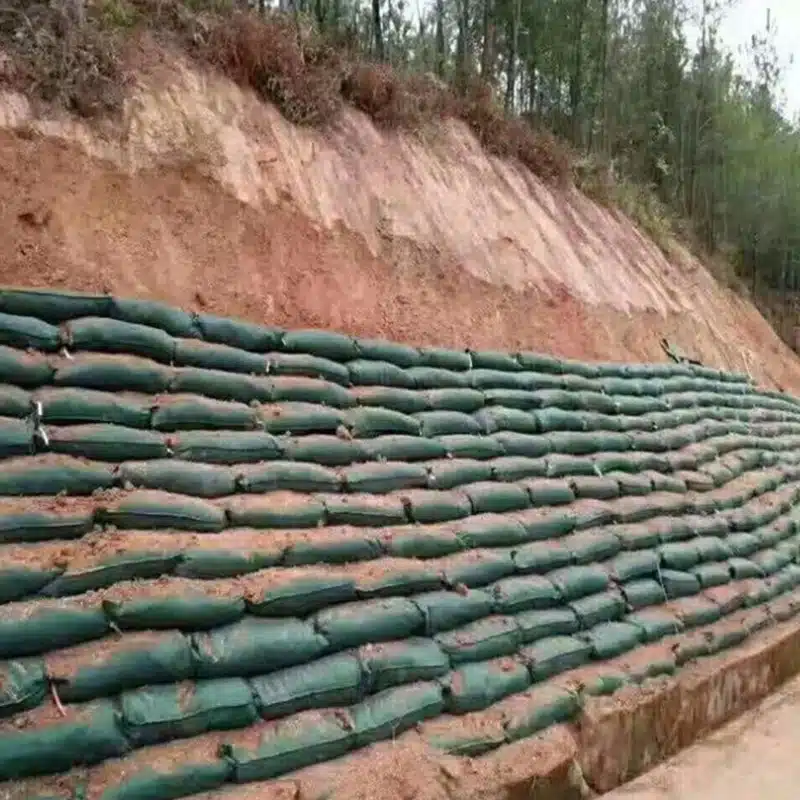
- Erosion Control Under Riprap: Stabilizes soil beneath rock layers to prevent erosion along slopes and waterways.
- Green Roofs and Landfill Capping: Provides filtration and drainage, supporting vegetation growth and soil stability.
- Coastal & Riverbank Protection: Helps resist soil erosion and supports structural reinforcement in water-exposed areas.
For projects related to road surfaces and soil stabilization, pairing non woven geotextile fabric with geocell reinforcement solutions can significantly improve performance and longevity. You can learn more about these applications in our detailed overview of geocell for road construction and geocell for slope protection.
How to Select the Right Non Woven Geotextile for Your Project
Choosing the right non woven geotextile fabric can make or break your project’s success. Here’s a simple step-by-step checklist to guide your selection:
- Identify the primary function needed: separation, filtration, drainage, reinforcement, or protection.
- Determine the required weight (gsm): Most projects use fabrics between 150 and 800 gsm. Lightweight (150–250 gsm) suits filtration and drainage, while heavier weights (500–800 gsm) are better for reinforcement and heavy-load stabilization.
- Check physical properties: Look for suitable Apparent Opening Size (AOS) for filtration, water flow rate (permeability) for drainage, and tensile/puncture strength for durability.
- Consider environmental exposure: UV resistance and chemical compatibility matter if the fabric is exposed above ground or near contaminants.
- Balance cost vs. performance: Higher gsm and specialty materials like polyester might cost more but deliver longer lifespan and better strength. Polypropylene options are generally cost-effective and versatile.
Here is a typical weight guideline by application:
| Application | Recommended Weight (gsm) |
|---|---|
| Drainage layer (French drain) | 150–300 |
| Road subgrade stabilization | 300–600 |
| Landfill capping & liners | 400–800 |
| Railway track ballast | 400–700 |
| Erosion control/reinforcement | 500–800 |
For a deeper dive into material choices like polypropylene vs polyester and their impact, see our detailed PP non-woven geotextile guide. Matching your fabric to the project’s mechanical and filtration needs will optimize cost efficiency and long-term performance.
Installation Best Practices & Common Mistakes
Proper installation is key to getting the most out of your non woven geotextile fabric. Here’s what you need to know:
Surface Preparation
- Clear the area of debris, sharp rocks, roots, or anything that might puncture the fabric.
- Make sure the ground is relatively smooth and level to prevent uneven settling or damage.
- For drainage applications, ensure proper grading before laying the nonwoven fabric.
Overlap and Seam Requirements
- Always provide minimum 30 cm (12 inches) overlap between adjacent rolls to maintain continuity.
- In slopes or high-flow areas, consider increasing overlaps or using seam tape or fixing pins for extra security.
- Overlaps help prevent soil migration and maintain filtration performance, so don’t skimp here.
Avoiding Damage During Placement
- Use equipment cautiously, especially heavy machinery, to avoid tearing or puncturing the fabric.
- Avoid walking directly on the fabric where possible; use boards or mats if you need to cross.
- When cutting, use sharp tools to get clean edges and avoid frayed fabric that can weaken the installation.
Installing nonwoven geotextile right the first time saves expensive repairs later and ensures your project’s long-term success. For more details on related ground stabilization techniques, check out our guide on how to install geogrid for driveways.
Standards & Testing (Give Buyers Confidence)
When choosing non woven geotextile fabric, meeting recognized standards is crucial. The most commonly required certifications include ASTM, ISO, and EN standards. These ensure the fabric performs well in strength, permeability, filtration, and durability tests — all vital for long-lasting, reliable use.
For example, ASTM D4491 measures water permeability, while CBR puncture resistance tests check the fabric’s ability to withstand pressure without damage. Compliance with these standards guarantees your geotextile will work as expected in your project, whether it’s road construction, drainage, or erosion control.
Third-party test reports add another layer of confidence, especially for government and large infrastructure tenders. Independent lab verification confirms the manufacturer’s claims and assures quality consistency. This is why most serious buyers insist on certified products with comprehensive test data before approving purchases.
For more on geotextile materials and their testing, check out this detailed guide on what is geotextile material.
MJY Non Woven Geotextile Range – Quick Overview
MJY offers a wide range of non woven geotextile fabric options, with weights from 100 to 1200 gsm, covering both needle-punched polypropylene (PP) and polyester (PET) varieties. This range ensures there’s a suitable product for almost any project, whether you need light filtration fabric or heavy-duty reinforcement material.
As a seasoned geosynthetics manufacturer since 2000, MJY provides factory-direct pricing and extensive experience exporting worldwide, making it easy and cost-effective to source quality nonwoven geotextiles globally. Every shipment comes with a Certificate of Analysis (COA) for quality assurance and a free sample policy to help you test and verify the fabric before committing.
If you\’re interested in learning more about how to properly use geotextiles, check out our detailed how to lay geotextile fabric guide to ensure your project’s success.
Frequently Asked Questions (FAQ)
Is non woven geotextile the same as landscape fabric?
No, they are different. While both fabrics help with soil stabilization and weed control, landscape fabric is usually lightweight and designed mainly to block weeds. Non woven geotextile fabric is heavier and engineered for broader civil engineering uses like filtration, drainage, and reinforcement.
Can non woven geotextile be used under concrete?
Yes, nonwoven geotextile is commonly placed under concrete slabs to improve soil separation and reduce cracking. It helps stabilize the base, control erosion, and manage moisture beneath the concrete.
How long does nonwoven geotextile last in the ground?
Its lifespan depends on UV exposure and soil conditions. When buried and protected from sunlight, nonwoven geotextile fabric can last 20 to 50 years or more. UV stabilizers in the fabric improve durability during outdoor installation.
What is the difference between 4 oz and 8 oz nonwoven fabric?
The difference is mainly weight (gsm) and strength. A 4 oz (about 135 gsm) nonwoven is lighter and good for basic filtration or separation. An 8 oz (about 270 gsm) fabric is thicker, stronger, and better for heavy-duty applications like subgrade stabilization or drainage.
Do you ship to the United States/Europe/Middle East?
Yes, most reliable manufacturers offer global shipping, including the US, Europe, and the Middle East. It’s important to confirm shipping policies and lead times directly with the supplier.
For those curious about how geotextile fabrics manage water flow, see our detailed guide on how geotextile fabric lets water through.