Where to Buy Non Woven Geotextile Fabric?
Sourcing geotextile feels risky: specs vary, timelines slip, budgets stretch. Want dependable quality without overpaying? Let’s choose the right channel and control the variables.
Buy non woven geotextile through factory-direct, regional distributors, or vetted B2B platforms. Lock specs (GSM, tensile, filtration, UV), demand test reports, compare landed cost (FOB/CIF/DDP), and align lead time. For bulk, factory-direct optimizes price; for urgent jobs, local stock wins on speed.
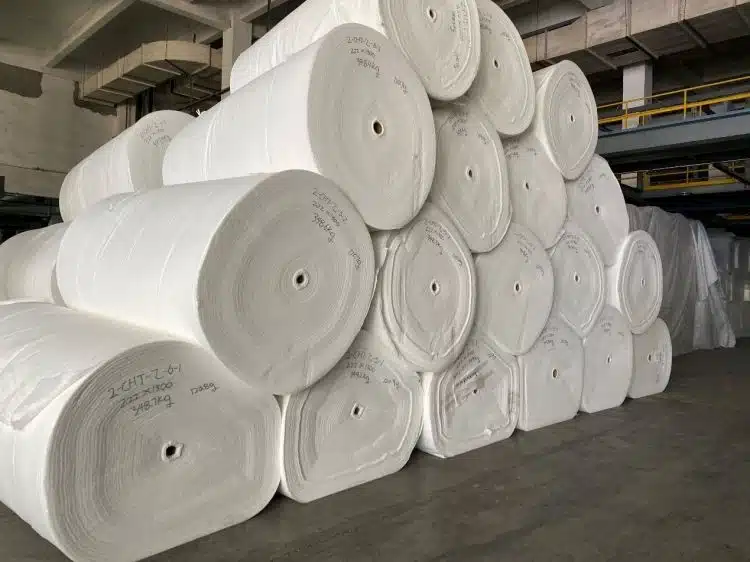
You need a straight path from requirement to delivery. Use the playbook below to match your project to the right channel, verify quality fast, and keep costs predictable.
Which buying channel fits your project best?
Different channels solve different problems—price, speed, or paperwork. Pick the one that serves your outcome.
For large, spec-driven projects, factory-direct is cost-best. For small or urgent works, regional distributors win on speed. Use B2B platforms to shortlist and benchmark, then verify.
Choose by outcome, not by habit
Engineers and buyers often default to whoever answers first. Flip the logic: define the outcome—cost control, compliance, or deadline—and then pick the channel that best aligns. Factory-direct gives you control over GSM, tensile class, and UV package with the lowest unit price at scale, but it needs schedule discipline. Regional distributors reduce risk when schedules are tight or the order is small. B2B marketplaces are great for discovering suppliers, cross-checking pricing, and collecting samples—but require stronger due diligence.
Channel comparison matrix
| Channel | Strengths | Trade-offs | Best for |
|---|---|---|---|
| Factory-direct (manufacturer) | Lowest bulk price; custom specs; consistent QC; mix SKUs in one container | Longer transit; MOQ; more import/admin work | Medium-large orders, framework contracts, OEM/ODM |
| Regional distributor | Local stock; quick delivery; local support & invoicing | Higher unit price; limited spec range | Urgent works, small jobs, pilot segments |
| Vetted B2B marketplaces | Broad choices; easy benchmarking; buyer protection tools | Mixed supplier quality; time spent verifying claims | Supplier shortlisting, price discovery, sample trials |
Practical rule of thumb
- If your volume fills ≥1×20′ container and timelines allow sea freight → factory-direct.
- If you need rolls on site this week → regional distributor.
- If you’re exploring the market or building a vendor list → platforms first, then factory sampling.
How do you verify fabric quality before paying?
Specs on paper are cheap. Your job is proving performance before money and time leave the table.
Request method-based tests, seam data, and UV evidence. Validate GSM and tensile on samples, then set acceptance criteria in the PO. No reports, no deal.

Verify by method, not by marketing
Skip adjectives. Ask for reports tied to test methods. Typical examples: wide-width tensile (e.g., ISO/ASTM methods), puncture/tear, permittivity or water flow, UV resistance (exposure hours), and seam efficiency for stitched goods. On arrival, sample rolls for GSM and thickness to confirm lot consistency. Set pass/fail gates in the purchase order so everyone knows the rules up front.
Minimum data you should see
| Parameter | Why it matters | What to request (example) | Field check you can do |
|---|---|---|---|
| GSM (g/m²) | Durability, puncture resistance, cost driver | Lab report + roll labels per lot | Weigh a 100×100 mm cut piece |
| Tensile strength | Load capacity, creep behavior | Wide-width tensile test report | Visual: elongation/necking signs |
| Elongation (%) | Deformation tolerance | Same tensile report | Compare to spec tolerance |
| Permittivity/Flow | Filtration & drainage performance | Water flow/permittivity test | Simple water-through visual check |
| UV resistance | Service life when exposed | UV exposure hours and retained strength | Ask for formulation/UV package |
| Seam efficiency* | Real system strength (stitched joints) | Seam test data vs base fabric strength | Inspect stitch count/pattern |
Purchase order safeguards
- State methods, minimum values, and tolerances.
- Require lot-wise COAs and allow third-party inspection.
- Define non-conformance handling (replacement/credit).
- Include retention samples: one with you, one with supplier.
How should you compare prices across quotes?
Unit price alone misleads. Landed cost and usable performance determine real value.
Normalize quotes by spec, yield, and Incoterm. Convert everything to landed cost per usable square meter meeting your spec—then decide.
Normalize before you optimize
Quotes often hide apples-to-oranges differences: GSM, roll width/length, core ID, and packaging. Start by aligning specs. If one offer is 140 g/m² and another is 160 g/m², normalize to performance: a cheaper, lighter fabric may cost more after failures or extra layers.
Incoterms and responsibility split
| Term | Supplier handles | You handle | When to use |
|---|---|---|---|
| EXW | Factory pickup | All transport, export, import, delivery | You have strong logistics capability |
| FOB | Export clearance + loading on vessel | Ocean freight, insurance, import, delivery | Common for experienced importers |
| CIF | Ocean freight + insurance to your port | Import clearance, local delivery | Simpler budgeting on freight/insurance |
| DDP | Almost everything to your door | Unload | Easiest; higher quoted price; great for pilots |
Quantity tiers and price elasticity
| Order size (rolls/TEU) | Typical price effect vs base | Best use case |
|---|---|---|
| Sample / < 5 rolls | +20–40% | Lab tests, pilot sections |
| LCL (mixed SKUs) | +10–20% | Multi-spec trials, urgent partials |
| 1×20′ container | Base | Standard projects |
| 2–4× containers | –5–10% | Region-wide supply, mini frameworks |
| 5×+ containers | –10–15% | Framework contracts, long programs |
Decision sequence
1) Align specs → 2) Convert to landed cost per usable m² → 3) Factor lead time → 4) Pick the lowest risk-adjusted cost, not the lowest number.
What order and logistics plan avoids delays?
Schedules die from unclear specs and late paperwork—more than from production time.
Lock specs, documents, and shipping windows early. Build a backward plan from site date, add buffer, and assign owners for customs, payment, and delivery.
Backward scheduling that actually works
Start from the date you need rolls on site. Subtract destination port clearance, ocean transit, factory lead time, and pre-production sampling. Add a contingency buffer for each leg. Share this schedule with stakeholders so procurement, finance, and site teams move in sync.
Documents and dependencies
| Step | Owner | Output / Checkpoint | Typical time |
|---|---|---|---|
| Spec finalization | You + supplier | PO with test methods/tolerances | 1–3 days |
| Samples & approval | Supplier → You | Lab reports + physical swatches | 3–10 days |
| Deposit & production slot | You + supplier | Payment received; raw material booked | Same day–2 days |
| Production & QC | Supplier | In-process checks; final COA | 7–15 days |
| Booking & export clearance | Supplier/Forward | Vessel booking; export docs | 3–7 days |
| Ocean/air transit | Carrier | In-transit | 7–35 days (route) |
| Import & local delivery | You/Broker | Customs cleared; truck to site | 2–7 days |
Risk controls you should add
- Split shipments for long programs (don’t risk everything on one vessel).
- Alternate ports/carriers pre-approved to avoid rollover pain.
- Roll labelling & packing list mapping to speed site distribution.
- FIFO storage & UV protection for stockpiles awaiting installation.
Conclusion
Choose the channel that fits your outcome, verify by method not marketing, normalize to landed cost, and lock logistics early for zero-drama delivery.