Many buyers focus only on unit price when requesting quotes, but they overlook how thickness decides the real service life of a project. Choose too thin, and the liner fails before completion. Choose too thick, and the budget is wasted. Is thickness really that hard to judge?
Choosing the right geomembrane thickness isn’t simply about pursuing the thickest possible thickness. It’s about selecting the appropriate thickness based on the project type, site conditions, and expected service life. Drawing on my production experience at our factory and fifteen years of export experience, I’ll explain how to strike a balance between durability and cost.
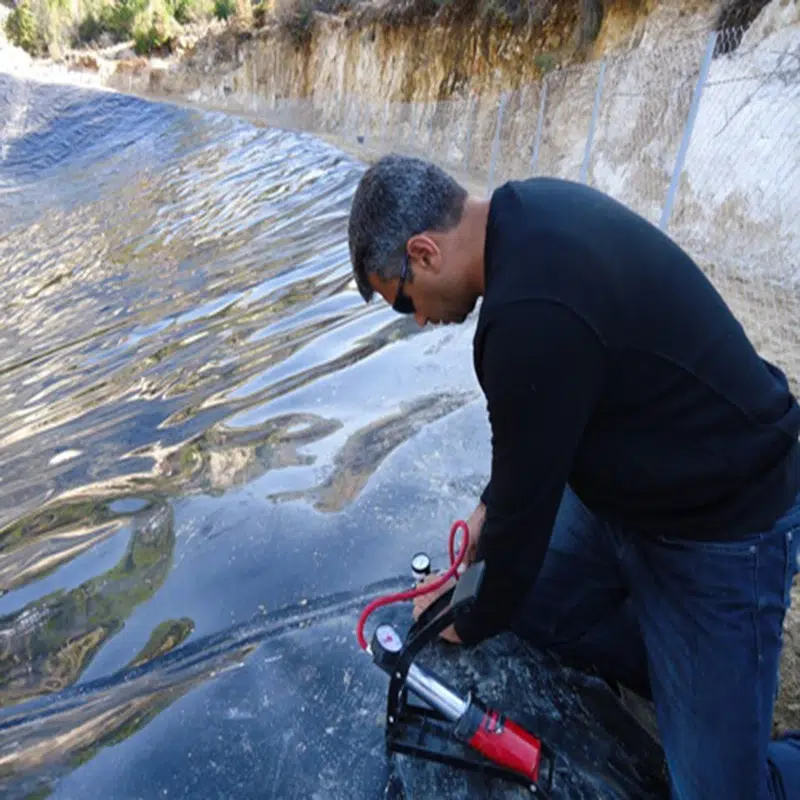
Many buyers feel confused by the wide range of thickness options on the market. If you keep reading, I will break this down step by step and make thickness selection clear and controllable.
What are the common geomembrane thickness ranges?
Below are the production specifications we commonly use in our factory daily.
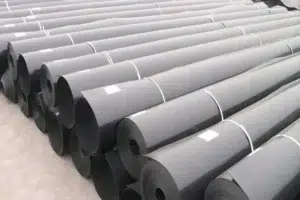
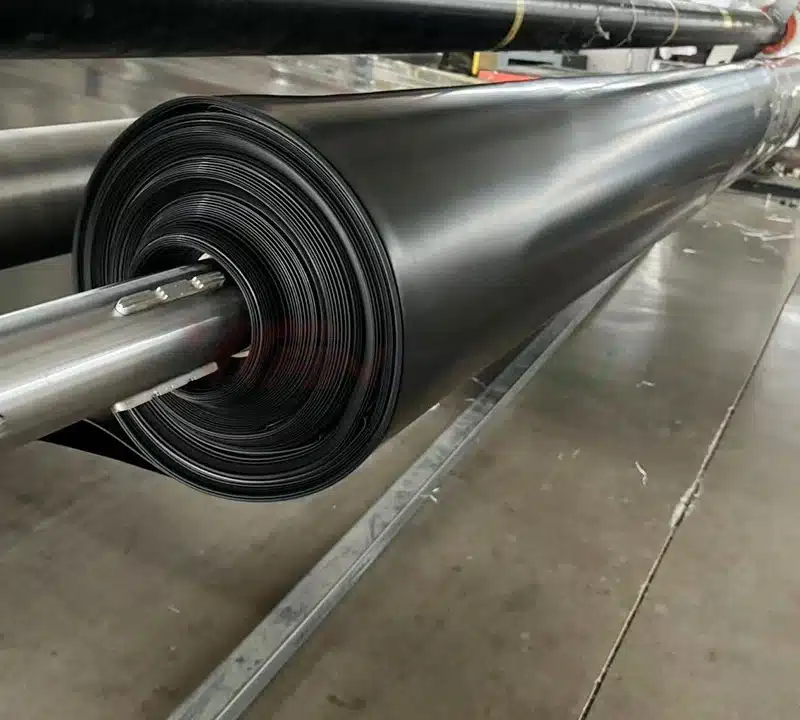
Most geomembrane thicknesses range from 0.3 mm to 3.0 mm. This range covers a wide range of projects, from light-duty enclosures to heavy-duty environmental protection. Common specifications include 0.5 mm, 0.75 mm, 1.0 mm, 1.5 mm, and 2.0 mm. These dimensions are not arbitrary but are the result of long-term engineering applications.
Based on my 15 years of experience serving clients, buyers frequently ask why there’s such a large price difference between 0.75 mm and 1.0 mm thick geomembranes, even though the visual difference is negligible. The answer lies in standards like ASTM GM13. Thickness directly affects tensile strength, puncture resistance, stress resistance, and crack resistance. For every 0.25 mm increase in thickness, the amount of raw material required per square meter increases by approximately 235 grams. This significantly increases production costs.
I’ve seen export projects suffer leaks and damage due to actual lining thicknesses far below standard values, resulting in significant economic losses.
Typical thickness ranges and characteristics
| Thickness | Common use | Key characteristics |
|---|---|---|
| 0.3–0.5mm | Light-duty lining | Low cost, limited puncture resistance |
| 0.75–1.0mm | General containment | Balanced strength and flexibility |
| 1.5–2.0mm | Environmental protection | High puncture and chemical resistance |
| 2.5–3.0mm | Heavy-duty lining | Extreme durability, higher cost |
How to Choose the Right Liner Thickness for Your Application?
This is the most pressing question for most buyers. I recommend different geomembranes to clients based on different application scenarios.
Aquaculture and shrimp ponds
For aquaculture and shrimp ponds, I usually recommend 0.5mm to 0.75mm. The reason is simple. These projects mainly need seepage control, not structural load resistance. Pond bases are normally leveled, and external pressure is low.
Surface smoothness is also important because it helps reduce bacteria buildup. Cost sensitivity is high in aquaculture projects. Thicker liners do not significantly extend service life in this case. Many pond aquaculture farmers who cooperate with our factory have been operating their ponds for many years with good results using geomembranes in this thickness range.
Landfills and mining projects
Landfills and mining projects are very different. I usually recommend 1.5mm to 2.0mm or above. These projects must meet environmental regulations and demand very high puncture resistance and chemical durability.
There may be sharp aggregates below the liner and long-term loads above it. Leachate composition is often very complex, thus placing higher demands on the thickness and corrosion resistance of the geomembrane. In these projects, thickness is not an expense. It is protection. Environmental failure costs far more than the liner itself. Most export landfill projects never go below 1.5mm.
Water reservoirs and irrigation canals
For reservoirs and agricultural canals, I usually recommend 0.75mm to 1.0mm. This range balances UV resistance and flexibility. These liners are often exposed to sunlight for long periods.
If the budget allows, using a 1.0 mm thick geomembrane provides greater safety. A 0.75 mm thick geomembrane can also perform well if the underlying substrate is properly treated and protected with geotextiles.
Biogas digesters
Biogas digesters are often underestimated. I usually recommend 1.0mm to 1.5mm. These systems must handle internal gas pressure in addition to seepage control.
Many projects use thinner bottom liners and thicker top liners. I have seen failures caused by underestimating thickness on the gas cover, leading to deformation and fatigue over time.
What factors really affect thickness selection?
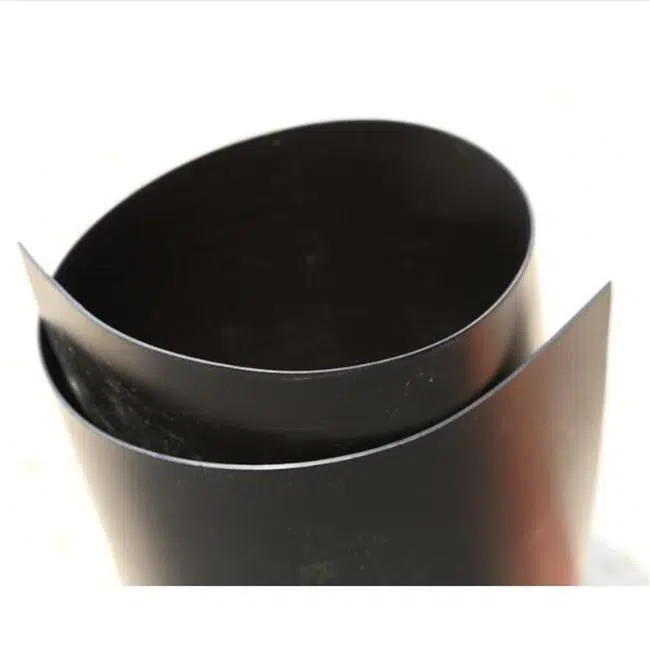
Professional thickness selection is not just about reading a table. When I advise buyers, I focus on several real site conditions.
Subgrade condition
Subgrade condition is the first factor to check. If the base contains sharp stones, thickness must increase or a geotextile must be added. Geotextiles act as a cushioning layer and reduce puncture risk.
I have seen projects try to save cost by ignoring subgrade quality. These projects often require repairs later. Adding thickness or protection early is usually cheaper.
UV exposure
If the geomembrane is exposed to sunlight, thickness becomes more critical. Thicker liners contain more carbon black and resist UV aging better. Aging speed slows significantly.
Temporary projects may not need this margin, but reservoirs and canals must consider long-term exposure.
Chemical resistance
Liquid composition also matters. Strong acids, alkalis, or high salinity accelerate material degradation. Thicker liners provide more safety margin for long-term chemical resistance.
I usually ask buyers to share liquid information. In some cases, formulation changes are needed even when thickness stays the same.
| Factor | Low risk | Medium risk | High risk |
|---|---|---|---|
| Subgrade | Fine soil | Mixed soil | Sharp rock |
| UV exposure | Covered | Partial exposure | Full exposure |
| Chemical | Clean water | Mild chemicals | Strong acids or alkalis |
What is the truth about thickness tolerance?
This is a critical issue many buyers do not know. Some suppliers sell negative tolerance products. A liner labeled as 1.0mm may actually be 0.9mm or less. This is hard to detect early but dangerous for long-term performance.
From a factory view, maintaining true thickness requires stable equipment and strict online inspection. This increases production cost. Some suppliers cut this cost and pass the risk to buyers.
Our factory insists on producing geomembranes that meet standard thicknesses. This isn’t marketing rhetoric, but a safety principle. True thickness represents true value.
FAQ
Q: How long can a 0.5mm geomembrane last?
A: In light-duty aquaculture projects with proper subgrade preparation, it can perform well for many years.
Q: Can I choose a thinner liner if I use geotextile underneath?
A: Yes. Geotextile protection reduces puncture risk and allows controlled thickness reduction.
Q: Is thickness selection different for HDPE and LDPE?
A: Yes. HDPE is stiffer and may allow slightly thinner choices. LDPE is softer and usually requires more thickness.
Thickness selection is not about choosing the thickest liner. It is about choosing the right one.
If you are unsure which specification fits your project, you can share drawings or soil information with me. I will help evaluate thickness from a factory and product perspective.