
Factory-Direct • ASTM/ISO Tested • Wholesale Supply

From our factory perspective, winter geogrid selection comes down to resin + UV package + stable junction strength at low temperature. PP or HDPE geogrids are usually the best option because they keep better flexibility and durability in cold conditions. In manufacturing, the focus is consistent rib geometry and strong nodes to avoid brittleness during freeze–thaw cycles. In the field, performance depends on method too—do not place on frozen subgrade, control moisture, and compact in lifts.

  • Immediate stabilization on weak, wet, or frozen subgrades

  • Lower aggregate thickness for haul roads, pads, and subbases

  • Rutting control through interlock + lateral confinement

  • Predictable cold-weather performance (UV-stabilized PP/HDPE/PET)

  • Faster build with simple unroll–cover–compact methodology

Product Range & Professional Parameters

Values below are typical ranges. U receive project-specific data sheets and mill certs with each shipment.

Property Test Method Typical Range
Tensile @ 2% strain (MD/CD) ASTM D6637 (Method A) 3–20 kN/m
Tensile @ 5% strain (MD/CD) ASTM D6637 6–40 kN/m
Ultimate tensile strength (MD/CD) ASTM D6637 20–200 kN/m
Junction efficiency ASTM D7737 ≥ 85%
Aperture size Caliper / Optical 25 × 25 – 65 × 65 mm
Rib thickness Micrometer 1.0–3.6 mm
UV resistance (500 h) ASTM D4355 ≥ 90% retained
Service temperature −40 °C to +60 °C
Polymers PP (UV-stabilized), HDPE
Coatings (Optional) Bitumen / PVC (for interface friction)
Property Test Method Typical Range
Tensile @ 2% strain (multi-axis) ASTM D6637 (equiv. ring/MD) 6–15 kN/m (equivalent radial)
Tensile @ 5% strain (multi-axis) 10–25 kN/m
Ultimate tensile (multi-axis) 30–120 kN/m
Junction strength ASTM D7737 ≥ 85%
Aperture geometry Triangular/hexagonal, 40–75 mm node spacing
UV resistance (500 h) ASTM D4355 ≥ 90% retained
Polymer UV-stabilized PP
Property Test Method Typical Range
Ultimate tensile (MD) ASTM D6637 60–300 kN/m (higher on request)
Tensile @ 2% / 5% strain (MD) ASTM D6637 20–80 / 40–150 kN/m
Creep reduction factor (design) ISO 13431 / BS 8006 RFcr ≈ 1.6–4.0 (project-specific)
Long-term design strength (LTDS) BS 8006 method 15–120 kN/m (derived)
Junction & anchorage ASTM D7737 / Internal ≥ 80%
Polymer HDPE (mono-/bi-oriented) or PET (warp-knit)
UV/chemical durability ASTM D4355 / ISO High (per data sheet)

Cold-Season Install Method (6 Steps)

geogrid (5)
  1. Assess subgrade: remove ice lenses/standing water; proof-roll light.

  2. Separator (if needed): nonwoven under the grid on pumping fines.

  3. Unroll & align: with traffic; tension by hand/winch; anchor overlaps.

  4. Place first lift: 150–300 mm depending on CBR; dump on top (no direct wheel contact with exposed grid).

  5. Compact: static/low-amp vibration; moisture near optimum.

  6. Build thickness: open to traffic after target density; avoid remixing snow into lifts.

  • Manufacturer, not trader — ISO shop, stable output, factory pricing for contractor, distributor, and wholesale programs.

  • Standards-driven — ASTM/ISO test reports with every lot.

  • Tech submittals — sections, details, and method statements for cold weather.

  • Customs made easy — HS code docs, packing lists, harmonized labels.

  • Global delivery — fast sail/air options, OEM/white-label available.

geotextile (23)
geogrid (14)

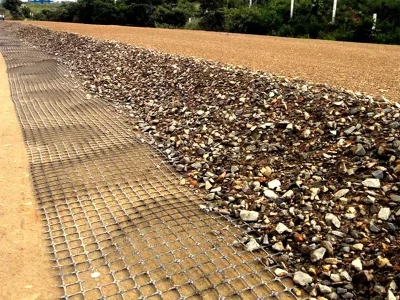
Retaining Walls & MSE Systems

Primary reinforcement for geogrid-reinforced backfills.
geogrid (18)

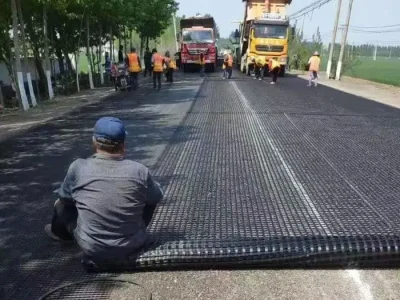
Steep Slopes & Embankments

Slope steepening, veneer stability with facing (blocks, gabions, wrap-around).
geogrid (21)

Roads & Highways

Basal reinforcement on soft ground; reduces rutting and differential settlement.

geogrid (17)

Railways & Yards:

Subgrade and embankment reinforcement; improved bearing capacity.
geogrid (1)_1

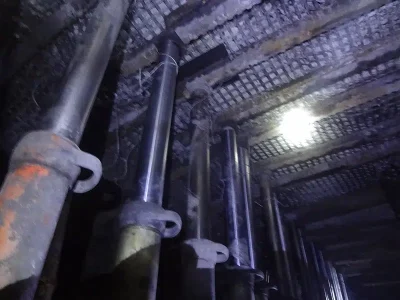
Mining & Industrial Platforms

Working pads, haul roads, stockyard bases under heavy cyclic loads.

Frequently Asked (Winter Edition)

Can U install geogrids below 0 °C?

Yes. Clear ice/snow, control moisture, and follow the winter lift/compaction method.

Both stabilize well; triaxial can help in turning zones with multi-directional loads.

On wet/fine subgrades, a nonwoven separator under the grid reduces pumping.

Typically 150–300 mm for the first lift based on CBR and traffic; see table.

UV-stabilized PP/HDPE for biaxial/triaxial; HDPE/PET for uniaxial—each supplied with durability data.

Contact Us

Looking for warp knitting polyester geogrid for sale at factory pricing? Tell us your design load, height/angle, soil data, coating preference, roll size, and delivery port. We’ll send best value options—spec-ready and ready to ship.
en_USEnglish

Get Free Quote!