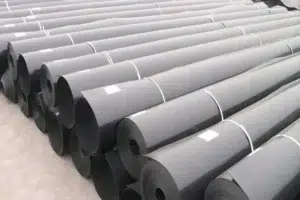
Choosing HDPE geomembrane thickness by price alone is one of the fastest ways to create liner risk.
HDPE geomembrane thickness should be selected by application, subgrade condition, hydrostatic pressure, puncture risk, chemical exposure, slope design, and inspection requirements. Ponds may use lighter liners, while landfills and mining projects usually need thicker, better-protected geomembrane systems.
The right thickness is not a universal number. A small irrigation pond, a landfill cell, a heap leach pad, and a wastewater lagoon place very different stress on the liner.
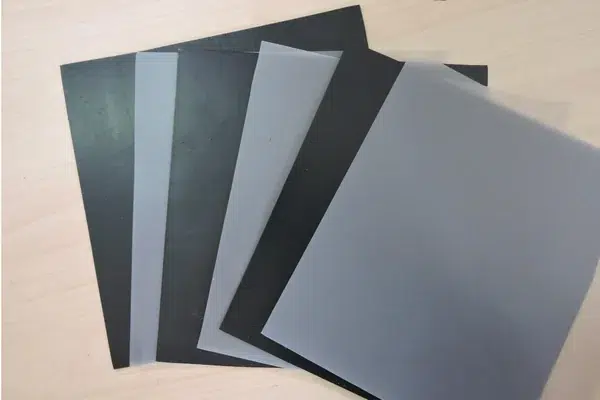
Send your application, area, subgrade condition, slope, and containment liquid to compare suitable HDPE geomembrane thickness before ordering.
Request an HDPE geomembrane thickness checkWhy Thickness Selection Matters
Thickness affects puncture resistance, welding behavior, roll weight, installation handling, and long-term safety margin. HDPE geomembrane specifications such as GRI GM13 include physical and mechanical property requirements used to evaluate liner quality, not just nominal thickness. [1]
Nominal thickness also needs proper measurement. ASTM D5199 is one commonly referenced test method for measuring geosynthetic nominal thickness. [2] For buyers, this means the quotation should state thickness clearly and the supplier should be able to support it with test data.
Expert Insight: Thicker is not always better, but too thin for the site is almost always risky. Extra thickness cannot fix poor subgrade preparation, but it can give more margin against puncture, handling damage, and installation stress.
Typical Thickness Logic by Application
| Application | Common buyer concern | Selection logic |
|---|---|---|
| Small pond | Water retention and puncture from stones | Balance thickness with geotextile underlay and subgrade prep |
| Irrigation reservoir | Large area and weather exposure | Check roll width, welding plan, and handling |
| Landfill liner | Regulatory and leachate containment risk | Use project specification and protection layers |
| Mining pond or heap leach | Chemical exposure and operational stress | Confirm chemical resistance, welding, and protection |
| Slope lining | Interface friction and stability | Consider textured geomembrane when design requires friction |
Ponds, Landfills, and Mining Projects
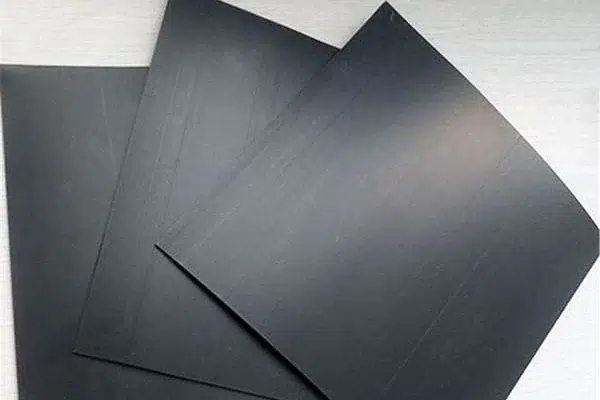
Each application changes the thickness conversation. Pond buyers often focus on leakage and installation cost. Landfill buyers must consider regulatory design, protection layers, seam testing, and long service life. Mining buyers must add chemical exposure, operational traffic, and process solution risk.
US landfill design rules show why landfill liners are not simple pond liners. Composite liner systems and low-permeability barriers are tied to environmental protection requirements. [4] Even outside the US, this type of regulation explains why landfill projects need stricter specification control.
Field Note: A buyer once asked whether a thinner liner could be used because the landfill project was only a temporary cell. The real issue was not the word temporary. It was leachate exposure, inspection risk, and whether the owner would accept the specification. We advised quoting against the project document, not the cheapest roll.
Smooth vs Textured Thickness Choices
Surface type can be as important as thickness on slopes. Smooth HDPE geomembrane is common for flat containment areas and efficient welding. Textured geomembrane is considered when interface friction and slope stability are part of the design.
Do not buy textured liner only because it sounds stronger. Texturing adds cost and handling considerations. Use it when the design needs surface friction, especially on side slopes, landfill covers, or steep containment areas.
RFQ Details Buyers Should Send
| RFQ detail | Why the supplier needs it |
|---|---|
| Application | Pond, landfill, mining, canal, or wastewater changes the risk level |
| Thickness target | Allows comparable quotation and data sheet review |
| Surface type | Smooth or textured affects price and installation |
| Subgrade condition | Sharp gravel may require geotextile protection |
| Roll size and destination | Freight, handling, and welding layout affect total cost |
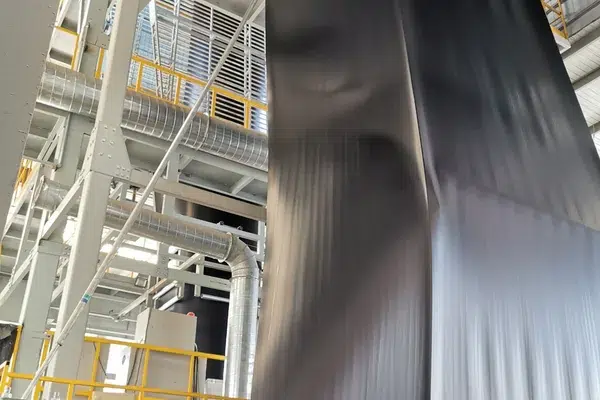
Seam performance is also part of thickness selection. ASTM D6693 is a common reference for tensile properties of nonreinforced polyethylene geomembranes, and seam testing methods are often added during installation planning. [3]
For product selection, compare MJY HDPE geomembrane liner specifications and broader geomembrane options. For high-value applications, review mining geosynthetics applications or landfill liner requirements before requesting a final quotation.
My View
My view is that thickness should be treated as a risk-control decision, not a price shortcut. If the subgrade is clean, the liquid is low-risk, and installation is simple, an over-specified liner can waste budget. But when the site has sharp aggregate, high water pressure, chemicals, slopes, or strict inspection, choosing the minimum thickness to save a few cents per square meter can create expensive rework. A good RFQ should make the project risk visible before price is discussed.
Conclusion
HDPE geomembrane thickness should match the application, site condition, and inspection requirement. The best liner is the one that can be installed, welded, protected, and accepted by the project.
FAQs
What thickness is best for a pond liner?
It depends on pond size, subgrade, water depth, installation method, and protection layer. A supplier should not answer from thickness alone.
Is thicker HDPE geomembrane always better?
No. Thicker liner adds puncture margin, but it also increases cost, roll weight, and handling difficulty. The site risk should decide.
When should textured geomembrane be used?
Textured geomembrane is usually considered on slopes or interfaces where friction is part of the design requirement.
References
- Geosynthetic Institute GRI GM13 Specification for HDPE Geomembranes ↩
- ASTM D5199 Standard Test Method for Measuring Nominal Thickness of Geosynthetics ↩
- ASTM D6693 Standard Test Method for Tensile Properties of Nonreinforced Polyethylene Geomembranes ↩
- EPA Subtitle D Landfill Design Criteria 40 CFR 258.40 ↩