
Top 7 Advantages of Implementing Geocell Slope Protection in Civil Engineering?
With increasingly intense rainfall during the rainy season, are you worried about finding severe erosion during your next inspection, leading to repair costs of thousands of dollars?
Geocell slope protection acts as a container for your soil, locking it in place to stop erosion. This 3D cellular confinement system offers enhanced stability, promotes vegetation, and handles heavy loads, making it a top choice for modern civil engineering projects.
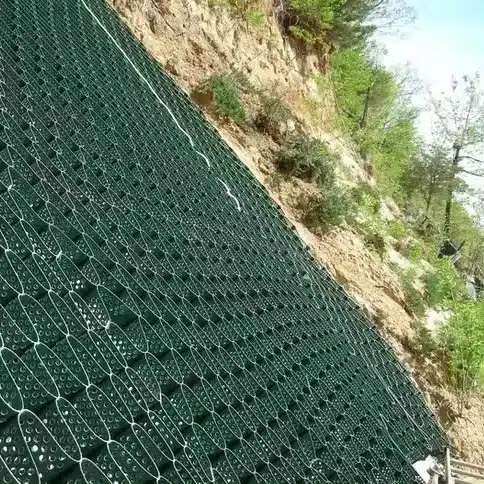
What is Geocell Slope Stabilization?
You may have seen these honeycomb-like grids on highway projects, but do you understand the principles behind them?
Geocell slope reinforcement is the process of using polyethylene grids to confine the surface soil of a slope. It holds soil, rock, or concrete in small cells, preventing the material from sliding down. This creates a stable, reinforced layer on the natural ground.
Understanding the Confinement Principle
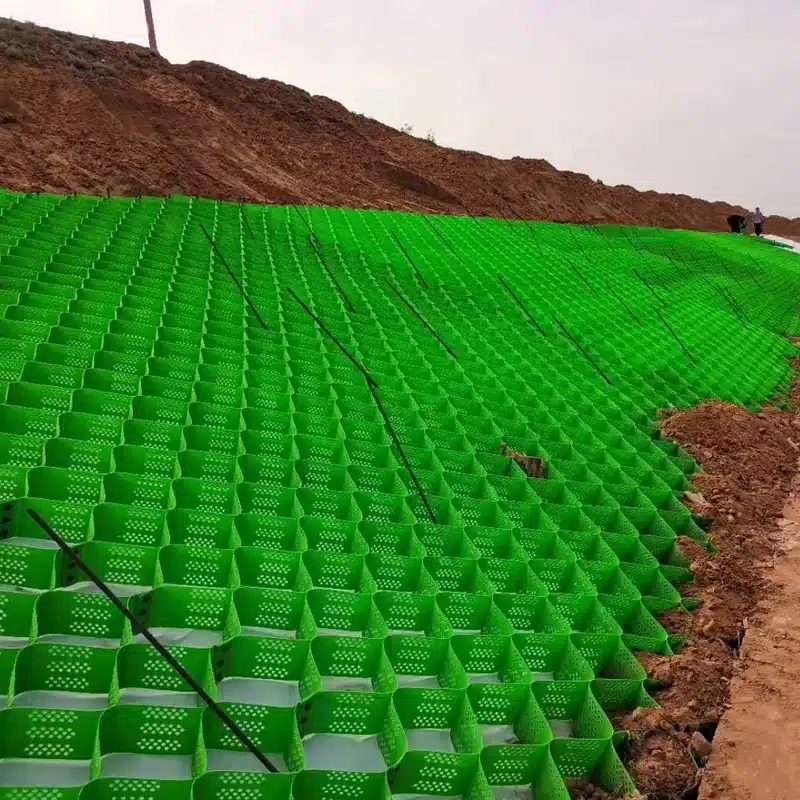
When I see geocell rolls in the warehouse, they look like folded mattresses. But when you unfold them and lay them on a slope, they become a structural system. This concept is simple yet effective. Loose soil has no tensile strength. If you pile it on a steep slope, it will slide down. However, when you place the soil inside the geocells, the cell walls hold the soil in place. The soil cannot move laterally or downwards.
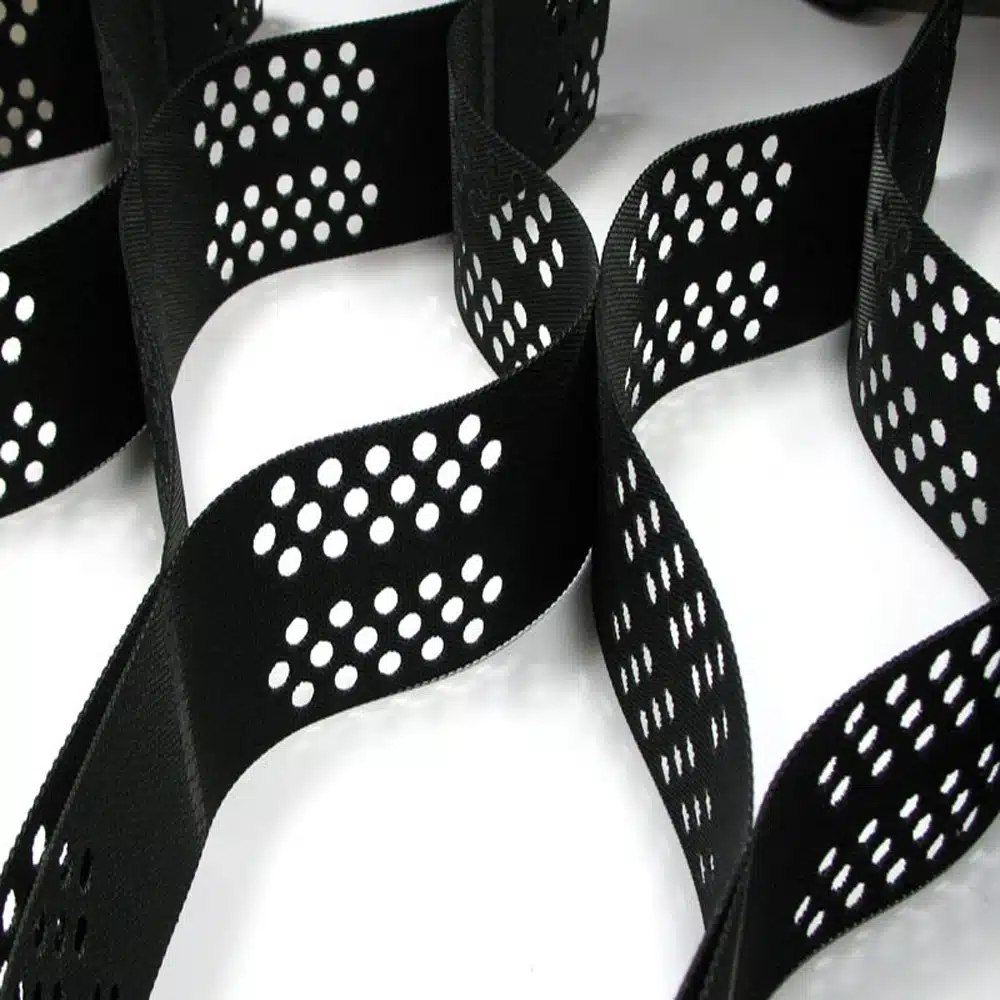
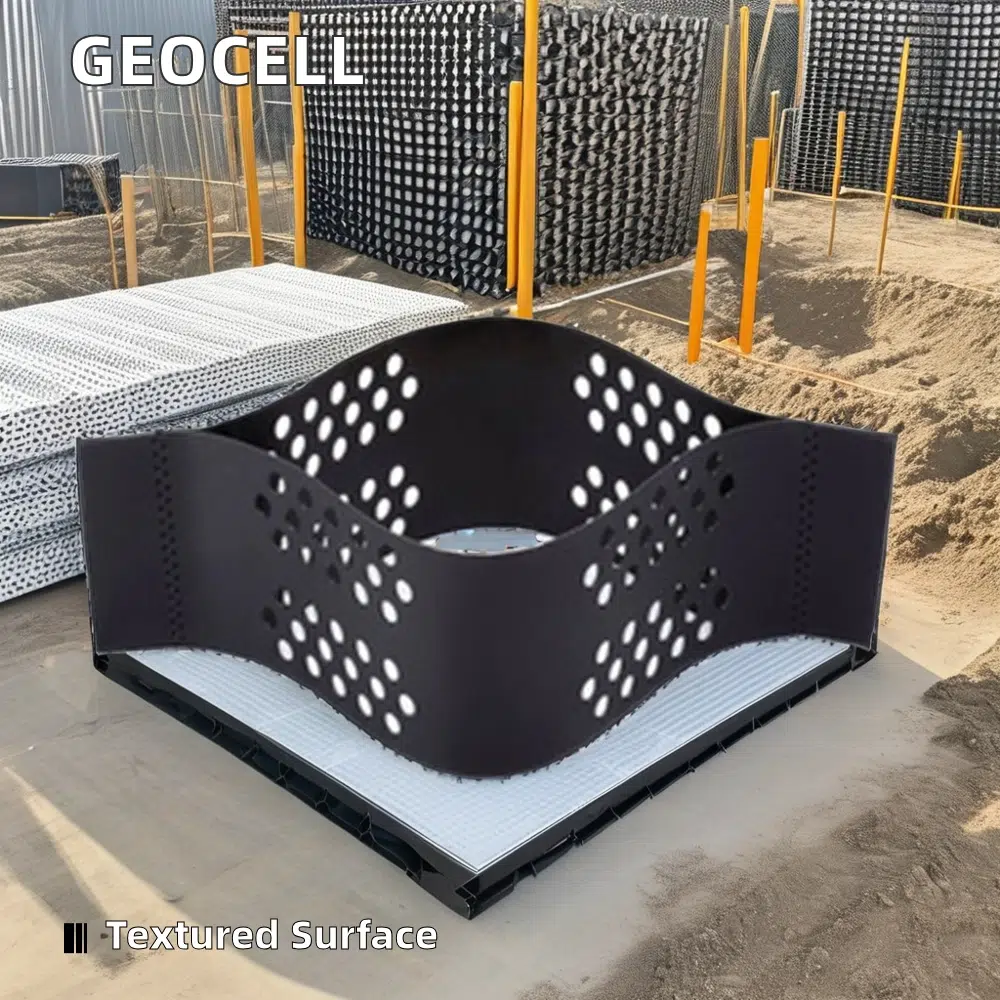
From a production perspective, we weld these strips to specific depths—usually 3 inches, 4 inches, or 6 inches. The depth you choose depends on the slope angle. A steeper slope needs a deeper cell to hold more material. We also add texture to the plastic strips. This friction helps hold the soil inside the cell. Without texture, the dirt creates a slip plane against the smooth plastic and falls out.
For a buyer, understanding this helps you order the right spec. If you buy a geocell grid for slope protection with smooth walls to save a few cents, you risk the infill sliding out during the first heavy rain. The confinement only works if the friction is high enough. This system effectively changes the physics of the slope surface, increasing the “angle of repose” of the material. This means you can build steeper slopes without them collapsing.
| Component | Function on Slope | Buyer Benefit |
|---|---|---|
| Cell Depth | Holds volume of soil | Prevents sliding on steep grades |
| Textured Wall | Increases friction | Locks soil in the cell |
| Perforations | Drains water | Prevents liquid buildup |
| Anchor Trench | Secures top of grid | Stops the whole system sliding |
How does it enhance erosion control?
Water channels create ruts that destroy slopes in minutes. How do you stop rain from turning your embankment into a mudslide?
The grid acts as thousands of mini check dams. It slows down water velocity and physically prevents the formation of rills and gullies. This keeps your topsoil exactly where you placed it.
The Check Dam Effect
Erosion is all about speed. When water runs down a hill, it picks up speed. The faster it goes, the more soil it carries. Traditional methods like blankets or mats try to cover the soil, but water often flows underneath them. A geocell for slope protection works differently. Every single cell wall acts as a dam.
When water hits the wall of a cell, it has to stop and flow over or through the perforations. This kills the momentum. Instead of a rushing river cutting a channel, you get a slow, manageable trickle. As a factory advisor, I tell clients that this is the primary reason to use geocells over riprap or gabions for surface protection. Riprap can shift. The grid stays fixed.
This is vital for long-term maintenance. If you stop the water speed, you stop the soil loss. This means you do not have to send crews out to fill ruts every spring. We design the geocell slope protection specifically with perforations—holes in the plastic. These allow water to drain laterally through the system so it does not pool and get heavy, but the soil particles are too big to pass through. The water leaves; the dirt stays.
| Erosion Factor | Without Geocell | With Geocell | Result |
|---|---|---|---|
| Water Velocity | High (Accelerates) | Low (Braked by walls) | Less force to move soil |
| Rill Formation | Common | Impossible | Uniform surface |
| Soil Migration | Downhill movement | Confined in cell | Zero material loss |
| Surface Runoff | Muddy/Dirty | Clear | Environmental compliance |
How does it improve load distribution?
Can a steep slope hold heavy maintenance equipment without sliding? Usually, the tires tear up the surface.
The grid distributes vertical loads laterally across the mattress. It prevents shear failure when mowers or trucks drive on the incline, protecting the structural integrity of the embankment.
Preventing Shear Failure on Inclines
Slopes are tricky because gravity is already pulling everything down. If you add the weight of a heavy mower or a maintenance truck, you increase the shear force. This often causes the top layer of soil to shear off and slide down, taking the vehicle with it. This is a safety nightmare and a liability risk.
A slope protection geocell system creates a semi-rigid slab. When a tire pushes down on one cell, the hoop stress transfers that energy to the surrounding cells. It functions like a snowshoe. The weight is spread out over a wide area rather than concentrated under the tire.
For buyers sourcing materials for highway banks or levees, this is a key selling point. You need to mow the grass. If the slope is too soft, you cannot maintain it. By installing a high-quality geocell, you give your maintenance crews a safe platform to work on. We test the weld strength in the factory to ensure it can handle these dynamic loads. If the weld snaps under the weight of a mower, the system unzips. That is why checking the seam peel strength on your data sheet is critical.
| Load Type | Risk on Slope | Geocell Solution | Technical Spec |
|---|---|---|---|
| Maintenance Mower | Tire ruts/Sliding | Load distribution | Seam Peel Strength |
| Foot Traffic | Surface damage | Confined footprint | Cell Size |
| Snow Load | Heavy wet weight | Prevention of creep | Resin Density |
| Heavy Rain | Saturated soil weight | Drainage/Locking | Perforation % |
What Geosynthetic Materials are used?
Does the type of plastic really affect long-term safety? Yes, inferior plastics can crack in the winter. Our products use high-quality high-density polyethylene (HDPE) with added UV stabilizers. This ensures the geosynthetic material can withstand decades of sunlight without becoming brittle or degrading.
HDPE and the Importance of Resin Quality
Not all geocell materials are created equal. As a manufacturer, I’ve seen some competitors use cheap, inferior materials to pass off as good quality. Our company adheres to environmentally responsible and customer-focused principles, and we use high-density polyethylene (HDPE) to manufacture our geocells. HDPE is a tough, flexible, and chemically inert material; it does not react with the soil or release chemicals that harm the environment.
Are there Case Studies of successful projects?
You want proof before you buy, right? Theories are great, but does it work in the real world?
From steep highway embankments to backyard hills, geocell grid for slope protection has a proven track record. It has successfully stopped slides in highway infrastructure and residential developments globally.
Proven Effectiveness in Real-World Applications
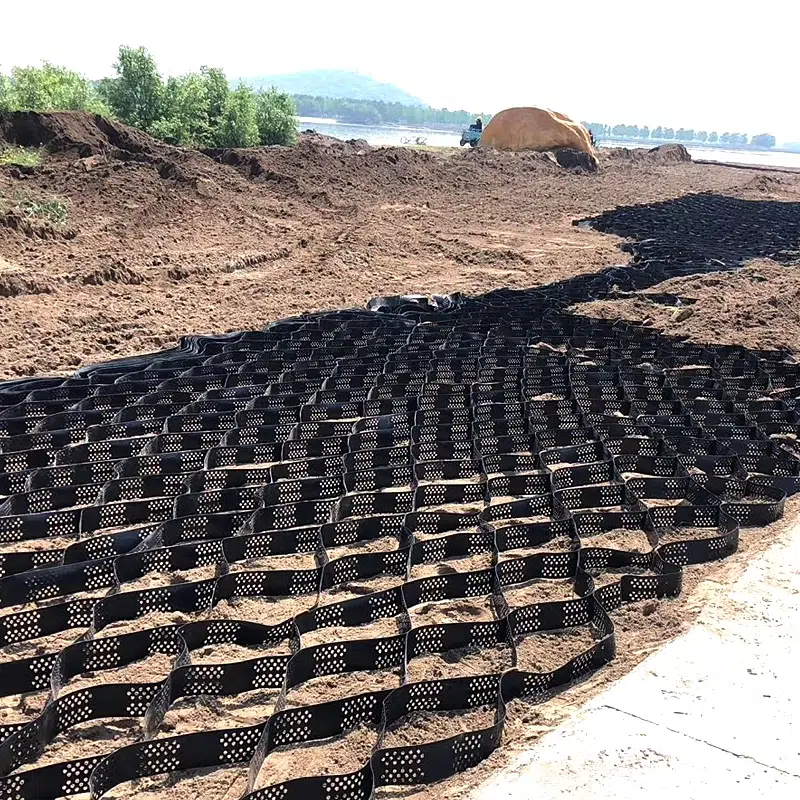
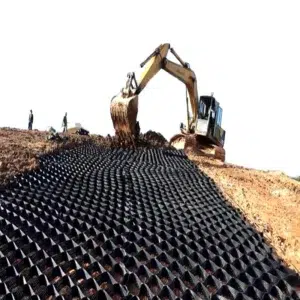
I recall one highway project order located in a rainy coastal region… They had a steep slope that experienced landslides every rainy season. They tried using rocks and mats, but nothing worked. The rainwater always eroded the foundation. Finally, they installed 6-inch thick textured geocells, filled them with local crushed stone, and covered the top with soil.
The result? The slope has remained stable for ten years. Maintenance costs have been reduced to almost zero because there is no longer a need to repair erosion damage. While the initial cost of the material was higher than simple coverings, the life-cycle cost was significantly lower.
In another case, a residential developer used it for slope reinforcement in a retention pond. They needed the slope to look green and lush while being able to withstand fluctuating water levels. By using geocells, they effectively prevented the saturated soil from “collapsing” when the water level dropped. The procurement team saved costs by avoiding expensive concrete lining, resulting in a park-like aesthetic that enhanced property values.
Conclusion
Geocell slope protection offers you stability, erosion control, and green aesthetics in one package. It is the smart, durable choice for modern terrain management.
Ready to secure your slopes? Contact MJY Geosynthetics today for a quote on high-performance geocells.

 English
  Spanish
  Arabic