
What Is Geocell Used For?
Snippet answer: Geocells are HDPE honeycomb panels that confine soil or aggregate to stop lateral movement, spread loads, and control erosion. U use them for driveways and road bases (load support), slopes and embankments (erosion control), retaining walls (backfill confinement), channels (lining), green parking/paths (grass grid), and temporary working platforms. With correct geo cell installation (a.k.a. geocell installation), U cut rutting, reduce base thickness, and boost service life.
Geocell Basics—What U’re Working With
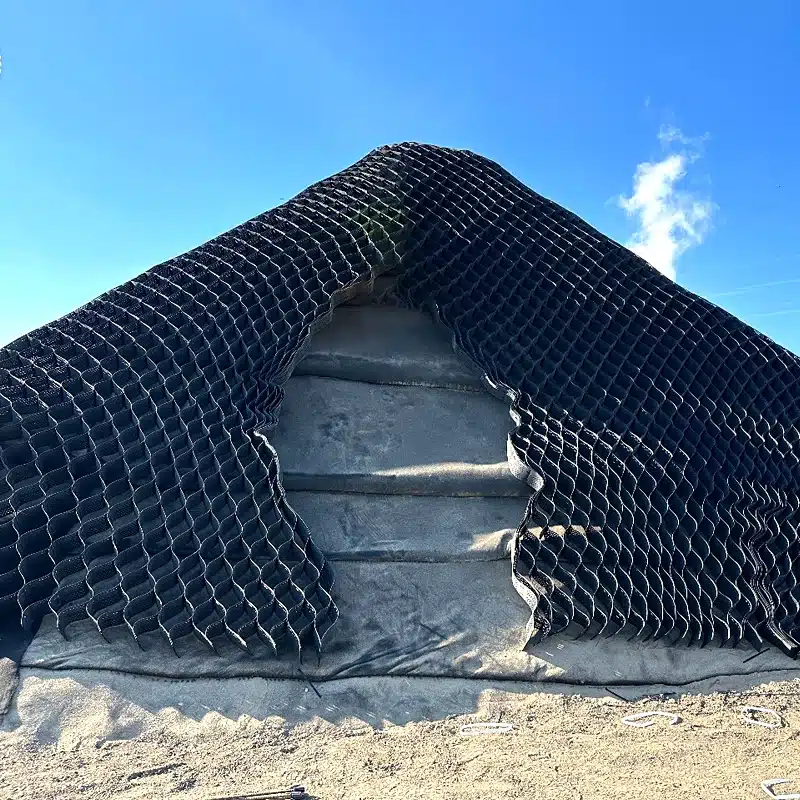
Geocells are 3D cellular structures made from UV-stabilized HDPE. Expanded on site, they form a rigid-yet-flexible matrix that locks infill in place. Many specs call the sheet a geocell membrane because it behaves like a cellular mat across weak ground.
Why they work
- Confinement prevents particle roll and pumping.
- Hoop strength resists shear and distributes load laterally.
- Drainage and separation (with geotextile) keep fines from migrating.
Where Geocells Deliver the Most Value
- Driveways, access roads, and parking pads – Build thinner sections that carry vehicles without rutting. Ideal as a geocell ground grid for driveway.
- Working platforms & laydown yards – Stabilize soft subgrades for cranes and deliveries.
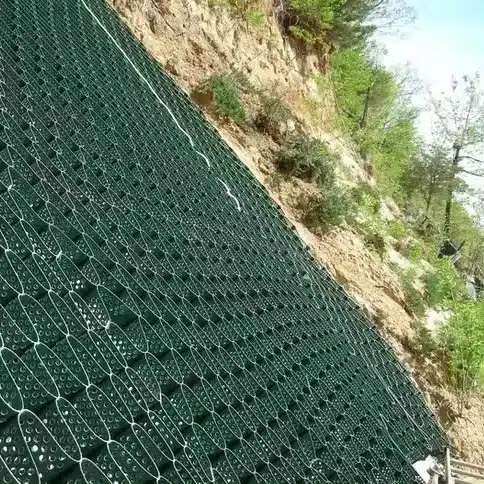
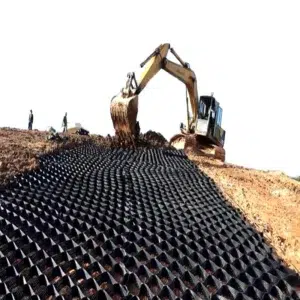
- Slope protection & embankments – Hold soil/topsoil on grades; seed for permanent cover.
- Erosion control & channels – Line ditches, swales, and shoreline toes; resist flow velocities.
- Retaining walls/MSE – Confine reinforced backfill; improve facing stability.
- Trails, paths, and grass grid parking – Keep surfaces green while trafficable.
- Remote/temporary roads – Fast deployment, easy retrieval, lower haul-in volumes.
How Geocells Improve Performance
- Load Support: Confinement spreads wheel loads, reducing subgrade stress and base thickness 25–50% versus unconfined aggregate (project dependent).
- Erosion Control: Cells slow runoff and anchor roots; with topsoil + seed, U get durable vegetated armor.
- Differential Settlement Control: The matrix bridges minor soft spots, limiting reflective rutting.
- Edge Integrity: Proper tie-ins stop edge shoving where aggregate meets hardscape.
Quick Spec Guide (Match Use to Section)
| Use Case | Typical Cell Height | Infill | Add-Ons That Matter |
|---|---|---|---|
| Driveway / Light vehicles | 6” | 3/4” minus, well-graded | Nonwoven geotextile separator; edge restraints |
| Service vans / Frequent loads | 8” | 3/4” minus + choke | Tighter anchor spacing; crown/drainage plan |
| Steep slopes / Erosion | 4–6” | Topsoil + seed or sand/soil blend | Crest/toe anchors; erosion blanket where needed |
| Channels / High flow | 4–6” | Angular stone or concrete | Geotextile underlayment; check hydraulics |
| Grass grid parking | 4” | Sandy loam, seed | Subdrain on clays; trafficking limits during establishment |
| Retaining backfill (MSE) | 4–6” layers | Granular backfill | Geogrid layers between lifts; drainage composite |
Tip: Reference expanded panel area for take-offs and add 5–8% for trims and curves.
Geo Cell Installation—Field-Ready Sequence
Use this for both geo cell installation and formal geocell installation submittals.
- Subgrade prep Strip organics/soft pockets; grade for 1–2% runoff; compact to spec (typ. 92–95% Mod/Proctor).
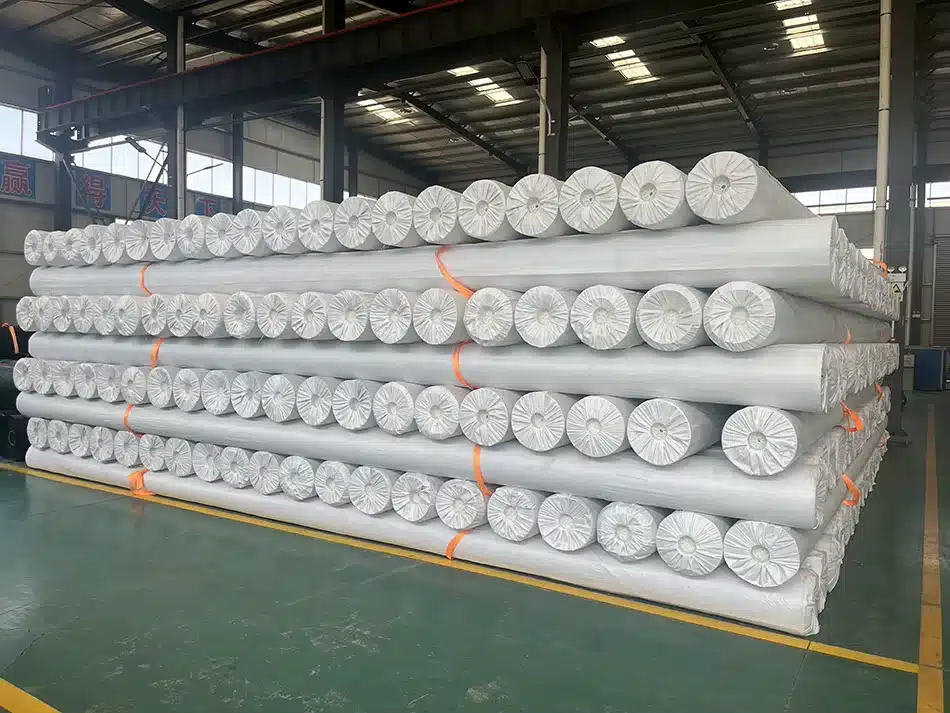
- Separator Roll nonwoven geotextile across the footprint; overlap seams 6–12”.
- Deploy & connect Expand panels square to traffic; connect sheets with keys/clips or UV-rated ties—no gaps.
- Anchor Pin corners, seams, and perimeters first; field pins ~3–5 ft. Tighten spacing at curves and transitions.
- Infill & compact Place in 4–6” lifts. Compact each lift to refusal; finish flush with cell tops (avoid overfill).
- Finish & tie-ins Choke with fines for driving surfaces or seed/mulch vegetated areas. Tuck 6–12” under adjacent asphalt/concrete.
Common pitfalls to avoid
- Skipping geotextile → fines pumping and early rutting.
- Sparse anchoring → panel creep at edges and crowns.
- Overfilling cells → shoving and surface waves.
- No drainage plan → freeze-thaw heave and soft spots.
Maintenance & Service Life
- Semi-annual walk-throughs: Top up localized settlement, re-compact, reseed bare spots.
- Keep it covered: Protect exposed cells with infill or vegetation to limit UV.
- Design life: With correct spec and upkeep, U expect long service in driveways, slopes, and channels.
Procurement—Choosing a Geocell Supplier (What to Ask)
- Resin & UV package: HDPE with proven carbon black/UV stabilization.
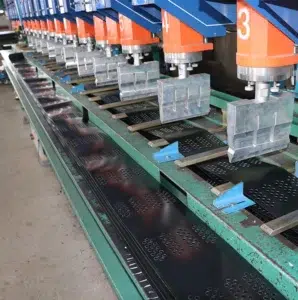
- Dimensional consistency: Panel height, weld strength, and expanded area tolerances.
- Documentation: QA/QC reports, test data, and installation guide.
- Logistics: Lead times, palletization, and coverage per load for your region.
- Tech support: Pre-bid section design help and on-site guidance for first installs.
Why Partner with MJY (Factory-Direct)
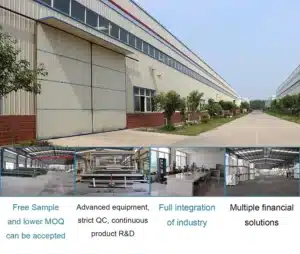
U get ISO-aligned production, custom heights/cell sizes, nonwoven geotextile and accessory kits, export documentation, and fast global shipping. As your geocell supplier, MJY supports take-offs, method statements, and value-engineered alternatives that pass inspections the first time.
Conclusion
When ground is weak or slopes won’t hold, geocells give U a faster, lighter, and longer-lasting solution. Specify the right geocell membrane, follow the step sequence for geocell installation, and lock in drainage, anchoring, and compaction. For driveways, slopes, channels, and retaining systems, U’ll cut rutting, stabilize grades, and extend service life—without pouring full-depth concrete. Need a bill of quantities or a stamped method statement? Engage a proven geocell supplier like MJY for design help, materials, and field support—from quote to commissioning.

 English
  Spanish
  Arabic