
What is with the geonet?
You handle water, pressure, and schedules. You need thin drains that keep flowing under load. This guide explains what is geonet, how geonetting performs, where geonets fit, and how to buy with confidence.
What is geonet in simple terms
A geonet is a stiff, open polymer core that moves liquid or gas within its plane. Most geonet geosynthetics use HDPE ribs arranged in bi-planar or tri-planar profiles. When you laminate nonwoven filters to one or both faces, the product is a geonet fabric or geonet geotextile (often called a geonet drainage composite). The composite filters fines, protects membranes, and maintains in-plane flow under sustained pressure.
Common aliases you will see: geonetting, geonet fabric, geonet geotextile, geonet geosynthetics.
How geonets work
- Rib geometry creates continuous channels for in-plane transmissivity.
- Bi-planar cores handle general duty; tri-planar cores keep higher flow at higher stress and temperature.
- Geotextile faces match soil with AOS and permittivity so fines do not clog the core.
- The system replaces thick gravel drains, lowers dead load, and speeds installation.
Key properties to name:
- Transmissivity at your confining stress, gradient, temperature, and time
- Core thickness at pressure and compressive creep
- Geotextile AOS (O90) and permittivity for the soil
- Interface shear against soil and geomembrane
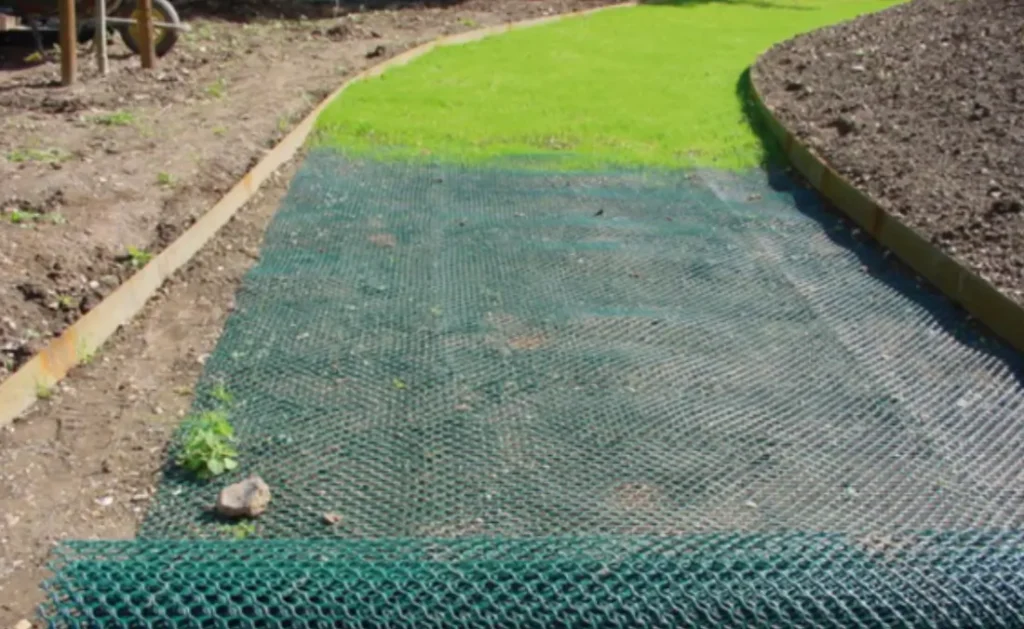
Geonets application: where they add value?
| Scenario | What the layer does | Why you use it |
|---|---|---|
| Landfills and mining | Leachate collection, leak detection, gas venting | High long-term flow, thin section, fast placement |
| Tunnels and basements | Drain behind waterproofing to galleries | Continuous paths, fewer penetrations |
| Retaining walls/abutments | Back-drain to reduce hydrostatic pressure | Lower face loads, quicker backfill |
| Podiums and green roofs | Drainage and protection above membranes | Light weight, root-safe with geotextile faces |
| Roads, rail, sports fields | Edge drains and sub-surface dewatering | Rapid recovery after storms, less rutting |
Use single-faced composites when flow comes from one side; use double-faced when both sides see water or soil contact.
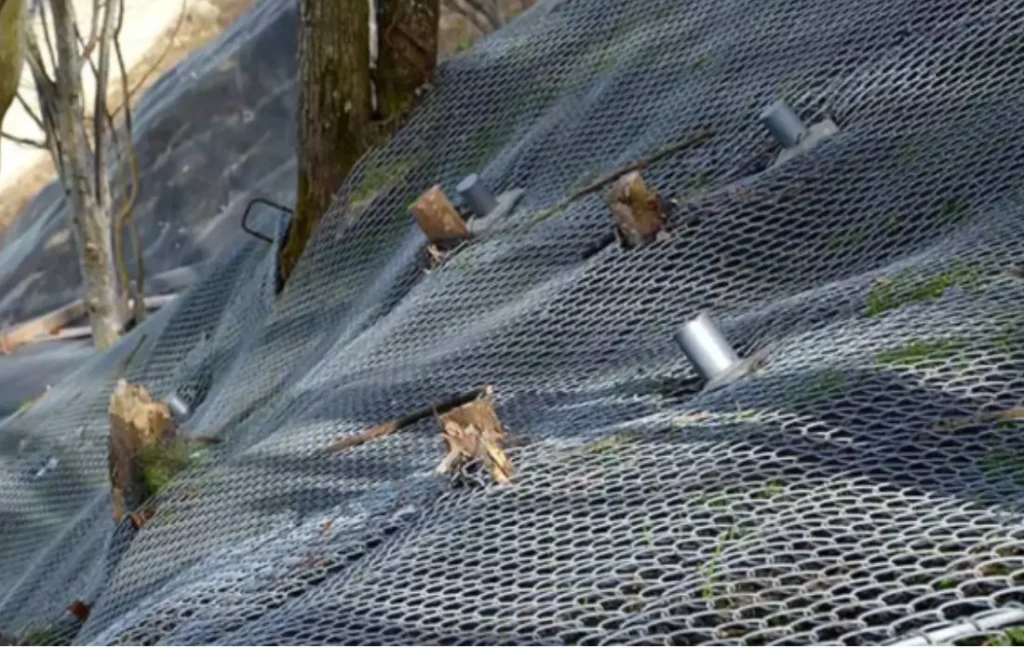
Fast selection guide
Match load, flow, time, and interface.
- Load: estimate confining stress from overburden, surcharge, and traffic.
- Flow: calculate required discharge; pick long-term transmissivity at that stress and temperature.
- Time/temperature: check creep and hot climates; require long-term data, not index values.
- Interface: select geotextile faces with compatible AOS and permittivity; confirm interface shear on slopes.
Typical tests to request:
- Transmissivity: ASTM D4716 or ISO 12958
- Thickness: ASTM D5199
- Compressive creep/flow reduction: product long-term data (method per supplier)
- Geotextile filter: ASTM D4491 (permittivity), ASTM D4751 or ISO 12956 (AOS)
- Interface shear: ASTM D5321 (as applicable)
Installation pointers that prevent callbacks
- Prepare a smooth, firm substrate; remove sharp points that dent ribs.
- Run laps in flow direction; shingle toward outlets.
- Keep outlets daylighted and protected from fines.
- Avoid point loads on exposed cores; place cover layers in controlled lifts.
- Record roll numbers and lot labels for submittals and closeout.
Frequent mistakes: sizing by index transmissivity, choosing the wrong AOS, crushing ribs during cover placement, and blocking outlets.
RFQ checklist you can paste into emails
- Product: geonet core or geonet geotextile drainage composite
- Geometry: bi-planar / tri-planar; core thickness at ___ kPa
- Transmissivity: ≥ ___ m²/s at ___ kPa, i = ___, T = ___ °C (long-term)
- Geotextile faces: nonwoven PP/PET; AOS ___; permittivity ___ s⁻¹
- Interface shear: against specified soil and geomembrane
- Roll size: width ___ m; length ___ m
- Documentation: lot-linked mill certs; recent third-party test reports matching supplied product
- Packaging: edge protection; moisture wrap; labeled roll/lot IDs
- Delivery: lead time ___ days; Incoterms ___
- Accessories: connection tape/adhesive; outlet fittings if required
Why source from MJY?
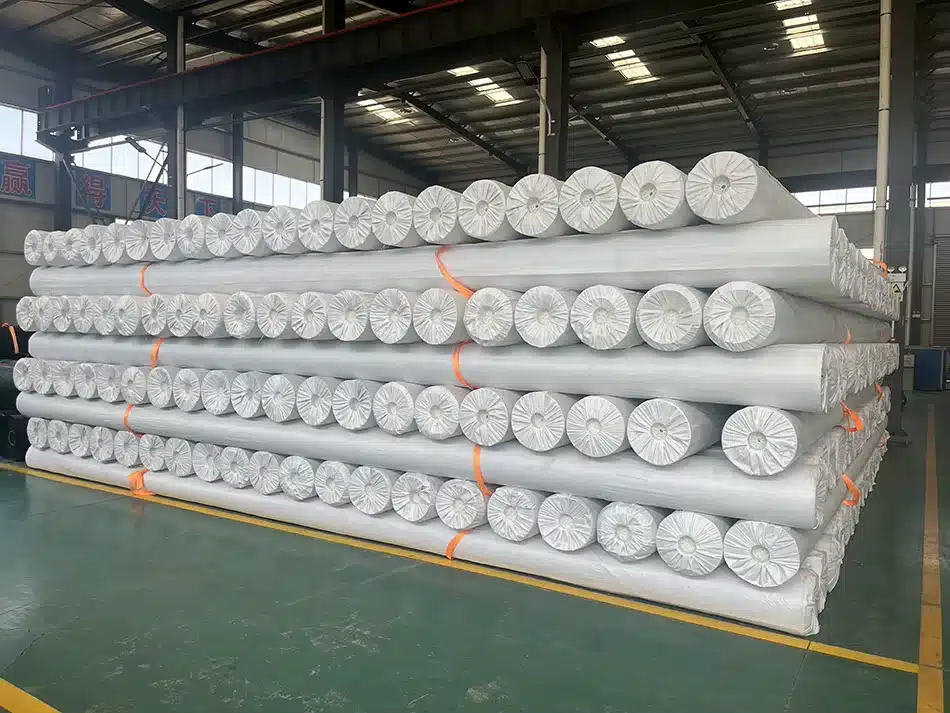
MJY supplies geonetting and full geonet geosynthetics packages: cores, single- and double-faced composites, matched geotextiles, and accessories. You get lot-linked certificates, third-party transmissivity at your stress, gradient, and temperature, stable lead times, and installer checklists for landfills, tunnels, podiums, and wall back-drains.
FAQ
Q: What is geonet compared with drainage board?
A: Geonet provides engineered in-plane flow with certified transmissivity under load; drainage boards vary widely and often lack long-term data.
Q: Do you always need geotextile on both sides?
A: No. Single-faced is common against a geomembrane with soil on one side. Choose double-faced when both sides contact soil or when you need bidirectional collection.
Q: Can geonets replace gravel drains?
A: Yes in many layers, provided long-term transmissivity at your stress and temperature meets the design flow with safety factors.
Q: How do you size the core type?
A: Start with the confining stress. Move from bi-planar to tri-planar when you need higher retained flow under higher stress and heat.
Conclusion
Use geonets where thin, reliable in-plane drainage matters. Specify long-term transmissivity, match the geonet fabric faces to the soil, and keep outlets clear. With mjy as your documented source, your geonets application installs faster and passes inspection.

 English
  Spanish
  Arabic