Does geotextile fabric let water through?
You want stable ground and clean drainage, but water keeps sitting there. You ask one key question. Does geotextile fabric let water through?
Yes. Geotextile fabric lets water pass, but at different rates. Non woven geotextile fabric drains faster and filters fines. Woven geotextile fabric drains slower but adds strength and separation. Choose by soil, flow, and load.
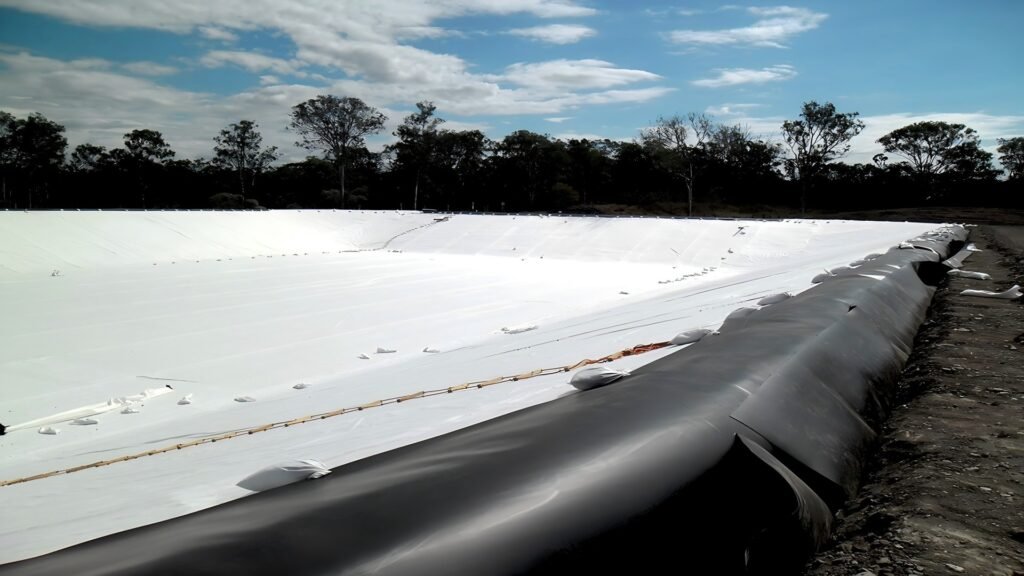
I keep this simple and practical. I explain how water moves through non woven and woven fabrics. I show what to check on a spec sheet. You can match fabric to soil and avoid clogs, rutting, and callbacks.
Does non woven geotextile fabric let water through?
You want water to flow out while soil stays put. You also want fewer ruts and less mud pumping after rain.
Yes. Non woven geotextile fabric lets water through well. It uses a thick, needle-punched web that gives high permittivity and stable filtration. It is the first choice for drainage, French drains, driveways, and retaining wall backdrains.
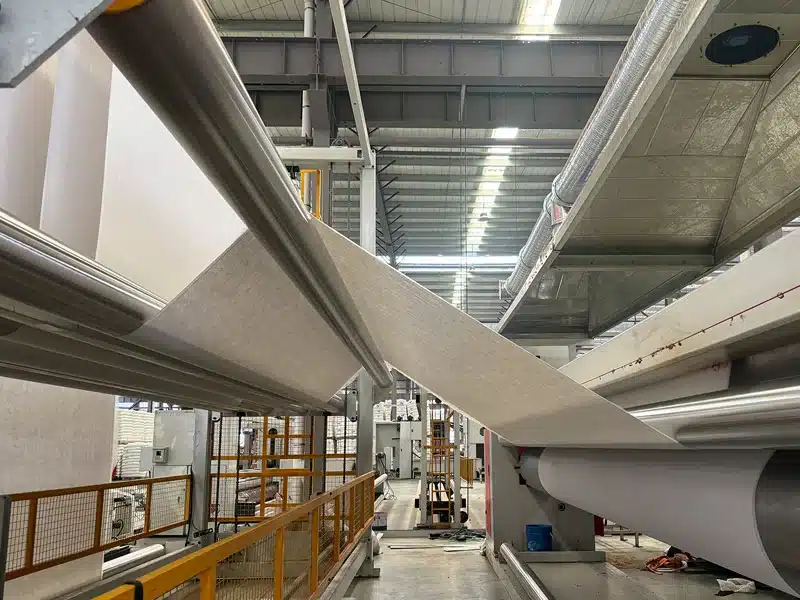
How and why water passes a non woven
Non woven geotextile fabric is a random fiber mat with millions of tortuous paths. Water passes normal to the plane and also in-plane. The structure resists blinding when you match the opening size to the soil. Typical permittivity is high. You will often see values from about 0.5 s⁻¹ up to 3.0 s⁻¹, depending on weight and polymer. Thicker grades keep flow under load because they hold pore volume when crushed by aggregate.
You still need to size it. The key filter number is AOS (apparent opening size). Many data sheets show AOS as O95 by ASTM D4751 or O90 by ISO 12956. You want the opening small enough to retain soil, but not so tight that it clogs. A common rule is to select AOS near the soil D85–D90. You also check permittivity by ASTM D4491. For a French drain or retaining wall drain, I prefer a non woven with permittivity above about 1.0 s⁻¹ when practical.
Clogging risk is real in silts and clays. You reduce it with correct AOS, a clean, well-graded drainage layer, and good construction practice. Avoid fines washing from the trench walls into the filter during backfill. Place fabric flat, with overlaps downstream, and avoid sharp folds. Do not smear clay on the fabric face. That smear acts like a cap.
You also check survivability. Look at grab or wide-width tensile, CBR puncture (ASTM D6241 or EN ISO 12236), and thickness under load (ISO 9863-1). Roads and yards need enough weight and strength to survive placement of angular stone. For light driveways, a 150–200 g/m² non woven is common. For heavy duty work, many buyers choose 300 g/m² or more for cushion and durability.
| Property | What it means | Typical non woven value | How I specify in bids |
|---|---|---|---|
| AOS (O95 / O90) | Pore size for soil retention | 0.075–0.60 mm | Match to soil D85–D90 |
| Permittivity | Cross-plane water rate | 0.5–3.0 s⁻¹ | Higher for drains and walls |
| Thickness under load | Pore volume under stress | 1.5–4.0 mm (at set kPa) | Keep flow when compacted |
| CBR puncture | Placement survivability | 1.5–4.0 kN | Higher for angular stone |
| Mass per area | Durability and cushion | 150–400 g/m² | Pick by duty and traffic |
Does woven geotextile fabric let water through?
You want strong separation and low stretch. You also want some drainage without losing fines.
Yes. Woven geotextile fabric lets water through, but less than a non woven. Slit-film woven has low permittivity. Monofilament woven drains better and filters cleaner. Pick woven when you need reinforcement and separation with controlled flow.
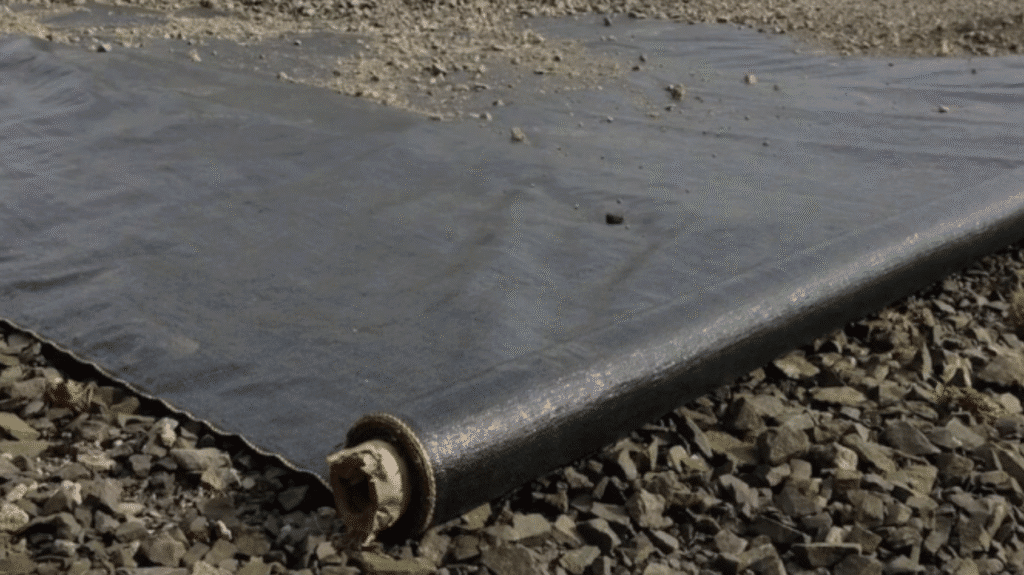
Where woven flows, and where it struggles
Woven geotextile fabric uses yarns that cross at 90 degrees. That tight geometry gives high tensile strength and low elongation. Water does pass, but the flow path is shorter and the openings are uniform. There are two common families. Slit-film woven uses flat tapes. It has very low permittivity and tends to trap fines. It is strong and cost-effective for separation on firm subgrades. Monofilament woven uses round filaments. It has larger, stable pores, better permittivity, and cleaner filtration. It works well behind riprap, on coastal filters, and under gravel where you need both strength and water flow.
You size woven the same way. Check AOS for soil retention. Check permittivity for cross-plane flow. Typical slit-film permittivity can be as low as about 0.05–0.20 s⁻¹. Monofilament woven often reaches 0.3–0.8 s⁻¹. These are guide ranges. Always read the data sheet. For soft subgrades with pumping fines, a non woven may be safer as the primary filter. For a firm subgrade that only needs separation and tensile, a woven may cut rutting and reduce base thickness.
You also look at seam strength and roll handling. Many woven products come in wide rolls that speed placement. Place with correct overlaps. Avoid tension that creates “banjoing.” Keep wrinkles out before you dump aggregate. Use gravel with limited fines when you want water to pass through the system.
| Woven type | Permittivity (guide) | AOS range | Strength profile | Best use case |
|---|---|---|---|---|
| Slit-film woven | 0.05–0.20 s⁻¹ | 0.212–0.60 mm | Very high tensile, low stretch | Separation on firm subgrades, haul roads |
| Monofilament woven | 0.30–0.80 s⁻¹ | 0.30–1.00 mm | High tensile, cleaner filtration | Filters behind riprap, coastal, under drains |
| Hybrid woven | 0.20–0.60 s⁻¹ | 0.21–0.85 mm | Balanced behavior | Drainage plus reinforcement combos |
FAQ
Q: Does geotextile fabric let water through under a driveway?
A: Yes. A non woven geotextile fabric driveway allows water through while it separates soil and base. It reduces pumping and rutting if you match AOS and permittivity to the soil.
Q: Does non woven geotextile fabric let water through when soil is clay?
A: Yes, but be careful. Clays can blind the surface. Choose a smaller AOS, use a clean drainage stone, and avoid smearing clay. Many buyers add a thin sand filter between clay and fabric.
Q: Does woven geotextile fabric let water through enough for French drains?
A: Often no for slit-film woven. It can clog. A monofilament woven may work, but most installers pick a non woven for French drains because it has higher permittivity and more forgiving filtration.
Q: Which side of the fabric faces up for drainage?
A: Most products are non-directional. Place the roll flat, keep overlaps with flow, and avoid stretching. Follow the manufacturer’s seam and overlap guidance.
Q: What test values do I look for on a data sheet?
A: Look for AOS (O95 or O90), permittivity (ASTM D4491), transmissivity for in-plane flow (ASTM D4716), CBR puncture (EN ISO 12236), and tensile/elongation (ISO 10319 or ASTM D4595).
Q: Will a geotextile stop water if I compact hard on top?
A: No. It still lets water through as designed, but very high loads reduce pore volume. That is why thickness under load matters for long-term flow.
Q: Does geotextile fabric let water through if it is covered with mud?
A: It should, if you sized AOS for the soil and used clean backfill. Heavy mud on the face can blind it. Keep surfaces clean during installation.
Q: Does geotextile fabric let water through fast enough for a retaining wall?
A: Yes, if you choose the right product. Most walls use non woven behind the backfill because of higher permittivity and reliable filtration.
Conclusion
Both types let water through. Non woven drains faster and filters better. Woven adds strength with lower flow. Select by soil, AOS, permittivity, and load to avoid clogs.