What Is Geotextile Fabric Used For?
You need bases that don’t pump, pavements that don’t rut, and walls that drain cleanly year-round. Geotextile fabric—woven or non woven geotextile fabric—does that job by separating layers, filtering water, and spreading loads so your structures last longer with fewer callbacks. Below is a practical guide you can hand to crews and share with buyers.
What Is Non Woven Geotextile Fabric Used For?
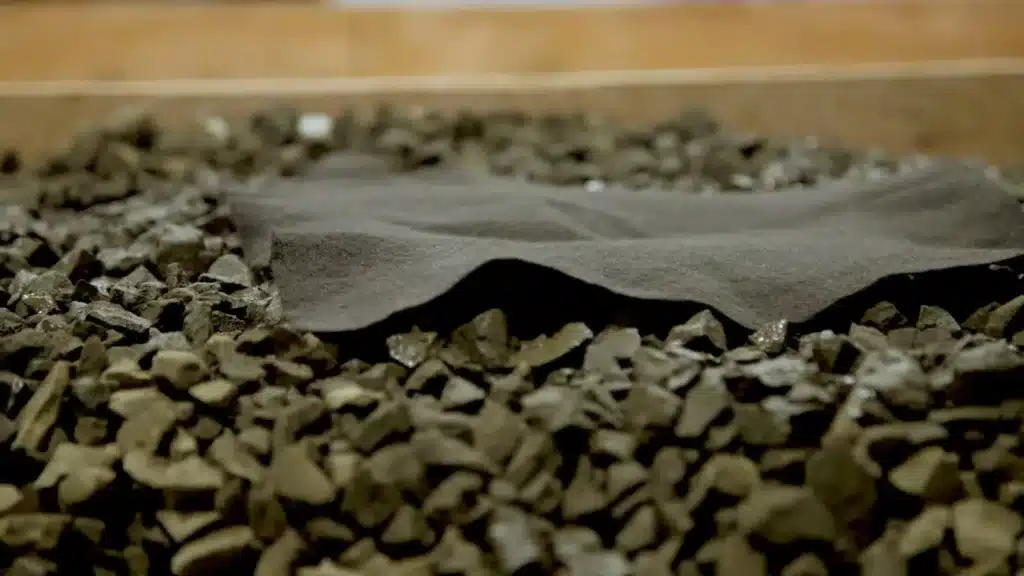
Non-woven geotextiles are needle-punched mats with high permeability. When someone asks “what is non woven geotextile fabric used for?”, point to these core applications:
- Separation + stabilization under granular bases Keep subgrade fines out of your base course for roads, yards, and geogrid for driveway systems (often paired with base course and, where needed, geogrid).
- Filtration + drainage behind structures Retaining walls, french drains, edge drains, and swales—allow water to pass while holding soil in place to avoid clogging.
- Protection (cushion) layers Under geomembranes, liners, and waterproofing to prevent puncture from angular aggregates or subgrade irregularities.
- Erosion control under riprap and gabions Acts as a filter layer so armor stone stays seated while fines don’t wash out.
- Landscaping + hardscape bedding Under pavers and paths to reduce mixing and weed pressure while maintaining water flow.
- Pipe wrapping and utility trenches Encases perforated pipes or surrounds trench backfill to keep systems free-flowing.
What Is Woven Geotextile Fabric Used For
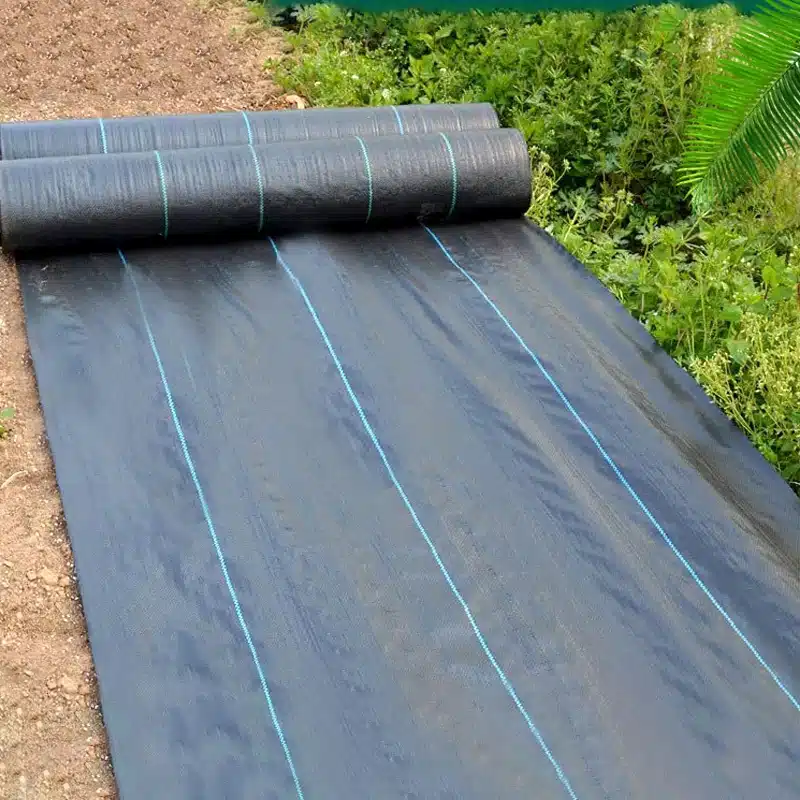
Woven geotextiles are interlaced yarns with high tensile strength and low elongation—ideal where reinforcement and long-term separation are critical. So, what is woven geotextile fabric used for?
- Subgrade reinforcement and separation Stabilize weak soils under access roads, logistics yards, laydown areas, and agricultural tracks; reduce aggregate thickness and rutting.
- Load support under heavy traffic Parking lots, container yards, and haul roads where tensile stiffness helps distribute loads and resist lateral spread.
- Silt fence and sediment control (select woven grades) Project perimeter control where specified woven slit-film fabrics are required.
- Rail + industrial platforms Separation of ballast from subgrade; maintains track geometry and reduces fouling.
Quick rule of thumb: use non-woven when filtration and drainage dominate; pick woven when you need higher tensile reinforcement with separation. Many sections combine both during design.
Choosing the Right Geotextile Fabric (Fast Spec Guide)
- Function first: Separation, filtration, drainage, protection, or reinforcement—map each location on the plan to a function before you choose geotextile type.
- Soil + water conditions: Fine silts/clays and high hydraulic gradients favor non-woven geotextiles for filtration; stiff bases over soft subgrades often favor woven geotextile fabric for reinforcement.
- Construction efficiency: Rolls must match crew handling—confirm geotextile fabric roll widths, overlaps, and seam methods per spec.
- Compatibility: If you’re also using geogrids, confirm survivability and placement order (geogrid above the geotextile in most base applications).
Installation Essentials (Field-Ready)
- Subgrade prep: Remove organics, proof-roll, and knock down high spots.
- Unroll in traffic direction: Minimize wrinkles; maintain specified overlaps (follow project spec).
- Hold in place: Use pins/ballast at edges and overlaps before placing aggregate.
- Placement: Place and spread the first lift without driving directly on fabric; avoid blade contact.
- Quality checks: Verify overlaps, tears, and uplift before compaction; repair per spec.
Conclusion
When durability and cost control matter, geotextile fabric is your simplest win. Use non woven geotextile fabric where filtration, drainage, and cushioning are critical; use woven geotextile fabric where reinforcement and long-term separation drive performance. Framed this way, your team answers both key queries—“what is non woven geotextile fabric used for” and “what is woven geotextile fabric used for”—with confidence, and your projects see fewer failures, thinner sections, and cleaner drainage from day one.
If you’re building out standard details or need submittal-ready specs, our team can map functions to woven and non-woven grades by application and soil type, and kit the job with matched rolls, pins, and aggregate guidelines for a clean install.