LEAD IN
Geocell looks simple from the outside, but its real performance depends on material, weld strength, thickness, cell size, and project matching. For buyers, comparing only price can lead to weak panels, poor site performance, and higher repair costs later.
ANSWER SECTION
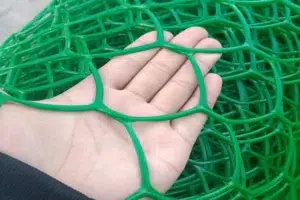
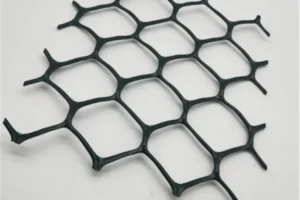
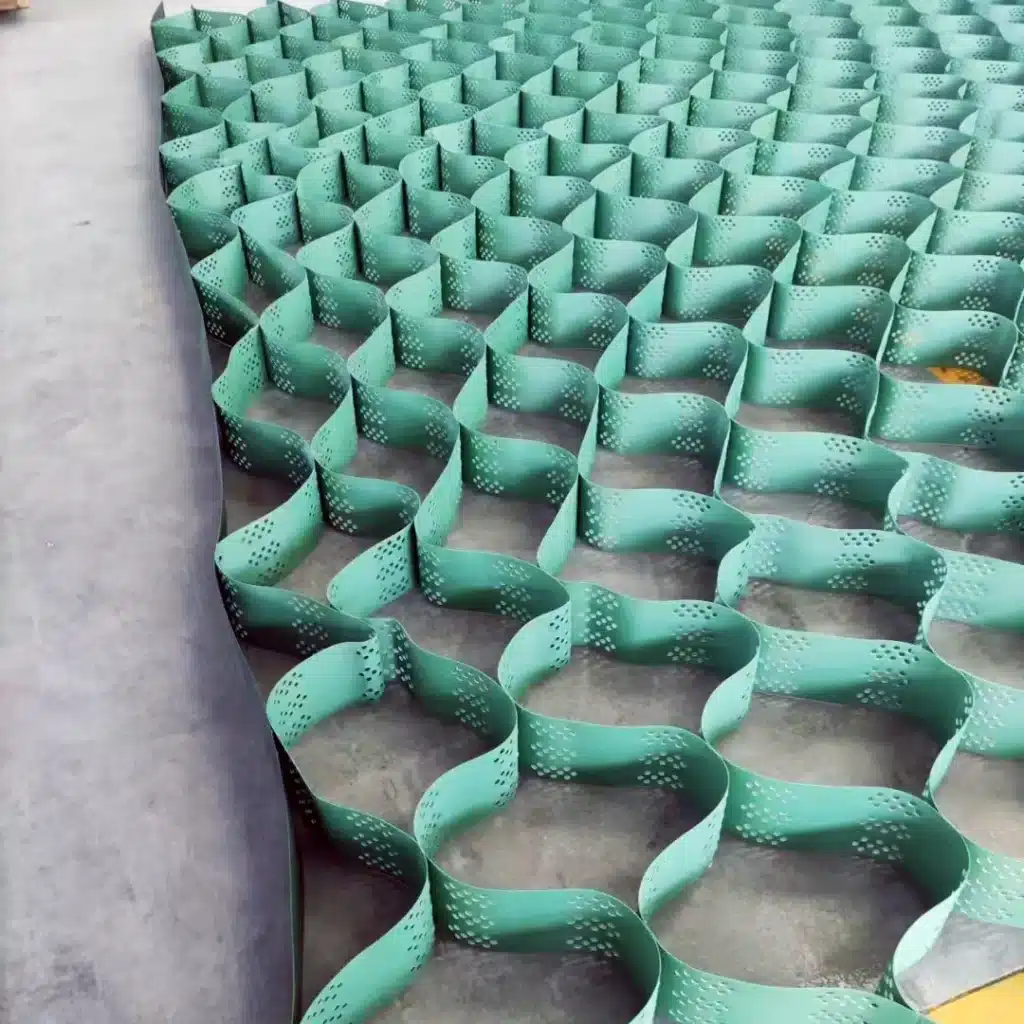
Geocell is a three-dimensional honeycomb geosynthetic material made from polymer sheets, usually HDPE or PP. Its main properties include tensile strength, weld strength, cell height, sheet thickness, flexibility, confinement ability, chemical resistance, UV resistance, and load distribution performance.
READ ON
To judge geocell correctly, buyers should not only ask for the lowest price per square meter. The better way is to check how the raw material, welding process, thickness, and specification match the road, slope, retaining wall, or erosion-control project.
What Are The Main Properties Of Geocell?
The biggest mistake is treating geocell as only a plastic honeycomb panel. In real engineering use, geocell works because its 3D cell structure confines soil, gravel, sand, or concrete and limits lateral movement under load.
Geocell properties should be judged from both material performance and structural performance. Material performance includes polymer type, sheet thickness, tensile strength, UV resistance, and aging resistance. Structural performance includes weld strength, cell height, weld spacing, opening size, and how well the filled material is confined.
For a project buyer, the most important point is not whether the product looks neat in photos. The real question is whether the geocell can keep its shape, hold the infill, resist separation at the welds, and match the project load.
Material Property
Most geocells are made from HDPE or PP sheets. HDPE is widely used because it has good flexibility, chemical resistance, and long-term outdoor performance. PP can also be used in some applications, but the final choice should depend on the project requirement and design specification.
Material quality matters because recycled or unstable raw material can reduce strength, aging resistance, and weld consistency. A low-price geocell may look similar at first, but poor raw material can show problems after transportation, installation, UV exposure, or long-term loading.
Structural Property
Geocell is not a flat reinforcement material. It is a three-dimensional confinement system. Once expanded and filled, each cell helps hold the infill material in place and reduces side movement.
This property is especially important for road bases, slopes, channel protection, and retaining structures. If the cell height is too low, the confinement effect may not be enough. If the weld spacing is not suitable, the cell size may not match the fill material or project load.
Mechanical Property
Mechanical properties include sheet tensile strength, weld strength, junction strength, and resistance to deformation. Among these, weld strength is often the point buyers overlook.
A geocell panel is made from strips connected by welding. If the weld points are weak, the panel may open or tear under tension. For serious projects, weld quality should be checked before bulk order, not after the material reaches the jobsite.
| Property | What It Means | Factory-Side Judgment |
|---|---|---|
| Sheet Thickness | The thickness of the polymer strip | Thicker is not always better, but it must match load and design |
| Cell Height | The vertical depth of the cell | Higher cells usually provide stronger confinement |
| Weld Strength | Strength of the welded joint | Critical for preventing panel separation |
| Tensile Strength | Resistance of the strip to pulling force | Important for load-bearing and slope applications |
| UV Resistance | Resistance to sunlight aging | Important for exposed or delayed-cover projects |
| Perforation | Holes in the strip surface | Useful for drainage and root interaction in some applications |
Why Does Raw Material Affect Geocell Performance?
Raw material decides the base quality before any welding, cutting, or packing happens. If the polymer sheet is unstable, no good-looking packaging or low price can solve the long-term performance risk.
For geocell, buyers usually see the final honeycomb panel. A factory sees the raw material first. Resin quality affects sheet strength, flexibility, weld behavior, aging resistance, and the ability to stay stable under repeated load.
Some buyers only ask, “How much per square meter?” That question is not enough. Two geocells with the same height and weld spacing can perform differently if the sheet material is different.
HDPE Material Stability
HDPE geocell is commonly used in road construction, slope protection, retaining walls, and erosion control because it offers good toughness and chemical resistance. It can be folded for transportation and expanded on site without losing its basic structure when produced correctly.
But HDPE quality is not only about the name of the material. Buyers should also care about resin grade, recycled content, sheet uniformity, and whether anti-aging additives are properly used. These details affect the real service life of the product.
Virgin Material vs Low-Grade Recycled Material
Using low-grade recycled material can reduce cost, but it may also reduce flexibility, tensile strength, and aging resistance. In some temporary applications, buyers may accept lower specifications. But for road, slope, retaining wall, and long-term infrastructure projects, material stability is not a place to cut corners.
The risk is not always visible before installation. Poor material may become brittle, crack during expansion, or lose performance after weather exposure. A serious buyer should confirm the raw material standard before discussing large-volume pricing.
Additives And Aging Resistance
Geocell may face sunlight, temperature change, water, soil chemicals, and repeated loading. Anti-UV and anti-aging additives help improve outdoor stability.
The common misunderstanding is thinking geocell will always be buried immediately. In real projects, materials may stay on site before installation or remain partly exposed during construction. If UV resistance is weak, the sheet can age before the project is even finished.
| Raw Material Factor | Why It Matters | Buyer Should Ask |
|---|---|---|
| Polymer Type | Affects flexibility and chemical resistance | Is it HDPE, PP, or another material? |
| Resin Quality | Affects strength and aging performance | Is the material stable for project use? |
| Recycled Content | Affects consistency and durability | Is recycled material used? If yes, what grade? |
| UV Additive | Affects outdoor exposure resistance | Is UV resistance required for this project? |
| Sheet Uniformity | Affects weld and tensile performance | Can the factory control thickness consistently? |
Why Is Weld Strength One Of The Most Important Geocell Properties?
Weld strength is one of the most important geocell properties because the cell structure depends on welded joints. If the weld points fail, the geocell loses confinement ability.
Many buyers focus on sheet thickness first. Thickness matters, but weld strength is often more critical for field performance. A thick sheet with weak welds can still fail when the panel is expanded, filled, or loaded.
From a factory-side view, geocell quality is not only about the plastic strip. It is also about how consistently each strip is welded into a stable honeycomb structure.
Weld Points Carry Real Stress
During installation, workers expand the panel, fix it with anchors, and fill it with soil, gravel, or concrete. During service, traffic load, slope pressure, water flow, or soil movement can pull on the cell structure.
The weld points must resist these forces. If welding temperature, pressure, time, or strip quality is unstable, the joint can become the weak point of the whole panel.
Good Welding Requires Stable Production Control
Welding is not only a machine setting. It depends on sheet quality, strip surface condition, welding temperature, pressure control, and production consistency.
This is why buyers should not judge geocell only by product photos. A clean surface and nice color do not prove weld strength. For bulk orders, a buyer should ask for technical data, sample testing, or at least clear factory confirmation of weld strength.
Weak Welds Create Hidden Project Risk
Weak welds may not fail during unloading. They may fail when the panel is stretched on site or after infill is placed. At that point, replacement becomes expensive because labor, transportation, and construction schedule are already involved.
This is why the cheapest quote can become the most expensive order. When weld quality is poor, the buyer does not only lose material cost. The buyer may also lose project time and customer trust.
| Weld-Related Point | Poor Judgment | Better Judgment |
|---|---|---|
| Only checking appearance | The panel looks clean, so quality is accepted | Check weld strength and joint consistency |
| Only checking thickness | Thicker sheet is assumed to be stronger | Check both sheet strength and weld strength |
| Only asking price | Lowest quote is selected first | Compare price after confirming specification |
| Ignoring sample expansion | Product is accepted before field handling | Expand sample and check joint behavior |
| Ignoring project load | Same product used for all applications | Match weld strength to road, slope, or retaining wall needs |
How Do Thickness, Cell Height, And Weld Spacing Affect Geocell Use?
Thickness, cell height, and weld spacing decide how geocell works in the project. These specifications are not just numbers on a quotation sheet. They directly affect confinement, load distribution, installation, and cost.
A common buyer mistake is asking for a standard geocell price without explaining the project. But geocell for a light slope protection project is not the same as geocell for road base reinforcement or retaining wall construction.
The right specification should be selected according to soil condition, load requirement, slope angle, infill material, and expected service life.
Sheet Thickness
Sheet thickness affects tensile strength, stiffness, weld behavior, and cost. A thicker sheet can provide stronger resistance in demanding applications, but it also increases material cost and roll weight.
The correct question is not “What is the thickest geocell?” The better question is “What thickness is suitable for this project condition?” A factory should help the buyer match thickness with load and application.
Cell Height
Cell height affects how much infill material the geocell can confine. Higher cells usually provide better confinement, especially for weak subgrade, road base, and load-bearing applications.
Lower cells may be suitable for lighter slope protection or erosion control. If the cell height is too low for the load, the infill may not be held effectively. If the height is too high for a simple project, the buyer may pay unnecessary cost.
Weld Spacing
Weld spacing affects cell opening size after the panel is expanded. Smaller or larger cell sizes can change how the infill locks inside the structure.
For gravel-filled road projects, cell size should match aggregate size and compaction needs. For slope protection, the cell opening should support soil retention, vegetation, or surface stability. For retaining wall use, structural design requirements become more important.
| Specification | Main Function | Buyer Risk If Chosen Wrong |
|---|---|---|
| Sheet Thickness | Supports strength and durability | Too thin may deform; too thick may waste budget |
| Cell Height | Controls confinement depth | Too low may reduce stabilization effect |
| Weld Spacing | Controls cell size | Wrong spacing may reduce infill interlock |
| Perforation | Supports drainage and friction | Unneeded perforation may add cost; missing perforation may affect drainage |
| Surface Texture | Improves friction with fill | Smooth surface may be unsuitable for some slopes |
| Panel Size | Affects installation efficiency | Wrong size may increase labor and overlap loss |
How Should Buyers Match Geocell Properties To Project Applications?
Geocell properties only matter when they match the project. A strong product used in the wrong specification can still create problems. A suitable product does not always need the highest specification, but it must meet the project requirement.
For B2B buyers, this is where factory support becomes valuable. A good supplier should not only send a price list. A good supplier should ask about application, soil condition, load level, slope ratio, infill material, and installation environment.
This is also where export experience matters. Overseas buyers need clear specification confirmation, suitable packing, stable delivery, and documents that match the order.
Road Base Reinforcement
For road construction, geocell is usually used to improve load distribution and reduce lateral movement of the base material. The key properties are cell height, weld strength, tensile strength, and sheet thickness.
If the road carries heavy vehicles, buyers should not choose geocell only by low price. A weak product can deform under load, and the road base may lose stability over time.
Slope Protection
For slope projects, geocell helps hold soil, gravel, or concrete on the slope surface. The key properties are cell opening size, perforation, surface friction, UV resistance, and anchoring compatibility.
If drainage is important, perforated geocell may be more suitable. If vegetation is required, the cell structure should support soil retention and root growth.
Retaining Wall And Erosion Control
For retaining wall and erosion-control projects, geocell must handle soil pressure, water movement, and installation tension. Weld strength and cell stability become very important.
A buyer should confirm whether the product is suitable for the wall height, fill material, slope angle, and construction method. Using a general low-cost geocell without project matching can increase the risk of deformation or failure.
| Application | Key Properties To Check | Factory-Side Recommendation |
|---|---|---|
| Road Base | Cell height, thickness, weld strength | Match product to load level and subgrade condition |
| Slope Protection | Perforation, UV resistance, cell size | Match product to slope ratio and drainage need |
| Retaining Wall | Weld strength, tensile strength, panel stability | Confirm design requirement before quoting |
| Channel Protection | Chemical resistance, water flow resistance | Check water condition and infill type |
| Erosion Control | Surface friction, soil retention, flexibility | Match cell structure to soil and vegetation plan |
| Export Projects | Packing, roll size, documentation | Confirm loading, shipment, and installation needs early |
Why Should Buyers Not Judge Geocell Only By Price?
Price matters in every project, but geocell price without specification is not a real comparison. A low price may come from thinner sheets, lower-grade material, weaker welds, smaller panels, or reduced quality control.
For professional buyers, the correct sequence is clear: confirm application first, confirm specification second, compare factory capability third, and then compare price. If the sequence is reversed, the buyer may save money on the quotation but lose money during construction.
A reliable geocell supplier should be able to explain why one specification fits a project better than another. If a supplier only pushes the cheapest option, the buyer should be careful.
Low Price Can Hide Specification Reduction
Some quotations look attractive because the product has been adjusted downward. The sheet may be thinner. The resin may be lower grade. The weld spacing may be different. The panel size may not match the buyer’s expected coverage.
This is why buyers should compare quotation details line by line. Price per square meter only makes sense when the specification is the same.
Factory Experience Affects Project Support
Geocell is often used in road, railway, slope, retaining wall, drainage, and erosion-control projects. Different projects need different product logic.
A factory with export experience can help buyers avoid wrong specifications, unclear packing, and delivery problems. For overseas projects, this support can be as important as the product itself.
Quality Control Reduces Long-Term Risk
Quality control should include raw material inspection, thickness control, dimension checking, weld quality checking, appearance inspection, and shipment inspection.
This does not mean every order needs complex laboratory testing. It means the factory should have a stable process and clear responsibility before the product leaves the factory.
| Buyer Concern | Wrong Way To Judge | Better Factory-Side Judgment |
|---|---|---|
| Price | Choose the lowest square-meter price | Compare price only after specification is clear |
| Quality | Look at color and surface only | Check material, thickness, weld strength, and sample behavior |
| Supplier | Choose the fastest quotation | Choose a factory that can explain project matching |
| Delivery | Only ask production time | Confirm packing, loading, export documents, and shipment plan |
| Application | Use one geocell for every project | Match product to road, slope, retaining wall, or erosion control |
My View
For geocell buyers, the first mistake is comparing price before comparing specification. A low price is not meaningful if the sheet thickness, weld strength, material grade, and cell size are not the same.
The second mistake is treating geocell as a simple plastic product. In real projects, geocell is a confinement system. Its performance depends on whether the material, welds, and structure can work together after filling and loading.
A serious buyer should confirm five things before bulk order: raw material, weld strength, sheet thickness, project application, and export support. These points decide whether the geocell is only cheap on paper or actually suitable for construction.
As a factory-side recommendation, I would not push buyers to choose the highest specification every time. I would push buyers to choose the correct specification. That is the difference between professional procurement and simple price shopping.
Conclusion
Geocell properties should be judged by material quality, weld strength, thickness, cell height, cell spacing, and application fit. For project buyers, the safest decision is to confirm technical requirements first and compare price only after the specification is clear.