A pond liner can be good material and still leak if the underlay fails to protect it.
Under a pond liner, nonwoven geotextile is commonly used as a protective underlay when the subgrade has stones, roots, rough soil, concrete, or uneven contact points. The underlay should be selected by puncture risk, liner thickness, soil condition, water pressure, and installation handling.
The liner is the waterproof barrier. The underlay is the cushion and protection layer. Confusing those jobs can lead to wrong material orders and expensive leak repairs.
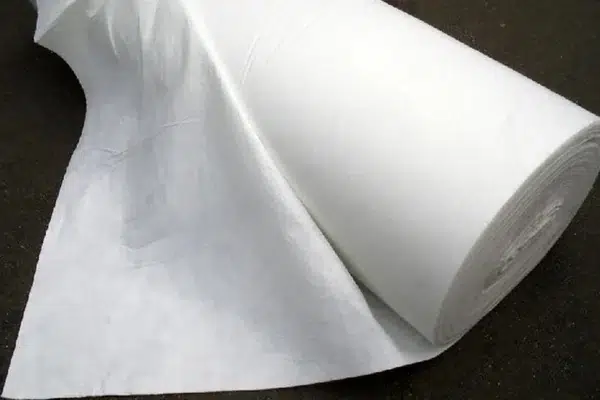
Send pond size, liner thickness, subgrade condition, stone risk, and water depth to compare underlay and HDPE liner options.
Request a pond liner underlay checkWhy Pond Liners Need Underlay
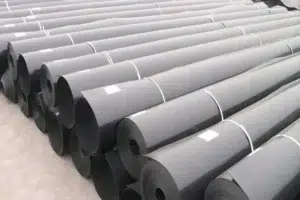
Pond liner underlay reduces puncture and abrasion risk between the liner and the ground. HDPE geomembrane is the barrier layer, and its quality is often evaluated through specifications such as GRI GM13. [1] But even a good liner can be damaged by sharp stones or rough subgrade.
Underlay does not replace subgrade preparation. The site should still remove sharp objects, smooth high points, compact soft pockets, and avoid dragging liner panels over debris. The underlay adds a protective margin where contact risk remains.
Field Note: We have seen pond projects where the buyer chose a suitable liner thickness but skipped underlay on rocky ground. The leak was not a material defect. It was a puncture pathway created before the pond was even filled.
Best Underlay Material for Most Pond Liners
Nonwoven geotextile is usually the practical underlay choice for HDPE pond liners. It provides cushioning, separation, and protection while still allowing some water movement around the layer when needed.
| Underlay option | Where it fits | Buyer warning |
|---|---|---|
| Nonwoven geotextile | Common pond liner cushion and protection layer | Select by puncture risk and weight, not only price |
| Sand layer | Small ponds with clean material available | Can move, wash out, or hide sharp points |
| Old carpet or fabric | Not recommended for engineered ponds | Unknown durability and contamination risk |
| No underlay | Only for very clean prepared subgrade | High risk on rocky or rough sites |
| Geotextile plus sand | Higher protection needs | Check drainage and installation sequence |
Puncture Risk and Geotextile Weight
The heavier underlay is not always automatically correct, but puncture risk must be respected. Stones, roots, concrete edges, compacted aggregate, and foot traffic during installation can all damage the liner before operation begins.
Index puncture resistance testing is one way geosynthetic products are compared for puncture-related behavior. [2] For buyers, the practical point is to describe the subgrade and liner thickness so the supplier can recommend a suitable geotextile weight.
QC Check: Ask whether the underlay recommendation is for smooth soil, rocky soil, concrete, or aggregate contact. A light fabric that works under a small garden pond may not be enough for an industrial pond or reservoir edge with rough preparation.

Drainage and Soil Conditions
Underlay selection should also consider water movement and soil migration. If water can collect below the liner, drainage paths, venting, or subgrade design may need review. Geotextile has filtration properties, so opening size and permittivity can matter when water and fines are present. [3] [4]
This does not mean the geotextile waterproofs the pond. It usually allows water to pass. The HDPE geomembrane stops seepage. The geotextile protects, separates, and may help manage contact conditions around the liner.
Installation Details That Protect the Liner
A good underlay only works if the installation sequence protects it from damage. Lay the fabric flat, overlap panels correctly, avoid wrinkles that create hard ridges, and keep construction traffic controlled before the liner is placed.
| Installation check | Why it matters |
|---|---|
| Remove sharp objects | Underlay should not be asked to hide bad preparation |
| Use enough overlap | Gaps expose the liner to puncture points |
| Avoid dragging liner | Dragging can move underlay or create abrasion |
| Protect anchor trenches | Edges often see higher stress and rough contact |
| Check water depth | Higher hydrostatic pressure increases contact stress |
RFQ Details for Pond Liner Underlay
A useful RFQ should include pond size, liner thickness, subgrade condition, expected water depth, stone risk, slope angle, roll width, and whether the underlay is below, above, or both sides of the liner. These details let the supplier compare fabric weight and puncture protection more realistically.
For material matching, compare MJY geotextile underlay fabric with HDPE geomembrane liner. For broader liner choices, review geomembrane products before ordering a pond liner system.
Expert Insight: The cheapest underlay is often cheap because nobody described the ground. If the subgrade is sandy and clean, the underlay requirement may be modest. If the pond is rocky, steep, or industrial, the protection layer deserves more attention than a small unit-price saving.
My View
My view is that pond liner underlay should be treated as insurance for installation quality, not an optional accessory added at the end. It will not fix a poorly prepared subgrade, and it will not make a weak liner strong. But when selected correctly, it reduces puncture risk, protects the liner during placement, and gives the buyer more confidence before filling. The best decision comes from matching underlay weight and liner thickness to the real ground condition.
Conclusion
For most pond liner projects, nonwoven geotextile is the practical underlay choice. Select it by puncture risk, subgrade condition, liner thickness, and installation method.
FAQs
Can I use sand instead of geotextile underlay?
Sometimes on clean small ponds, but sand can move or hide sharp points. Nonwoven geotextile is more controlled for many engineered liner systems.
Does pond liner underlay make the pond waterproof?
No. The geomembrane liner provides waterproofing. The underlay protects the liner from puncture and abrasion.
What geotextile weight should go under a pond liner?
It depends on liner thickness, subgrade roughness, stones, water depth, and installation traffic. A supplier should check these details before recommending weight.
References
- Geosynthetic Institute GRI GM13 Specification for HDPE Geomembranes ↩
- ASTM D4833 Standard Test Method for Index Puncture Resistance of Geomembranes and Related Products ↩
- ASTM D4751 Standard Test Method for Apparent Opening Size of Geotextiles ↩
- ASTM D4491 Standard Test Methods for Water Permeability of Geotextiles by Permittivity ↩