
Difference Between Geogrid and Geosynthetics: Materials, Functions, and Applications Explained
In ground engineering and infrastructure projects, choosing the wrong reinforcement or separation material can directly lead to settlement, cracking, or premature failure. Many buyers and engineers ask the same question before sourcing: what is the real difference between geogrid and geosynthetics? Understanding this difference is critical for cost control, performance, and long-term durability
The difference between geogrid and geosynthetics lies in material structure, primary function, and application focus. Geogrid is a reinforcement-focused geosynthetic designed for load transfer and soil stabilization, while geosynthetics is a broader category covering separation, filtration, drainage, protection, and containment.
Read on to make the right specification decision with confidence.
What are the differences between geogrids and geosynthetic materials in terms of their materials?
Geogrid material: engineered for tensile reinforcement
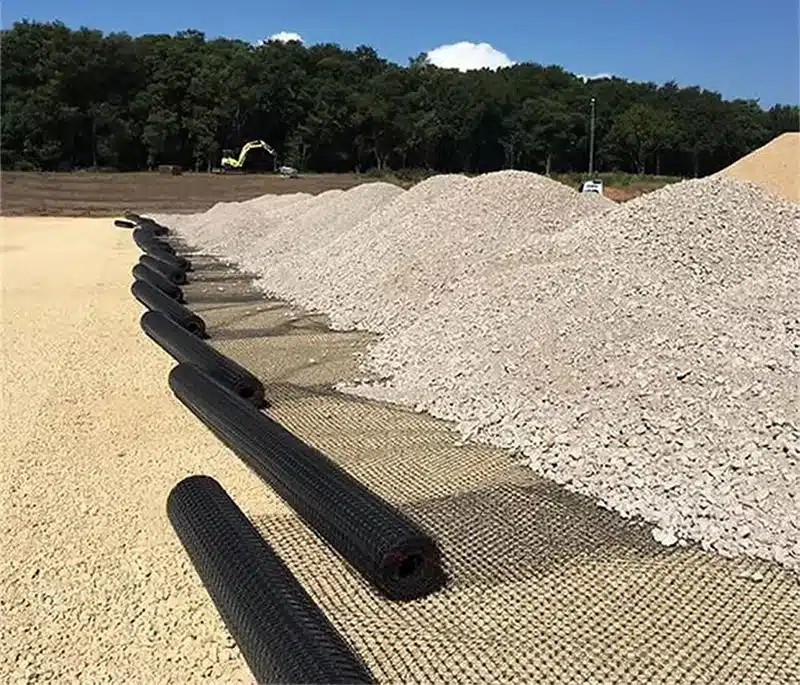
Geogrid is a high-strength geogrid material manufactured from polymers such as polypropylene (PP), high-density polyethylene (HDPE), or polyester (PET). The material is processed through extrusion, stretching, or weaving to create an open grid structure with precise apertures.
Key material characteristics include:
- High tensile strength at low strain
- Excellent creep resistance for long-term load-bearing
- Strong chemical and biological resistance
- Stable performance in buried environments
Because of this structure, geogrid material is not designed to block water or soil—it is designed to interlock with aggregates and create mechanical reinforcement.
Geosynthetics: a broad family of polymer materials
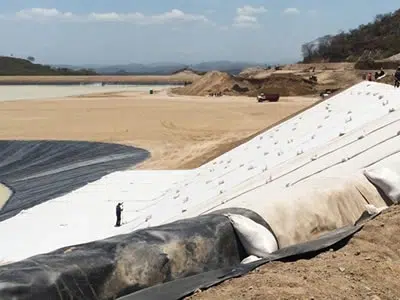
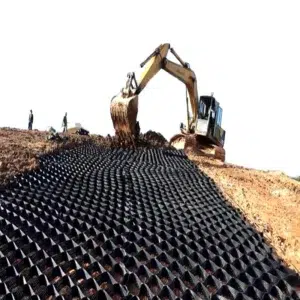
Geosynthetics is an umbrella term covering multiple products, including geotextiles, geomembranes, geocells, geonets, and geogrids themselves. Materials commonly include PP, PET, HDPE, and PVC, but they are manufactured in different forms: sheets, membranes, fabrics, or cellular systems.
From a material perspective:
- Some geosynthetics focus on permeability (geotextiles)
- Others focus on impermeability (geomembranes)
- Some focus on confinement or drainage
This means Geogrid and Geosynthetics are related, but not interchangeable—geogrid is a specific reinforcement product within the wider geosynthetics system.

What are the functional differences between geogrids and geosynthetic materials?
Primary function of geogrid: soil reinforcement
The core function of a Geogrid is reinforcement. When placed within soil or aggregate layers, the grid apertures allow stone to lock in place, creating a composite system that:
- Increases load-bearing capacity
- Reduces lateral soil movement
- Improves slope and wall stability
- Minimizes rutting and deformation
This is why geogrids are essential in systems such as a geogrid retaining wall, where tensile strength and long-term stability are critical.
Primary functions of geosynthetics: separation, filtration, protection, containment
In contrast, most geosynthetics are designed to manage interfaces between materials, not reinforce them. Typical functions include:
- Separation between soil layers
- Filtration while allowing water flow
- Drainage and fluid transmission
- Protection of membranes
- Environmental containment
While some overlap exists, geosynthetics generally do not provide the same tensile reinforcement mechanism as geogrids.
What are the differences in the applications of geogrids and geosynthetic materials?
Where geogrids are used
Geogrids are selected when structural performance and load distribution are the priority. Typical applications include:
- Road base and pavement reinforcement
- Railways and heavy-duty industrial yards
- Geogrid retaining wall systems
- Slope stabilization and embankments
- Foundations over weak subgrade
In these applications, geogrid material directly reduces required aggregate thickness and improves long-term performance.
Where geosynthetics are used
Geosynthetics are chosen based on environmental control and layer interaction. Common applications include:
- Soil separation in road construction
- Drainage layers behind retaining structures
- Landfill liners and caps
- Erosion control systems
- Water management and filtration projects
In many real-world designs, geogrid and geosynthetics are used together, each performing a specialized role within one integrated system.
Conclusion
Understanding the difference between geogrid and geosynthetics is not about choosing one over the other—it’s about choosing the right material for the right engineering role. Geogrid material delivers reinforcement and load transfer, while geosynthetics provide separation, filtration, drainage, and protection.
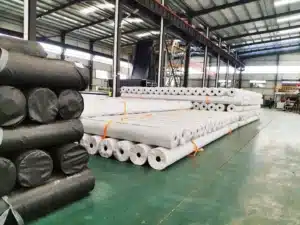
By fully understanding geogrid material specifications, raw material selection, and proven field applications, U can make sourcing decisions with confidence. Partnering directly with MJY’s professional factory ensures consistent quality, stable performance, and technical support—whether U’re working with a trusted geogrid material supplier, specifying integrated geogrid and geosynthetics systems, or building a long-lasting geogrid material driveway designed for heavy loads and long service life.

 English
  Spanish
  Arabic