
A drainage layer can look open in a sample yet lose flow capacity after compression, installation damage, or clogging is ignored.
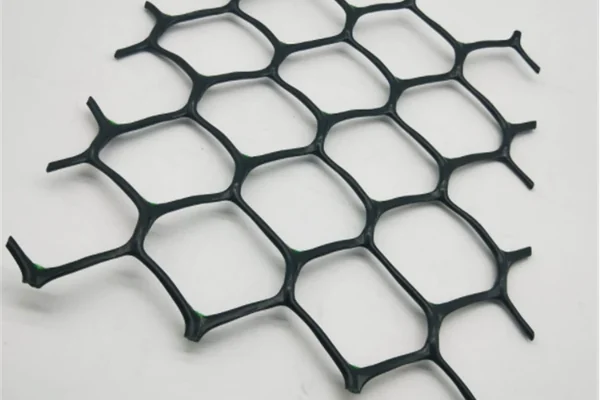
A geonet drainage layer creates an in-plane flow path beside or beneath soil, liner, or cover layers. It is used in landfill, retaining wall, road, and drainage geocomposite systems when transmissivity, compressive resistance, gradient, filter compatibility, and clogging risk are checked together.
The practical decision is not simply which product costs less per square meter. It is which layer can keep working after compaction, rainfall, construction traffic, and the conditions that matter on this site.
Before a purchase order is released, compare the product data sheet with the drawing, site conditions, installation method, and destination logistics. That small check helps a buyer identify whether two quotations truly cover the same material, roll dimensions, test basis, and delivery scope. It also creates a clear record for the contractor, project engineer, and supplier before site work begins. In B2B projects, clarity at this stage is usually less expensive than explaining a substitution after material reaches the site. Ask the supplier to identify any assumption in writing, especially when a drawing, local soil report, or anchor layout is not available at quotation stage. Confirm the proposed roll layout, joining plan, unloading approach, and inspection records as well, because these logistics affect installation quality and can change the actual project cost.
Send cross-section drawings, overburden load, gradient, liquid type, filter layer, roll dimensions, and destination to compare geonet options.
Request a geonet drainage layer specification checkWhat a Geonet Drainage Layer Does
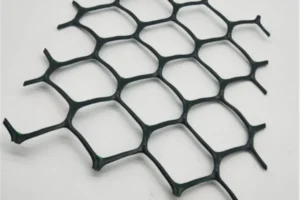
Geonet drainage moves liquid sideways within an open polymer core rather than through a thick gravel layer. This in-plane flow can be useful where drainage space is limited, aggregate is costly to transport, or a lighter composite system simplifies installation.
The key term is transmisividad: the ability of a geosynthetic to carry flow in its plane under stated load and gradient. ASTM D4716 is a standard method for in-plane flow and transmissivity, but selection still needs the expected load, liquid, and service conditions. [1]
Geonet, Geotextile, and Drainage Geocomposite
A geonet core provides the drainage path, geotextile commonly provides filtration and separation, and a drainage geocomposite combines the functions. Confusing those roles is a common purchasing error. A filter fabric may pass water through its thickness but does not automatically provide an in-plane drainage path.
MJY composite geonet information lists common core thicknesses of 6.3, 7, 8, and 9 mm with continuous-filament nonwoven geotextile components. These figures are starting points only. Required thickness and test condition must be checked against actual load, not copied from a general sheet.
| Aplicación | Drainage concern | Specification focus |
|---|---|---|
| Recolección de lixiviado en vertederos | Flow under overburden | Transmissivity, chemical exposure, filters |
| Drenaje trasero de muro de contención | Pore pressure and outlet | Core path, outlet, compression |
| Road or embankment | Base drainage and clogging | Gradient, filter, installation protection |
| Limited-space drainage | Replacing thick aggregate | Long-term flow at design load |
Landfill Drainage Applications
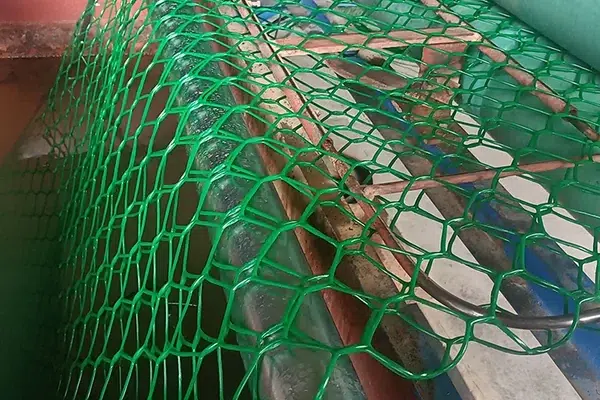
Landfill drainage layers are part of a system that manages leachate and protects containment performance. A geonet or drainage geocomposite can create controlled lateral flow with limited profile thickness. EPA Subtitle D criteria address landfill liner and leachate collection requirements. [3]
Factory Tip: do not request landfill geonet by thickness alone. Ask whether the design calls for one or two filter layers, expected overburden, gradient, chemical exposure, panel joining method, and required transmissivity at a stated load. A thick-looking core without a test condition is not a complete comparison.
Retaining Walls and Road Drainage
Behind walls, a drainage layer directs water away from backfill; in road structures, it can support a planned drainage path. The aim is to avoid water accumulation that increases pore pressure, weakens base material, or creates repeated maintenance.
Field Note: a wall-drainage buyer once focused only on roll width. The more important question was where the water would leave the system. Without a collector or outlet detail, even a suitable drainage layer has no useful discharge path. The route must be continuous from entry to outlet.
Compression, Clogging, and Interface Risk
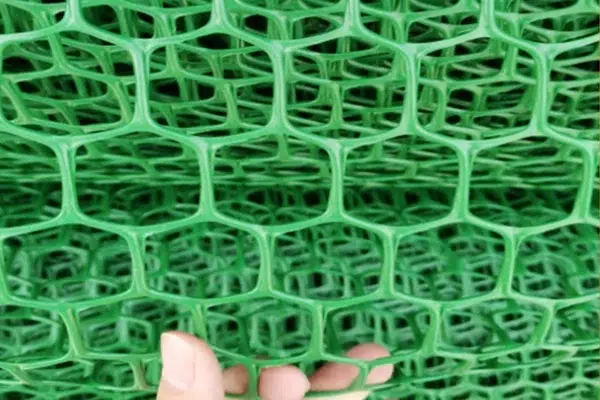
Judge a drainage core by flow under load, not the open appearance of an unloaded sample. Long-term compression reduces available channels, and fine soil intrusion or an incompatible filter can reduce capacity further.
Expert Insight: replacing gravel with geonet is not automatically a cost saving. It can reduce transport and profile depth, but only when transmissivity, compressive resistance, filtration, and outlet details suit the project. FHWA guidance helps position drainage products within the whole geosynthetic and earthwork system. [2]
RFQ Details for Drainage Systems
Send the drawing section, application, liquid type, design load, gradient, target flow, filter fabric requirement, core thickness, roll width, joining method, quantity, and destination. This lets suppliers quote comparable systems rather than generic rolls.
cURL Too many subrequests by single Worker invocation. To configure this limit, refer to https://developers.cloudflare.com/workers/wrangler/configuration/#limits geonet and drainage geocomposite options, landfill geosynthetic applications, y cURL Too many subrequests by single Worker invocation. To configure this limit, refer to https://developers.cloudflare.com/workers/wrangler/configuration/#limitscURL Too many subrequests by single Worker invocation. To configure this limit, refer to https://developers.cloudflare.com/workers/wrangler/configuration/#limits [4]
Mi opinión
cURL Too many subrequests by single Worker invocation. To configure this limit, refer to https://developers.cloudflare.com/workers/wrangler/configuration/#limits
Conclusión
cURL Too many subrequests by single Worker invocation. To configure this limit, refer to https://developers.cloudflare.com/workers/wrangler/configuration/#limits
Preguntas frecuentes
cURL Too many subrequests by single Worker invocation. To configure this limit, refer to https://developers.cloudflare.com/workers/wrangler/configuration/#limits
cURL Too many subrequests by single Worker invocation. To configure this limit, refer to https://developers.cloudflare.com/workers/wrangler/configuration/#limits
cURL Too many subrequests by single Worker invocation. To configure this limit, refer to https://developers.cloudflare.com/workers/wrangler/configuration/#limits
cURL Too many subrequests by single Worker invocation. To configure this limit, refer to https://developers.cloudflare.com/workers/wrangler/configuration/#limits
cURL Too many subrequests by single Worker invocation. To configure this limit, refer to https://developers.cloudflare.com/workers/wrangler/configuration/#limits
cURL Too many subrequests by single Worker invocation. To configure this limit, refer to https://developers.cloudflare.com/workers/wrangler/configuration/#limits
Referencias
- cURL Too many subrequests by single Worker invocation. To configure this limit, refer to https://developers.cloudflare.com/workers/wrangler/configuration/#limits ↩
- Directrices de diseño y construcción de geosintéticos de la FHWA ↩
- Criterios de diseño de vertederos EPA Subtítulo D 40 CFR 258.40 ↩
- cURL Too many subrequests by single Worker invocation. To configure this limit, refer to https://developers.cloudflare.com/workers/wrangler/configuration/#limits ↩


 Spanish
  English
  Arabic