
A fabric may look similar on a roll, yet fail quickly when a landscaping material is substituted for an engineered separation or drainage layer.
Geotextile and landscape fabric are not automatically interchangeable. Engineered geotextiles are selected by filtration, apparent opening size, permittivity, puncture resistance, tensile properties, and project exposure. Landscape fabric may suit light weed-control jobs, but contractors should not assume it will perform as a road, drainage, retaining-wall, or liner-protection geotextile.
Before a purchase order is released, compare the project drawing, site condition, test-data basis, installation method, dimensions, packaging, and delivery scope. This helps project buyers verify that quotations describe the same engineering system rather than materials with similar names but different performance. Confirm receiving inspection, roll identification, storage protection, field handling, panel joining, and acceptance records before shipment. These details reduce avoidable site delays and make it easier to trace the material batch if a project question arises later.

Send the application, soil condition, aggregate, expected traffic, drainage need, and destination to compare fabric type before ordering.
Request a geotextile specification checkThe Main Difference Is Engineering Function
Geotextile is an engineered civil material selected for separation, filtration, drainage, protection, or reinforcement; landscape fabric is usually designed for lighter horticultural weed-control use. The labels can create confusion because both products may be black, white, woven, or nonwoven, but their data requirements and service conditions are different.
For contractor work, start with the function required below or behind the surface. If the layer must stop soil migration while letting water move, filtration stability and apparent opening size matter. If it must protect a liner from stone, CBR puncture resistance matters. ASTM D4751 provides a common apparent-opening-size test reference. [1]
Filtration and Drainage Performance
Good drainage does not mean a fabric has large holes; it means the fabric allows water through while retaining the soil structure needed for the project. Nonwoven geotextiles are commonly used for drainage and filtration where the opening size and permittivity match the soil. A thin landscape fabric can clog, tear, or let fines move if it is used outside its intended conditions.
Factory Tip: buyers often ask whether one fabric ‘lets water through.’ The better question is what soil will touch it. Fine silts, sandy material, organic soil, and crushed stone backfill need different filtration checks. ASTM D4491 addresses water permeability by permittivity, which is more useful than judging a fabric by appearance. [2]
| Caso de uso | Better starting point | Critical check |
|---|---|---|
| Light weed-control bed | Landscape fabric may be sufficient | UV exposure and maintenance |
| Driveway or aggregate base | Engineered geotextile | Separation, puncture, traffic |
| Drainage trench | Geotextil no tejido | Permittivity, opening size, outlet |
| Protección del revestimiento | Cushioning nonwoven | Puncture resistance and subgrade |
Strength, Puncture, and Installation Damage
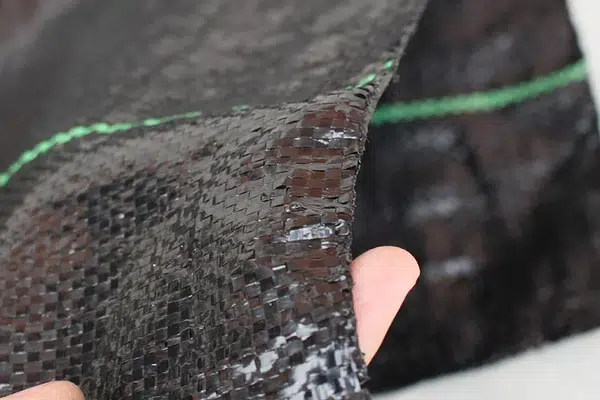
Contractor-grade geotextile should be compared by expected installation damage, aggregate angularity, traffic, and required service life. A fabric placed under sharp crushed rock or behind a wall can face very different stresses than fabric laid in a flower bed. Tensile strength alone is not sufficient; puncture, tear, and elongation may be just as important.
Field Note: a site team once used a light landscaping fabric beneath recycled aggregate because the rolls were available locally. During placement, coarse fragments punctured the layer and fines entered the base. The visible material cost was low, but the aggregate and labor required to reopen the area removed any saving.
Woven and Nonwoven Options
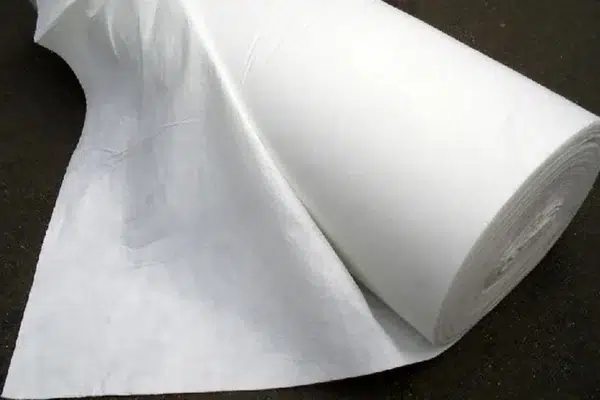
Woven geotextile is commonly considered where tensile support and separation are important, while nonwoven geotextile is widely used for filtration, drainage, cushioning, and liner protection. Neither is universally better. The application decides whether strength direction, elongation, opening size, or drainage performance controls the selection.
Expert Insight: do not choose woven or nonwoven simply because one feels thicker. A woven fabric can be strong in a chosen direction yet have different flow behavior, while a nonwoven fabric can cushion a liner and drain well. Compare the product data sheet against the soil, aggregate, load, and water path.
Common Contractor Mistakes
The most common mistake is treating all fabric as weed barrier. Other errors include ignoring roll overlap, leaving edges exposed, trafficking directly on fabric, placing rock from excessive height, and omitting drainage outlets. These site decisions can damage a correct product before it begins to work.
FHWA geosynthetic guidance treats the material as part of a complete earthwork system. A separation layer needs compatible aggregate and proper placement; a drainage layer needs an outlet. Review installation sequence before delivery so the first roll is not cut, pulled, or covered incorrectly. [3]
RFQ Details Before Buying
Send application, soil type, aggregate size, expected traffic, drainage condition, UV exposure, roll width, fabric function, quantity, and destination. This enables a supplier to distinguish light landscaping use from engineered geotextile use.
cURL Too many subrequests by single Worker invocation. To configure this limit, refer to https://developers.cloudflare.com/workers/wrangler/configuration/#limits cURL Too many subrequests by single Worker invocation. To configure this limit, refer to https://developers.cloudflare.com/workers/wrangler/configuration/#limits cURL Too many subrequests by single Worker invocation. To configure this limit, refer to https://developers.cloudflare.com/workers/wrangler/configuration/#limits cURL Too many subrequests by single Worker invocation. To configure this limit, refer to https://developers.cloudflare.com/workers/wrangler/configuration/#limitscURL Too many subrequests by single Worker invocation. To configure this limit, refer to https://developers.cloudflare.com/workers/wrangler/configuration/#limits [4]
Mi opinión
cURL Too many subrequests by single Worker invocation. To configure this limit, refer to https://developers.cloudflare.com/workers/wrangler/configuration/#limits
Conclusión
cURL Too many subrequests by single Worker invocation. To configure this limit, refer to https://developers.cloudflare.com/workers/wrangler/configuration/#limits
Preguntas frecuentes
cURL Too many subrequests by single Worker invocation. To configure this limit, refer to https://developers.cloudflare.com/workers/wrangler/configuration/#limits
cURL Too many subrequests by single Worker invocation. To configure this limit, refer to https://developers.cloudflare.com/workers/wrangler/configuration/#limits
cURL Too many subrequests by single Worker invocation. To configure this limit, refer to https://developers.cloudflare.com/workers/wrangler/configuration/#limits
cURL Too many subrequests by single Worker invocation. To configure this limit, refer to https://developers.cloudflare.com/workers/wrangler/configuration/#limits
cURL Too many subrequests by single Worker invocation. To configure this limit, refer to https://developers.cloudflare.com/workers/wrangler/configuration/#limits
cURL Too many subrequests by single Worker invocation. To configure this limit, refer to https://developers.cloudflare.com/workers/wrangler/configuration/#limits
Referencias
- Método de prueba estándar ASTM D4751 para el tamaño de apertura aparente de geotextiles ↩
- Métodos de prueba estándar ASTM D4491 para la permeabilidad al agua de geotextiles por permitividad ↩
- Directrices de diseño y construcción de geosintéticos de la FHWA ↩
- cURL Too many subrequests by single Worker invocation. To configure this limit, refer to https://developers.cloudflare.com/workers/wrangler/configuration/#limits ↩


 Spanish
  English
  Arabic