
Using a familiar overlap value without the drawing, product type, and placement method can make a geogrid installation look complete while missing its intended function.
There is no universal geogrid overlap for roads, slopes, and retaining walls. The required detail depends on the product, tensile direction, aggregate or soil interface, load, geometry, construction sequence, and the approved design. Buyers should obtain the overlap and connection detail before ordering, not after rolls arrive.
Overlap is sometimes discussed as a simple installation number. In project work, it is a continuity and constructability question. A road-base layer, a reinforced slope, and a retaining-wall reinforcement detail can use geogrids differently, so one installation habit should not be transferred without checking the drawings.

Send the section drawing, geogrid type, tensile direction, aggregate or soil information, quantity, and destination for an RFQ review.
Request a geogrid specification checkFor quotation comparison, put the intended use and direction on the RFQ rather than relying on a generic request for a geogrid roll. Request the declared material type, tensile direction, aperture description where relevant, roll width and length, applicable test method, packaging, labels, batch traceability, quantity, delivery location, and installation documentation. A clear technical request helps a contractor compare like-for-like offers and helps the supplier identify a mismatch before production or container loading.
Why Is There No Single Geogrid Overlap Rule?
Overlap is project-specific because geogrid function and loading differ. A layer placed for aggregate interlock is not automatically detailed like a layer that provides tensile reinforcement in a reinforced-soil structure.
The first question is what the geogrid is expected to do in the section. For road base stabilization, aperture interaction, aggregate, subgrade support, compaction sequence, and construction traffic may govern the placement detail. For walls and slopes, tensile direction, embedment, pullout resistance, facing or connection detail, and staged fill become more important. FHWA guidance treats geosynthetics as part of the complete earthwork and structural system, not as a roll that can be installed from a generic rule. [1]
How Do Roads, Slopes, and Retaining Walls Differ?
Road base geogrid, slope reinforcement, and retaining-wall geogrid must be reviewed against different load paths and installation sequences. The better detail is the one that matches the approved section and product direction.
A biaxial grid may be considered for aggregate interlock in some base-stabilization sections, while a uniaxial reinforcement product can be used in designs where strength is required in a defined direction. That does not make one product a universal replacement for the other. MSE wall and reinforced-slope guidance should be read with the project-specific design, especially where reinforcement length, facing, drainage, and backfill placement are involved. [2]
| Aplicación | Primary installation question | Verificación del comprador antes de ordenar |
|---|---|---|
| Base de carretera | How will aggregate engage the apertures? | Grid type, subgrade, aggregate, roll width, compaction method |
| Slope | How does the layer connect to the slope detail? | Tensile direction, anchoring, soil cover, staged placement |
| Muro de contención | What is the reinforcement layout in the design? | Design length, facing connection, backfill, reinforcement direction |
| Access road or working platform | What construction traffic crosses the layer? | Construction sequence, damage risk, overlap/placement detail |
What Site Conditions Change the Placement Detail?
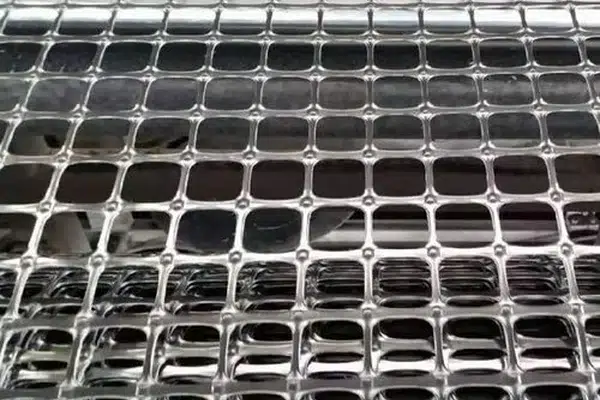
Weak subgrade, wet conditions, angular aggregate, limited working space, and heavy construction traffic can all change the practical placement method. A sound product choice can still perform poorly if crews damage, fold, shift, or contaminate it during installation.
Before placement, confirm the prepared surface, roll orientation, intended direction, overlap or connection detail, aggregate placement method, lifting restrictions, and compaction equipment. Do not allow trucks to turn sharply or place aggregate in a way that drags or wrinkles the grid. These are construction controls, not optional finishing steps.
Why Tensile Direction and Product Data Matter
A geogrid should not be selected by aperture appearance alone. Tensile direction, stated strength, junction behavior, and the relevant test basis must match the intended function in the project section.
ASTM D6637 provides a test method for tensile properties of geogrids, but a laboratory property is not a replacement for long-term design evaluation or soil-geogrid interaction analysis. Buyers should request the manufacturer data sheet, product orientation, roll size, test basis, and any project-required documentation before approving bulk supply. [3]
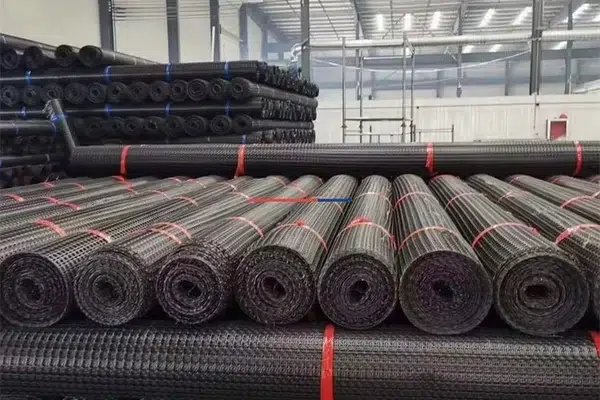
Expert Insight: A common sourcing error is to compare price per roll while missing roll width, tensile direction, declared property basis, or the installation layout. A cheaper roll can create cutting, extra joints, incorrect orientation, or a late change when it does not match the drawing. Confirm whether the quoted roll width reduces cuts in the approved layout and whether the installation crew has a clear placement sequence before containers leave the supplier.
What Should a Geogrid RFQ Include?
A usable geogrid RFQ includes the application, drawing or section, soil and aggregate information, design load where available, required direction, target property, roll width, quantity, delivery point, and required test documents.
For wall and slope work, share the reinforcement layout and any facing or anchoring condition. For roads, share subgrade condition, aggregate type, layer thickness, traffic class, and compaction approach. Buyers can compare geogrid product options con aplicaciones de refuerzo de suelo before requesting a project quotation. Final design parameters require qualified engineering review.
Preguntas frecuentes
Can one overlap value be used for every geogrid project?
No. The overlap or connection detail should follow the product function, project drawing, installation sequence, and responsible design requirements.
Does a stronger-looking grid solve an orientation mistake?
cURL Too many subrequests by single Worker invocation. To configure this limit, refer to https://developers.cloudflare.com/workers/wrangler/configuration/#limits
cURL Too many subrequests by single Worker invocation. To configure this limit, refer to https://developers.cloudflare.com/workers/wrangler/configuration/#limits
cURL Too many subrequests by single Worker invocation. To configure this limit, refer to https://developers.cloudflare.com/workers/wrangler/configuration/#limits
Conclusión
cURL Too many subrequests by single Worker invocation. To configure this limit, refer to https://developers.cloudflare.com/workers/wrangler/configuration/#limits
Referencias
- Administración Federal de Carreteras, Directrices de Diseño y Construcción con Geosintéticos. ↩
- cURL Too many subrequests by single Worker invocation. To configure this limit, refer to https://developers.cloudflare.com/workers/wrangler/configuration/#limits ↩
- ASTM D6637 Tensile Properties of Geogrids ↩
- cURL Too many subrequests by single Worker invocation. To configure this limit, refer to https://developers.cloudflare.com/workers/wrangler/configuration/#limits ↩



 Spanish
  English
  Arabic