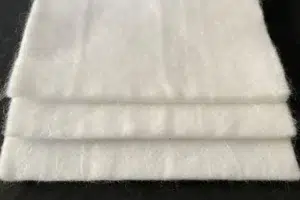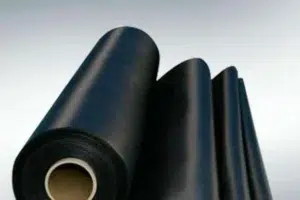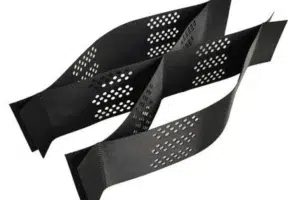
Rock can look stable on day one while fine soil washes through a poorly selected fabric beneath it.
Geotextile beneath riprap must retain the adjacent soil while passing water and surviving rock placement. Select it using subgrade gradation, apparent opening size, permittivity and installation survivability rather than GSM alone. The rock size, wave or current loading and placement method may change the specification and need project-specific hydraulic design.
A filter failure is usually blamed on the visible stone, but the deciding information often sits in the soil report and fabric data sheet.
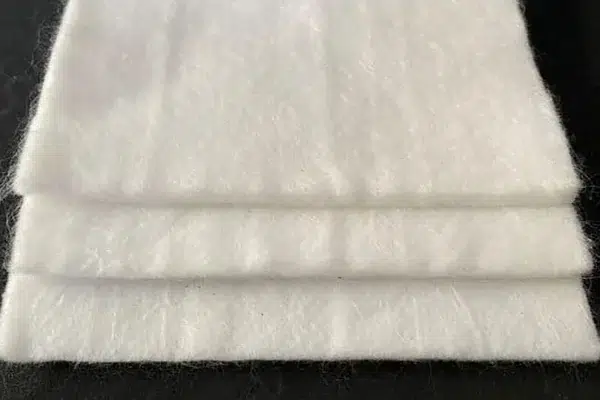
Send your project drawings, technical specifications, quantities and destination for material-fit review before quotation.
Send drawings and specificationsWhat Must the Filter Do Beneath Riprap?
The fabric separates soil from armour stone while letting water relieve pressure. If openings are too large for the adjacent soil, fines may migrate. If flow capacity is inadequate, pressure can build under the cover. The hydraulic setting also matters: a quiet drainage bank is not the same as a wave-exposed shoreline or a channel bend. Ask the engineer for soil gradation, groundwater or flow conditions and the rock-placement detail before selecting a roll. FHWA filtration guidance links apparent opening size and permittivity to the soil being filtered; it is not a license to choose one generic product for every bank. [1]
How Do AOS and Permittivity Answer Different Questions?
ASTM D4751 measures apparent opening size, an index of the openings through which particles may pass. ASTM D4491/D4491M measures water permeability in terms of permittivity under standard conditions. Neither value alone establishes long-term compatibility with a particular silty or dispersive soil. Request both test results and the soil grading on which the engineer based the filter criteria. A supplier's 'high flow' label is not a substitute for the measured number and test basis. For a high-risk site, the designer may require additional filtration or clogging assessment. [2] [3]
| Check | What it tells you | What it does not prove |
|---|---|---|
| ASTM D4751 | Apparent opening size | Does not measure water flow |
| ASTM D4491/D4491M | Permittivity | Does not prove soil retention |
| Placement check | Damage and continuity | Needs site inspection |
The comparison is a procurement screen, not a replacement for the approved engineering design. A test method defines how a property is measured; acceptance thresholds and the site detail must come from the project specification.
Will the Fabric Survive Rock Placement?
A correct filter can still be destroyed when angular rock is dropped from excessive height or tracked over by equipment. Review rock size, drop height, bedding layer, slope access, overlaps and anchoring before ordering. The site method statement should define how damaged areas are identified and repaired before they disappear under stone. A thicker fabric may help survivability, but increasing mass without checking openings and flow can solve one problem while creating another. Include puncture resistance and handling strength in the specification, then compare those with the actual placement method. [1]
What Does a Useful Riprap RFQ Contain?
Send the bank or shoreline section, soil gradation, rock grading, water level range, expected currents or wave action, fabric function, required test values, total area and roll-width preference. A wide roll may reduce seams but be difficult to control on a steep bank. Ask for packaged roll dimensions and a deployment plan, not only square-metre price. Separate the fabric supply quote from hydraulic design and installation responsibility. If the soil conditions are not known, say so explicitly and seek engineering review rather than pretending a catalog GSM closes the gap. [1]
What Should the Site Team Verify Before Work Starts?
At the site meeting, agree where the first fabric panel starts, which way each overlap faces and how the toe will be restrained. Mark a short trial section for inspection before the main rock placement. Observe whether the proposed stone bruises or punctures the fabric when placed by the actual machine. If the crew needs to drive over the installed filter, that exposure must be addressed in the method statement rather than discovered after damage. Recheck the soil at a bank transition: a sandy reach and a silty reach may need different filter criteria even when the visible riprap specification is unchanged. Photograph the trial before cover so the engineer can confirm the approved detail was built.
What Should Be in the RFQ?
Share soil gradation, riprap size, slope section, expected hydraulic exposure, design filter criteria, total quantity, roll dimensions, required ASTM results and destination. Ask MJY to compare geotextile filtration fabrics against the stated criteria. The project engineer should confirm the filter and hydraulic design before procurement signs off.
For the connected design check, review our geotextile AOS and permittivity selection guide before approving a material substitution.
For a fair quotation, ask each supplier to state the proposed grade, tested properties, test edition, usable roll dimensions, packaging, batch identification, lead time and exclusions. Put the drawing revision and destination on the inquiry. If a proposed substitute changes an engineered detail, request written design approval rather than treating it as a price-only decision.
Factory Tip and Buyer Check
Field Note: The most useful pre-order photo is often a close view of the subgrade and proposed stone, with scale, alongside the section drawing. It can reveal angular armour or a steep placement route that a one-line ‘riprap fabric’ request misses.
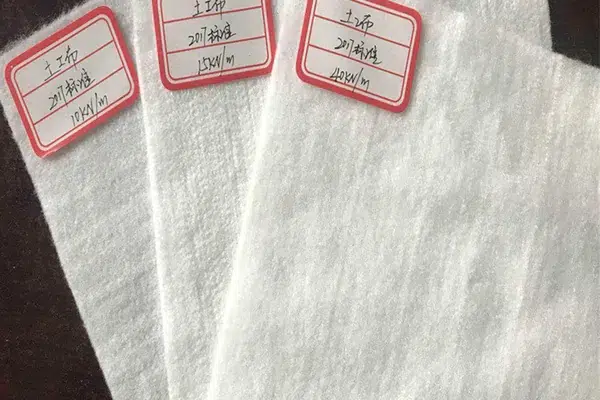
Before bulk production, compare the labelled sample or approved data sheet against the purchase specification. At goods receipt, keep roll IDs and packaging photographs. These small controls make a later site question traceable instead of turning it into an argument about what was ordered.
FAQs
Is heavier fabric always safer?
No. Survivability matters, but filtration and water flow still have to match the soil.
Can one AOS value be used for every shoreline?
No. Adjacent soil grading and hydraulic conditions change the filter criteria.
Who approves rock drop height?
The construction method should be approved by the responsible project team.
Conclusion
Buy the filter for the soil and the placement method, not for the word riprap. Send project drawings, soil data and technical specifications to MJY for a material review before the rock order and fabric order are locked together.