
How to Lay Geotextile Fabric?
I see projects fail because bases pump mud, fines migrate, and gravel vanishes. You want a simple way to stop that. You want a base that passes inspection and lasts.
You lay geotextile fabric on a prepared subgrade, overlap seams by 12–24 inches, pin the sheet, and backfill in thin lifts with proper compaction. Choose non woven geotextile fabric for filtration and drainage or woven geotextile fabric for separation and strength. Then lock edges and maintain.
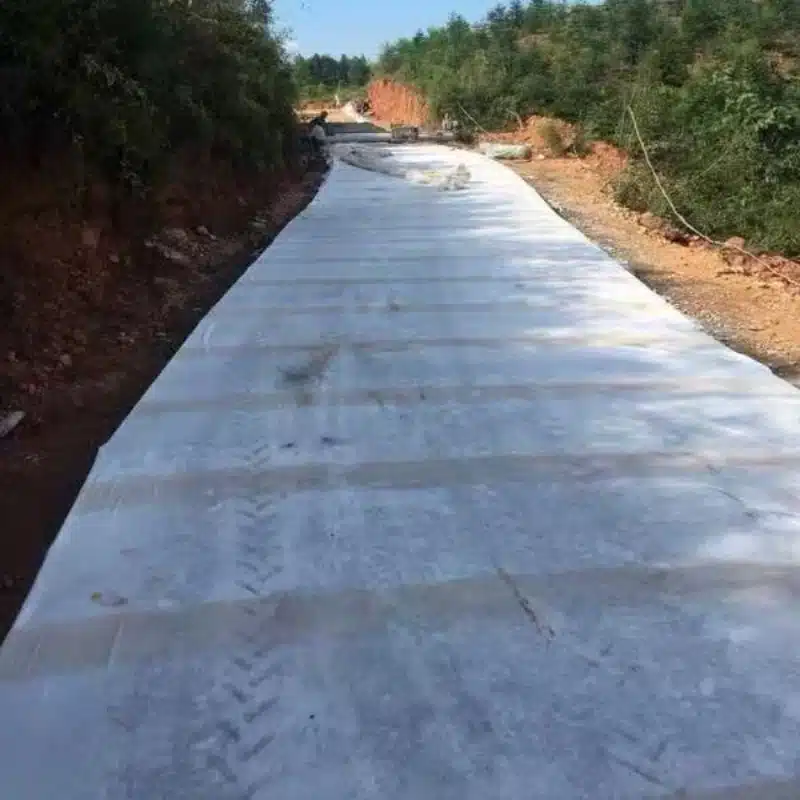
I explain what geotextile is, where it works, and the full step-by-step method for driveways, roads, and yards. I keep specs plain and testable, so you can buy the right roll, lay it fast, and move on.
What is geotextile?
The wrong fabric will clog or tear. The right fabric will breathe, separate, and protect the base.
A geotextile is a permeable engineering fabric that separates soil layers, filters water, drains laterally, and protects liners or bases from puncture. Non woven geotextile fabric favors filtration and cushioning. Woven geotextile fabric favors tensile strength and low elongation for separation and reinforcement.
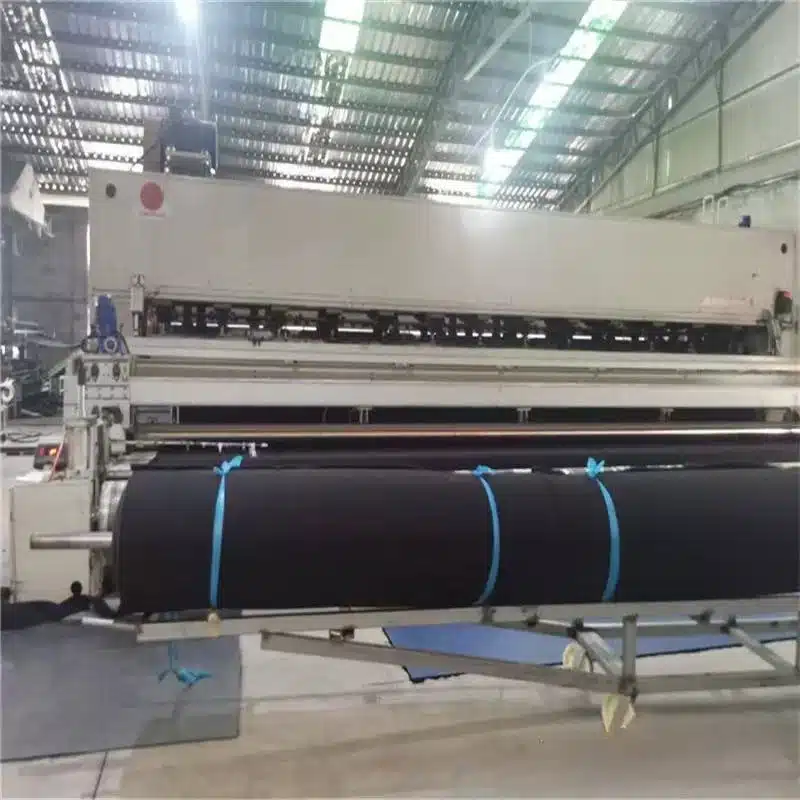
Families and how they work
U can sort geotextiles by structure:
- Non woven: needle-punched or heat-bonded fibers; lets water pass while holding fines; adds cushion and puncture resistance under angular aggregate.
- Woven: interlaced yarns; high tensile per gsm with low stretch; ideal for separation on soft subgrades and load transfer into the base.
Hybrid and knitted options exist, but most purchases come down to these two.
The functions you specify
Specify by function:
- Separation: stops fines mixing with base.
- Filtration: lets water cross without soil loss.
- Drainage: moves water in-plane to outlets.
- Protection: shields liners/membranes from puncture.
- Reinforcement: shares load, reduces rutting.
One fabric can do multiple jobs—state the primary function in the PO.
Quick property map
I keep three numbers in front of buyers: AOS (apparent opening size), permittivity (cross-plane flow), and tensile/elongation. For filtration against silty soils, I pick a non woven with an AOS matched to soil D85–D90. For road separation over soft subgrade, I pick a woven with high tensile and adequate CBR puncture. For liner protection, I choose a heavy non woven and confirm thickness under load.
| Type | Primary function | Typical gsm | AOS (indicative) | Permittivity (indicative) | Tensile/elongation | Common uses |
|---|---|---|---|---|---|---|
| Non woven needle-punched | Filtration, cushion | 150–600 | Small–medium | Medium–high | Medium tensile, higher strain | French drains, subgrade filter, liner pad |
| Woven slit-film/monofilament | Separation, strength | 120–300 | Medium | Low–medium | High tensile, low strain | Road base over soft soils, yards, pads |
| Heavy non woven | Protection, filtration | 400–1200 | Small | Medium | High puncture resistance | Geomembrane protection, landfill caps |
When I ship under our MJY geotextile line, I attach roll labels and lot certificates with these values. This saves time on site and during inspection.
What are the applications of geotextiles?
Bad base layers cost rework. Good base layers save gravel, stop mud pumping, and keep edges stable.
Geotextiles go in roads, gravel driveways, parking pads, rail yards, embankments, French drains, retaining wall backdrains, sports fields, and green projects. They separate, filter, drain, and protect. I choose non woven for flows and fines. I choose woven for separation and tensile control.
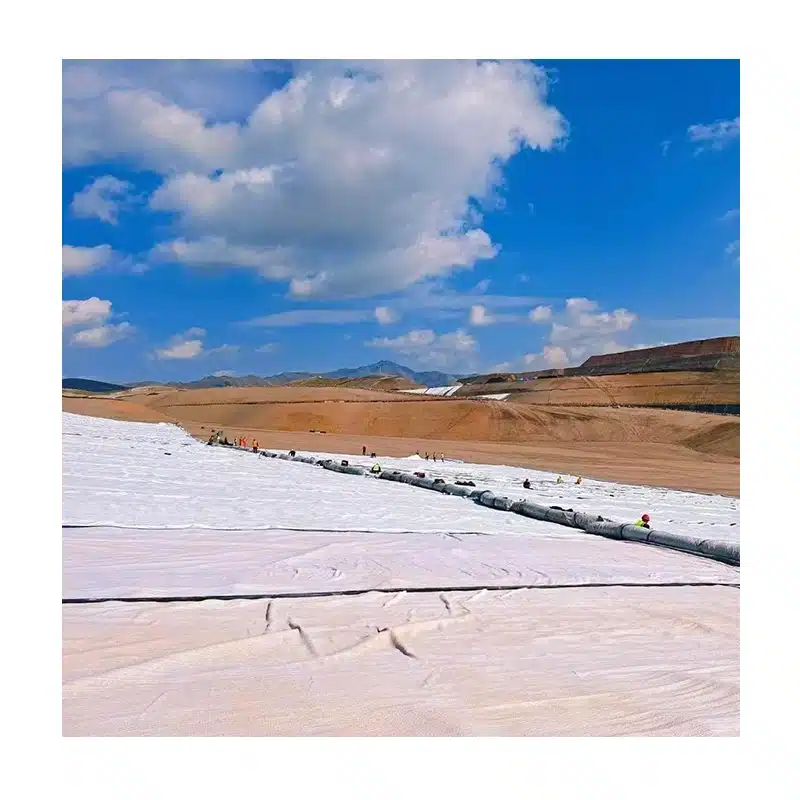
Groundworks that benefit most
Start with the subgrade:
For landfill caps or pond liners, use heavy non woven as a cushion under the geomembrane.
If it’s wet or weak, use a woven geotextile to spread load, stop aggregate punch-through, and keep the top course clean.
For French and edge drains, use a non woven filter to let water pass and block soil.
For retaining walls, place a non woven on the soil side to keep fines out of drain gravel and pipes.
Matching fabric to task
I match fabric based on failure mode. If you fight contamination between soil and base, use woven geotextile fabric with adequate tensile and CBR puncture. If you fight clogging in drains, use non woven geotextile fabric with an AOS that matches the soil gradation and a permittivity that meets flow. If you protect liners, use heavy non woven with thickness retained under load.
Application menu with quick picks
| Application | Primary risk | Preferred fabric | Key checks on PO |
|---|---|---|---|
| Gravel driveway over clay | Mixing, rutting | Woven 150–220 gsm | Tensile (wide-width), CBR puncture |
| French drain in silt | Clogging | Non woven 150–250 gsm | AOS vs soil, permittivity |
| Retaining wall backdrain | Fines migration | Non woven 200–300 gsm | AOS, grab strength, UV during install |
| Patio base over loam | Mixing | Woven 120–180 gsm | Tensile, seam strength, overlap detail |
| Liner protection under angular fill | Puncture | Non woven 600–1000 gsm | Thickness under load, static puncture |
I keep the language simple on drawings and RFQs. I tie acceptance to test methods and lot numbers. This reduces disputes and keeps crews moving.
How do you lay geotextile fabric step by step?
Many crews rush the base. They skip prep. They lay fabric loose. The result is ruts and waves.
I prepare the subgrade, trim high spots, remove organics, and compact to a uniform, firm surface. I roll out geotextile fabric in the traffic direction, keep overlaps straight, pin the sheet, and place aggregate in thin lifts. I compact each lift before the next. I lock the edges so the fabric never shows.

Site prep that makes compaction easy
I start by stripping sod, roots, and topsoil. I remove mud pockets and backfill with granular material. I shape the subgrade with a crown or crossfall for drainage. I compact with a plate compactor or roller until the surface is firm under foot with no visible deflection. If the subgrade pumps, I reduce water or add a bridging layer before the fabric. I never place geotextile over standing water.
Aggregate placement and edge control
I place the first lift gently. I never drive directly on exposed fabric. I dump on the placed aggregate and push forward. I keep lift thickness thin and even, then compact. I repeat until I reach design thickness. I install edge restraints where needed to prevent lateral spread. For driveways, I prefer timber, concrete, or metal edging. For yards, I tie the edge into soil with a shallow trench and backfill.
Quick step table for crews
| Step | Purpose | What good looks like | Common mistake |
|---|---|---|---|
| 1 | Strip and grade | Firm, smooth subgrade, no organics or puddles | Laying over soft mud |
| 2 | Compact subgrade | No visible deflection under foot or plate | Skipping compaction pass |
| 3 | Roll out fabric | Straight runs, correct overlaps, seams staggered | Wrinkles and loose spots |
| 4 | Pin and secure | Pins flush, edges trapped, no wind lift | Sparse pinning |
| 5 | Place first lift | Aggregate placed on top of aggregate, not on fabric | Dumping directly on fabric |
| 6 | Compact and build lifts | Even thickness, dense surface, no weaving movement | Thick lifts, poor density |
| 7 | Edge restraint and finish | Edges locked, fabric never visible | Exposed fabric at borders |
If you ask me how to lay geotextile fabric on a tight schedule, this is the path that keeps crews safe and the base solid. When buyers request mjy geotextile, I ship rolls with clear labels so foremen know overlap, pins, and lift rules at a glance.
FAQ
Q: Do I choose non woven or woven for a gravel driveway over clay?
A: I choose woven for separation and tensile control. It stops fines from pumping into the base and reduces rutting.
Q: Does geotextile fabric let water through?
A: Yes. Non woven favors cross-plane flow and filtration. Woven passes water too, but the flow is lower. Match AOS and permittivity to soil.
Q: What overlap should I use?
A: I use 12–24 inches on firm subgrades. I use up to 36 inches on very soft soils. I stagger seams.
Q: Can I drive on the fabric?
A: I never drive on exposed fabric. I place aggregate first, then I track on top of the placed aggregate.
Q: How do I stop fabric from showing at edges?
A: I use edging or a shallow anchor trench. I bury edges and backfill so the fabric stays hidden and protected.
Q: Which weight should I buy?
A: For drives and yards, I buy woven 150–220 gsm or non woven 200–300 gsm depending on function. I confirm tensile, CBR puncture, AOS, and permittivity on the PO.
Q: Can one roll do everything?
A: One roll cannot cover every function well. I select by primary function: separation, filtration, drainage, or protection.
Q: Where do I place geotextile in a retaining wall?
A: I place non woven on the soil side of the drainage gravel to prevent fines from entering the backdrain and pipe.
Conclusion
Select by function, verify simple properties, and follow overlaps, pinning, and lift rules. The base will last, inspections will pass, and rework will drop.




 English
  Spanish
  Russian
  Portuguese
  Arabic
  Hindi
Hindi