
The Ultimate Guide to Geocell for Retaining Walls: Benefits, Installation & Cost
Retaining wall projects often face common challenges: weak soil layers, water pressure, high material costs, and long construction periods, all of which can lead to delays and increased project risks. Traditional retaining wall systems are often not the first choice for engineers due to their poor adaptability and high construction costs.
Consequently, an increasing number of contractors, engineers, and project owners are turning their attention to geocell retaining wall systems. By effectively confining the infill material, geocell retaining walls can significantly enhance slope stability. Furthermore, thanks to their lightweight and flexible structural characteristics, these systems provide reliable support for the wall face; their straightforward installation process also helps to substantially reduce construction costs.
In this guide, U will learn what a geocell retaining wall is, how it works, its main benefits, how to install it correctly, and what factors affect the final project cost.
A geocell retaining wall is a flexible retaining system that utilizes a three-dimensional, honeycomb-like confinement structure to anchor infill material, improve soil stability, and provide support for slopes or wall faces. Across various retaining wall applications, the primary advantages of this system include ease of installation, superior drainage performance, minimal material consumption, and low overall project costs.
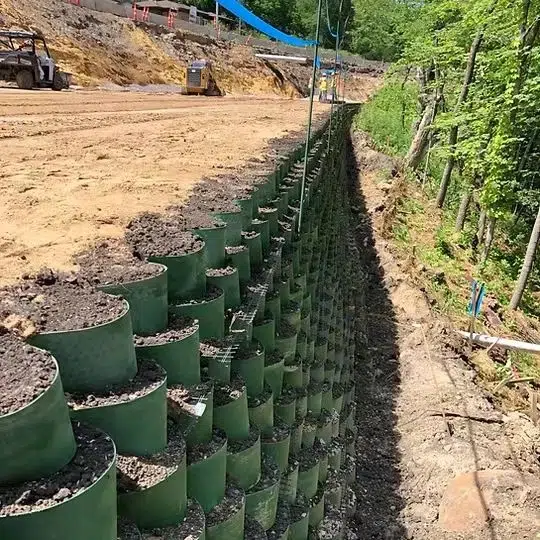
What Is a Geocell Retaining Wall?
A geocell retaining wall is a reinforced soil structure built with expanded cellular panels filled with aggregate, soil, or other infill. The cells confine the fill material and create a stable wall body or wall face support system.
Unlike rigid walls that rely mainly on heavy mass, a geocell retaining wall works by improving interaction between the infill and the confinement system. This makes it suitable for slopes, embankments, and soft ground conditions.
Geocell Retaining Wall vs Traditional Retaining Wall Systems
| System Type | Flexibility | Drainage | Installation Speed | Appearance | Cost Level |
|---|---|---|---|---|---|
| Geocell Retaining Wall | High | Good | Fast | Natural / Vegetated | Medium |
| Concrete Retaining Wall | Low | Needs Added Design | Slow | Rigid | High |
| Gabion Retaining Wall | Medium | Good | Medium | Stone Look | Medium to High |
Geocell is often the better choice when U need easier installation, better drainage, flexible alignment, and a more natural wall face.
Types of Geocell Retaining Walls
| Type | Main Feature | Best For |
|---|---|---|
| Gravity Geocell Wall | Relies mainly on filled system weight | Low to medium wall heights |
| Reinforced Geocell Wall | Uses added reinforcement for strength | Higher loads or taller walls |
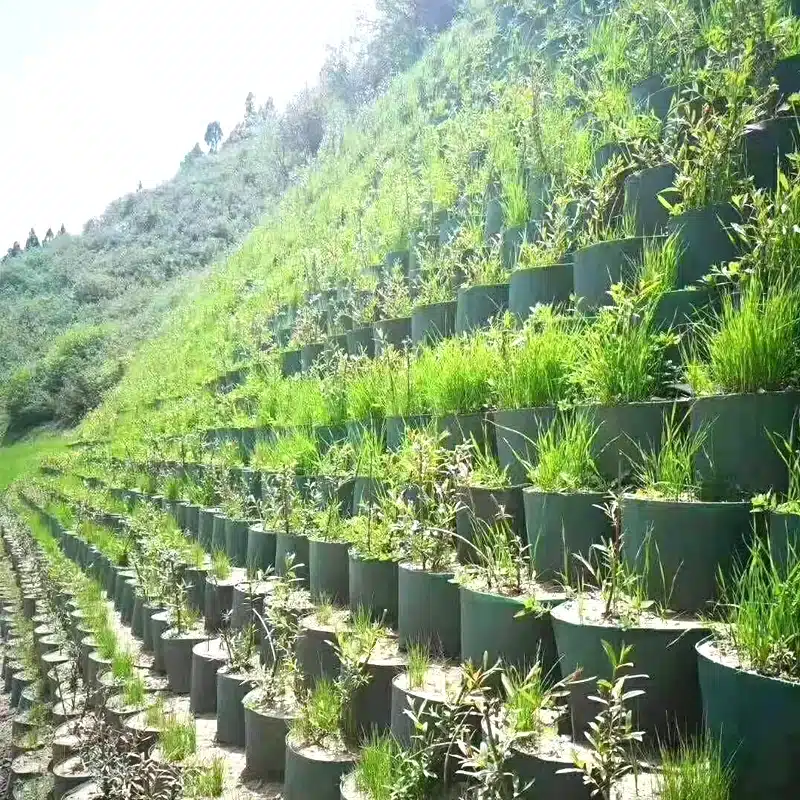
| Vegetated Geocell Wall | Supports plant growth on the wall face | Landscape and erosion control projects |
The right type depends on wall height, load demand, drainage needs, and project appearance goals.
Step-by-Step Geocell Retaining Wall Installation
Site preparation and foundation work
Clear the site, remove weak material, level the base, and compact the foundation according to the design.
Geotextile placement and drainage setup
Install geotextile where needed to separate soil layers and improve filtration. Plan drainage before wall construction starts.
Expanding and anchoring geocell panels
Expand the panels to the required size and secure them with anchors or connection devices to maintain wall shape.
Filling, compacting, and building the wall face
Fill the cells layer by layer and compact each layer properly. Good compaction is essential for wall stability.
Final finishing and surface protection
Finish the wall face with aggregate, soil, vegetation, or other surface treatment based on the project design.
Best Fill Materials for a Geocell Retaining Wall
| Fill Material | Main Advantage | Typical Use |
|---|---|---|
| Aggregate / Crushed Stone | Strength and drainage | Structural retaining walls |
| Soil Fill | Supports planting | Vegetated wall systems |
| Concrete Infill | Higher rigidity | Heavy load or special projects |
The best fill depends on load demand, drainage requirements, wall appearance, and project budget.
Geocell Retaining Wall Design Factors
| Design Factor | Why It Matters |
|---|---|
| Wall Height | Higher walls need stronger design and more material |
| Slope Angle | Steeper slopes increase stability demand |
| Soil Type | Weak soil may need stronger support |
| Load Condition | Traffic or surcharge adds pressure |
| Panel Height | Affects confinement depth and strength |
| Weld Spacing | Influences structural performance |
| Material Type | Impacts durability and long-term use |
A proper design review helps match the geocell specification to the real project conditions.
How Much Does a Geocell Retaining Wall Cost?
Material cost of geocell panels
Panel cost depends on material type, size, height, thickness, and order volume.
Infill and drainage material cost
Aggregate, soil, concrete, geotextile, and drainage layers all affect the total budget.
Labor and installation cost
Labor cost depends on site access, wall complexity, local wages, and installation conditions.
Transportation and project access cost
Remote or difficult sites often increase freight, handling, and installation cost.
What Affects Geocell Retaining Wall Cost the Most?
| Cost Factor | Impact on Cost |
|---|---|
| Wall Height | More material and stronger design |
| Infill Type | Aggregate, soil, and concrete have different cost levels |
| Site Access | Difficult access increases labor and transport cost |
| Drainage Design | Added drainage layers increase total cost |
| Custom Specification | Non-standard sizes or properties may cost more |
| Project Scale | Larger projects may get better unit pricing |
The final geocell retaining wall cost should always be evaluated as a full system cost, not just panel price.
Best Applications for Geocell Retaining Walls
| Application | Why Geocell Fits |
|---|---|
| Road and Highway Walls | Supports slopes and embankments |
| Slope Protection Walls | Adapts well to variable terrain |
| Erosion Control Areas | Helps confine fill and reduce surface loss |
| Soft Soil Environments | Improves load distribution and stability |
Geocell retaining walls are most useful where flexibility, drainage, and lighter construction are important.
Common Mistakes to Avoid in Geocell Retaining Wall Construction
| Mistake | Main Risk |
|---|---|
| Poor Drainage Planning | Water pressure behind the wall |
| Wrong Infill Selection | Reduced strength or poor drainage |
| Inadequate Compaction | Settlement and wall movement |
| Wrong Geocell Specification | Poor long-term performance |
Avoiding these common mistakes can improve wall stability and reduce maintenance risk.
How to Choose the Right Geocell for a Retaining Wall Project
| Selection Item | What U Should Check |
|---|---|
| Panel Height | Match wall design and fill depth |
| Material Type | HDPE is common for long-term durability |
| Wall Height | Higher walls need stronger systems |
| Soil Condition | Weak soil may need added support |
| Drainage Need | Free-draining design may affect fill choice |
| Project Goal | Structural wall, green wall, or erosion control |
The best geocell system depends on wall height, slope condition, load demand, fill material, and expected service life.
FAQ About Geocell Retaining Walls
Is geocell good for retaining walls?
Yes. Geocell is a good option for many retaining wall projects because it improves soil confinement, supports slope stability, and offers a more flexible system than many rigid wall types.
Is geocell cheaper than concrete retaining walls?
In many applications, geocell can be more cost-effective than concrete because it may reduce labor, simplify installation, and lower material demand. The final result depends on wall height, site condition, and design.
What fill is best for a geocell retaining wall?
Aggregate is common for strength and drainage. Soil is often used for vegetated walls. Concrete infill may be used for higher load demand.
Do geocell retaining walls need drainage?
Yes. Drainage is still essential. Even if the system uses free-draining fill, water pressure behind the wall must still be controlled.
How long do geocell retaining walls last?
A geocell retaining wall can last many years when the right material is used and the wall is properly designed and installed.
Final Thoughts
A geocell retaining wall can be a practical and cost-effective solution for many earth retention and slope support projects. It offers flexibility, easier installation, good drainage performance, and a more adaptable structure than many traditional wall systems.
The final result still depends on proper design, suitable fill material, effective drainage, and the right geocell specification. If U are planning a retaining wall project, it is better to review wall height, soil condition, loading requirement, and site environment before choosing the final system.
Need help choosing the right geocell for a retaining wall project? Send U wall height, soil condition, application, and destination port. A suitable geocell specification and supply plan can then be recommended based on the real project demand.

 English
  Spanish
  Arabic