A retaining wall geogrid works only when the strength direction, embedment length, and placement match the wall design.
Where Geogrid Should Sit in a Retaining Wall
Geogrid is usually placed in horizontal layers between compacted soil lifts, extending back from the wall face into the reinforced soil zone. The exact elevation, length, spacing, and strength must follow the wall design. Wrong placement can reduce reinforcement performance even if the geogrid itself is strong.
Geosynthetic reinforced soil systems rely on interaction between reinforcement, compacted fill, and facing. FHWA guidance on reinforced soil systems shows why reinforcement layout and compaction quality cannot be separated from material selection.[1][2]
For buyers, the key point is simple: the geogrid roll is not the design. The wall designer defines strength, spacing, length, and connection needs. The supplier should help match the product to those requirements.
Uniaxial Direction Is Easy to Get Wrong
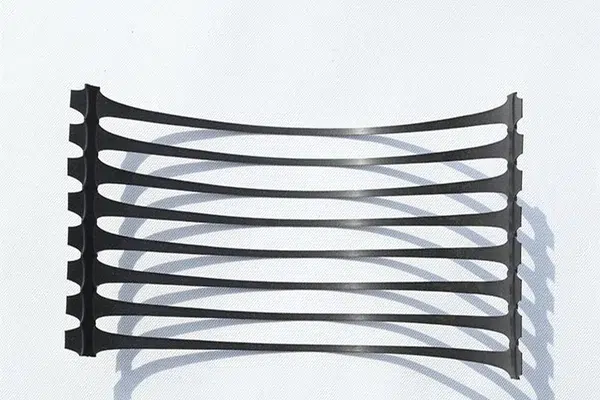
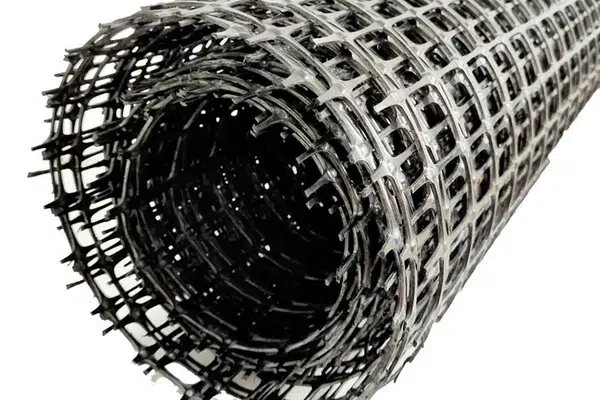
Many retaining walls rely on uniaxial geogrid because its Long-Term Design Strength (LTDS) is engineered to run in one direction—from the wall face into the reinforced soil zone.
If your crew cuts or places the roll parallel to the wall rather than perpendicular, the wall loses up to 80% of its designed reinforcement strength, leading to potential deformation or failure under high hydrostatic pressure.
💡 Factory Tip: Always verify the “Machine Direction” (MD) marked on our MJY roll labels before cutting to ensure the main tensile strength faces the right way.

Overlap Is Not a Substitute for Design
Overlap helps maintain coverage and installation continuity, but it does not magically replace the required embedment length. The common site question is, how much overlap is enough? The honest answer is: follow the project drawings and supplier guidance for the selected geogrid type.
For road base stabilization, biaxial or multiaxial products may be discussed differently. For retaining walls, the reinforcement direction, pullout resistance, and connection details usually matter more than a generic overlap number.
| Mistake | Likely consequence | Better check |
|---|---|---|
| Wrong strength direction | Wall reinforcement does not work as intended | Confirm machine direction and roll layout |
| Too short embedment | Reduced pullout resistance | Follow wall design length |
| Poor compaction over geogrid | Settlement and reduced soil interaction | Compact in proper lifts |
| Using any grid on hand | Mismatch between product and design | Match data sheet to specification |
Compaction and Fill Quality Matter
Geogrid performs through interaction with soil or aggregate. If the fill is weak, wet, poorly graded, or badly compacted, the geogrid cannot fix every problem by itself. Installation tolerance and subgrade control still matter.
Testing methods for geogrid tensile properties exist because designers and buyers need comparable product data, not just product photos or sales claims.[3] Still, tensile strength should be read with aperture, polymer type, creep behavior, and project environment in mind.
Near the wall face, compaction needs extra care. Heavy equipment too close to the face can move blocks or panels, while poor compaction can leave weak zones behind the wall. The geogrid layer should be pulled straight, placed at the correct elevation, and covered with suitable fill before the next lift is built.
Storage and cutting also affect field quality. Rolls should not be dragged through sharp aggregate, left exposed longer than necessary, or cut without checking the design direction. These are simple site habits, but they prevent avoidable damage before the geogrid is even working in the wall.
How Soil Types & Drainage Affect Geogrid Reinforcement
Geogrid performance changes drastically depending on whether you are backfilling with high-plasticity clays or well-graded gravels. Clays retain water, increasing hydrostatic pressure behind the wall facing blocks. When working with cohesive soils, strict adherence to drainage layer placement and geogrid embedment length is non-negotiable to prevent internal shear failure.
Expert View on Cheap Geogrid
The cheapest geogrid is often expensive when it causes design confusion, delivery delay, or field rejection. For retaining walls, I would rather see a buyer confirm tensile direction and test data first, then negotiate price. Reversing that order invites mistakes.
MJY supplies different geogrid types for soil reinforcement and infrastructure applications. Buyers can review the geogrid product page and the soil reinforcement application page before sending drawings or a bill of quantities.
If the wall is part of a public road, bridge approach, industrial yard, or high-surcharge area, do not treat the geogrid as a commodity accessory. Ask for the data sheet, manufacturing standard, roll label, and batch traceability before shipment. Those details are easier to confirm before loading than after the material reaches the site.
For export orders, also confirm roll width, roll length, packaging, and container loading plan. A retaining wall crew does not want to discover on site that the roll is too heavy for available handling equipment or that the cutting plan wastes material. Small logistics details can affect installation speed.
If the wall uses curves, corners, steps, or drainage layers, send those details with the inquiry. The supplier may not design the wall, but those details help check whether the proposed geogrid type and roll format are practical for the installation crew.
That early check is especially useful when the wall schedule is tight. A small mismatch in roll direction, roll width, or specified strength can stop installation while the crew waits for clarification.
What Contractors Should Confirm Before Ordering
| Before ordering | What to ask |
|---|---|
| Wall drawing | Required geogrid length, spacing, and elevation |
| Product data | Tensile strength direction, aperture, polymer, and test method |
| Roll layout | How the roll will be cut and placed at the wall face |
| Site method | Fill type, compaction lift, and equipment limits near the face |
Final Takeaway
A geogrid retaining wall succeeds when design, material, and installation match. Do not buy a roll before confirming strength direction, embedment length, spacing, and site handling.
References
- Federal Highway Administration, Geosynthetic Reinforced Soil Integrated Bridge System Interim Implementation Guide. https://www.fhwa.dot.gov/publications/research/infrastructure/structures/11026/index.cfm
- Federal Highway Administration, Geosynthetic Design and Construction Guidelines. https://www.fhwa.dot.gov/engineering/geotech/pubs/07092/
- ASTM International, ASTM D6637 geogrid tensile properties test method. https://www.astm.org/d6637_d6637m-15r21.html
- International Geosynthetics Society, geosynthetics education resources. https://www.geosyntheticssociety.org/