
A low HDPE geomembrane price can look attractive until welding, freight, and liner repairs change the real budget.
HDPE geomembrane price should be compared by thickness, resin quality, surface type, roll size, test data, welding plan, freight, and site condition. The cheapest square-meter price is not always the lowest installed cost, especially for ponds, landfills, mining, and wastewater projects.
Many buyers ask for a price per square meter first. That is normal, but it is only the start of the quotation, not the final project cost.
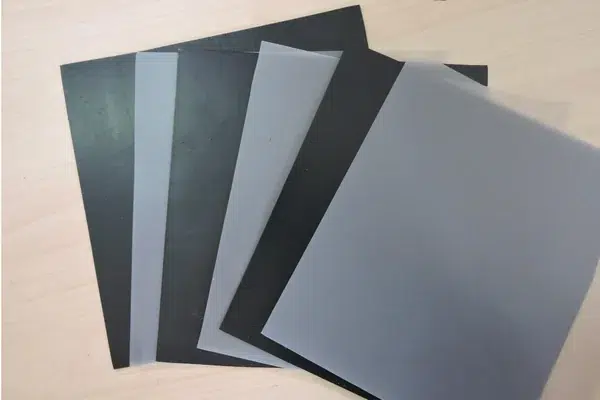
Send liner thickness, surface type, project use, quantity, and destination to compare HDPE geomembrane price beyond the square-meter number.
Request an HDPE geomembrane price checkWhat Changes HDPE Geomembrane Price
The main price drivers are thickness, resin quality, surface texture, roll size, order quantity, freight, and required test data. HDPE geomembrane is usually evaluated with properties such as density, tensile behavior, carbon black content, and oxidative resistance in recognized specifications like GRI GM13. [1]
Thickness also needs a clear measurement basis. ASTM D5199 is commonly referenced for nominal thickness measurement of geosynthetics, so buyers should avoid vague wording like ‘about 1 mm’ when asking for a quotation. [2]
Factory Tip: When two prices differ sharply, I first check whether both quotes use the same thickness, width, resin grade, surface type, and testing package. Many low quotes are not cheaper; they are simply quoting a different liner.
Thickness and Texture Are Not Small Details
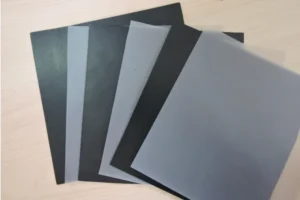
Thickness and surface texture can change both material price and installation cost. A smooth 0.75 mm liner for a small pond and a textured 1.5 mm liner for a slope are not comparable products even if both are called HDPE geomembrane.
| Price factor | Why it changes cost | Buyer check |
|---|---|---|
| Thickness | More resin, higher roll weight, different handling | Confirm nominal thickness and test method |
| Smooth surface | Usually simpler to weld and handle | Suitable for flat or low-friction-risk areas |
| Textured surface | Adds production and handling cost | Use where slope/interface friction is required |
| Roll width | Can reduce seams but needs better unloading | Check site access and welding layout |
| Testing package | Adds documentation value and quality control | Ask for data sheet and batch documents |
Installed Cost Matters More Than Unit Price
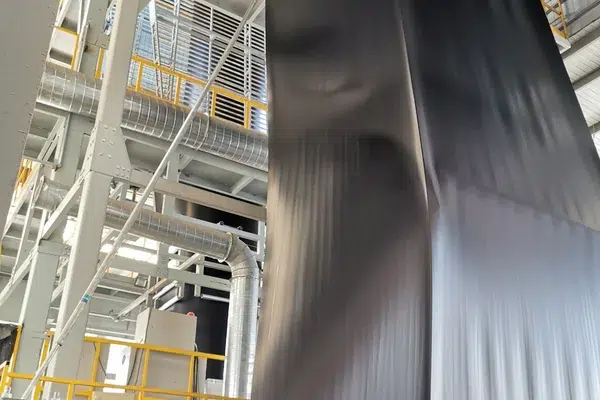
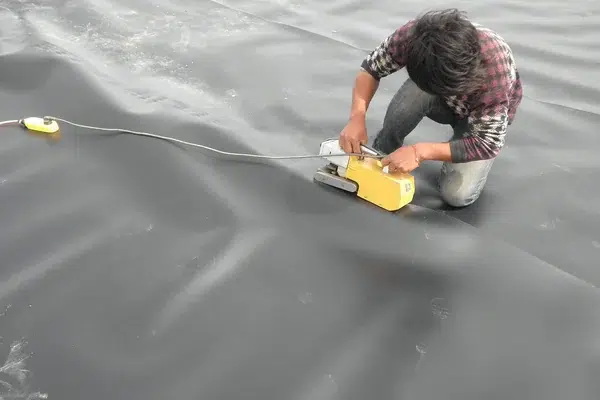
The real buyer question is not only material price; it is installed and accepted cost. Welding length, subgrade repair, geotextile protection, anchor trenches, seam testing, and weather delay can all change the final number.
Mechanical behavior and seam-related performance should not be ignored because liner failure is rarely cheap to repair after filling. ASTM D6693 is one common reference for tensile properties of nonreinforced polyethylene geomembranes. [3]
Field Note: We once reviewed a pond inquiry where the buyer wanted to reduce cost by switching to a thinner liner. The site had rough subgrade and irregular slopes. The better saving was not thinner material; it was choosing a practical liner thickness and adding geotextile protection only where puncture risk was high.
Where Cheap Quotes Usually Hide Risk
Cheap quotes often hide risk in raw material, surface type, roll size, or documentation. A buyer may receive a low price, then discover the roll width creates more seams, the surface is wrong for the slope, or the supplier cannot provide the requested test data.
For export orders, freight and packing matter. Wider rolls may reduce welding time but increase roll weight and unloading requirements. If the jobsite cannot move the rolls safely, the installation team loses time before welding even starts.
Expert Insight: I do not recommend treating recycled-content ambiguity as a normal discount. For containment work, buyers should know what grade of material they are buying. Saving a few cents per square meter is not useful if it increases stress cracking, welding inconsistency, or acceptance risk.
Application Changes the Right Price Level
A fair price depends on what the liner must do. Pond, landfill, mining, canal, and wastewater projects all create different risk levels. Price comparison should start from project use, not from the supplier’s cheapest stock roll.
| Application | Common risk | Price comparison focus |
|---|---|---|
| Farm or irrigation pond | Puncture, subgrade, water depth | Thickness, underlay, roll width |
| Landfill liner | Regulatory acceptance and leachate risk | Specification, protection layers, seam QC |
| Mining pond | Chemical exposure and operational stress | Chemical resistance, thickness, welding plan |
| Wastewater pond | Containment and long-term exposure | HDPE grade, seam testing, protection |
| Slope liner | Interface friction and slippage | Textured surface and anchoring detail |
Landfill and environmental containment projects can involve stricter system expectations than ordinary ponds. EPA landfill design criteria show why liner systems may require more than a single material line item. [4]
RFQ Checklist Before Asking for Price
A better RFQ makes price comparison cleaner and reduces back-and-forth. Buyers should send application, thickness target, surface type, quantity, roll width preference, destination port, site condition, and whether third-party inspection or extra documents are required.
For product matching, compare MJY HDPE geomembrane liner specifications and broader geomembrane options. For project use, review landfill geosynthetics applications or mining liner applications before final ordering.
QC Check: Before confirming an order, compare data sheets line by line. Check thickness, density, tensile properties, tear resistance, puncture resistance, carbon black content, OIT requirement, roll size, and whether the quoted product is smooth or textured.
My View
My view is that HDPE geomembrane price should be discussed only after the application is clear. A supplier can always quote a cheap roll, but a project buyer needs a liner that can be welded, inspected, protected, and accepted. The strongest quotation is not necessarily the lowest number. It is the one where thickness, surface, test data, logistics, and site risk all make sense together. That is the difference between buying plastic sheet and buying a containment layer.
Conclusion
HDPE geomembrane price is only useful when compared against the same specification and project condition. Check thickness, texture, welding, testing, and freight before choosing the lowest number.
FAQs
Why do HDPE geomembrane prices vary so much?
Prices vary because thickness, resin quality, texture, roll width, quantity, documentation, freight, and project risk are different from quote to quote.
Is textured geomembrane more expensive than smooth geomembrane?
Usually yes. Texturing adds production and handling cost, but it may be necessary for slopes or designs requiring interface friction.
Should I buy by price per square meter only?
No. Compare the installed cost, including welding, subgrade preparation, geotextile protection, testing, freight, and repair risk.
References
- Geosynthetic Institute GRI GM13 Specification for HDPE Geomembranes ↩
- ASTM D5199 Standard Test Method for Measuring Nominal Thickness of Geosynthetics ↩
- ASTM D6693 Standard Test Method for Tensile Properties of Nonreinforced Polyethylene Geomembranes ↩
- EPA Subtitle D Landfill Design Criteria 40 CFR 258.40 ↩

 English
  Spanish
  Arabic