Mining containment liners face demanding site conditions, so selecting an HDPE sheet by thickness alone can leave seam, protection, and slope risks unresolved.
Mining geomembrane is commonly used in heap leach pads, process ponds, and tailings containment, but the required liner system depends on chemistry, temperature, hydrostatic pressure, subgrade, slope friction, puncture risk, seam layout, drainage, and project regulations.
Before purchase, compare the drawing, site condition, material function, stated test basis, dimensions, installation method, packaging, delivery scope, and acceptance documents. This reduces the chance that quotations describe different products under the same general name.
Send the section drawing, liquid description, slopes, subgrade, liner area, protection layers, quantity, and destination for a technical RFQ checklist.
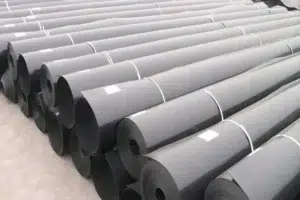
Request a mining geomembrane specification checkFor project procurement, the quotation should identify the product grade, polymer or fabric type where relevant, dimensions, stated minimum properties, test methods, roll or panel size, packing, labels, batch identification, production tolerance, loading plan, and required submission documents. These points are not paperwork for its own sake. They let the buyer check whether incoming materials match the approved section and whether crews can place the material without uncontrolled cutting, additional joints, or unsuitable handling.
At receiving, compare roll labels and quantities against the packing list, inspect visible damage, protect materials from site traffic and unsuitable storage, and keep records that connect each batch to its data sheet. Before installation, the contractor should confirm the prepared surface, water conditions, access, equipment, proposed overlaps or seams, and the inspection hold points required by the project. The final result depends on material grade, design, site conditions, and installation quality; a supplier quotation does not replace engineering approval.
A usable technical comparison also separates material requirements from design responsibility. Suppliers can explain available product ranges and provide data sheets, samples, packing information, and commercial terms. The project team must determine the required values, confirm compatibility with adjacent materials, and approve the construction method. When the intended use involves slopes, groundwater, chemicals, UV exposure, high construction loads, or long-term reinforcement, identify those conditions in writing before bulk production. This avoids a late change after containers have shipped or installation has already begun.
Before dispatch, confirm the approved sample or data sheet, labeling language, packaging protection, container loading arrangement, delivery schedule, and who will receive the technical documents. Clear handover records help the purchasing team, installer, and engineer resolve questions without guessing which product batch was delivered. Keep copies with the project quality file for later inspection and traceability. This supports clear coordination among procurement, engineering, logistics, and site teams.
Mining Applications Need System-Level Selection
Heap leach pads, solution ponds, and tailings areas can all use geomembrane barriers, but their operating conditions and liner interfaces are different. The liner is only one part of the containment section, which can also include subgrade preparation, geotextile protection, drainage, leak-detection features, and anchor details.
The final specification should be confirmed according to the project design and applicable requirements. Regulatory examples for landfill liner systems show why containment, drainage, and installation details are evaluated together rather than as a single material purchase. [1]
Thickness and Texture Serve Different Purposes
Thickness relates to handling and puncture resistance, while textured surfaces may be selected where interface friction is required on slopes. Neither choice should be made from a catalogue image or unit price alone.
Available MJY smooth HDPE ranges from 0.2 to 3.0 mm, with textured product options in a different range. These are available product configurations, not a mining design recommendation. GRI GM13 is often used as a reference framework, but buyers should request the exact property requirements and testing basis for the project. [2] [3]
| Mining area | Typical liner question | Critical check |
|---|---|---|
| Heap leach pad | Barrier and slope interface | Texture, seams, protection |
| Process pond | Liquid containment | Chemistry, hydraulic load, panel layout |
| Tailings area | Containment section | Subgrade, drainage, cover load |
| Channel or sump | Complex geometry | Welding access and repairs |
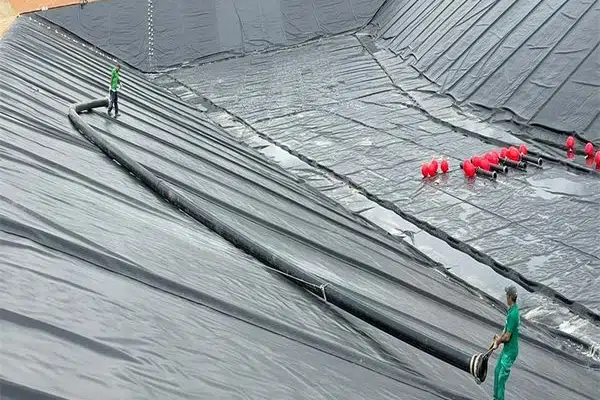
Protection Layers Reduce Interface Damage Risk
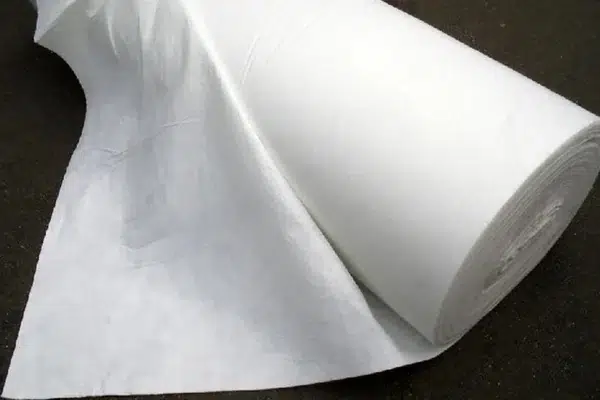
Geotextile protection can reduce localized damage risk where the liner contacts rough subgrade, drainage aggregate, or cover material. The needed protection depends on the actual interface, construction traffic, and load rather than a generic fabric weight.
Procurement Perspective: a mining liner quote is incomplete if it names only the geomembrane but not the relevant protection, drainage, and panel layout. We recommend defining every interface, the required function of each layer, roll or panel dimensions, installation sequence, and documents required for acceptance.
Seaming and Site Handling Are Critical
A liner can have appropriate material properties and still create risk if panels, seams, repairs, or site handling are not planned. Panel orientation, weather conditions, welding equipment, test frequency, and repair access should be addressed before shipment.
QC Check: request a panel layout, welding and seam-test procedure, repair procedure, roll identification, and batch documentation. A failed seam can create retesting and schedule delay, so a lower material price is not automatically the lower installed cost. ASTM D4833 is an index puncture reference; it does not replace project-specific interface evaluation. [4]
What to Include in a Mining Liner Inquiry
Send application, section drawing, liquid chemistry, temperatures if relevant, slopes, liner thickness and surface requirements, protection layers, panel dimensions, required documents, quantity, and delivery point. This lets suppliers compare like-for-like requirements.
Review MJY geomembrane containment products, mining-industry applications, and geotextile protection materials. A qualified engineer should verify final design parameters.
Conclusion
Mining geomembrane should be purchased as part of a containment system. Confirm the interfaces, seam plan, protection, chemical conditions, and project documents before pricing.
FAQs
Can woven geotextile be used for drainage?
It may be used in some designs, but drainage and filtration need to be checked against the soil, openings, and water-flow requirement.
Is a thicker material always better?
No. The correct material is the one whose relevant properties match the project function and installation conditions.
What should be checked before ordering?
Confirm the section, application, performance basis, dimensions, quantity, documentation, delivery conditions, and approval requirements.