Woven and non woven geotextiles can look similar in a quotation, but they answer different drainage, separation, reinforcement, and protection questions.
Choose woven versus non woven geotextile by the needed function and site interface: woven products are often evaluated for tensile reinforcement and separation, while nonwoven products are commonly considered for filtration, drainage, cushioning, and separation. Soil, water, load, and installation risk decide the final specification.
Before purchase, compare the drawing, site condition, material function, stated test basis, dimensions, installation method, packaging, delivery scope, and acceptance documents. This reduces the chance that quotations describe different products under the same general name.
Send the section drawing, soil information, water condition, loading, required function, roll dimensions, quantity, and destination for an RFQ checklist.
Request a woven or nonwoven geotextile checkFor project procurement, the quotation should identify the product grade, polymer or fabric type where relevant, dimensions, stated minimum properties, test methods, roll or panel size, packing, labels, batch identification, production tolerance, loading plan, and required submission documents. These points are not paperwork for its own sake. They let the buyer check whether incoming materials match the approved section and whether crews can place the material without uncontrolled cutting, additional joints, or unsuitable handling.
At receiving, compare roll labels and quantities against the packing list, inspect visible damage, protect materials from site traffic and unsuitable storage, and keep records that connect each batch to its data sheet. Before installation, the contractor should confirm the prepared surface, water conditions, access, equipment, proposed overlaps or seams, and the inspection hold points required by the project. The final result depends on material grade, design, site conditions, and installation quality; a supplier quotation does not replace engineering approval.
A usable technical comparison also separates material requirements from design responsibility. Suppliers can explain available product ranges and provide data sheets, samples, packing information, and commercial terms. The project team must determine the required values, confirm compatibility with adjacent materials, and approve the construction method. When the intended use involves slopes, groundwater, chemicals, UV exposure, high construction loads, or long-term reinforcement, identify those conditions in writing before bulk production. This avoids a late change after containers have shipped or installation has already begun.
Before dispatch, confirm the approved sample or data sheet, labeling language, packaging protection, container loading arrangement, delivery schedule, and who will receive the technical documents. Clear handover records help the purchasing team, installer, and engineer resolve questions without guessing which product batch was delivered. Keep copies with the project quality file for later inspection and traceability. This supports clear coordination among procurement, engineering, logistics, and site teams.
The First Question Is the Required Function
Geotextile selection should begin with what the layer must do: separate soil and aggregate, allow filtration, carry water, protect a liner, or provide tensile reinforcement. A fabric name or GSM value does not provide that answer by itself.
In road construction, separation may control aggregate contamination. In a drain, filtration stability and water flow may be more important. In liner protection, puncture resistance and thickness can matter. FHWA guidance provides system context for these different geosynthetic functions. [3]
Where Woven Geotextile Usually Fits
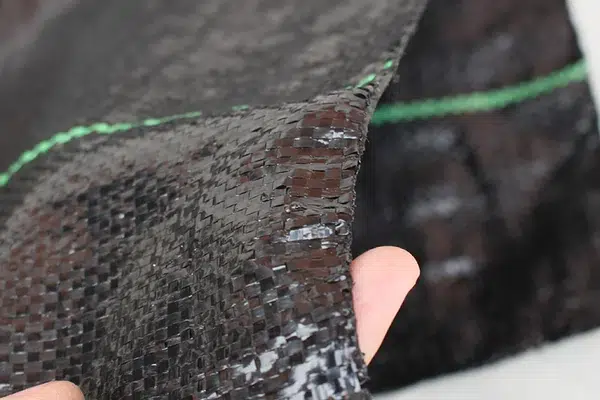
Woven geotextile is commonly considered where tensile strength, dimensional stability, and separation are important, such as some roads, embankments, and reinforcement applications. Its opening characteristics and permeability still need to suit the soil and water conditions.
MJY product information lists PP woven geotextile options with different strength and unit-weight ranges. Those catalogue values are not a substitute for confirming the required direction, soil interface, overlap, roll width, and installation sequence for a project.
| Need | Often evaluated option | Key variable |
|---|---|---|
| Drainage and filtration | Nonwoven | Opening size and permittivity |
| Road separation | Woven or nonwoven | Subgrade, aggregate, strength, water |
| Liner protection | Nonwoven | Puncture and interface risk |
| Reinforcement | Woven | Tensile direction and soil interaction |
| Erosion or drainage layer | Project specific | Flow path and installation exposure |
Where Nonwoven Geotextile Usually Fits
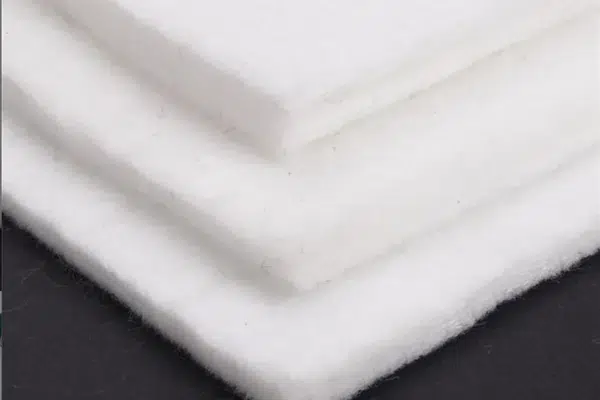
Nonwoven geotextile is commonly selected for filtration, drainage, separation, and cushioning where water flow and interface protection are important. A heavier fabric is not always the correct fabric if opening size, permittivity, or puncture requirement do not match the job.
ASTM D4751 and ASTM D4491 are common references for apparent opening size and water permeability by permittivity. The values must be interpreted with the adjacent soil and hydraulic condition; they do not make a fabric suitable for every drainage application. [1] [2]
Do Not Compare Only GSM or Price
GSM is a useful descriptor, but it cannot replace the performance information needed for a specific function. Two fabrics with a similar mass can have different tensile behavior, openings, thickness, or water-flow characteristics.
Expert Insight: a low-price fabric can become costly when it clogs, tears during placement, allows aggregate and soil to mix, or does not cushion a liner at a rough interface. Buyers should compare test methods, minimum values, roll width, packaging, batch identification, and the exact layer function before approving bulk supply.
What to Put in a Geotextile RFQ
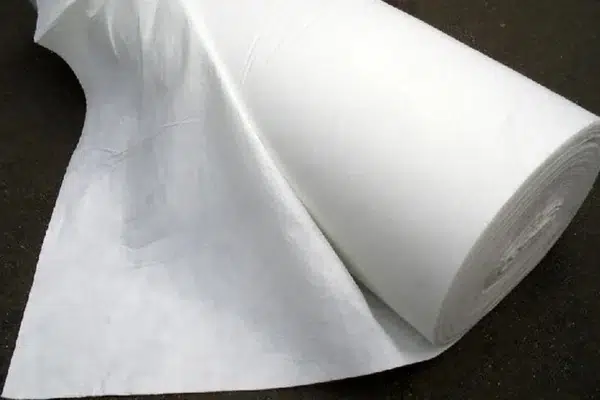
Include application, section drawing, soil type, water condition, required function, performance requirements, roll size, overlap, quantity, destination, and required documents. This creates a comparable technical request.
Review MJY geotextile product options, geomembrane protection applications, and geogrid reinforcement materials. The final selection should be checked against the project design.
FAQs
Can woven geotextile be used for drainage?
It may be used in some designs, but drainage and filtration need to be checked against the soil, openings, and water-flow requirement.
Is a thicker material always better?
No. The correct material is the one whose relevant properties match the project function and installation conditions.
What should be checked before ordering?
Confirm the section, application, performance basis, dimensions, quantity, documentation, delivery conditions, and approval requirements.
Conclusion
Woven and non woven geotextile are selected by function, not by fabric label alone. Confirm the soil interface, water, load, required properties, and installation method before ordering.