
La mayoría de los problemas en la instalación de geotextiles comienzan antes de desenrollar la tela.
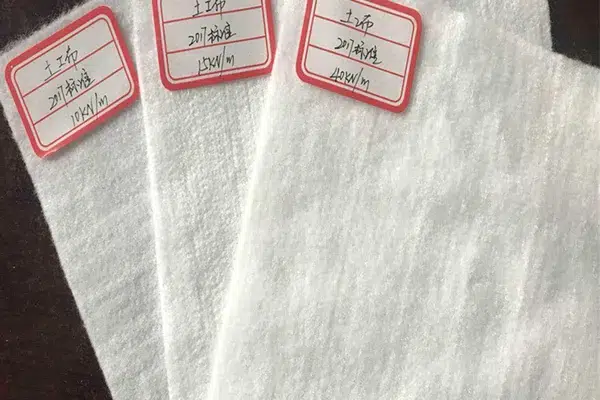
¿Cuál es la forma correcta de instalar un geotextil?
La instalación correcta de geotextiles comienza con la preparación del subrasante, seguida de la colocación controlada de la tela, el solapamiento adecuado, la eliminación de arrugas, la protección contra daños y el cubrimiento inmediato. El solapamiento exacto y el tipo de tejido dependen de la resistencia del suelo, las condiciones del agua, el tamaño del árido, el tráfico y de si la tela actúa como separación, filtración, drenaje o refuerzo.
Un geotextil no es solo una lámina colocada bajo el árido. Es una capa funcional. Si la obra requiere separación, la tela debe evitar que el árido se mezcle con las finas. Si la obra requiere filtración, la tela debe permitir el paso del agua reteniendo el suelo. Si la obra requiere protección, la resistencia a la perforación cobra mayor importancia.
El tamaño de apertura aparente y la permeabilidad al agua son puntos de referencia habituales para las decisiones de filtración y drenaje de geotextiles. [1] [2] Los equipos de instalación no necesitan memorizar los métodos de ensayo, pero los compradores deberían entender por qué un mismo tejido no sirve para todos los emplazamientos.
Envíe el detalle de su carretera, drenaje, estanque o muro de contención para comprobar el solapamiento del geotextil, el tipo de tejido y el riesgo de colocación antes de realizar el pedido.
Solicite una lista de verificación de instalación de geotextilesLa preparación del subrasante es lo primero
Retire escombros afilados, raíces grandes, huecos blandos, agua estancada y cambios bruscos de cota antes de colocar la tela. Si el subrasante está irregular, la tela puede salvar huecos, arrugarse, rasgarse durante la colocación del árido o no mantener las capas separadas.
Consejos de fábrica: pregunte por el peso del rollo antes del envío. Un rollo ancho reduce las uniones, pero también requiere el equipo de manipulación adecuado. Si un equipo no puede mover el rollo con seguridad, podría arrastrar la tela, contaminarla con tierra o cortarla en secciones poco eficientes.
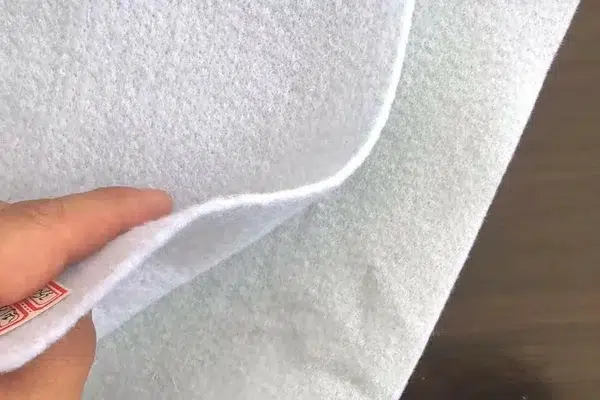
¿Cuánto solapamiento se necesita?
| Condición del sitio | Lógica del solapamiento | Riesgo si es demasiado pequeño |
|---|---|---|
| Subrasante preparado y firme | Un solapamiento moderado puede funcionar cuando la perturbación sea baja | Pequeños huecos durante la colocación del árido |
| Soft or wet soil | Use wider overlap or sewing as specified | Fabric separation and soil pumping |
| Drainage trench | Wrap detail matters more than flat overlap alone | Soil enters the drain stone |
| Sloped area | Overlap direction should follow water and fill movement | Water or aggregate lifts the fabric edge |
There is no honest universal overlap number for every geotextile project. Many site specifications give a minimum, but the installer still needs judgment. Soft subgrade, moving water, steep slopes, or heavy aggregate placement usually require more care than a clean, flat, compacted base.
FHWA geosynthetic guidance emphasizes matching material function and construction practice. [3] That is important because a good fabric can still fail if aggregate is dumped aggressively or equipment turns directly on uncovered fabric.
Drainage and Filtration Checks
For drainage work, confirm the water path before fabric is placed. Water should enter the drainage layer, move through or along the correct path, and leave through a planned outlet. If the outlet is blocked, the fabric becomes part of a wet problem rather than a drainage solution.
QC Check: Before covering the fabric, inspect for tears, folds, open seams, soil contamination, and shifted overlaps. Small defects are much easier to repair before aggregate covers the fabric. After covering, the repair becomes excavation work.
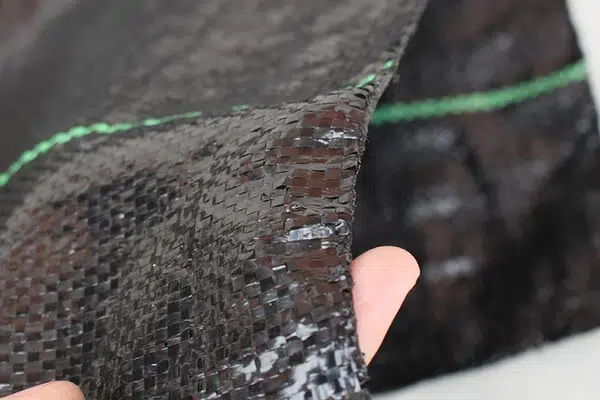
Common Installation Mistakes
| Error | Por qué importa | Mejor práctica |
|---|---|---|
| Placing fabric on soft mud | The layer can pump and deform under load | Repair weak spots and control water first |
| Dragging fabric over sharp stone | Creates punctures before service starts | Unroll and position with controlled handling |
| Leaving wrinkles under aggregate | Creates stress points and uneven cover | Pull flat before covering |
| Driving on uncovered fabric | Can tear or shift the layer | Cover with specified fill before traffic |
Field Note: When buyers report that geotextile ‘did not work,’ the photos often show installation damage, not product failure. Exposed fabric has been driven over, aggregate was dumped from too high, or overlap moved before cover was placed. The material did not get a fair chance.
Cover Material and Site Traffic Control
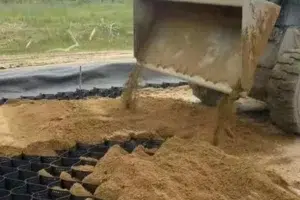
The covering step is where many good fabrics are damaged. Aggregate should be placed in a way that does not drag, fold, or shove the geotextile. If a loader pushes stone directly across uncovered fabric, the overlap can open and soil can enter the aggregate layer. That failure may not be obvious until rutting, clogging, or settlement appears later.
For roads and working platforms, traffic control matters. A geotextile can separate soil and aggregate only when it stays continuous. Turning trucks on thin cover, braking hard during placement, or working during heavy rain can disturb the fabric. The installer should place enough initial cover before allowing repeated traffic.
The International Geosynthetics Society describes geosynthetics as engineered products used with soil and rock, which is a useful reminder that the fabric is part of a construction system, not a loose accessory. [4] The installer has to protect that system during placement.
For B2B buyers, I recommend asking the contractor how the fabric will be unrolled, overlapped, covered, and inspected. If the answer is vague, add a simple site checklist to the purchase file. It can prevent disputes later when product quality and installation damage are being discussed at the same time.
That checklist is especially useful when several subcontractors handle the same base layer and responsibility for damage is unclear. It also helps the buyer separate a product-quality issue from a placement issue, which makes after-sales communication faster and more factual.
MJY supplies nonwoven and woven geotextile fabrics para drenaje, separación y refuerzo. Para proyectos de drenaje, compare la tela geotextil con capas de drenaje geonet cuando se requiere un drenaje en el plano más rápido. Para trabajos de carretera y de base, revise opciones de aplicación de geosintéticos antes de finalizar el pedido de rollos.
Conclusión final
La instalación de geotextiles es una tarea sistémica: prepare el subrasante, coloque la tela con cuidado, controle los solapes, proteja la capa y confirme el drenaje antes de cubrir.
Referencias ##
Referencias
- Método de ensayo estándar ASTM D4751 para determinar el tamaño de apertura aparente de un geotextil ↩
- Métodos de prueba estándar ASTM D4491 para la permeabilidad al agua de geotextiles por permitividad ↩
- Directrices de diseño y construcción de geosintéticos de la FHWA ↩
- Sociedad Internacional de Geosintéticos, recursos educativos sobre geosintéticos. ↩

 Spanish
  English
  Arabic