
A slope may look stable in dry weather, then lose infill after heavy runoff because anchoring and drainage were treated as secondary details.
Geocell slope protection works when the cellular confinement system, anchor layout, cell depth, infill, drainage path, and slope condition are designed together. It can control erosion and hold infill on many slopes, but it is not a substitute for correcting active slips, poor drainage, or unstable subsoil.
The practical decision is not simply which product costs less per square meter. It is which layer can keep working after compaction, rainfall, construction traffic, and the conditions that matter on this site.
Before a purchase order is released, compare the product data sheet with the drawing, site conditions, installation method, and destination logistics. That small check helps a buyer identify whether two quotations truly cover the same material, roll dimensions, test basis, and delivery scope. It also creates a clear record for the contractor, project engineer, and supplier before site work begins. In B2B projects, clarity at this stage is usually less expensive than explaining a substitution after material reaches the site. Ask the supplier to identify any assumption in writing, especially when a drawing, local soil report, or anchor layout is not available at quotation stage. Confirm the proposed roll layout, joining plan, unloading approach, and inspection records as well, because these logistics affect installation quality and can change the actual project cost.
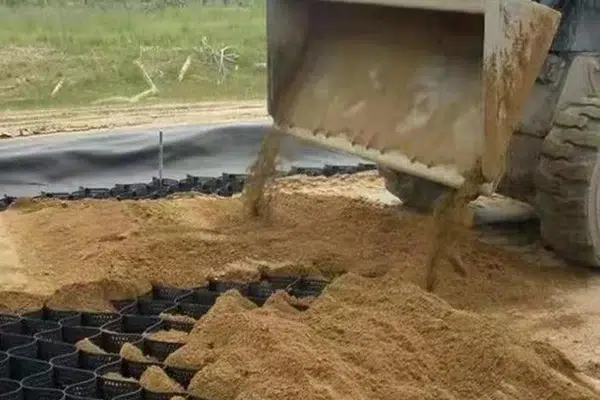
Send slope angle, length, soil condition, runoff details, infill choice, and project location to compare cell depth and anchor needs.
Request a geocell slope protection specification checkWhen Geocell Slope Protection Works
Geocells work where a slope needs surface confinement, erosion control, or stable support for topsoil, gravel, or concrete infill. The cells restrict lateral movement of the selected infill, so rainfall and runoff are less likely to wash it down the face.
They are used on embankments, channels, access slopes, and vegetated erosion-control areas. The boundary is important: geocells protect a prepared surface, not a deep rotational failure or uncontrolled groundwater problem. FHWA guidance is useful for understanding how stabilization products sit within the wider civil system. [1]
Cell Depth and Panel Geometry
Cell depth should match the infill and the severity of exposure. Shallow cells can suit vegetated surfaces, while deeper cells provide more confinement for aggregate or higher-energy runoff. MJY product data lists common heights from 50 to 250 mm, but height alone does not define performance.
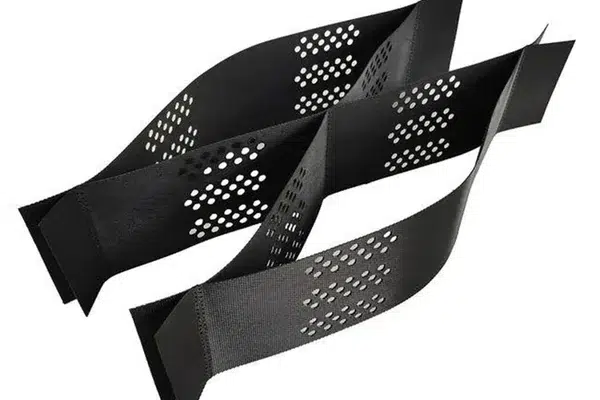
Weld spacing changes expanded geometry, and strip thickness and texture influence stiffness and interaction with fill. Factory Tip: when a buyer asks only for HDPE geocell for slope, the next questions should be slope angle and infill. A 75 mm vegetated panel and a 200 mm aggregate panel solve different problems.
| Condición de la pendiente | System focus | Critical check |
|---|---|---|
| Vegetated embankment | Moderate cell depth and topsoil | Drainage, seed, anchors |
| Aggregate access slope | Deeper confinement | Cell depth, anchor grid, runoff |
| High runoff channel | Stable infill and restraint | Flow condition and crest |
| Wet or unstable slope | Investigation first | Groundwater and global stability |

Anchoring Is Not an Accessory
Anchoring transfers surface loads into the slope and prevents panel creep during placement and service. Anchor length, spacing, crest restraint, and soil holding capacity need to be considered together. A good panel can still move if anchors are undersized or set out without regard to slope geometry.
Field Note: a rainy-season inquiry listed only panel area and cell height. After a review, the contractor added a defined anchor grid and crest restraint before delivery. That clarification was much cheaper than opening a finished surface after the first rainfall.
Infill, Perforation, and Drainage
The infill is part of the geocell system, not a decorative finish. Topsoil and seed need a drainage-aware vegetated design. Angular aggregate needs stable confinement. Concrete infill changes both loading and drainage. Perforated strips may support drainage and root interaction when those functions matter.
Expert Insight: many slope jobs specify the visible erosion-control layer carefully while ignoring water behind or beneath it. Seepage exits, surface channels, and hydrostatic pressure should be checked before the panel is installed. Surface confinement cannot compensate for a drainage path that directs water into the slope.
Weld Strength and Permanent Performance
Geocell weld strength matters because the panel is expanded, filled, compacted, and exposed to weather cycles. ASTM D8269 covers tensile properties of geocells and is relevant when comparing panel and weld performance. [2]
cURL Too many subrequests by single Worker invocation. To configure this limit, refer to https://developers.cloudflare.com/workers/wrangler/configuration/#limits [3]
cURL Too many subrequests by single Worker invocation. To configure this limit, refer to https://developers.cloudflare.com/workers/wrangler/configuration/#limits
cURL Too many subrequests by single Worker invocation. To configure this limit, refer to https://developers.cloudflare.com/workers/wrangler/configuration/#limits cURL Too many subrequests by single Worker invocation. To configure this limit, refer to https://developers.cloudflare.com/workers/wrangler/configuration/#limits
cURL Too many subrequests by single Worker invocation. To configure this limit, refer to https://developers.cloudflare.com/workers/wrangler/configuration/#limits cURL Too many subrequests by single Worker invocation. To configure this limit, refer to https://developers.cloudflare.com/workers/wrangler/configuration/#limitscURL Too many subrequests by single Worker invocation. To configure this limit, refer to https://developers.cloudflare.com/workers/wrangler/configuration/#limits aplicaciones de geoceldas, y cURL Too many subrequests by single Worker invocation. To configure this limit, refer to https://developers.cloudflare.com/workers/wrangler/configuration/#limitscURL Too many subrequests by single Worker invocation. To configure this limit, refer to https://developers.cloudflare.com/workers/wrangler/configuration/#limits [4]
Mi opinión
cURL Too many subrequests by single Worker invocation. To configure this limit, refer to https://developers.cloudflare.com/workers/wrangler/configuration/#limits
Conclusión
cURL Too many subrequests by single Worker invocation. To configure this limit, refer to https://developers.cloudflare.com/workers/wrangler/configuration/#limits
Preguntas frecuentes
cURL Too many subrequests by single Worker invocation. To configure this limit, refer to https://developers.cloudflare.com/workers/wrangler/configuration/#limits
cURL Too many subrequests by single Worker invocation. To configure this limit, refer to https://developers.cloudflare.com/workers/wrangler/configuration/#limits
cURL Too many subrequests by single Worker invocation. To configure this limit, refer to https://developers.cloudflare.com/workers/wrangler/configuration/#limits
cURL Too many subrequests by single Worker invocation. To configure this limit, refer to https://developers.cloudflare.com/workers/wrangler/configuration/#limits
cURL Too many subrequests by single Worker invocation. To configure this limit, refer to https://developers.cloudflare.com/workers/wrangler/configuration/#limits
cURL Too many subrequests by single Worker invocation. To configure this limit, refer to https://developers.cloudflare.com/workers/wrangler/configuration/#limits
Referencias
- Directrices de diseño y construcción de geosintéticos de la FHWA ↩
- cURL Too many subrequests by single Worker invocation. To configure this limit, refer to https://developers.cloudflare.com/workers/wrangler/configuration/#limits ↩
- cURL Too many subrequests by single Worker invocation. To configure this limit, refer to https://developers.cloudflare.com/workers/wrangler/configuration/#limits ↩
- cURL Too many subrequests by single Worker invocation. To configure this limit, refer to https://developers.cloudflare.com/workers/wrangler/configuration/#limits ↩


 Spanish
  English
  Arabic