
Replacing a gravel drainage layer with a thinner geocomposite can save space and hauling, but only if flow capacity remains adequate under load.
Drainage geocomposite can replace or supplement gravel drainage layers when its geonet core, filter geotextile, transmissivity under load, hydraulic gradient, chemical environment, installation protection, and outlet detail match the project. It is useful in landfills, retaining walls, roads, and limited-space drainage, but it is not an automatic substitute for gravel.
Before a purchase order is released, compare the project drawing, site condition, test-data basis, installation method, dimensions, packaging, and delivery scope. This helps project buyers verify that quotations describe the same engineering system rather than materials with similar names but different performance. Confirm receiving inspection, roll identification, storage protection, field handling, panel joining, and acceptance records before shipment. These details reduce avoidable site delays and make it easier to trace the material batch if a project question arises later.
Send the section drawing, overburden load, gradient, liquid type, filter requirement, target flow, panel layout, and destination for a drainage comparison.
Request a drainage geocomposite specification checkWhat a Drainage Geocomposite Does
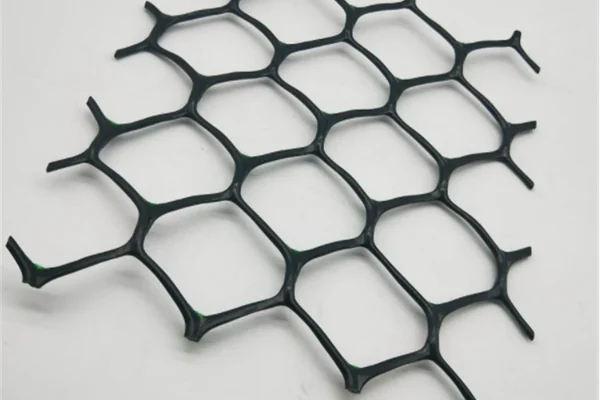
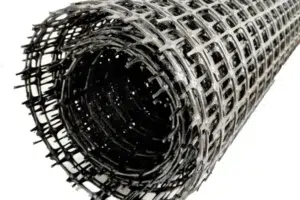
A drainage geocomposite combines an open drainage core with one or more geotextile filter layers. The core provides an in-plane flow path; the geotextile separates and filters adjacent soil, waste, or aggregate. This can create a compact drainage system where importing thick gravel is difficult, costly, or space-consuming.
The key performance concept is transmisividad, the ability to carry liquid in the plane of the material under stated pressure and gradient. ASTM D4716 is a common reference for in-plane flow rate and hydraulic transmissivity. A test value should always be read with its load, gradient, and boundary conditions. [1]
When It Can Replace Gravel
Drainage geocomposite is most useful where a project needs drainage performance with reduced thickness and lower handling weight. Typical cases include landfill leachate collection, retaining-wall backdrains, subgrade drainage, and some covered containment systems. It can reduce aggregate transport and simplify roll installation when access is limited.
MJY composite geonet data lists core thicknesses of 6.3, 7, 8, and 9 mm combined with continuous-filament nonwoven geotextile. That does not mean every thickness fits every job. The correct model depends on overburden load, expected flow, gradient, adjacent materials, and whether one or two filter layers are needed.
| Aplicación | Why use a composite | Critical check |
|---|---|---|
| Landfill drainage | Compact flow path below heavy cover | Transmissivity at load, chemical exposure |
| Retaining-wall backdrain | Reduced wall profile and easy roll placement | Filter fabric, outlet, compression |
| Road or embankment | Planned lateral drainage path | Installation protection and clogging |
| Remote site | Less aggregate hauling | Equivalent flow capacity and access |
Flow Under Compression
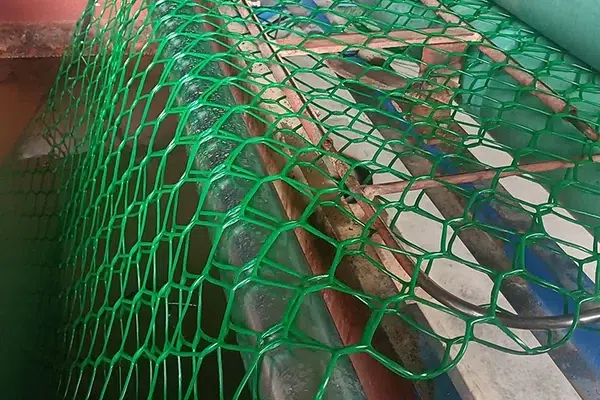
An unloaded sample can appear very open while its drainage channels become smaller under soil, waste, or cover load. Compression resistance and long-term transmissivity therefore matter more than visual thickness. The core must maintain enough flow path after installation and service loading.
Factory Tip: never compare drainage composites using core thickness alone. Ask for the transmissivity value at the relevant normal load and hydraulic gradient. A low-price core may look similar in a warehouse but provide a different flow result when buried below a landfill cover or retaining-wall backfill.
Filter Fabric and Clogging Risk
The geotextile filter layer must prevent fine soil intrusion without stopping intended flow. Its opening size, permittivity, mass, and resistance to installation damage must suit the adjacent material. If fines enter the core or the filter clogs, the drainage path can lose capacity.
Field Note: a wall drainage inquiry focused on the geonet core and omitted the soil-side filter. The backfill contained fines that could migrate under wet conditions. The useful system was not simply a net; it required a compatible filter layer and a clear route to a collector pipe or outlet.

Landfills, Walls, and Roads Need Different Checks
Landfills, retaining walls, and road structures place different loads and liquids on a drainage composite. Landfill systems may involve leachate, high overburden, liner interfaces, and regulatory requirements. Retaining walls need drainage exits that prevent pore pressure. Road systems need protected flow paths that are not crushed or clogged by base material.
EPA Subtitle D criteria give regulatory context for landfill liner and leachate collection systems. FHWA guidance is useful for system-level geosynthetic applications. Expert Insight: a composite that works behind a light wall should not be assumed suitable for a high-load landfill drainage layer without project-specific design verification. [2] [3]
cURL Too many subrequests by single Worker invocation. To configure this limit, refer to https://developers.cloudflare.com/workers/wrangler/configuration/#limits
Send application, drawing section, design load, gradient, liquid type, target flow, chemical exposure, filter requirement, core thickness, panel joining method, roll width, quantity, and destination. This lets suppliers compare drainage systems on the actual service condition.
cURL Too many subrequests by single Worker invocation. To configure this limit, refer to https://developers.cloudflare.com/workers/wrangler/configuration/#limits geonet and drainage geocomposite options, landfill geosynthetic applications, y filter geotextile materials. IGS resources provide useful function context. [4]
Mi opinión
cURL Too many subrequests by single Worker invocation. To configure this limit, refer to https://developers.cloudflare.com/workers/wrangler/configuration/#limits
Conclusión
cURL Too many subrequests by single Worker invocation. To configure this limit, refer to https://developers.cloudflare.com/workers/wrangler/configuration/#limits
Preguntas frecuentes
cURL Too many subrequests by single Worker invocation. To configure this limit, refer to https://developers.cloudflare.com/workers/wrangler/configuration/#limits
cURL Too many subrequests by single Worker invocation. To configure this limit, refer to https://developers.cloudflare.com/workers/wrangler/configuration/#limits
cURL Too many subrequests by single Worker invocation. To configure this limit, refer to https://developers.cloudflare.com/workers/wrangler/configuration/#limits
cURL Too many subrequests by single Worker invocation. To configure this limit, refer to https://developers.cloudflare.com/workers/wrangler/configuration/#limits
cURL Too many subrequests by single Worker invocation. To configure this limit, refer to https://developers.cloudflare.com/workers/wrangler/configuration/#limits
cURL Too many subrequests by single Worker invocation. To configure this limit, refer to https://developers.cloudflare.com/workers/wrangler/configuration/#limits
Referencias
- cURL Too many subrequests by single Worker invocation. To configure this limit, refer to https://developers.cloudflare.com/workers/wrangler/configuration/#limits ↩
- Directrices de diseño y construcción de geosintéticos de la FHWA ↩
- Criterios de diseño de vertederos EPA Subtítulo D 40 CFR 258.40 ↩
- cURL Too many subrequests by single Worker invocation. To configure this limit, refer to https://developers.cloudflare.com/workers/wrangler/configuration/#limits ↩


 Spanish
  English
  Arabic