Lucas

As a professional technical consultant at MJY Geosynthetics Company, I have over ten years of industry experience and possess in-depth knowledge of the company's various products – from technical parameters and material characteristics to corresponding construction methods. To date, I have provided services to clients in more than 40 countries and regions, accumulating extensive practical experience in multinational projects and developing a systematic understanding of geosynthetic applications, construction practices, and industry standards in different markets.

cURL Too many subrequests by single Worker invocation. To configure this limit, refer to https://developers.cloudflare.com/workers/wrangler/configuration/#limits

Woven vs Non Woven Geotextile: Drainage, Separation, and Reinforcement Differences

Woven and non woven geotextiles can look similar in a quotation, but they answer different drainage, separation, reinforcement, and protection questions. Choose woven versus non woven geotextile by the needed function and site interface: woven products are often evaluated for tensile reinforcement and separation, while nonwoven products are commonly considered for filtration, drainage, cushioning, and […]

Woven vs Non Woven Geotextile: Drainage, Separation, and Reinforcement Differences Leer más »
HDPE geomembrane sheet used in a landfill liner system material guide

Landfill Liner Material Guide: HDPE Geomembrane, GCL, and Geotextile Layers

A landfill liner is a layered containment system, so choosing one material by price alone can leave critical interfaces unprotected. A landfill liner commonly combines an HDPE geomembrane barrier with geotextile protection, drainage, and sometimes a geosynthetic clay liner (GCL). The correct layer sequence depends on the design, waste and leachate conditions, subgrade, slopes, loads,

Landfill Liner Material Guide: HDPE Geomembrane, GCL, and Geotextile Layers Leer más »

Expanded HDPE geocell panel showing cellular confinement structure and cell depth

Geocell Material Guide: HDPE Strip Thickness, Weld Distance, and Cell Depth

Geocell panels look similar when folded, but strip thickness, weld spacing, cell depth, and panel dimensions can produce very different site results. Geocell material should be selected by HDPE strip properties, cell depth, weld spacing, panel size, infill, slope or traffic load, subgrade condition, and anchoring method. A deeper or thicker-looking panel is not automatically

Geocell Material Guide: HDPE Strip Thickness, Weld Distance, and Cell Depth Leer más »

Geomembrane roll representing containment material in a geosynthetics selection guide

Geosynthetic Materials: Types, Uses, and How to Choose for Civil Works

Civil projects rarely need a generic geosynthetic. They need one material function matched to soil, water, load, geometry, and installation conditions. Geosynthetic materials include geotextiles, geomembranes, geogrids, geocells, geonets, drainage composites, and related products. Choose them by the required function, such as separation, filtration, drainage, reinforcement, confinement, or containment, then verify the project conditions and

Geosynthetic Materials: Types, Uses, and How to Choose for Civil Works Leer más »

Nonwoven geotextile fabric for drainage separation and civil construction

Geotextile vs Landscape Fabric: What Contractors Should Know Before Buying

A fabric may look similar on a roll, yet fail quickly when a landscaping material is substituted for an engineered separation or drainage layer. Geotextile and landscape fabric are not automatically interchangeable. Engineered geotextiles are selected by filtration, apparent opening size, permittivity, puncture resistance, tensile properties, and project exposure. Landscape fabric may suit light weed-control

Geotextile vs Landscape Fabric: What Contractors Should Know Before Buying Leer más »

Uniaxial geogrid roll used for retaining wall and slope soil reinforcement

Uniaxial Geogrid: Best Uses for Retaining Walls and Soil Reinforcement

A retaining wall can be under-reinforced when a grid is selected by mesh appearance or peak strength instead of its working tensile direction. Uniaxial geogrid is designed to carry tensile load mainly in one direction. It is widely used for retaining walls, reinforced soil slopes, embankments, and other applications where reinforcement extends away from a

Uniaxial Geogrid: Best Uses for Retaining Walls and Soil Reinforcement Leer más »

Drainage geocomposite roll with geonet core for landfill wall and road drainage

Drainage Geocomposite: When It Replaces Gravel Drainage Layers

Replacing a gravel drainage layer with a thinner geocomposite can save space and hauling, but only if flow capacity remains adequate under load. Drainage geocomposite can replace or supplement gravel drainage layers when its geonet core, filter geotextile, transmissivity under load, hydraulic gradient, chemical environment, installation protection, and outlet detail match the project. It is […]

Drainage Geocomposite: When It Replaces Gravel Drainage Layers Leer más »

cURL Too many subrequests by single Worker invocation. To configure this limit, refer to https://developers.cloudflare.com/workers/wrangler/configuration/#limits

cURL Too many subrequests by single Worker invocation. To configure this limit, refer to https://developers.cloudflare.com/workers/wrangler/configuration/#limits

A driveway can rut before the surface is finished when aggregate, geogrid, fabric, and compaction are treated as separate decisions. Geogrid driveway installation works best when a suitable biaxial grid is laid on a prepared subgrade, aggregate is placed without damaging the grid, and base depth and compaction match the expected traffic. Geotextile fabric may

cURL Too many subrequests by single Worker invocation. To configure this limit, refer to https://developers.cloudflare.com/workers/wrangler/configuration/#limits Leer más »

cURL Too many subrequests by single Worker invocation. To configure this limit, refer to https://developers.cloudflare.com/workers/wrangler/configuration/#limits

Geotextile Bags: Uses in Coastal Protection, Rivers, and Erosion Control

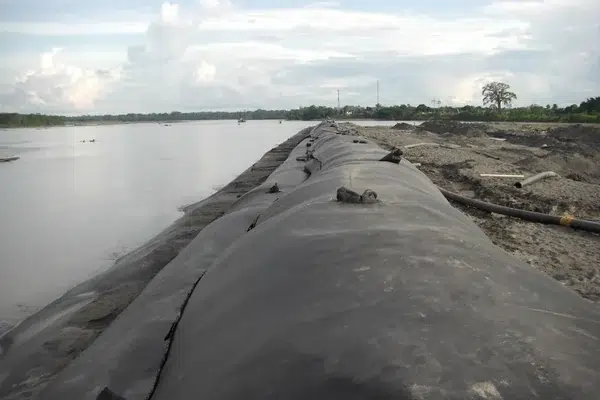
A geotextile bag can control erosion only when fabric, seam, fill, placement, and water force are treated as one system. Geotextile bags, often searched in Spanish as bolsas de geotextil, are filled geotextile units used for coastal protection, riverbank support, temporary flood works, and erosion control. Their performance depends on fabric filtration, tensile and seam

Geotextile Bags: Uses in Coastal Protection, Rivers, and Erosion Control Leer más »

cURL Too many subrequests by single Worker invocation. To configure this limit, refer to https://developers.cloudflare.com/workers/wrangler/configuration/#limits

cURL Too many subrequests by single Worker invocation. To configure this limit, refer to https://developers.cloudflare.com/workers/wrangler/configuration/#limits

A pond liner can fail long before filling if thickness, underlay, seam work, and site handling are selected as separate purchases. An HDPE pond liner should be selected by pond purpose, water depth, subgrade, stone and root risk, slope, required service life, panel layout, underlay, and welding plan. Thickness is important, but puncture protection and

cURL Too many subrequests by single Worker invocation. To configure this limit, refer to https://developers.cloudflare.com/workers/wrangler/configuration/#limits Leer más »

es_ESSpanish

¡Obtén Cotización Gratis!