Choosing pond liner thickness by price alone can create puncture, seam, and repair risk before the pond enters normal service.
A pond geomembrane should be selected when liner thickness, subgrade condition, water load, slope interface, protection layer, and seam-control plan match the project. Buyers should compare the whole liner system before ordering, because a lower price per square metre can create a higher installed and repair cost.
A pond can be agricultural, industrial, decorative, process-related, or part of a larger containment system. The product name does not decide the specification. The section beneath the liner, water level, exposed edges, access for welding, liquid chemistry, and the project design all change the right discussion.
Send the pond section, subgrade condition, slope information, target thickness, quantity, and destination for a project-based liner review.
Request a pond liner spec checkFor procurement, ask the supplier to state the polymer type, thickness basis, surface finish, roll width and length, stated minimum properties, test methods, batch identification, packaging, delivery arrangement, and included documentation. The buyer should then compare those details with the approved pond section rather than comparing two generic HDPE liner descriptions. This is particularly useful when the quotation includes a protection layer, pre-fabricated panels, on-site welding support, or different roll sizes, because each option changes handling, seams, waste, and the inspection sequence.
What Changes Pond Geomembrane Thickness?
Thickness is one part of the decision, not the whole decision. The required liner depends on puncture exposure, subgrade preparation, hydraulic conditions, construction handling, protection layers, and the approved project design.
A liner placed over a smooth, well-prepared surface faces a different risk profile from one placed above angular stone, irregular concrete, or a weak wet subgrade. Thickness data should be read with the stated test basis and the layer immediately below it. GRI GM13 is a manufacturing quality-control framework for smooth and textured HDPE geomembranes; it also states that a specific project can require additional or more restrictive conditions. [1]
Buyers should not turn a nominal thickness into a promise of field life. ASTM D5199 provides an index method for nominal thickness, while the final material selection still belongs with the project design, installation method, and relevant acceptance requirements. [2]
How Subgrade and Protection Layers Change the Liner Decision
A protection layer is often considered when the subgrade, aggregate, drainage layer, or cover placement could damage the liner. It cannot correct a badly prepared surface or replace project-specific puncture evaluation.
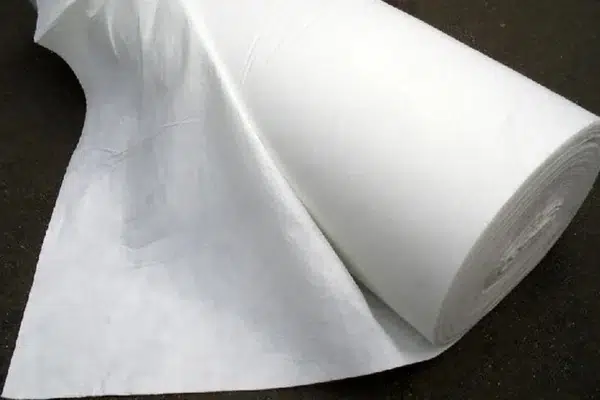
For pond lining, contractors should remove sharp protrusions, fill voids, control standing water where the design requires it, and protect placed rolls from uncontrolled traffic. A nonwoven geotextile can be considered as a cushioning layer where the project section calls for it. ASTM D4833 is an index puncture test reference; use it to compare documented material information, not as a substitute for evaluating the actual interface. [3]
| Project condition | What to confirm | Risk if missed |
|---|---|---|
| Prepared soil pond | Subgrade smoothness, groundwater, panel layout | Puncture or trapped-water repair work |
| Rocky or aggregate interface | Cushion layer and puncture requirement | Localized liner damage during placement |
| Sloped pond wall | Surface texture, interface friction, anchoring detail | Slip or difficult liner control |
| Process or industrial pond | Liquid chemistry, temperature, design documents | Specification mismatch or acceptance delay |
When Does Surface Texture Matter?
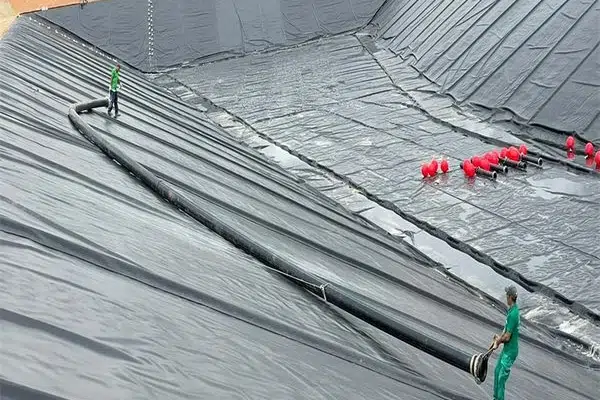
Textured geomembrane is generally considered when the liner must work at an interface where friction is part of the design, especially on slopes. Smooth material may be suitable in other sections when the engineered detail supports it.
Texture is not a general upgrade for every pond. It can alter handling, welding planning, interface behavior, and quotation cost. The responsible designer should define where texture is required and how the liner connects to adjacent layers. Buyers comparing two quotations should ask whether both offers describe the same surface type, roll dimensions, and project section.
Which Installation Errors Create Leak Repairs?
Many liner problems begin before the first seam is welded: poor surface preparation, damaged panels, unsuitable weather conditions, unclear panel layout, and missing inspection records can all create repair and retesting work.
A seam should be treated as a controlled construction detail, not a visual line that is accepted by appearance. Confirm the welding procedure, trial-seam approach, test frequency, repair method, panel identification, and access for inspection before delivery. ASTM D6392 covers destructive peel and shear testing of nonreinforced geomembrane seams, which is useful context for a project seam-quality discussion. [4]
QC Check: Before bulk supply, compare the approved data sheet, roll labels, panel layout, packaging, seam-test plan, and protection-layer description. This short review can reduce a mismatch between the material purchased and the material that site crews can install and document.
What Should Be Included in a Pond Liner RFQ?
An accurate pond liner RFQ should identify the pond use, dimensions, depth, slopes, subgrade, liner thickness or performance requirement, surface type, protection layers, quantity, destination, and required documents.
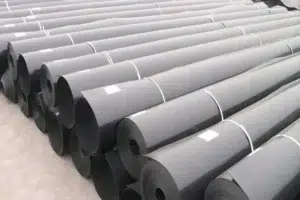
For a clear comparison, include liquid chemistry and temperature if relevant, expected water level, installation responsibility, delivery access, packaging preference, and any specified test or inspection requirements. Buyers can also review HDPE geomembrane liner options and nonwoven geotextile protection materials before asking for a quotation. The final specification should be confirmed against the project design.
FAQs
Is a thicker pond liner always better?
No. A thicker liner can change puncture resistance and handling, but subgrade, seams, slope interfaces, protection, and design requirements still control the final decision.
Can a geotextile replace subgrade preparation?
No. A protection layer can support a designed liner system, but it does not remove the need to prepare the surface and address sharp objects or unsuitable site conditions.
What documents should buyers request?
Request the applicable data sheet, stated test methods, roll dimensions, batch identification, packing information, and any project-required test or inspection documents.
Conclusion
A pond geomembrane works as part of a liner system. Confirm thickness, subgrade, protection, surface type, seam control, and RFQ details before comparing price.