Road construction can fail when the base layer moves, settles, or loses compaction under traffic load. Geocell helps control this problem, but only when the material, cell height, infill, and installation method match the project.
Geocell is used in road construction by expanding the honeycomb panels over the prepared subgrade, fixing them with anchors, filling the cells with soil, sand, gravel, or aggregate, and compacting the infill to form a stable reinforced base layer. It improves load distribution and reduces lateral movement.
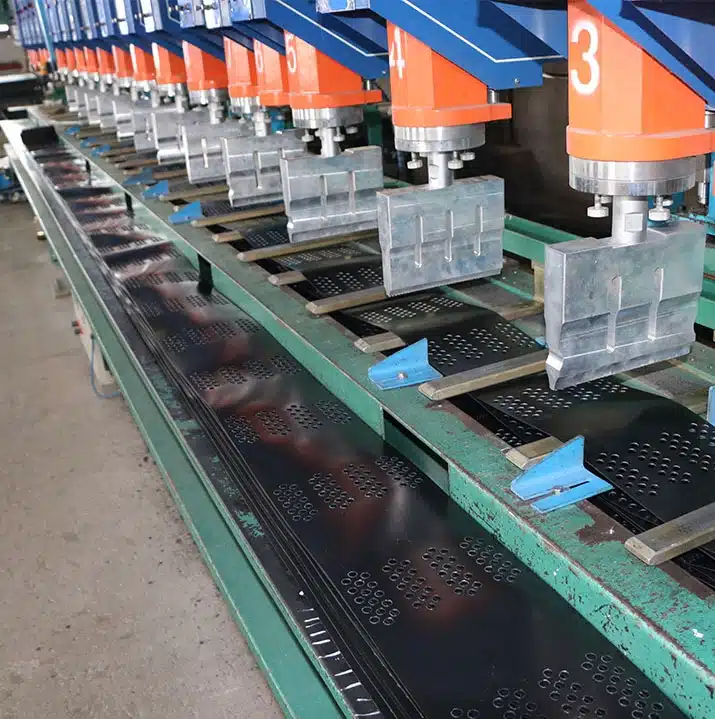
A good road geocell system is not only about placing panels on the ground. It depends on subgrade preparation, geotextile separation, correct anchoring, suitable infill, proper compaction, and the right geocell specification.
Why Is Geocell Used In Road Construction Projects?
Weak road bases can deform when the base material spreads sideways under repeated wheel load. Geocell is used because its three-dimensional structure confines the infill and helps keep the road base stable.
Geocell is used in road construction to improve load distribution, reduce base material movement, control settlement, increase bearing capacity, and support road construction over weak or unstable subgrade. It is especially useful for access roads, haul roads, rural roads, and soft soil areas.
Geocell works by confinement
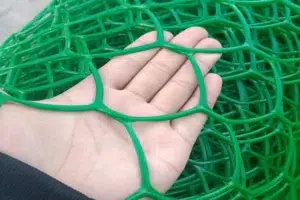
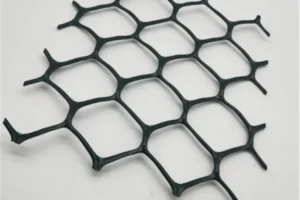
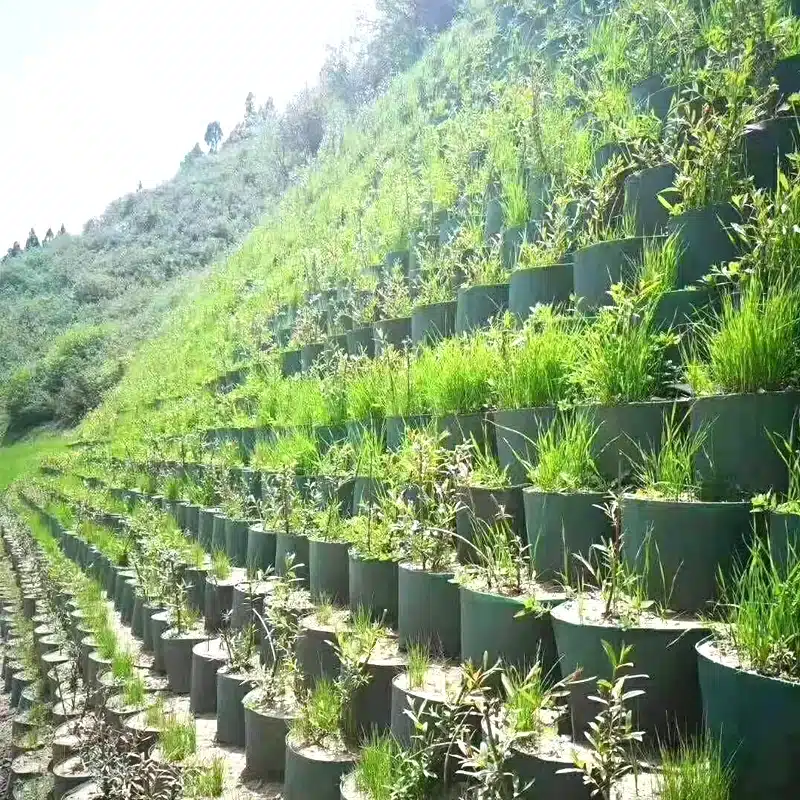
Geocell is not a flat sheet reinforcement material. It is a three-dimensional honeycomb structure. When the cells are expanded and filled, the infill material is locked inside the cell walls. This reduces lateral movement and helps the road base act like a stronger mattress.
This is useful in road projects because traffic load does not only press downward. It also pushes base material outward. If the base material moves sideways, the road can rut, settle, or lose surface stability. Geocell helps reduce this movement.
A neutral description of cellular confinement systems[^1] explains that geocells are expanded on site and filled with soil, sand, aggregate, recycled materials, or concrete. This is the same basic working logic used in many road base applications.
Geocell is useful on weak subgrade
Weak subgrade is one of the common reasons road construction becomes expensive. If the ground cannot support the load, the contractor may need more aggregate, thicker base layers, or repeated repair after traffic begins.
Geocell can help by spreading the load over a wider area. It also improves the confinement of the infill layer. This does not mean geocell can solve every soil problem by itself. The subgrade still needs proper evaluation, grading, drainage, and compaction.
Geocell can reduce aggregate movement
In many road projects, aggregate is the main infill material. Without confinement, aggregate can move under wheel load, especially on soft soil or temporary access roads.
Geocell keeps aggregate inside the cells. This helps maintain layer thickness and reduces material loss. For projects where good aggregate is expensive or hard to transport, geocell can help make better use of available fill material.
| Road Problem | How Geocell Helps | Factory-Side Checkpoint |
|---|---|---|
| Weak subgrade | Distributes load over a wider area | Match cell height and thickness to load |
| Aggregate movement | Confines infill inside the cells | Check weld strength and cell size |
| Rutting | Reduces lateral displacement | Use suitable infill and compaction |
| Soft soil settlement | Improves base layer stability | Prepare subgrade and drainage first |
| High aggregate cost | Helps reduce material loss | Confirm local fill quality before design |
For buyers who need a road-focused product, the first step is to review the right geocell specification options before comparing only price.
How Should You Prepare The Road Subgrade Before Installing Geocell?
Many geocell failures start before the panel is installed. If the subgrade is soft, wet, uneven, or poorly drained, the geocell system cannot perform as expected.
Before installing geocell, the road subgrade should be cleared, leveled, compacted, drained, and checked for weak zones. In many road projects, a geotextile separation layer is placed under the geocell to prevent subgrade soil from mixing with aggregate infill.
Clear and level the base
The subgrade should be cleared of sharp debris, large stones, roots, loose mud, and standing water. The surface should be shaped according to the road design. A flat and stable surface helps the geocell panel expand evenly.
If the base is uneven, some cells may carry more stress than others. This can create local deformation after filling and compaction. A road geocell system needs full contact with the base surface. It should not bridge over holes or soft pockets.
Compact the subgrade
Subgrade compaction is a basic but important step. Geocell improves the base layer, but it does not replace proper ground preparation.
If the soil is too loose, the filled geocell can still sink. If the soil has high moisture content, the road may deform after traffic load begins. Contractors should follow the project compaction requirement and correct weak areas before laying panels.
Use geotextile when separation is needed
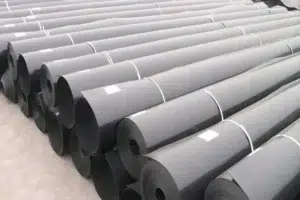
In many road projects, a geotextile is placed between the subgrade and the geocell layer. The geotextile helps separate soft soil from aggregate. It can also support filtration and drainage depending on the material type.
This matters because aggregate can be contaminated by fine soil particles from the subgrade. Once the aggregate loses clean void space and interlock, the base layer may lose strength. A proper geotextile layer can help reduce this risk.
Wikipedia’s geosynthetics[^2] page explains that geosynthetic products are used for functions such as stabilization, drainage, filtration, and separation. In road construction, geotextile and geocell often work together because they solve different parts of the base stability problem.
| Preparation Step | Purpose | Risk If Ignored |
|---|---|---|
| Remove debris | Prevent puncture and uneven contact | Local stress and panel damage |
| Level surface | Support even cell expansion | Uneven base and poor compaction |
| Compact subgrade | Improve support below geocell | Settlement under load |
| Control water | Reduce softening and pumping | Long-term road deformation |
| Add geotextile | Prevent soil-aggregate mixing | Loss of base strength |
From a factory-side view, the best geocell product still needs correct site preparation. A buyer should not expect geocell to fix poor drainage, unstable soil, or wrong construction practice by itself.
What Is The Correct Installation Process For Road Geocell?
Geocell installation is not complicated, but each step affects the final road performance. The panel must be expanded correctly, fixed firmly, filled evenly, and compacted in the right sequence.
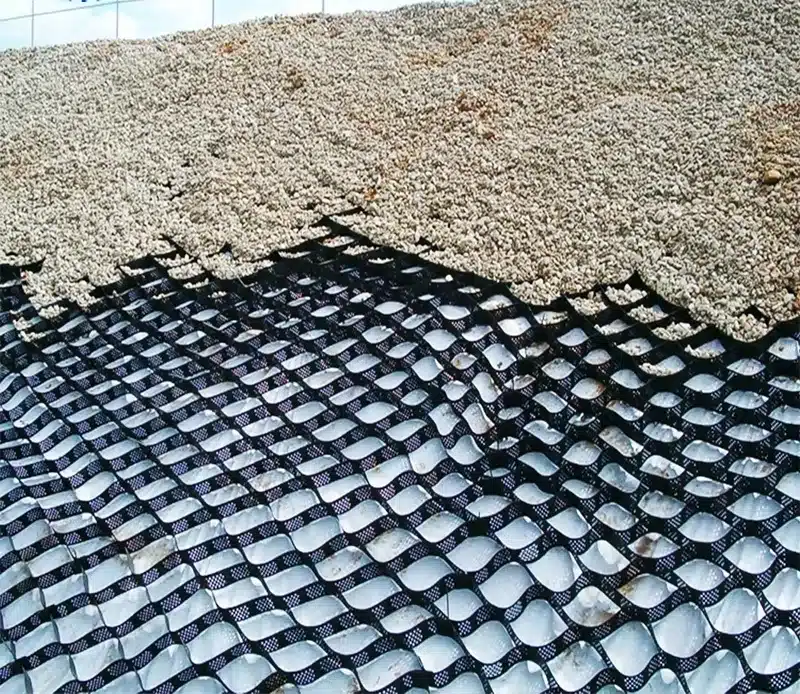
The correct road geocell installation process is: prepare the subgrade, place geotextile if needed, expand the geocell panel, anchor it in position, connect adjacent panels, fill the cells from edge to center, level the infill, compact the layer, and build the final road surface.
Step 1: Place the geocell panels
After the subgrade is prepared, the geocell panels are placed on the surface. Workers expand the panels to the designed size. The cells should open evenly. The panel should not be overstretched or left loose.
If the panel is not expanded correctly, the cell size will not match the design. This can affect infill confinement and installation efficiency. On long road sections, workers should check alignment often.
Step 2: Anchor and connect the panels
Anchors or stakes hold the geocell in place during filling. The number and spacing of anchors should follow project conditions. Soft ground, slopes, curves, and construction traffic may need stronger fixing.
Adjacent panels should be connected properly. Weak panel connection can cause separation during filling or compaction. In road construction, the geocell layer should act as a continuous system, not as many loose pieces.
Step 3: Fill the cells
The cells can be filled with suitable aggregate, gravel, sand, or other approved material. For road base use, aggregate quality matters. The material should match the design and compaction requirement.
Filling should be controlled. Heavy equipment should not directly damage empty cells. In many projects, infill is placed from one side and spread carefully. The cell walls should not be crushed or displaced during filling.
Step 4: Compact the infill
Compaction is where the geocell and infill become a stable road base layer. The compactor should work in a controlled way. The goal is to densify the infill without damaging the cell structure.
A common mistake is rushing this step. If compaction is weak, the road may settle later. If compaction is too aggressive before enough infill covers the cells, the panel can be damaged.
| Installation Step | Key Control Point | Why It Matters |
|---|---|---|
| Panel Placement | Correct direction and alignment | Keeps road section consistent |
| Expansion | Cells fully opened to design size | Ensures confinement effect |
| Anchoring | Stable fixing before filling | Prevents panel movement |
| Connection | Adjacent panels joined properly | Creates continuous reinforcement |
| Filling | Suitable infill placed evenly | Protects cell walls and base quality |
| Compaction | Correct equipment and sequence | Builds final load-bearing layer |
For buyers who also need pavement reinforcement in upper layers, geogrid products may be used in other parts of the road design. Geocell and geogrid are not the same product. They should be selected based on the project layer and engineering purpose.
What Geocell Specification Is Better For Road Construction?
A road project should not use geocell specification blindly. The right specification depends on traffic load, subgrade strength, base thickness, aggregate type, road life, and installation environment.
For road construction, buyers should focus on geocell material, sheet thickness, cell height, weld strength, weld spacing, surface texture, and perforation. Heavy-load roads usually need stronger welds, suitable cell height, and stable HDPE sheet quality.
Material should match road use
HDPE geocell is widely used in road construction because it has good flexibility, chemical resistance, and field handling performance. But the material name alone is not enough. Buyers should also ask about resin quality, UV resistance, and recycled content.
A lower-cost material may reduce the initial price. But if it cracks during expansion or loses performance under site exposure, the total cost becomes higher. Road projects need stable material because the product must handle both installation stress and traffic load.
Cell height affects confinement
Cell height is one of the most important road geocell specifications. Higher cells hold more infill and usually give stronger confinement. This can be useful for weak subgrade or heavier traffic.
But higher cells also use more material and increase cost. For light roads or temporary access roads, a lower cell height may be enough. A factory should not recommend the highest cell every time. It should recommend the correct height for the project.
Weld strength affects system stability
Road geocell panels face stress during expansion, filling, compaction, and traffic use. The welded joints must stay stable.
Weak welds are a serious risk because the cell structure depends on welded strips. If weld points fail, the honeycomb system loses confinement. For large road projects, weld strength should be discussed before placing bulk orders.
| Specification | Why It Matters In Roads | Buyer Should Confirm |
|---|---|---|
| Material | Affects durability and flexibility | HDPE / PP and resin quality |
| Sheet Thickness | Affects strength and stiffness | Measured thickness and tolerance |
| Cell Height | Affects confinement depth | Road load and base design |
| Weld Strength | Affects cell stability | Joint strength and production control |
| Weld Spacing | Affects cell opening size | Infill compatibility |
| Surface Texture | Improves friction with infill | Needed for road base stability |
| Perforation | Supports drainage and interaction | Needed based on site water condition |
A professional road geocell inquiry should include road type, traffic condition, subgrade condition, design thickness, infill material, and quantity. Without these details, the factory can only give a general quotation.
What Infill Material Should Be Used With Geocell In Road Construction?
The geocell panel is only one part of the road system. The infill material decides how the cell structure behaves under load.
Common geocell infill materials for road construction include crushed stone, gravel, sand, soil, recycled aggregate, and sometimes concrete. For load-bearing roads, well-graded aggregate is usually preferred because it provides better interlock, compaction, and drainage.
Aggregate is common for load-bearing roads
Crushed stone or gravel is often used because it can compact well and provide good load distribution. When aggregate is confined inside geocell cells, it is harder for the particles to move sideways.
This is useful for roads that carry vehicles. The aggregate and geocell work together. The aggregate provides strength and drainage. The geocell provides confinement and layer stability.
Local soil may work in some projects
Some low-volume roads or temporary roads may use local soil or sand. This can reduce material cost and transportation cost. But local soil must be checked first.
If the soil is too fine, too wet, too plastic, or difficult to compact, it may not perform well. A low-cost infill can become expensive if the road needs repair later. The buyer should not assume every local material is suitable.
Recycled material can be used carefully
Some projects use recycled aggregate or construction waste material. This may help reduce cost and support sustainable construction.
But recycled material must be graded, cleaned, and suitable for compaction. If it contains too many fines, sharp debris, or inconsistent particles, it may damage the geocell or weaken the road base.
FHWA has published information about geosynthetic reinforced soil systems, where compacted granular fill and geosynthetic reinforcement work together to improve construction performance in civil works. Geosynthetic reinforced soil guidance[^3] is not a geocell-only guide, but it supports the broader engineering logic that reinforcement and compacted fill must work as a system.
| Infill Material | Best Use | Key Risk |
|---|---|---|
| Crushed Stone | Load-bearing road base | Higher material cost |
| Gravel | Access roads and base layers | Must be well graded |
| Sand | Light-duty or specific designs | May need careful compaction |
| Local Soil | Temporary or low-load roads | May be weak or too wet |
| Recycled Aggregate | Cost-saving projects | Must be clean and consistent |
| Concrete | Special high-strength sections | Higher cost and less flexibility |
The best infill is not always the most expensive one. It is the material that can compact well, stay stable, drain properly, and match the road design.
What Mistakes Should Buyers Avoid When Using Geocell In Roads?
Most geocell road problems come from wrong specification, poor subgrade preparation, weak filling control, or buying only by price. These mistakes can reduce performance even when the product idea is correct.
Buyers should avoid choosing geocell only by price, using the wrong cell height, ignoring weld strength, skipping geotextile separation, using poor infill, under-compacting the base, or failing to match the product to road load and soil condition.
%common mistakes when using geocell in road construction
Mistake 1: Buying only by square meter price
A low square-meter price can hide thinner sheets, weak welds, poor resin, or unsuitable cell height. The buyer may save money at purchase but lose more during installation or road maintenance.
For road construction, price should be compared only after the specification is the same. If two suppliers quote different thicknesses or cell heights, the prices are not comparable.
Mistake 2: Ignoring weld strength
The weld point holds the geocell structure together. If the weld fails, the cells open and the confinement effect is reduced.
Some buyers check thickness but forget welding. That is a risky approach. A thicker sheet with weak welds can still fail during expansion or under road load.
Mistake 3: Using poor infill material
Geocell does not make bad fill material perfect. If the infill cannot compact or drain properly, the road base may still deform.
Buyers should confirm infill type early. If good aggregate is not available, the design and geocell specification may need adjustment.
Mistake 4: Skipping drainage thinking
Water is one of the biggest enemies of road base stability. If water stays in the subgrade or base layer, the road may soften and deform.
Geocell can help stabilize the structure, but drainage still needs to be considered. In some projects, perforated geocell, geotextile, side drainage, and proper slope design should work together.
| Mistake | Result | Better Practice |
|---|---|---|
| Choosing lowest price | Wrong product may be supplied | Compare full specification first |
| Ignoring subgrade | Settlement may continue | Prepare and compact base first |
| Weak anchoring | Panel moves during filling | Anchor according to site condition |
| Poor infill | Weak base performance | Use suitable compactable material |
| Weak compaction | Later rutting or settlement | Compact layer correctly |
| No drainage plan | Water weakens road base | Plan drainage before installation |
For marketing or training, buyers may look at TikTok geocell installation videos[^4] or Facebook geocell road construction posts[^5]. These platforms can show site visuals, but technical decisions should still come from project design and factory confirmation.
How Should Buyers Source Geocell For Road Construction Projects?
A road geocell purchase should begin with project information, not only product photos. The factory needs enough details to recommend the right material and specification.
To source geocell for road construction, buyers should provide road type, subgrade condition, traffic load, required base thickness, infill material, cell height preference, sheet thickness, quantity, destination port, and packing needs. This helps the factory quote the correct product.
Send project details first
A useful inquiry should include basic project information. For example, a temporary access road, a rural road, a heavy haul road, and a permanent paved road do not need the same geocell.
If the buyer sends only quantity and asks for price, the factory may quote a standard product. That standard product may not match the site. Clear project details reduce this risk.
Ask for specification confirmation
The buyer should ask the factory to confirm material, thickness, height, weld spacing, surface type, perforation, expanded panel size, and packing.
This is also the right time to discuss customization. If the project drawing has specific requirements, the factory should quote according to those details. If the buyer is not sure, the factory should explain what specification is commonly used for similar road conditions.
Check export support
For international buyers, export support matters. Road projects often have strict schedules. Delayed production, weak packing, or unclear shipping documents can affect the whole project.
A reliable factory should confirm production time, packing method, container loading, labels, and documents before shipment. Buyers should not treat export details as small issues.
| Buyer Information | Why Factory Needs It | What It Helps Confirm |
|---|---|---|
| Road Type | Defines load and use | Suitable geocell grade |
| Subgrade Condition | Shows soil support level | Cell height and base design |
| Traffic Load | Affects strength demand | Thickness and weld quality |
| Infill Material | Affects confinement behavior | Cell size and compaction plan |
| Quantity | Affects production and price | MOQ and lead time |
| Destination Port | Affects shipping plan | Freight and loading details |
| Project Schedule | Affects delivery planning | Production priority and shipment |
When buyers source from a China factory, the target should not be the cheapest quote. The target should be the correct road geocell specification, stable batch quality, clear packing, and reliable delivery.
My View
When I help buyers select geocell for road construction, I always start with the road condition, not the price list. A geocell product can only perform well when the specification fits the subgrade, traffic load, infill material, and construction method.
The most common mistake is using one standard geocell for every road project. A temporary site road, a soft soil access road, and a heavy-duty haul road need different thinking. The material, cell height, weld strength, and infill choice should change with the project.
A good factory should not only ask how many square meters you need. It should ask where the geocell will be used, what load the road will carry, what material will be filled inside the cells, and how the goods will be shipped.
My suggestion is direct. Confirm the road application first. Confirm the geocell specification second. Compare price last. This order helps buyers avoid weak material, wrong thickness, poor weld strength, and costly project delays.
Conclusion
Geocell works in road construction when the subgrade, specification, anchoring, infill, compaction, and drainage are handled correctly. The right product must match the road, not only the budget.
Footnotes
[^1]: This Wikipedia source is used to support the basic definition and working logic of cellular confinement systems, also known as geocells.
[^2]: This Wikipedia source is used to explain the broader function of geosynthetics in stabilization, separation, filtration, drainage, and civil engineering applications.
[^3]: This FHWA page is used as a neutral engineering reference for the broader concept of geosynthetic reinforcement working together with compacted granular fill.
[^4]: This TikTok search page is included as a social media reference for geocell road construction visuals. Buyers should verify all technical decisions with project design and supplier data.
[^5]: This Facebook search page is included as a social media reference for geocell road construction posts and application examples. It should not replace engineering confirmation.