LEAD IN
Choosing a geocell manufacturer in China is not only about finding a lower price. For road, slope, retaining wall, and erosion-control projects, the real risk is buying panels with weak resin quality, poor weld strength, wrong thickness, or unstable export support.
ANSWER SECTION
To choose a reliable geocell manufacturer in China, check raw material quality, sheet thickness, weld strength, cell height, production control, project matching ability, export experience, and clear technical documentation. A good manufacturer should help match the geocell specification to your project, not only quote a low unit price.
READ ON
A serious geocell order should start with engineering needs, not only square-meter price. Below, I will explain how to evaluate a China geocell factory from material, production, quality control, application fit, and export reliability.

Why Should You Not Choose A Geocell Manufacturer Only By Price?
A low price can look attractive at the quotation stage. But for geocell, price can be reduced by using thinner sheets, lower-grade resin, weaker welds, smaller panel sizes, or less strict inspection.
The problem is that these cost reductions are not always visible in product photos. A geocell panel may look clean, black, and well packed. But if the weld strength is weak or the material ages too fast, the failure may only appear during expansion, filling, compaction, or long-term loading.
For professional buyers, the correct sequence is simple: confirm the application first, confirm the specification second, check the factory capability third, then compare price. If price comes first, the buyer may save money on paper but create risk on site.
Price Must Be Compared Under The Same Specification
A geocell quotation is only meaningful when the specification is clear. You need to compare sheet thickness, cell height, weld spacing, surface texture, perforation, material type, and panel size.
If one supplier quotes a lower price but uses thinner sheets or lower weld strength, it is not a real price advantage. It is a different product.
Low-Cost Resin Can Create Long-Term Risk
Geocell is often made from HDPE or PP sheets. If the raw material is unstable, the panel may lose flexibility, crack more easily, or age faster under outdoor exposure.
For temporary projects, some buyers may accept lower material requirements. For roads, slopes, retaining walls, and long-term infrastructure, raw material quality should not be treated as a small detail.
Poor Welding Can Destroy The Whole Cell Structure
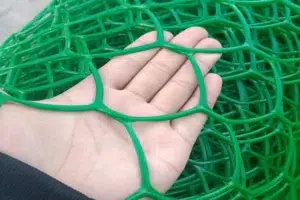
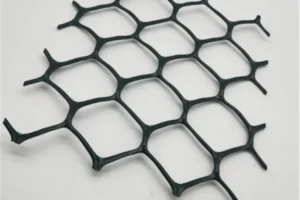
Geocell works as a three-dimensional confinement system. The welded joints hold the strips together and form the honeycomb structure.
If the weld points open, the cell structure loses confinement ability. That means the infill material can move, the panel can deform, and the project may lose stability.
| Buyer Focus | Wrong Way To Judge | Better Factory-Side Judgment |
|---|---|---|
| Price | Choose the lowest square-meter price | Compare price only after specification is identical |
| Material | Ask only “Is it HDPE?” | Check resin quality, additives, and material consistency |
| Thickness | Trust nominal thickness only | Confirm measured thickness and tolerance |
| Welding | Only check appearance | Ask about weld strength and welding control |
| Supplier | Choose the fastest quote | Choose a factory that understands project application |
What Raw Material Should A Reliable Geocell Factory Use?
Raw material is the first point to check because it decides the base performance of the geocell sheet. A factory cannot make a stable geocell if the sheet material is weak, inconsistent, or unsuitable for the project.
Most geocells are made from HDPE or PP. HDPE is widely used because it has good flexibility, chemical resistance, and long-term outdoor performance. PP may also be used in some projects, but the final choice should follow the design requirement and application environment.
The buyer should not only ask for the material name. The better question is whether the factory can control resin quality, sheet uniformity, UV resistance, and batch consistency.
HDPE Is Common, But Not All HDPE Is The Same
Many suppliers will say their geocell is made from HDPE. That answer is not enough.
HDPE quality can vary depending on resin grade, recycled content, additives, and production control. A low-grade HDPE sheet may look similar when new, but it may perform differently after folding, expansion, outdoor storage, and long-term loading.
UV Resistance Matters For Outdoor Projects
Geocell is often used in road construction, slope protection, channel protection, and retaining wall systems. In real projects, panels may stay exposed before they are fully covered.
If anti-UV and anti-aging performance is weak, the material can become brittle faster. This is especially important for hot climates, high-altitude regions, delayed installation, and exposed slope projects.
Sheet Consistency Affects Welding Quality
Welding quality is connected to sheet consistency. If sheet thickness or material composition is unstable, the weld may also become unstable.
This is why a reliable manufacturer should control raw material before production, not only inspect the finished panel. Good quality starts before the welding machine runs.
| Raw Material Point | Why It Matters | What You Should Ask |
|---|---|---|
| HDPE / PP Type | Affects flexibility and chemical resistance | Which polymer is used for this project? |
| Resin Grade | Affects strength and aging performance | Is the material suitable for long-term engineering use? |
| Recycled Content | Affects consistency and durability | Is recycled material used? If yes, what grade? |
| UV Additive | Affects outdoor exposure resistance | Is UV resistance included in the formulation? |
| Sheet Uniformity | Affects tensile and weld stability | How is thickness controlled during production? |
How Important Is Weld Strength When Choosing A Geocell Manufacturer?
Weld strength is one of the most important quality points in geocell manufacturing. The geocell sheet is not working alone. The product works because many strips are welded into a stable three-dimensional honeycomb structure.
A buyer may think thickness is the main indicator. Thickness does matter, but weak welds can still make a thick geocell fail. When the panel is stretched, anchored, filled, and compacted, the weld points carry real stress.
A reliable China geocell manufacturer should be able to explain how welding is controlled and why the weld strength matches the application.
Geocell Failure Often Starts At The Weld
The welded joint is a critical point because it connects the strips. If the weld separates, the cell opens.
This failure may not happen when the product is still in the roll. It may happen during site expansion, filling, compaction, or after the structure starts carrying load.
Welding Control Is A Production Capability
Good welding depends on temperature, pressure, welding time, sheet condition, and operator control. It is not only about having a welding machine.
A serious factory should control the welding process and inspect weld consistency. If the factory cannot explain weld quality, the buyer should be careful with bulk orders.
Weld Strength Should Match The Project
A light erosion-control project and a load-bearing road base project do not need the same geocell specification. The more demanding the project, the more attention should be placed on weld strength and cell stability.
This is why a reliable manufacturer should ask about your project before recommending a product. If every project receives the same specification, the recommendation is not professional.
| Weld Quality Point | Why It Matters | Factory Checkpoint |
|---|---|---|
| Weld Strength | Prevents cell separation | Check weld/junction strength requirements |
| Weld Consistency | Keeps panels stable across batches | Inspect welding process and finished panels |
| Sheet-Weld Compatibility | Affects joint stability | Control sheet thickness and material quality |
| Expansion Behavior | Shows whether joints can handle site use | Test sample expansion before bulk order |
| Project Matching | Avoids under-specification | Match weld strength to load and application |
What Specifications Should You Confirm Before Ordering Geocell?
Geocell specification decides whether the product can match the project. A quotation without complete specification is not enough for professional procurement.
At minimum, you should confirm material, sheet thickness, cell height, weld spacing, panel size, surface texture, perforation, color, packing method, and application. If the project has engineering drawings, the factory should quote according to the drawings or help check whether the requested specification is practical.
The mistake is asking only, “What is your geocell price?” A better inquiry gives the supplier enough project information to recommend the right product.
Sheet Thickness
Sheet thickness affects strength, stiffness, welding behavior, and cost. Thicker sheets can support more demanding applications, but unnecessary thickness can also increase budget and shipping weight.
The correct goal is not always the thickest sheet. The correct goal is the right thickness for your project load, soil condition, and service requirement.
Cell Height
Cell height affects confinement depth. Higher cells can hold more infill material and usually provide stronger confinement.
For road base reinforcement and weak subgrade support, cell height is a key factor. For light slope protection, a lower cell height may be enough if the design allows it.
Weld Spacing And Cell Size
Weld spacing affects the final cell opening size after expansion. The cell size should match the infill material, slope condition, load requirement, and installation method.
If the cell size is not suitable, the infill may not lock well inside the structure. This can reduce the stabilizing effect of the geocell.
| Specification | Why It Matters | Better Procurement Question |
|---|---|---|
| Material | Affects durability and chemical resistance | Is HDPE or PP more suitable for this project? |
| Sheet Thickness | Affects strength and cost | What thickness matches my load condition? |
| Cell Height | Affects confinement ability | What height should I use for road, slope, or wall? |
| Weld Spacing | Affects cell opening size | Does the cell size match my infill material? |
| Perforation | Helps drainage and soil interaction | Does this project need perforated geocell? |
| Surface Texture | Improves friction with infill | Should the sheet be smooth or textured? |
| Panel Size | Affects installation efficiency | What expanded panel size is suitable for my site? |
How Do You Check A Geocell Manufacturer’s Production Capability?
A reliable geocell manufacturer should not only sell a product. The factory should control production from raw material to finished panel.
Production capability affects batch stability, delivery time, custom specification support, and product consistency. This is important for overseas buyers because quality problems are expensive to fix after shipment.
A good factory should be able to explain its production process, inspection points, packing method, and export workflow.
Raw Material Inspection
Raw material inspection is the first step. If the material is unstable, the finished geocell cannot be stable.
The factory should check whether the material matches the required production standard. For project-based orders, the buyer should confirm whether the material formula matches the application.
Thickness And Dimension Control
Geocell performance depends on consistent sheet thickness and accurate dimensions. If the thickness varies too much, weld behavior and tensile performance may also vary.
Dimension control also matters for installation. Panel size, strip height, and weld spacing should be consistent, especially for large projects.
Batch Inspection Before Shipment
Before shipment, the factory should check appearance, dimensions, packing, labeling, and key quality points. This reduces the risk of receiving wrong or inconsistent goods.
For B2B buyers, pre-shipment inspection is not a formality. It protects the project schedule, customer trust, and long-term cooperation.
| Factory Capability | What To Check | Why It Matters |
|---|---|---|
| Raw Material Control | Resin type, additives, batch stability | Decides base product quality |
| Sheet Production | Thickness and surface consistency | Affects strength and welding |
| Welding Process | Temperature, pressure, joint consistency | Affects cell structure stability |
| Customization | Height, spacing, perforation, panel size | Helps match project requirements |
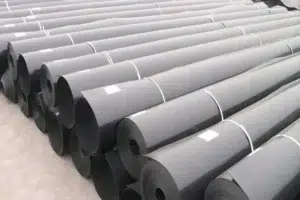
| Packing | Roll size, labeling, export protection | Reduces loading and delivery problems |
| Inspection | Finished product checking before shipment | Reduces quality risk after delivery |
How Should You Match Geocell Manufacturer Selection To Your Project?
A reliable manufacturer should help you match geocell to the project, not only provide a catalog. Different applications need different product logic.
Road base reinforcement focuses on load distribution and lateral confinement. Slope protection focuses on soil retention, drainage, anchoring, and erosion control. Retaining wall applications need stronger attention to structural stability and design requirements.
If the factory does not ask about your application, the recommendation may be too general.
Road Construction
For road base projects, geocell helps confine the base material and reduce lateral movement. The key points are cell height, weld strength, sheet thickness, and tensile performance.
If the road carries heavy traffic or is built on weak subgrade, choosing a low-cost, low-strength geocell can create settlement and deformation risk.
Slope Protection
For slope projects, geocell helps hold soil, gravel, or concrete on the slope surface. Perforation, surface texture, cell size, and anchoring method become important.
A buyer should provide slope ratio, soil condition, rainfall condition, and filling material before asking for a final recommendation.
Retaining Wall And Erosion Control
For retaining wall and erosion-control projects, the geocell must handle soil pressure, water movement, installation tension, and long-term deformation.
ASTM D8269-21 covers geocell use in geotechnical and roadway projects, including load support, slope stability, earth retention, retaining walls, and slope/channel protection. geocell use in geotechnical and roadway projects[^1]
| Project Type | Key Geocell Focus | Supplier Should Confirm |
|---|---|---|
| Road Base | Load support, weld strength, cell height | Traffic load, subgrade, aggregate type |
| Slope Protection | Soil retention, drainage, anchoring | Slope ratio, rainfall, fill material |
| Retaining Wall | Stability and deformation control | Wall height, design requirement, connection method |
| Channel Protection | Water flow and erosion resistance | Flow condition, infill type, anchoring |
| Temporary Access Road | Cost and installation speed | Load level, reuse need, project duration |
| Export Project | Packing and delivery reliability | Container loading, labels, documents, shipment plan |
What Documents Should A Reliable China Geocell Supplier Provide?
Documentation is part of supplier reliability. A professional buyer needs more than a price list.
The supplier should provide specification sheet, product photos, packing details, production lead time, loading information, and available test data. For project-based orders, the factory should also confirm whether the requested specification can be produced consistently.
This is especially important for overseas buyers. If the product arrives with unclear labels, wrong packing, or mismatched specifications, the buyer may face delays before the material even reaches the jobsite.
Technical Data Sheet
A technical data sheet should include material, thickness, height, weld spacing, panel size, tensile properties, weld strength, surface type, perforation, and packing details.
If the data sheet is vague, the buyer has no clear basis for comparison.
Sample Confirmation
For new buyers or new specifications, sample confirmation is useful. It helps check material feel, welding, color, expansion behavior, and general workmanship.
A sample cannot replace full batch inspection, but it can reduce early misunderstanding before placing a large order.
Export Documents And Packing Details
Export orders need clear packing, labeling, container loading information, invoice, packing list, and other required documents. A factory with export experience should understand these details.
A low price is not helpful if the supplier cannot manage export preparation properly.
| Document / Support | Why It Matters | Buyer Benefit |
|---|---|---|
| Technical Data Sheet | Clarifies product specification | Easier comparison between suppliers |
| Product Photos | Shows appearance and packing | Helps confirm order details |
| Sample | Checks workmanship before bulk order | Reduces early procurement risk |
| Test Data | Supports quality judgment | Better confidence for engineering orders |
| Packing Details | Supports logistics planning | Reduces loading and delivery confusion |
| Export Documents | Supports customs and delivery | Helps overseas buyers receive goods smoothly |
What Questions Should You Ask Before Choosing A Geocell Manufacturer?
A good inquiry helps the factory give a better recommendation. If the inquiry only asks for price, the answer will also be limited.
Before choosing a geocell manufacturer, you should ask questions that reveal the supplier’s real capability. The goal is not to make the conversation complicated. The goal is to avoid buying the wrong product.
A reliable manufacturer should answer clearly. If the supplier avoids technical details, gives only general claims, or cannot explain specification differences, you should slow down the decision.
Questions About Material
Ask what material is used, whether UV additives are included, and whether the material is suitable for the intended project.
Do not stop at “HDPE.” You need to know whether the HDPE quality is stable enough for your application.
Questions About Production
Ask about sheet thickness control, weld spacing, welding method, and custom specification ability.
These questions help you judge whether the factory actually understands the product or only resells standard items.
Questions About Project Matching
Ask which specification is recommended for your road, slope, retaining wall, or erosion-control project.
A professional supplier should explain the reason behind the recommendation. If the supplier cannot connect specification to application, the buyer may receive an unsuitable product.
| Question | Why You Ask It | What A Reliable Supplier Should Do |
|---|---|---|
| What material is used? | To confirm base quality | Explain HDPE / PP and application fit |
| What thickness do you recommend? | To match load and budget | Suggest based on project condition |
| What is the weld strength? | To judge cell stability | Provide clear technical explanation |
| Can you customize height and spacing? | To match design needs | Confirm producible specifications |
| What packing do you use? | To plan export and unloading | Provide roll or bundle details |
| What projects is this grade used for? | To avoid wrong application | Explain road, slope, wall, or erosion use |
How Can You Identify A Reliable Geocell Manufacturer In China?
A reliable geocell manufacturer does not only compete by low price. It should have stable production, clear specifications, quality control, application understanding, and export experience.
For overseas B2B buyers, this matters because the supplier is not only producing material. The supplier is also helping reduce sourcing risk, delivery risk, and project mismatch risk.
The best manufacturer is not always the one with the lowest quotation. It is the one that can provide the right product, with stable quality, at a reasonable factory price.
Reliable Manufacturers Explain Specification Clearly
A professional factory should explain the difference between thickness, cell height, weld spacing, perforation, and surface texture.
If the supplier cannot explain these points, it may not be suitable for project-based orders.
Reliable Manufacturers Ask About Application
A good manufacturer will ask where the geocell will be used. Road base, slope protection, retaining wall, channel protection, and temporary access roads have different requirements.
This is a positive sign. It means the supplier is not blindly quoting.
Reliable Manufacturers Understand Export Orders
For international buyers, export experience is not optional. Packing, labeling, container loading, documents, and communication all affect the order.
A manufacturer with stable export support can reduce delays and misunderstandings.
| Reliable Manufacturer Sign | What It Shows | Why It Matters |
|---|---|---|
| Clear Specification Sheet | Technical transparency | Makes comparison easier |
| Application-Based Recommendation | Project understanding | Reduces wrong product selection |
| Stable Welding Control | Production capability | Protects cell performance |
| Customization Support | Factory flexibility | Fits project drawings or special needs |
| Export Experience | Delivery reliability | Reduces overseas order risk |
| Honest Price Explanation | Professional attitude | Helps buyers compare real value |
Conclusion
Choosing a reliable geocell manufacturer in China requires more than checking price. You should confirm raw material, weld strength, thickness, cell height, project fit, quality control, and export support before placing a bulk order.
[^1]: This ASTM page is referenced because it explains the application scope of geocells in geotechnical and roadway projects, including load support, slope stability, retaining walls, earth retention, and slope/channel protection.