The Ultimate Guide to Installing a Geocell Retaining Wall
Retaining wall projects often run into soft soil, drainage pressure, erosion, and high labor cost. Many teams start with rigid wall systems, then realize the site needs a more flexible and buildable solution.
Geocell retaining walls utilize a three-dimensional, honeycomb-like confinement system to confine fill material, thereby enhancing soil stability and supporting slopes or wall faces. Owing to its combination of flexibility, excellent drainage properties, and rapid installation capabilities, this structure is widely employed in fields such as retaining engineering, slope reinforcement, soil erosion control, and load support.

Many buyers know geocell works for slopes and roads, but they feel less sure about how to install a geocell retaining wall.That is where mistakes happen. I will walk through the logic, the build sequence, and the site details that matter most.
What is a geocell retaining wall?
Retaining wall projects often fail because the structure is overly rigid relative to site conditions, the drainage system is inadequate, or the backfill material is not effectively controlled. Geocell retaining walls address these challenges in a fundamentally different manner. Rather than relying solely on their own mass and structural rigidity, they utilize a confinement mechanism to transform the backfill material into a more robust and stable integrated system.
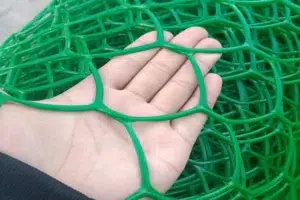
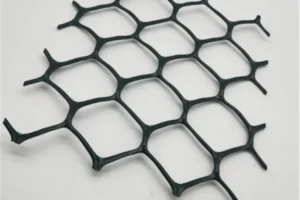
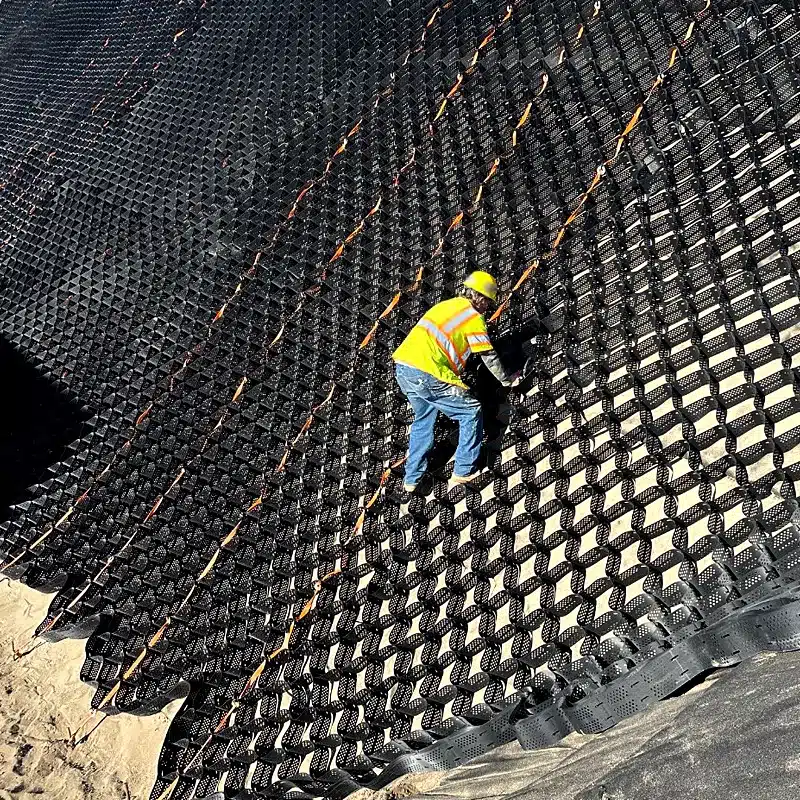
Geocells are three-dimensional, honeycomb-structured geosynthetic materials fabricated from welded polymer strips. When expanded and filled with soil, gravel, or other infill materials, they exert a confining effect on the contents, thereby inhibiting lateral displacement. This confinement not only enhances overall stability but also helps walls or slopes maintain optimal performance under load. Due to their inherent flexibility, lightweight nature, and exceptional performance even under complex geological conditions, geocells are widely utilized in engineering applications such as retaining walls, slope reinforcement, soil erosion control, and riverbank protection.
How does geocell work in retaining wall construction?
In retaining wall construction, geocell acts as a confinement layer. Each filled cell limits the spread of the infill and helps distribute pressure across the wall face and reinforced mass. The wall is not just holding soil. The wall is building a stable reinforced soil body.
This is particularly critical in sites where differential settlement is likely to occur. When foundation displacement takes place, rigid concrete retaining walls may crack; in contrast, geocell retaining walls demonstrate greater resilience, as their flexible structure allows them to accommodate minor displacements through deformation without immediately resulting in structural failure. For this very reason, geocells are especially well-suited for applications involving slopes, embankments, and soft ground foundations.
How is it different from traditional wall systems?
A traditional concrete retaining wall depends on rigid mass and reinforcement. A geocell retaining wall depends on confinement, drainage, and layered construction. It often uses less heavy material, needs smaller equipment, and works well where access is difficult or the terrain is irregular.
| System | Structure type | Settlement tolerance | Drainage behavior | Installation speed |
|---|---|---|---|---|
| Concrete retaining wall | Rigid | Low | Needs dedicated drainage design | Slower |
| Gabion wall | Semi-flexible | Medium | Good | Medium |
| Geocell retaining wall | Flexible reinforced soil system | High | Good with correct fill and drainage | Faster |
What are the main benefits?
The main advantages are flexibility, erosion resistance, easier transport, and efficient installation. Geocell also helps keep infill in place on slopes and wall faces, which supports long-term surface stability and can support vegetation in suitable designs.
Why is geocell effective for erosion control and soil stabilization?
Many retaining walls do not fail because the front face looks weak. They fail because soil behind the face moves, water builds up, or the slope starts eroding. That is why erosion control and soil stabilization are not side topics. They are central to retaining wall performance.
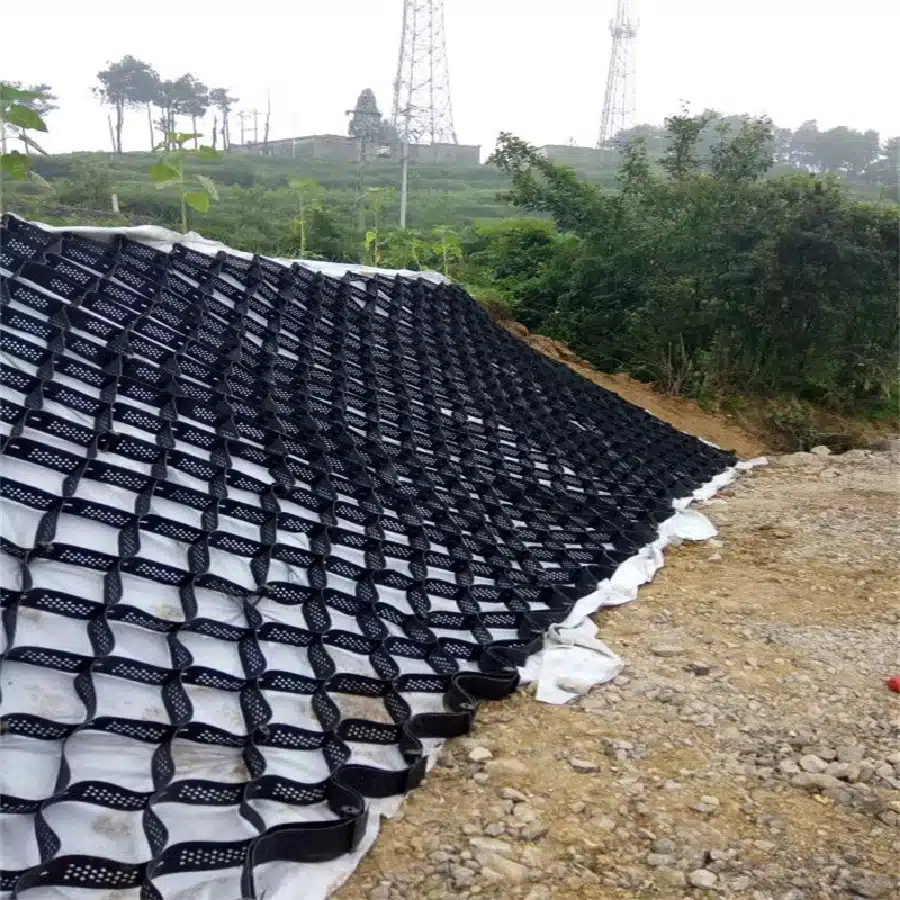
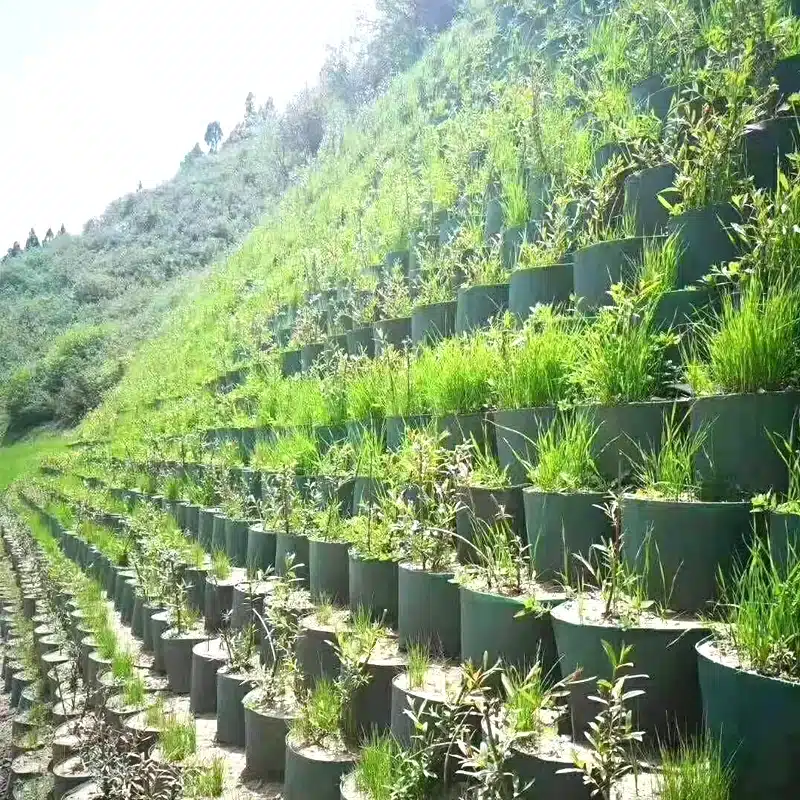
Geocell retaining walls are capable of simultaneously addressing both of the aforementioned types of problems. The cellular structure constrains the infill material, thereby minimizing lateral displacement and helping the soil mass as a whole exhibit the characteristics of a more robust composite layer. On the exposed faces and slopes of the retaining wall, the geocells also effectively anchor surface cover materials, thereby mitigating erosion and loss, while simultaneously promoting the growth and establishment of vegetation in areas where soil-based infill is utilized. Geocells are frequently employed in slope reinforcement and soil erosion control projects, primarily because their unique cellular structure effectively prevents the lateral spreading and loss of slope infill materials.
Why is erosion control necessary behind and on the wall face?
Water is one of the main reasons retaining systems weaken over time. Surface runoff can strip the face material. Internal water can soften the backfill and increase pressure. Fine particles can migrate if separation and drainage are poor.
This is why geocell works best when it is not treated as only a face material. It should be treated as part of a full slope or wall system that includes drainage, separation, suitable fill, and compaction. If those elements are ignored, even a good geocell product can underperform.
How does geocell improve stabilization?
Geocell improves stabilization by confining infill, reducing lateral displacement, and spreading stress over a larger area. In weak soil conditions, this can reduce localized deformation. In slope work, it helps hold material in place while the reinforced mass develops its stable shape. In practice, this means better resistance to rutting, slumping, or small surface failures.
Traditional vs modern stabilization methods
Traditional slope support often relies on thicker granular sections, rigid facings, or simple surface protection. Modern geosynthetic approaches combine confinement, drainage, and reinforcement so the system uses the soil more efficiently. That does not mean traditional systems are wrong. It means geocell is often a better fit when the project needs flexibility, speed, and reduced heavy material use.
| Method | Main idea | Strength | Limitation |
|---|---|---|---|
| Thick granular fill | Add more base material | Simple | High material demand |
| Concrete face | Create rigid support | Strong | Low flexibility |
| Gabion wall | Use rock-filled baskets | Good drainage | Heavy transport need |
| Geocell wall | Confine and reinforce fill | Flexible and efficient | Needs correct installation |
What design principles matter before installation starts?
A retaining wall can go wrong long before construction starts. Many field problems are actually design problems. The crew may install exactly what was delivered, but the wall still struggles because the wrong panel height, infill, drainage plan, or slope geometry was chosen.
For this very reason, the design of cellular retaining walls should be grounded in actual site conditions rather than relying solely on a standard list of facing panels. Factors such as wall height, slope angle, groundwater conditions, surcharge loads, and soil strength all exert an influence on the layout design. When designing reinforced soil structures, it is imperative to give full consideration to the wall geometry, loading conditions, reinforcement layout, and the structural behavior of the facing panels; this design philosophy applies equally to cellular retaining wall systems.
Which design factors matter most?
The first factor is wall height. Low walls may work with simpler gravity-style layouts. Taller walls need more careful reinforced mass design. The second factor is slope angle. Steeper faces need stronger confinement and better face control. The third factor is load. If vehicles, structures, or embankment loads act near the crest, the design needs more reinforcement.
The fourth factor is soil type. Weak or erodible soils increase the need for separation and confinement. The fifth factor is water. Drainage behind the wall is not optional. Water changes soil behavior and increases pressure.
Which geocell configuration should be used?
There is no single best configuration. Common choices include vegetated wall faces with soil fill, granular-filled wall faces for stronger drainage, and hybrid systems where geocell works with geotextile or other reinforcement layers. The correct layout depends on the project goal. A highway embankment wall is not designed the same way as a landscaped slope wall.
Why should drainage and geotextile be planned early?
Geotextile can act as a separator and help prevent migration of fines between soil layers. Drainage layers help reduce water pressure behind the wall. Geotextiles are commonly used for separation and drainage-related functions in civil works, and drainage control is a basic requirement in reinforced soil applications.
| Design factor | Why it matters | Typical decision impact |
|---|---|---|
| Wall height | Controls structural demand | Panel depth, reinforcement length |
| Slope angle | Affects face stability | Face treatment, anchoring |
| Soil type | Controls base stability | Geotextile, fill choice |
| Water condition | Controls pressure and erosion | Drainage layer, outlet design |
| Surcharge load | Adds stress near crest | More reinforcement, stronger layout |
How do you install a geocell retaining wall step by step?
Many teams like the idea of geocell, but what they really want is a practical sequence. The installation process is where product value turns into wall performance. If the site is prepared badly, the drainage is skipped, or the fill is compacted poorly, the wall may never reach its design potential.
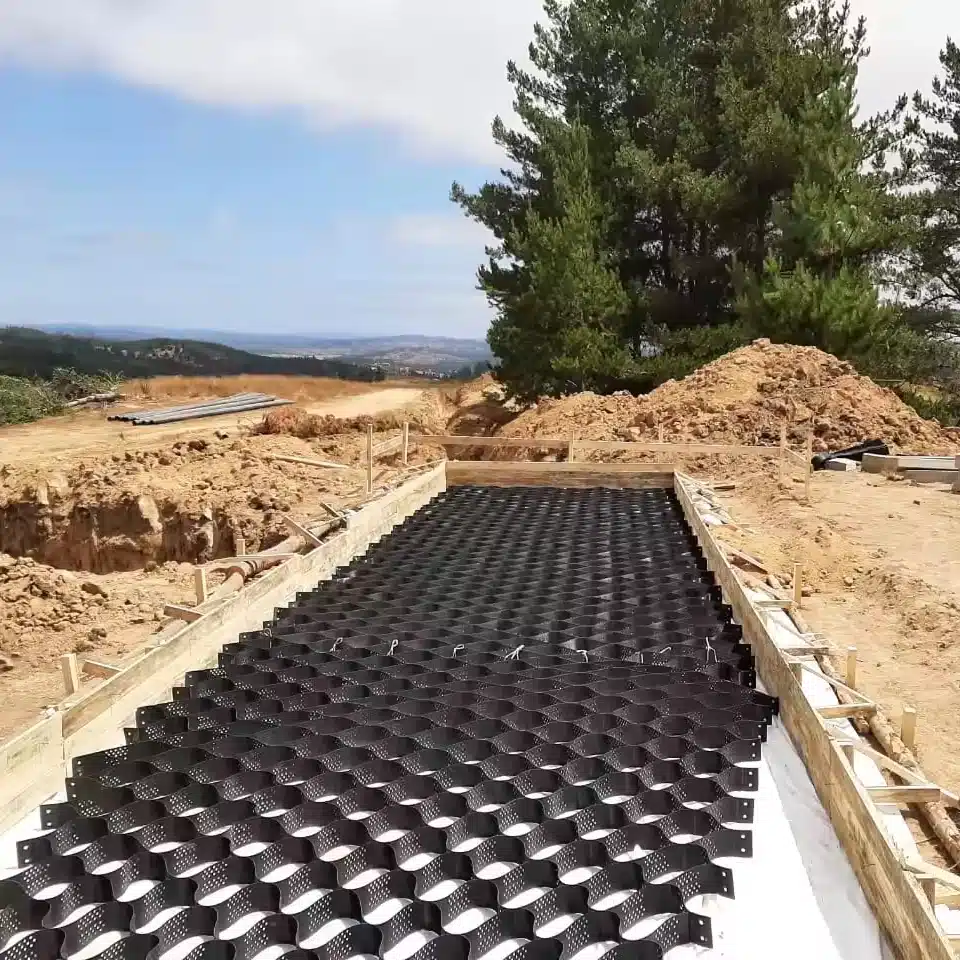
Geocell retaining walls are typically installed using a layered construction method. Specific construction details depend on the particular design scheme; however, the on-site construction process generally follows a logical sequence: site preparation, foundation construction, placement of separation and drainage layers (as required), expansion and anchoring of the geocells, filling of the cells, controlled compaction performed in layers and stages, and finally, the finishing of the retaining wall face and drainage outlets. Compared to heavier, rigid structural systems, geocell systems are frequently selected as the preferred solution due to their light weight, ease of transport, and simple installation.
Step 1: Prepare the site and foundation
Clear loose debris, remove unstable material, and shape the formation level. The foundation must be level, compacted, and consistent. If the base is weak, improve it before placing the geocell system. This is where many future settlement problems begin.
Step 2: Install geotextile and drainage components
If the design calls for separation, place geotextile on the prepared base or behind the wall zone. Install drainage stone, drains, or outlets as specified. Do not wait until the wall is finished to think about water.
Step 3: Expand and anchor the geocell panels
Open the geocell to the designed dimensions. Keep the geometry consistent. Anchor the panels so they do not shift during filling. On slopes, proper anchoring is especially important at the crest and along the face line.
Step 4: Fill the cells in controlled layers
Use the specified infill. Gravel and crushed stone are common where drainage and structural performance matter. Soil may be used in vegetated wall systems. Place fill carefully so the cells are not distorted.
Step 5: Compact correctly
Compaction is not just a finishing step. It activates the structural behavior of the infill. Compact each lift according to the project requirements. Poor compaction reduces the confinement benefit and creates weak zones.
Step 6: Build up the wall face and finish protection
As the layers rise, maintain line, level, and face control. Add surface treatment, vegetation, or protective cover as required. Make sure outlets remain open and surface runoff is directed away from the wall.
| Installation stage | Main action | Common mistake |
|---|---|---|
| Site prep | Grade and compact base | Building on weak formation |
| Separation/drainage | Install geotextile and drainage path | Ignoring water path |
| Panel setup | Expand and anchor cells | Uneven geometry |
| Filling | Place specified infill | Using unsuitable fill |
| Compaction | Compact by lift | Under-compaction |
| Finishing | Protect face and outlets | Blocking drainage exits |
What should be checked after construction for long-term performance?
Some teams finish the wall and move on. That is a mistake. A retaining wall should be inspected after construction, especially after major rain events or early service loading. The wall may look stable at handover, but long-term performance depends on whether the system continues to drain, hold shape, and resist erosion.
Compared to rigid structural systems, geocell retaining walls typically require less intensive maintenance; however, monitoring remains necessary. Geocell systems are adopted for their ability to provide durable, low-maintenance slope stabilization; nevertheless, their long-term effectiveness ultimately depends on the quality of construction and the execution of regular inspections.
What should be inspected?
Check for face bulging, surface erosion, blocked drainage outlets, exposed geocell edges, settlement at the crest, and local washout after storms. In vegetated walls, check whether growth is establishing evenly or whether sections are losing soil.
How are common issues repaired?
Small surface erosion can often be repaired by re-filling and compacting localized areas, then restoring cover or vegetation. Damaged edges may need trimming, patching, or local replacement depending on the severity. Drainage issues must be corrected quickly because trapped water can create larger structural problems.
What helps the wall last longer?
Good drainage, correct runoff control, proper compaction, and using the right infill help more than any cosmetic fix. A wall that starts with the right design and installation usually needs far less intervention later.
Conclusion
A geocell retaining wall works best when design, drainage, filling, and compaction all work together. Flexible structure, correct installation, and good water control are what make it perform.