Weak weld strength can turn a good-looking geocell panel into a project risk. The sheet may be thick, the color may look correct, but the cell structure can fail if the welded joints cannot hold under tension.
Weld strength matters in HDPE geocell manufacturing because geocell is made from polymer strips joined into a three-dimensional honeycomb structure. If the weld points are weak, the cells can separate during expansion, filling, compaction, or long-term loading, reducing confinement performance and increasing project failure risk.

A buyer should not judge HDPE geocell only by price, thickness, or appearance. Weld strength is one of the clearest signs of real factory control, because it connects raw material quality, sheet consistency, welding process, inspection, and project performance.
What Is Weld Strength In HDPE Geocell Manufacturing?
Many buyers treat weld strength as a small technical detail. In factory production, it is one of the most important indicators of whether the geocell can keep its honeycomb structure under real site stress.
Weld strength is the bonding strength of the welded joints where HDPE strips are connected to form geocell cells. It shows whether the joints can resist pulling, expansion, filling pressure, compaction, and project load without separating.
Weld strength is the joint strength
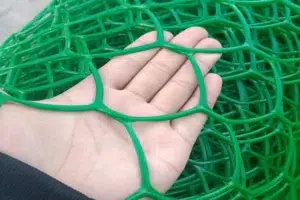
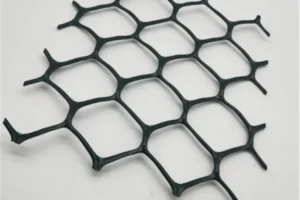
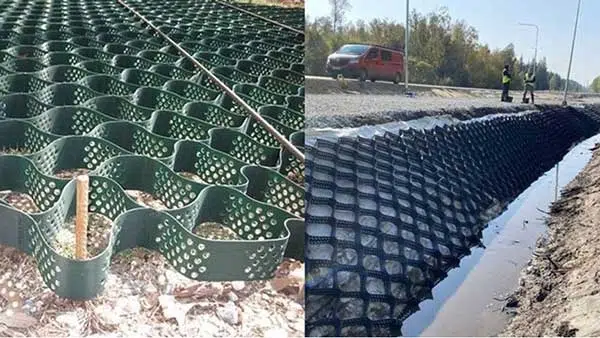
HDPE geocell is made from long polymer strips. These strips are welded at fixed intervals to create a folded panel. When the panel is expanded on site, it forms a three-dimensional cellular structure.
The weld points are the connection points of the whole system. If they are strong, the cells hold their shape. If they are weak, the cells can open, stretch, or separate.
This is why weld strength is not only a factory testing term. It is directly related to how the product behaves during installation and use.
Geocell depends on the welded structure
A geocell is not only a piece of HDPE sheet. It is a cellular confinement system. The engineering function comes from the complete honeycomb structure after expansion and filling.
Wikipedia’s geosynthetics overview describes geocells as three-dimensional honeycombed cellular structures made from polymeric strips welded together and expanded to form a flexible 3D cellular mattress. geocells as welded polymeric strips[^1]
This means the strip and the weld must work together. Strong sheet material with weak welds still creates risk. Good resin and correct thickness are not enough if the welding process is unstable.
Weld strength is not visible from product photos
Product photos can show color, surface texture, perforation, and general appearance. They cannot prove weld strength.
A buyer may receive two black HDPE geocell samples that look similar. But one may have stable weld bonding, and the other may separate when pulled or expanded. This is why serious buyers should ask about weld strength, especially for road, slope, retaining wall, and load-support projects.
| Weld Strength Point | What It Means | Why Buyers Should Care |
|---|---|---|
| Joint Bonding | The strength of the welded connection | Prevents cell separation |
| Cell Stability | The ability to keep honeycomb shape | Protects confinement effect |
| Expansion Resistance | Strength during panel opening | Reduces installation damage |
| Load Response | Joint behavior under fill and traffic load | Affects long-term project performance |
| Batch Consistency | Stable weld quality across production | Reduces risk in bulk orders |
For buyers reviewing HDPE geocell options, it is better to check the full geocell product specification before comparing quotations only by square-meter price.
Why Does Weld Strength Affect Geocell Performance On Site?
A geocell panel faces several stresses before it starts working in the project. It is expanded, fixed, connected, filled, compacted, and then loaded by traffic, soil, water, or slope pressure.
Weld strength affects geocell performance because the welded joints hold the cell structure together. Weak welds can open during installation or under service load, causing loss of confinement, infill movement, deformation, and lower project stability.
Installation creates tension at the welds
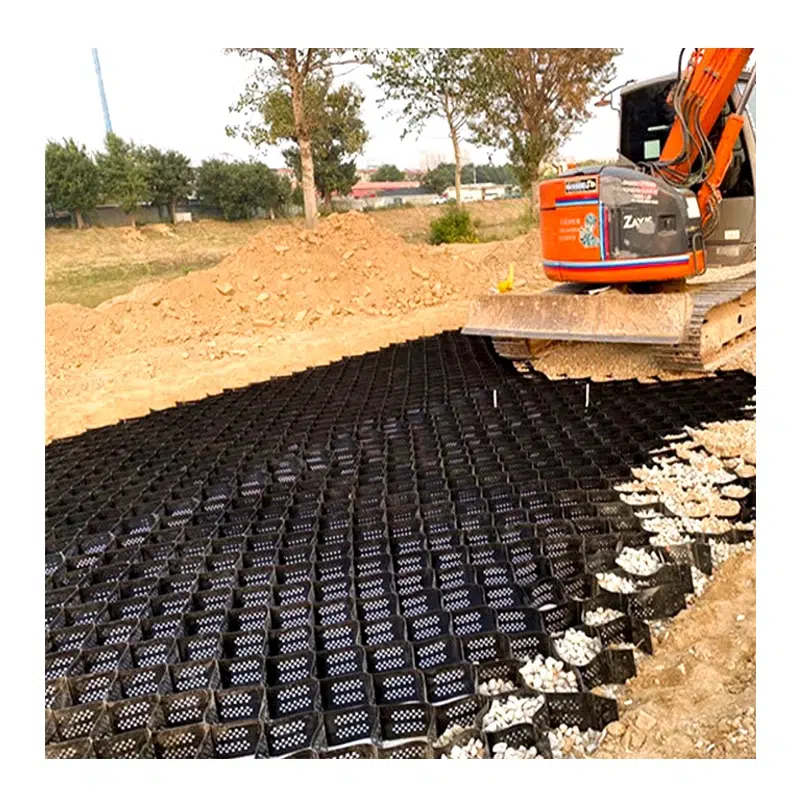
During installation, workers expand the folded panel to its designed size. This action pulls on the welded joints. If the welds are weak, the panel may separate before it is even filled.
This is especially common when the panel is overstretched, dragged on rough ground, or installed on uneven surfaces. A good weld gives the installer more safety margin. A weak weld leaves little tolerance for normal site handling.
The buyer may blame the installer, but the root cause can be poor welding control at the factory.
Filling and compaction add pressure
After expansion, the cells are filled with soil, gravel, crushed stone, sand, or concrete. The infill pushes against the cell walls. Then compaction adds more force.
If the weld points are unstable, the cell shape can deform. The infill can move more than expected. The layer may lose uniform thickness. In road base projects, this can increase rutting risk. In slope projects, it can increase surface movement.
A geocell system only works when the cells remain connected and stable after filling.
Long-term load tests the weak points
Projects do not fail only on the first day. Many failures appear after repeated load cycles, rainfall, temperature change, water flow, or soil movement.
The ASTM D8269-21 guide covers basic considerations for geocell use in geotechnical and roadway projects, including load support, subgrade improvement, slope stability, retaining walls, earth retention, and slope and channel protection. ASTM D8269-21 geocell project applications[^2]
For these applications, the weld is one of the points that must survive repeated stress. If the weld is the weakest part of the system, the whole project can be affected.
| Site Stage | Stress On Welds | Risk Of Weak Welds |
|---|---|---|
| Panel Expansion | Pulling force at joints | Cell separation before filling |
| Anchoring | Local tension at fixed points | Distortion around anchors |
| Filling | Side pressure from infill | Cell shape deformation |
| Compaction | Vibration and compression | Joint opening or tearing |
| Service Load | Traffic, soil, water, slope force | Long-term loss of confinement |
Buyers sourcing geocell for road projects can also review HDPE geocell for road and slope applications to match weld requirements with project use.
What Factory Factors Control HDPE Geocell Weld Strength?
Weld strength is not created by one machine setting. It comes from raw material quality, sheet uniformity, welding temperature, pressure, time, strip surface condition, and production discipline.
HDPE geocell weld strength is controlled by resin quality, sheet thickness consistency, welding temperature, welding pressure, welding time, strip alignment, machine stability, operator control, and quality inspection. If one factor is unstable, the weld strength can become inconsistent.
Raw material affects weld behavior
The welding process starts before the welding machine runs. It starts with the sheet material.
If the HDPE resin is unstable, mixed with poor recycled content, or has inconsistent additives, the sheet may not weld evenly. The material can look acceptable but still behave poorly under heat and pressure.
A factory should control raw material before production. If raw material quality changes from batch to batch, weld strength may also change from batch to batch.
Sheet thickness affects heat and pressure
Sheet thickness must be consistent. If one part of the strip is thicker and another part is thinner, the welding process becomes harder to control.
The same welding temperature and pressure may not work equally across inconsistent sheet thickness. This can create some strong joints and some weak joints in the same batch.
This is why buyers should not only ask for nominal thickness. They should ask whether the factory controls actual thickness during production.
Welding parameters must stay stable
Welding temperature, pressure, and time must match the sheet material and thickness. If the temperature is too low, bonding may be weak. If it is too high, the material can be damaged. If pressure is unstable, the joint may not bond evenly.
Good weld strength requires process control. It is not enough for a supplier to say, “We use ultrasonic welding” or “We use professional equipment.” The real question is whether the factory controls the process and checks the result.
Operator and inspection still matter
Even with good machines, human control matters. Operators must keep strip alignment, weld spacing, and process settings stable. Quality staff must check finished panels.
A factory that ignores inspection may still ship products that look normal but have weak welds. For bulk export orders, this is a serious risk because the problem may be discovered only after arrival.
| Factory Factor | How It Affects Weld Strength | Buyer Question |
|---|---|---|
| Resin Quality | Controls material bonding behavior | What HDPE material is used? |
| Recycled Content | Affects consistency and aging | Is recycled material used? If yes, what grade? |
| Sheet Thickness | Affects welding heat and pressure | Is actual thickness controlled? |
| Welding Temperature | Affects bonding quality | How is welding temperature controlled? |
| Welding Pressure | Affects joint contact | Is pressure stable during production? |
| Welding Time | Affects bond formation | Is welding time adjusted by specification? |
| Inspection | Finds weak welds before shipment | Is weld quality checked before delivery? |
For buyers comparing geocell with other reinforcement materials, geogrid reinforcement products can also help show why different geosynthetics need different quality checkpoints.
Why Should Buyers Not Judge HDPE Geocell Only By Thickness?
Thickness is important, but it is not the whole product. A thick sheet with weak welds can still fail. A correct geocell needs both sheet strength and joint strength.
Buyers should not judge HDPE geocell only by thickness because geocell performance depends on the complete cellular structure. Sheet thickness affects strip strength, but weld strength decides whether the strips stay connected under expansion, filling, compaction, and long-term load.
Thickness can hide other problems
Some buyers believe thicker geocell is always safer. This is not always true.
A thicker sheet can improve stiffness and material strength. But if the weld process is poor, the thicker sheet may still separate at the joints. The failure point may not be the strip. It may be the weld.
This is why professional procurement should compare thickness together with weld strength, cell height, weld spacing, resin quality, and application.
Weld strength protects the structure
The sheet forms the wall of each cell. The weld creates the connection between strips. Both are needed.
If the strip is strong but the weld is weak, the panel cannot maintain its honeycomb shape. If the weld is strong but the sheet is too thin for the project, the cell wall may deform. The factory must balance both.
This is the product logic buyers should understand. The best geocell is not the thickest. The best geocell is the one with suitable thickness, stable welds, correct cell height, and matched project application.
Price comparison must include weld quality
A supplier can quote a low price by reducing quality control or using lower welding standards. The product may still meet the requested thickness on paper.
This creates a hidden trap. The buyer thinks the two quotations are equal because both show the same thickness. But the weld strength may be different.
A serious buyer should ask for a full specification comparison, not only a thickness comparison.
| Buyer Checks Only | What May Be Missed | Better Check |
|---|---|---|
| Thickness | Weak weld strength | Thickness + weld strength |
| Color | Poor resin quality | Material grade and additive |
| Surface | Inconsistent welding | Joint strength and cell stability |
| Price | Reduced quality control | Full specification and inspection |
| Panel Size | Poor connection behavior | Expansion and weld consistency |
A buyer who understands this can avoid a common mistake: paying for thickness but receiving poor structure.
How Does Weld Strength Affect Road, Slope, And Retaining Wall Projects?
Different projects place different stress on HDPE geocell. Road projects create repeated load. Slope projects create gravity and erosion stress. Retaining wall projects create soil pressure and long-term deformation demand.
Weld strength affects road, slope, and retaining wall projects because each application depends on stable cell confinement. If welds open, the infill can move, the panel can deform, and the system may lose its reinforcing or erosion-control function.
Road construction needs weld stability under load
In road base projects, the geocell confines aggregate. Traffic load pushes the aggregate downward and sideways. The cell walls resist that movement.
If welds are weak, cells can open under repeated load. The aggregate may move. The road base may lose shape. Over time, this can lead to rutting, settlement, or surface damage.
For road projects, buyers should pay attention to weld strength, cell height, sheet thickness, and infill quality together.
Slope protection needs weld stability under gravity
On slopes, the geocell holds soil, gravel, vegetation media, or concrete on the slope surface. Gravity pulls the infill downward. Rainwater adds erosion force.
If the welds separate, the cells cannot hold the infill in place. Soil may wash out. Gravel may slide. Vegetated slopes may lose soil before roots establish.
This is why slope projects need stable welds and correct anchoring.
Retaining wall projects need long-term structure
Retaining wall and earth retention projects place more long-term stress on the geocell system. The product may need to handle soil pressure, deformation, and project-specific connection requirements.
Weak weld strength can reduce the stability of the cellular structure. For these projects, a general low-cost geocell may not be enough. Buyers should confirm whether the factory understands the application before ordering.
| Project Type | Main Stress | Weld Strength Risk |
|---|---|---|
| Road Base | Repeated traffic load | Cell opening and aggregate movement |
| Temporary Road | Construction equipment load | Panel damage during use |
| Slope Protection | Gravity and runoff | Soil or gravel washout |
| Channel Protection | Water flow and erosion | Cell deformation and loss of infill |
| Retaining Wall | Soil pressure and deformation | Long-term structure instability |
For slope projects, buyers can also review geocell for slope protection solutions and confirm whether the product is designed for soil, gravel, or concrete infill.
How Should Buyers Check Weld Strength Before Ordering HDPE Geocell?
Buyers do not need to become factory technicians, but they should know what to ask. The goal is to avoid buying a product that looks right but fails at the joints.
Before ordering HDPE geocell, buyers should ask about weld strength, welding method, sheet thickness tolerance, resin quality, sample expansion, production inspection, and batch consistency. For important projects, buyers should request samples, technical data, or factory confirmation before bulk order.
Ask for more than product photos
Product photos are useful, but they cannot prove weld strength. Buyers should ask for specification details and quality control information.
A serious inquiry should include:
- HDPE material grade
- sheet thickness
- cell height
- weld spacing
- weld strength requirement
- surface texture
- perforation
- panel size
- project application
- order quantity
- destination port
This gives the factory enough information to recommend the correct product and control production.
Test sample expansion
For new suppliers or new specifications, sample checking is useful. The buyer can expand the panel, inspect the welds, and check whether the joints behave normally.
This does not replace full quality testing, but it reduces early misunderstanding. A sample that opens at the weld during normal handling is a warning sign.
Confirm batch inspection
Bulk orders need batch control. A good sample does not automatically mean the full container will be consistent.
The factory should inspect sheet thickness, panel dimensions, weld consistency, appearance, packing, and label information before shipment. For important projects, buyers may also request third-party inspection or specific test data.
| Buyer Check | Why It Matters | What To Ask The Factory |
|---|---|---|
| Material | Affects weld behavior | What HDPE material is used? |
| Thickness Tolerance | Affects welding stability | How is actual thickness controlled? |
| Weld Strength | Confirms joint performance | What weld strength standard is followed? |
| Sample Expansion | Shows handling behavior | Can you provide a sample before order? |
| Batch Inspection | Reduces container-level risk | What is checked before shipment? |
| Packing | Protects product during export | How are panels packed and labeled? |
For buyers who are building a wider geosynthetics package, reviewing MJY geosynthetic material options can help compare geocell with geotextile, geomembrane, and geogrid based on project function.
What Mistakes Do Buyers Make When Comparing Geocell Weld Strength?
Most weld-strength mistakes come from judging the wrong thing. Buyers often compare price, color, thickness, or catalog claims, but they do not compare the actual joint performance.
Common mistakes include comparing only price, checking only thickness, ignoring resin quality, accepting vague “high strength” claims, skipping sample checks, and choosing suppliers that cannot explain welding control. These mistakes increase the risk of weak joints and project failure.
Mistake 1: Comparing only price
A lower price may mean weaker material, less inspection, or unstable welding control. If the weld strength is reduced, the price is not a real advantage.
For project buyers, the cheaper option is not always the lower-cost option. If the cells separate during installation, the buyer pays through delay, labor, replacement, and reputation damage.
Mistake 2: Checking only sheet thickness
Thickness is easy to understand, so many buyers focus on it. But geocell is a welded cellular product. The joint matters as much as the sheet.
A thick sheet with poor welds is still risky. Buyers should compare thickness and weld strength together.
Mistake 3: Trusting general quality claims
Words like “high quality,” “strong,” and “durable” do not prove weld performance. The supplier should explain the material, process, and inspection logic.
If a supplier cannot explain weld strength clearly, the buyer should slow down. A reliable factory should not avoid technical questions.
Mistake 4: Ignoring application
Different applications need different performance. A light landscape slope and a heavy road base should not use the same buying logic.
The buyer should tell the factory the project use. Then the factory can recommend suitable weld strength, sheet thickness, cell height, and panel design.
| Mistake | Hidden Risk | Better Practice |
|---|---|---|
| Choose lowest price | Weak welds and poor inspection | Compare full specification first |
| Check only thickness | Joint failure may be ignored | Check thickness and weld strength |
| Trust photos only | Weld weakness is invisible | Ask for sample or technical data |
| Ignore resin quality | Welds may vary by batch | Confirm material consistency |
| Ignore project use | Product may be under-specified | Match geocell to road, slope, or wall |
| Skip export checks | Damage or confusion after delivery | Confirm packing and labels |
Buyers can use social platforms such as TikTok geocell installation videos[^3] or Facebook geocell application posts[^4] to observe field visuals. But social videos should not replace weld-strength confirmation, project design, or factory quality data.
My View
When I evaluate HDPE geocell manufacturing quality, I do not start with color, photos, or even thickness. I start with weld strength because the welded joint decides whether the cellular structure can stay together under real stress.
A buyer can accept different thicknesses for different applications. A buyer can also choose different cell heights based on road, slope, or retaining wall needs. But weak weld strength is not something to ignore. It affects installation safety, infill confinement, and long-term stability.
For B2B buyers, the right method is simple. Confirm the project application first. Confirm material and thickness second. Then ask how the factory controls welding and inspection. After that, compare price.
A supplier that cannot explain weld strength is not a strong choice for project-based orders. A reliable factory should understand that weld quality is not a small production detail. It is one of the core performance points of HDPE geocell.
Conclusion
Weld strength matters because HDPE geocell works as a welded cellular system. Buyers should check joint quality, material stability, and factory control before comparing price.
Footnotes
[^1]: This Wikipedia page is used to support the basic explanation that geocells are three-dimensional cellular structures made from polymeric strips welded together.
[^2]: This ASTM D8269-21 document is used as a neutral technical reference for geocell applications in load support, subgrade improvement, slope stability, retaining walls, earth retention, and slope/channel protection.
[^3]: This TikTok search page is included as a social media reference for geocell installation visuals. Buyers should verify weld strength and specification details with factory data.
[^4]: This Facebook search page is included as a social media reference for geocell application posts. It should not replace technical confirmation or supplier inspection.