Slope protection projects can fail when soil moves, rainwater washes the surface, or the selected material cannot match the slope condition. Geocell can solve many of these problems, but only when buyers choose the right material, cell height, weld strength, perforation, and infill.
Geocell is used for slope protection by expanding honeycomb panels on the slope surface, fixing them with anchors, filling the cells with soil, gravel, concrete, or vegetation media, and creating a stable confinement layer. It helps reduce erosion, hold infill in place, and improve slope surface stability.

A good slope geocell system is not only about covering the slope. It depends on slope angle, soil type, water flow, anchoring design, geocell specification, infill choice, and factory quality control.
Why Is Geocell Used For Slope Protection?
Slope surfaces fail when soil particles move downward under gravity, rainfall, runoff, or construction disturbance. Geocell helps because it confines the surface layer and reduces the movement of soil or aggregate.
Geocell is used for slope protection to control erosion, stabilize surface soil, support vegetation, hold gravel or concrete infill, and reduce surface washout. It is suitable for road slopes, railway slopes, riverbanks, channels, embankments, landfill slopes, and erosion-control projects.

Geocell controls surface movement
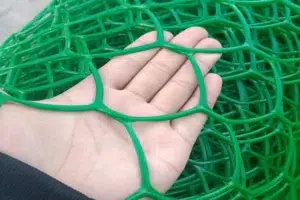
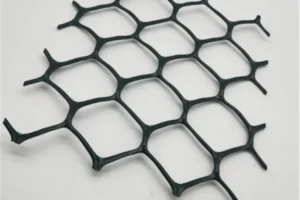
Geocell is a three-dimensional cellular confinement system. After expansion, it forms a honeycomb structure. When the cells are filled, the cell walls help hold the infill material in position.
This matters on slopes because gravity and water both push material downward. Loose soil can wash away after rain. Gravel can slide. Vegetation soil can lose its structure before roots grow. Geocell creates a small confined unit in each cell, so the surface layer becomes more stable.
A neutral explanation of cellular confinement systems[^1] describes geocells as honeycomb-like structures expanded on site and filled with soil, sand, rock, gravel, or concrete. This is the same working logic used in many slope protection projects.
Geocell reduces erosion risk
Slope erosion usually starts on the surface. Rainfall hits the slope. Water flows downward. Fine particles move first. Then small channels form. If the project does not control this early movement, the slope can become unstable over time.
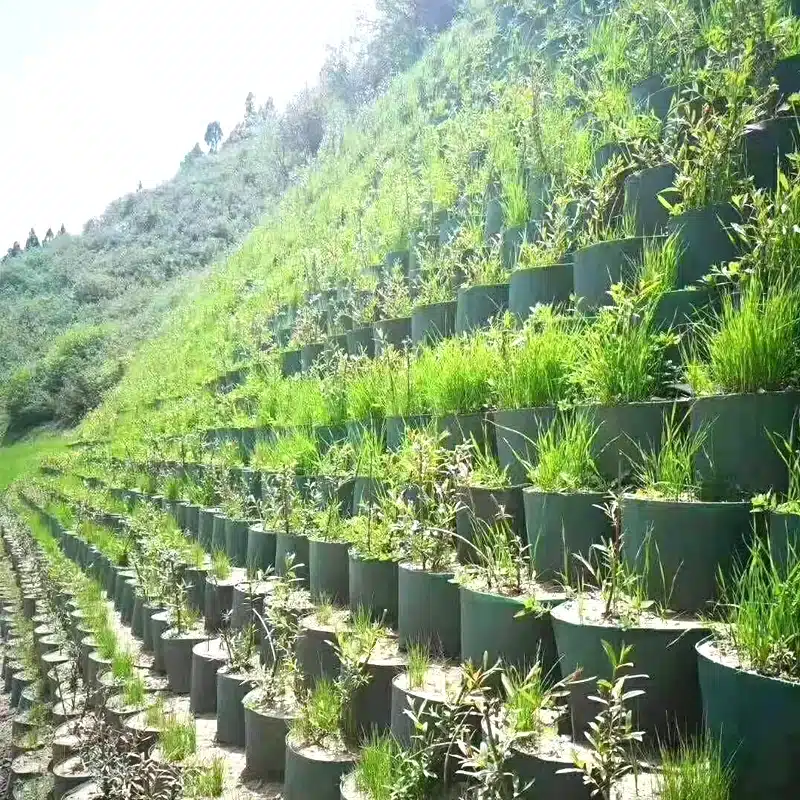
Geocell helps slow this process by holding soil or aggregate in separated cells. The system can also work with vegetation. When grass roots grow through the soil inside the cells, the slope gains another layer of reinforcement.
Geocell can support different infill choices
For slope protection, the infill is not always the same. Soil can be used for vegetation. Gravel can be used for drainage and surface protection. Concrete can be used for channels, high-flow areas, or heavy erosion zones.
This flexibility is one reason geocell is popular in slope projects. But flexibility does not mean one geocell specification fits every slope. The material, height, perforation, texture, and anchoring plan must match the project.
| Slope Problem | How Geocell Helps | Factory-Side Judgment |
|---|---|---|
| Surface erosion | Confines soil or aggregate | Match cell height to slope and runoff |
| Gravel sliding | Holds aggregate inside cells | Check cell size and anchoring |
| Weak vegetation layer | Supports soil before roots develop | Use suitable cell height and perforation |
| Rainwater washout | Reduces surface material loss | Combine with drainage planning |
| Steeper slope surface | Adds surface confinement | Check weld strength and anchor layout |
For buyers comparing slope-control materials, the first step is to review the correct geocell product options before asking only for a square-meter price.
What Geocell Properties Matter Most For Slope Protection?
Many buyers only ask for geocell thickness and price. That is not enough for slope projects. The slope condition decides which geocell properties matter most.
For slope protection, buyers should focus on raw material, sheet thickness, cell height, weld strength, perforation, surface texture, UV resistance, panel size, and anchoring compatibility. These properties decide whether the geocell can hold infill and resist slope movement.

Material quality affects field performance
Most geocells are made from HDPE or PP. HDPE is widely used because it has good flexibility, chemical resistance, and outdoor durability. But the material name alone is not enough.
A buyer should ask about resin quality, recycled content, UV additive, and sheet consistency. If the material is unstable, the sheet may crack during expansion, age too fast under sunlight, or create unstable welds.
For slope protection, outdoor exposure is common. Panels may remain exposed before vegetation grows or before the slope is fully covered. This makes UV resistance more important than many buyers expect.
Cell height affects soil retention
Cell height controls how much infill the geocell can hold. Higher cells can hold more soil, gravel, or concrete. This can improve confinement on steeper or more erosion-prone slopes.
But higher cell height also increases cost and filling quantity. A gentle landscaping slope may not need the same cell height as a steep road embankment or riverbank slope.
This is why a factory should not recommend one standard size for every buyer. The correct height depends on slope angle, infill type, water flow, and project purpose.
Weld strength affects slope safety
The welded joints hold the cell strips together. On a slope, the cells are pulled by gravity, infill weight, anchoring force, and sometimes water flow.
If weld strength is weak, the geocell may separate during installation or after filling. This is a serious risk. Once cells open, the infill can move and the slope surface loses confinement.
| Property | Why It Matters On Slopes | Buyer Should Confirm |
|---|---|---|
| Raw Material | Affects durability and flexibility | HDPE / PP quality and recycled content |
| Sheet Thickness | Affects strength and stiffness | Measured thickness and tolerance |
| Cell Height | Affects infill retention | Match to slope angle and infill type |
| Weld Strength | Prevents cell separation | Ask about welding control |
| Perforation | Helps drainage and root interaction | Needed for vegetated slopes |
| Surface Texture | Improves friction with infill | Useful for gravel or soil retention |
| UV Resistance | Protects exposed material | Important for outdoor slope projects |
If the slope project also requires separation, filtration, or soil support under the geocell layer, buyers should consider using a suitable geotextile layer together with geocell.
How Should Buyers Choose Geocell Infill For Slope Protection?
The geocell panel does not work alone. The infill material decides how the system behaves under rain, runoff, gravity, and long-term exposure.
Common geocell infill materials for slope protection include topsoil, vegetation soil, gravel, crushed stone, concrete, and sometimes local soil. Soil is used for green slopes, gravel is used for drainage and surface protection, and concrete is used for high-flow or severe erosion areas.
Soil infill supports vegetation
Soil is commonly used when the project wants a green slope. The geocell holds the soil in place while grass or plants grow. After vegetation develops, the roots help improve surface stability.
This type of system is useful for road embankments, railway slopes, landscaping slopes, and ecological restoration projects. But the soil must be suitable for plant growth and compaction. If the soil is too loose or too fine, it may wash out easily before vegetation is established.
For vegetated slopes, perforated geocell can help drainage and root interaction. The buyer should confirm this before ordering.
Gravel infill improves surface protection
Gravel or crushed stone can be used when the project needs stronger surface protection and better drainage. This is common in drainage channels, roadside slopes, or areas where vegetation is not the main goal.
The gravel size should match the cell opening. If the stone is too large, it may not compact or sit properly. If it is too small or contains too many fines, drainage and stability may be affected.
The factory should know the intended infill before recommending cell size and height.
Concrete infill is used for severe erosion
Concrete infill can be used in high-flow channels, drainage slopes, or areas with strong water erosion. It creates a hard surface while the geocell acts as a formwork and confinement structure.
This option is stronger but less flexible and less ecological. It also costs more. It should be used when the project needs hard protection, not when a green slope is required.
| Infill Material | Best Use | Key Risk |
|---|---|---|
| Topsoil | Vegetated slope protection | Can wash out before roots grow |
| Local Soil | Low-cost slope filling | May be weak or hard to compact |
| Gravel | Drainage and erosion control | Must match cell size |
| Crushed Stone | Strong surface protection | Higher material cost |
| Concrete | High-flow or severe erosion zones | Higher cost and less green effect |
| Mixed Soil + Seed | Ecological slope projects | Needs water and maintenance plan |
The wider geosynthetics[^2] category includes materials used for stabilization, drainage, filtration, separation, and erosion control. In slope protection, geocell often works with geotextile, drainage products, or vegetation systems depending on the project.
How Should Geocell Be Installed On A Slope?
Slope installation needs more control than flat ground installation. Gravity can move the panel, infill, and workers’ equipment if the system is not fixed correctly.
Geocell slope installation usually includes slope trimming, subgrade compaction, geotextile placement if needed, geocell expansion from top to bottom, anchoring, panel connection, infill placement, compaction or finishing, and vegetation or surface treatment.
Prepare the slope surface first
The slope surface should be trimmed and cleaned before installation. Workers should remove loose stones, soft pockets, roots, debris, and unstable soil. The slope should be shaped according to the project design.
This step is important because geocell needs close contact with the slope surface. If the panel is placed over loose soil or cavities, the filled system may deform later.
For weak or fine soils, a geotextile layer may be used under the geocell. It can help separation and prevent soil loss depending on the site condition.
Install from the top down
On many slopes, geocell panels are fixed from the top and expanded downward. This helps control panel position and reduces sliding during installation.
Anchors should be installed according to slope angle, soil type, panel size, and expected load. Steeper slopes need stronger anchoring. Water-flow areas may also need closer anchor spacing.
A common mistake is using the same anchor layout for every slope. This is risky. A gentle slope and a steep embankment do not have the same holding requirement.
Fill the cells carefully
Infill should be placed in a controlled way. On steep slopes, workers must avoid dumping too much material at once because it can move the panel or damage the cell walls.
For soil infill, light compaction or surface finishing may be needed. For gravel infill, the stone should be distributed evenly. For concrete infill, the filling process should follow project requirements and avoid voids.
| Installation Step | Key Control Point | Why It Matters |
|---|---|---|
| Slope trimming | Remove loose and unstable material | Prevents later deformation |
| Geotextile placement | Separate and filter when needed | Reduces soil loss |
| Panel expansion | Open cells evenly | Keeps confinement consistent |
| Anchoring | Fix panels from top and middle areas | Prevents sliding |
| Panel connection | Join adjacent panels securely | Creates continuous protection |
| Infill placement | Fill cells evenly | Prevents local stress |
| Final finishing | Compact, seed, or surface treat | Improves long-term performance |
For visual site examples, buyers may review TikTok geocell slope protection videos[^3]. These videos can help buyers understand field scenes, but the final specification should still come from project design and factory confirmation.
What Mistakes Should Buyers Avoid When Buying Geocell For Slope Protection?
Most buying mistakes come from treating geocell as a simple plastic product. A slope protection project needs material selection, specification matching, installation planning, and export reliability.
Buyers should avoid choosing geocell only by price, ignoring slope angle, using the wrong cell height, skipping weld-strength checks, choosing the wrong infill, ignoring UV exposure, and buying from suppliers that cannot explain project matching.
Mistake 1: Comparing only price per square meter
A lower price can come from thinner sheets, lower cell height, weak welds, unstable resin, or basic packing. If the specification is different, the price is not comparable.
For slope projects, a low-price product may fail by sliding, tearing, or losing infill. The cost of repair can be much higher than the original material saving.
Buyers should compare price after confirming thickness, cell height, weld spacing, surface type, perforation, and material quality.
Mistake 2: Ignoring slope angle
Slope angle directly affects anchoring, infill choice, and cell height. A steep slope needs stronger control than a gentle slope.
If the buyer does not tell the factory the slope angle, the factory can only make a general recommendation. This can lead to under-specification.
Mistake 3: Choosing the wrong infill
Some buyers want a green slope but choose a product or infill plan that does not support vegetation well. Others use loose soil in a high-flow area where gravel or concrete would be more suitable.
The geocell specification and infill material must be selected together. They cannot be judged separately.
Mistake 4: Ignoring export support
For overseas buyers, export support is part of product reliability. Packing, labeling, container loading, lead time, and documents all affect the project.
A supplier that gives a low price but cannot control packing or shipment may create delays. For project buyers, this is not a small problem.
| Buying Mistake | Possible Result | Better Practice |
|---|---|---|
| Choosing lowest price | Weak material or wrong specification | Compare full technical details first |
| Ignoring slope angle | Poor anchoring and retention | Provide slope ratio before quotation |
| Ignoring weld strength | Cell separation risk | Ask about welding control |
| Wrong infill choice | Washout or poor vegetation | Match infill to project goal |
| No UV consideration | Faster aging before cover | Confirm UV resistance |
| No export check | Delivery and packing problems | Confirm documents and loading plan |
Buyers can also observe Facebook geocell slope protection posts[^4] for application ideas, but social content should not replace engineering judgment or factory-side specification confirmation.
How Should Buyers Source Geocell For Slope Protection From China?
A good sourcing process starts with project details. The supplier needs to understand the slope before recommending the product.
To source geocell for slope protection, buyers should provide slope angle, slope height, soil condition, rainfall or water-flow condition, infill material, vegetation requirement, sheet thickness, cell height, quantity, destination port, and packing needs. This helps the factory quote the correct product.
Send slope details before asking price
The factory needs to know where the geocell will be used. A road embankment, riverbank, drainage channel, landfill slope, and landscaping slope have different requirements.
A buyer who only asks for price per square meter may receive a standard quote. That standard quote may not fit the project.
The better way is to send slope angle, soil type, rainfall condition, expected infill, and project purpose. This gives the factory enough information to recommend a practical specification.
Confirm specification and packing
Buyers should confirm material, sheet thickness, cell height, weld spacing, perforation, surface texture, expanded panel size, roll or bundle packing, and label requirements.
If the project needs custom size, the buyer should confirm production ability early. Some specifications may affect lead time, MOQ, and container loading.
For slope projects, buyers should also ask whether the product is suitable for vegetation, gravel, or concrete infill.
Check factory quality and export ability
A reliable factory should control raw material, sheet thickness, welding, dimensions, appearance, packing, and shipment inspection.
For B2B buyers, factory support is not only about price. It is about reducing sourcing mistakes, project delay, and quality risk.
| Buyer Information | Why Factory Needs It | What It Helps Confirm |
|---|---|---|
| Slope Angle | Affects anchoring and cell height | Suitable specification |
| Soil Condition | Affects stability and drainage | Need for geotextile or drainage |
| Rainfall / Water Flow | Affects erosion risk | Infill and perforation choice |
| Infill Type | Affects cell size and height | Soil, gravel, or concrete suitability |
| Vegetation Need | Affects perforation and soil depth | Green slope design |
| Quantity | Affects production and price | MOQ and lead time |
| Destination Port | Affects shipping plan | Freight and loading details |
For buyers building a full slope protection system, it may also help to review 3D geomat erosion-control products and compare whether the project needs geocell, geomat, geotextile, or a combined solution.
My View
When I help buyers choose geocell for slope protection, I do not start with the lowest price. I start with slope angle, water condition, infill material, and expected service life.
The biggest mistake is using one standard geocell for all slopes. A gentle green slope, a road embankment, a riverbank, and a drainage channel do not need the same product. The material, cell height, weld strength, perforation, and anchoring design should change with the project.
A reliable factory should ask about the project before quoting. If a supplier only sends a price list without asking about slope condition, the recommendation may be too shallow for real engineering use.
My suggestion is direct. Confirm the slope condition first. Confirm the geocell specification second. Compare price last. This order helps buyers avoid weak material, wrong cell height, poor weld strength, unsuitable infill, and unnecessary project risk.
Conclusion
Geocell can protect slopes when the specification, infill, anchoring, drainage, and installation method match the project. A reliable buyer should choose by project fit, not price alone.
Footnotes
[^1]: This Wikipedia page is used to support the basic definition and working logic of cellular confinement systems, also known as geocells.
[^2]: This Wikipedia page is used to explain the broader function of geosynthetics in stabilization, drainage, filtration, separation, and erosion-control applications.
[^3]: This TikTok search page is included as a social media reference for geocell slope protection visuals. Buyers should verify technical decisions with project design and supplier data.
[^4]: This Facebook search page is included as a social media reference for geocell slope protection posts and application ideas. It should not replace engineering confirmation.