
A soft-subgrade haul road can rut after the first loaded trucks when the grid, aggregate and drainage are specified separately.
Biaxial geogrid may improve aggregate confinement in a temporary haul road when aperture geometry, aggregate grading, base thickness and subgrade strength work together. It does not replace a separation layer or drainage design automatically. Buyers should give the engineer traffic loads and a ground investigation before requesting one headline tensile strength.
The goal is a buildable temporary section that survives the expected construction traffic, not a grid that merely looks strong on a data sheet.

Send your project drawings, technical specifications, quantities and destination for material-fit review before quotation.
Send drawings and specificationsWhat Is the Actual Failure Mode on Weak Ground?
Under repeated wheel loads, aggregate may punch into a weak subgrade, fines can pump upward, and ruts can concentrate traffic into a narrow path. A grid can help restrain aggregate laterally when its apertures and the stone interact, but it cannot create a stable section without enough cover and suitable drainage. FHWA's geosynthetic road guidance distinguishes reinforcement from separation and the ground conditions that govern each. Ask for a soil profile or at least a documented field assessment. A supplier should not turn a photograph of muddy ground into a precise bearing-capacity claim. [1] [3]
Which Grid and Aggregate Details Must Match?
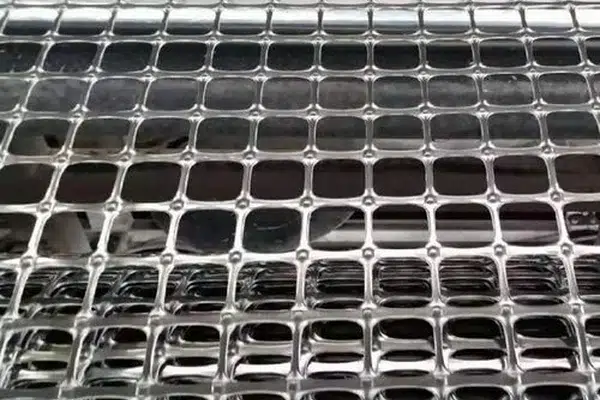
Compare aperture shape, rib and junction behavior, roll direction and the grading of the available aggregate. The stone must be placed without dragging or folding the grid, and the first lift must protect it from equipment. ASTM D6637/D6637M measures grid tensile properties, but an index tensile result does not measure aggregate interlock or predict rut depth by itself. Some projects need a geotextile beneath or with the grid to keep fines out of the base. Tell the engineer whether the road is temporary, how many heavy passes are expected and whether maintenance regrading is possible. [2]
| Check | What it tells you | What it does not prove |
|---|---|---|
| Grid reinforcement | Aggregate confinement | Does not provide soil filtration |
| Geotextile separator | Limit fine migration | Does not replace base thickness |
| ASTM D6637/D6637M | Grid tensile property | Does not predict rutting alone |
The comparison is a procurement screen, not a replacement for the approved engineering design. A test method defines how a property is measured; acceptance thresholds and the site detail must come from the project specification.
Where Does Installation Lose the Benefit?
Crews sometimes place the grid over standing water, drive directly on it, leave insufficient overlap or dump coarse rock in a concentrated pile. Each step can shift the reinforcement or damage a junction before the section carries useful load. The method statement should set subgrade preparation, overlap, anchoring if needed, first-lift thickness and traffic release. A roll-wide layout can reduce joints but only if the crew can deploy it along the alignment. Record any soft spots found during placement; covering a pumping zone without repair can make the next failure look like a material defect. [1]
How Should Two Haul-Road Quotes Be Compared?
Start with the same road width and design traffic. Compare usable roll area after overlaps, declared tensile test method and direction, aperture geometry, packaging, delivery timing and whether a separator is included. The lowest price per square metre may require more rolls or a different road section. Ask each bidder to mark what is excluded: geotextile, aggregate, labour, field trials or maintenance. Where the ground changes along the route, a single nominal section may be a poor procurement assumption. Have the designer identify zones before placing one bulk order. [3]
What Should the Site Team Verify Before Work Starts?
Before the full road is built, place a short trial section across a representative weak area. Record the subgrade condition, grid orientation, aggregate source, lift thickness, compaction method and the first loaded truck passes. Inspect rutting and any pumping at the edges before extending the method to the full alignment. If the trial performs poorly, changing the grid alone may not solve the problem; the team may need more aggregate, improved drainage or local subgrade treatment. Keep a maintenance allowance in the commercial comparison because a temporary road still has an operating cost. Define who approves traffic after rain. A nominally cheaper design that repeatedly closes the haul route can delay the entire construction programme.
What Should Be in the RFQ?
Send the alignment, typical section, subgrade observations, axle loads, expected passes, available aggregate grading, road width and length, drainage condition, required test values, roll preference and destination. MJY can compare biaxial geogrid reinforcement options, while the engineer confirms the road section and traffic release criteria.
For the connected design check, review our geogrid aperture and aggregate selection guide before approving a material substitution.
For a fair quotation, ask each supplier to state the proposed grade, tested properties, test edition, usable roll dimensions, packaging, batch identification, lead time and exclusions. Put the drawing revision and destination on the inquiry. If a proposed substitute changes an engineered detail, request written design approval rather than treating it as a price-only decision.
Factory Tip and Buyer Check
Field Note: Ask the site team where trucks first slow or turn. Braking and turning areas may experience a different demand than a straight run; flag those zones on the drawing instead of assuming uniform exposure along the whole route.
Before bulk production, compare the labelled sample or approved data sheet against the purchase specification. At goods receipt, keep roll IDs and packaging photographs. These small controls make a later site question traceable instead of turning it into an argument about what was ordered.
FAQs
Can geogrid replace all aggregate?
No. Aggregate thickness remains a design variable and must suit the traffic and ground.
Is tensile strength enough to choose a grid?
No. Aperture, junctions, aggregate interaction and installation matter too.
Is a separator always required?
It depends on soil migration and the approved road section; a grid alone does not perform every filter function.
Conclusion
A haul-road grid is one component of a temporary pavement system. Send drawings, traffic assumptions and the technical specification to MJY for a material review before committing to rolls and stone quantities.