
Non woven geotextile fabric is easy to buy wrong because GSM looks simple but performance is not.
Non woven geotextile fabric is used for drainage, filtration, separation, protection, and cushioning. Buyers should compare GSM together with apparent opening size, permittivity, puncture resistance, tensile strength, soil type, and installation condition before choosing a specification.
A heavier fabric is not automatically better. It may be stronger, but drainage flow, clogging risk, and site function still decide whether the fabric fits.
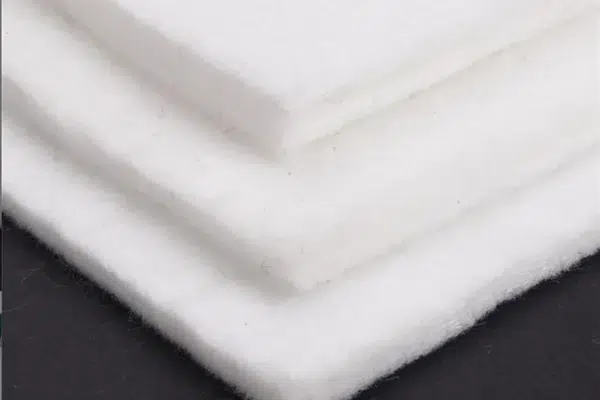
Send soil type, drainage direction, aggregate size, application, GSM target, and roll size to compare nonwoven geotextile fabric before ordering.
Request a nonwoven geotextile specification checkWhat Non Woven Geotextile Fabric Does
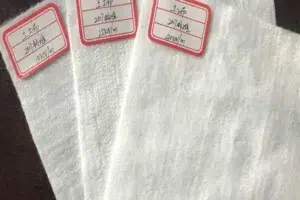
Nonwoven geotextile usually works as a permeable fabric layer, not a waterproof barrier. It can separate soil from aggregate, filter moving water, protect geomembrane, and support drainage. Apparent opening size is one key value because it affects soil retention and filtration behavior. [1]
Common applications include road separation, retaining wall drainage, French drains, landfill liner protection, pond liner underlay, erosion control support, and construction separation layers. The same roll should not be used blindly for every job.
Factory Tip: When a buyer asks for 200 gsm fabric, I ask where it will sit in the section. Under gravel, behind a wall, above a liner, or inside a drain trench are different conditions. GSM is a starting point, not the whole specification.
Drainage, Separation, and Protection
The required function decides the right fabric. Drainage and filtration need water flow and soil retention. Separation needs tensile strength and survivability. Protection needs puncture resistance and cushioning behavior.
| Function | Main purpose | Specification focus |
|---|---|---|
| Drainage and filtration | Let water pass while controlling soil migration | Permittivity, opening size, clogging risk |
| Separation | Keep aggregate and subgrade from mixing | Tensile strength, elongation, survivability |
| Liner protection | Reduce puncture risk against geomembrane | CBR puncture, mass per area, cushion behavior |
| Road base support | Maintain aggregate layer integrity | Strength, overlap, installation damage resistance |
| Retaining wall drainage | Protect drain stone and reduce soil migration | Opening size, flow, installation layout |
Why GSM Alone Can Mislead Buyers
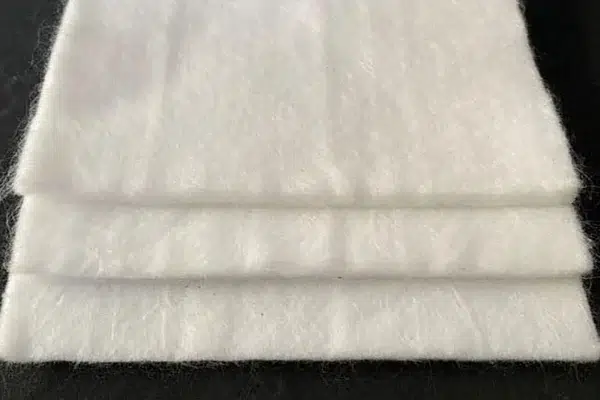
GSM tells mass per unit area, but it does not fully describe drainage or survivability. Two fabrics with similar weight can have different fiber type, thickness, opening size, elongation, puncture resistance, and water flow behavior.
Water permeability by permittivity is a common performance concern for geotextiles used in drainage and filtration. [2] If a buyer only compares GSM, they may choose fabric that is strong enough but too slow to drain, or open enough to drain but weak on site.
Field Note: We have seen drainage projects where a buyer upgraded GSM after a failure, but the real issue was clogging from fine soil and poor aggregate grading. Heavier fabric alone did not solve the problem. The fabric opening size and drainage layer had to be checked together.
Nonwoven vs Woven Geotextile
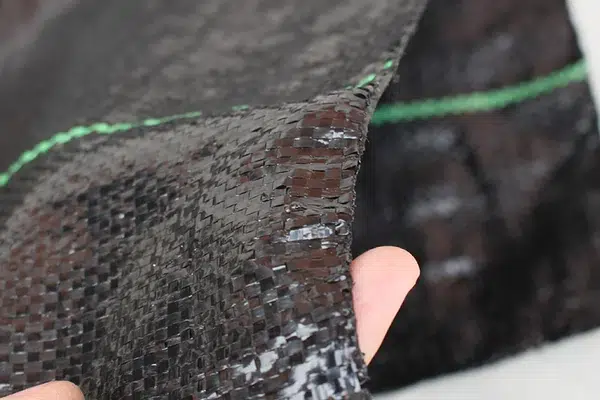
Nonwoven and woven geotextiles are not direct replacements. Nonwoven fabric is often selected for drainage, filtration, and cushioning. Woven geotextile is often selected where tensile strength, separation, or reinforcement is more important.
| Material type | Typical strength | Typical use | Buyer warning |
|---|---|---|---|
| Nonwoven geotextile | Good elongation and filtration behavior | Drainage, filtration, protection, separation | Check flow and opening size, not only GSM |
| Woven geotextile | Higher tensile strength in defined directions | Separation, stabilization, reinforcement support | May not drain like nonwoven fabric |
| Filament nonwoven | Continuous fiber structure | Drainage and engineering separation | Confirm thickness and puncture resistance |
| Staple fiber nonwoven | Needle-punched short fiber structure | Protection, filtration, drainage support | Check roll consistency and project fit |
Specification Checks Before Ordering
A useful RFQ should describe the project condition and the fabric function. Send application, soil type, aggregate size, water flow direction, expected overlap, roll width, GSM target, strength requirement, puncture risk, and delivery destination.
FHWA geosynthetic guidance is useful because it separates geosynthetic functions such as filtration, drainage, separation, and reinforcement. [3] The buyer should identify the function first, then compare specifications.
QC Check: Ask the supplier for mass per unit area, thickness, tensile strength, elongation, CBR puncture, apparent opening size, and permittivity when those values are relevant. If the fabric will protect geomembrane, puncture behavior matters more than a pretty roll photo.
Installation Details That Affect Performance
Good fabric can still perform poorly if it is installed badly. Wrinkles, insufficient overlap, exposed fabric, muddy subgrade, sharp aggregate, and construction traffic can damage or displace the geotextile before it starts working.
Overlap should be adjusted for subgrade strength and site disturbance. Soft soil usually needs more care than firm ground. In drainage trenches, the fabric should wrap the aggregate correctly so fines do not enter the drain path.
For product matching, review MJY geotextile fabric options. If the project is road-related, connect the fabric choice with civil engineering applications. If the fabric is used under a liner, compare it together with geomembrane liner systems.
General geosynthetics education resources from IGS can also help buyers understand the difference between product categories and functions. [4]
My View
My view is that non woven geotextile fabric should be quoted around function first and GSM second. A buyer can always ask for 150 gsm, 200 gsm, or 300 gsm, but the site may need filtration stability, puncture resistance, or installation survivability more than weight. The best supplier response is not simply ‘yes, we have stock.’ It is asking where the fabric will be used, what soil it will contact, and what failure the buyer is trying to avoid.
Conclusion
Non woven geotextile fabric is valuable when its function matches the site. Compare GSM with opening size, permittivity, puncture resistance, strength, and installation condition before ordering.
FAQs
Is non woven geotextile good for drainage?
Yes, when the apparent opening size, permittivity, soil type, and drainage layer are compatible. GSM alone is not enough.
What GSM non woven geotextile should I use?
It depends on application, soil, aggregate, puncture risk, and installation condition. Ask for a specification check instead of choosing by weight only.
Can non woven geotextile replace woven geotextile?
Not always. Nonwoven fabric is usually better for drainage and filtration, while woven geotextile often suits high-strength separation and stabilization work.

 English
  Spanish
  Arabic