The Benefits of Using Geocells
Bottom line: With geocells, U confine aggregate or soil so loads spread laterally, not down. U get thinner sections, faster installs, and longer service life—on driveways, roads, slopes, yards, channels, and retaining systems.
What Are Geocells (and Why They Work)
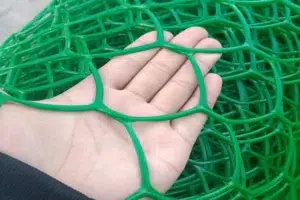
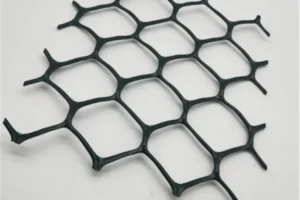
- 3D confinement: HDPE honeycomb cells lock infill in place, stopping lateral movement and pumping.
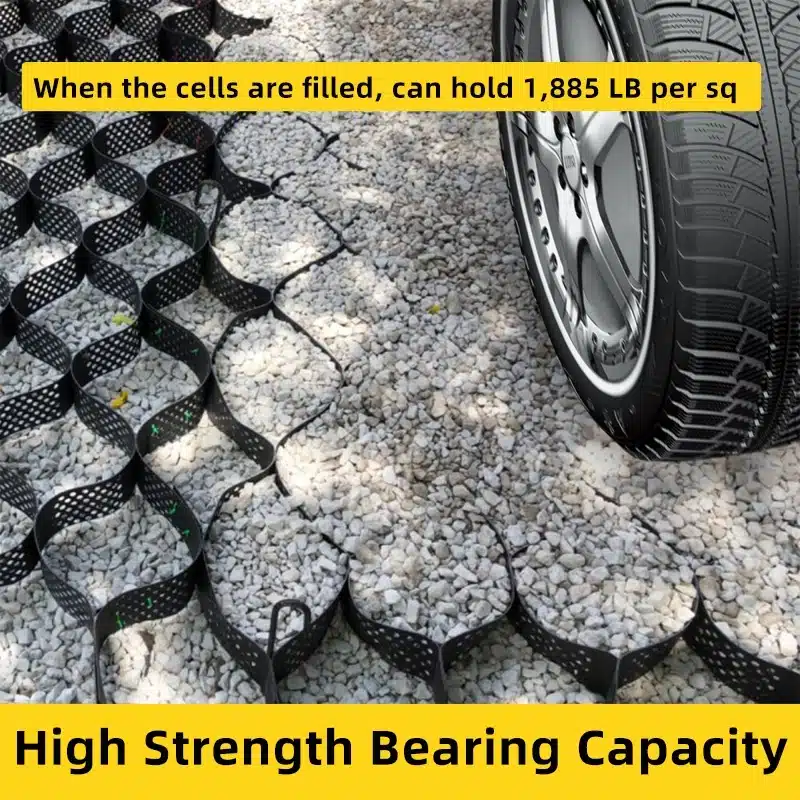
- Load distribution: Hoop strength spreads wheel loads across a wide area, protecting weak subgrades.
- Hydraulic stability: On slopes and channels, the grid slows runoff and resists erosion.
- Versatility: Works with gravel, recycled concrete, soil/topsoil (for green surfaces), or sand blends.
The Core Benefits U Can Count On
- Thinner sections, same (or better) performance Reduce base thickness 25–50% (project dependent) versus unconfined aggregate while keeping bearing capacity.
- Predictable surfaces, fewer ruts Confinement limits differential settlement and washboarding—ideal for turning/ braking zones.
- Lower lifecycle cost Less import, less maintenance, fewer callbacks; faster crew productivity during peak seasons.
- Climate resilience Better behavior over frost-susceptible or saturated soils when paired with drainage and geotextiles.
- Sustainable options Use locally available/recycled infill; cut trucking volumes and CO₂ per project.
Geocell Types (Choose by Duty & Infill)
- By cell height
- 4”: paths, trails, pedestrian zones, vegetated cells.
- 6”: light vehicles, geocell driveway, fire lanes, parking bays.
- 8”: frequent vans/service trucks, weak subgrades, turning areas.
- By aperture & wall spec
- Smaller apertures pair with finer graded stone; larger apertures suit coarser rock.
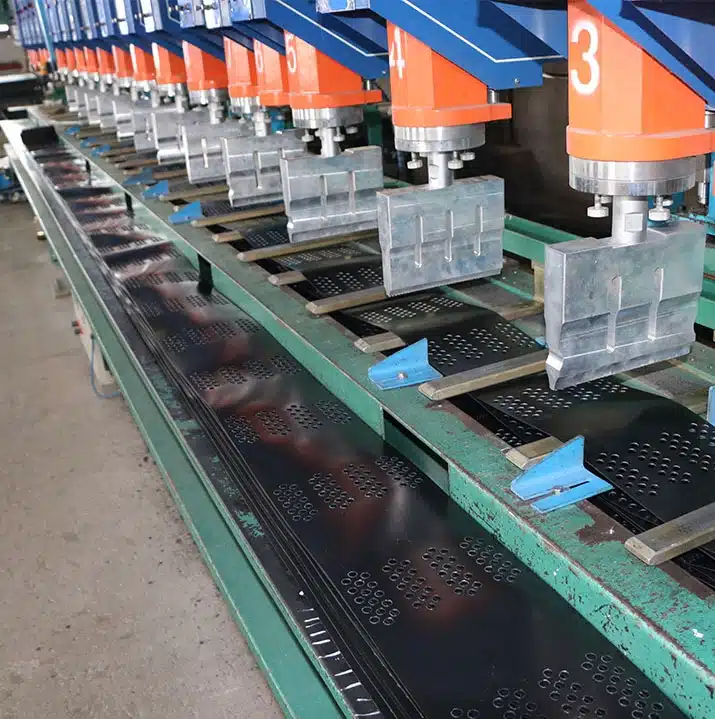
- UV-stabilized HDPE with verified weld strength for long-term exposure.
- By application kit
- Load support kits (keys, anchors, geotextile).
- Erosion kits (crest/toe anchoring, tendons, vegetation aids).
Tip: Always calculate coverage using expanded panel area and add 5–8% for cuts/curves.
Geocell Applications (Where U Win Fast)
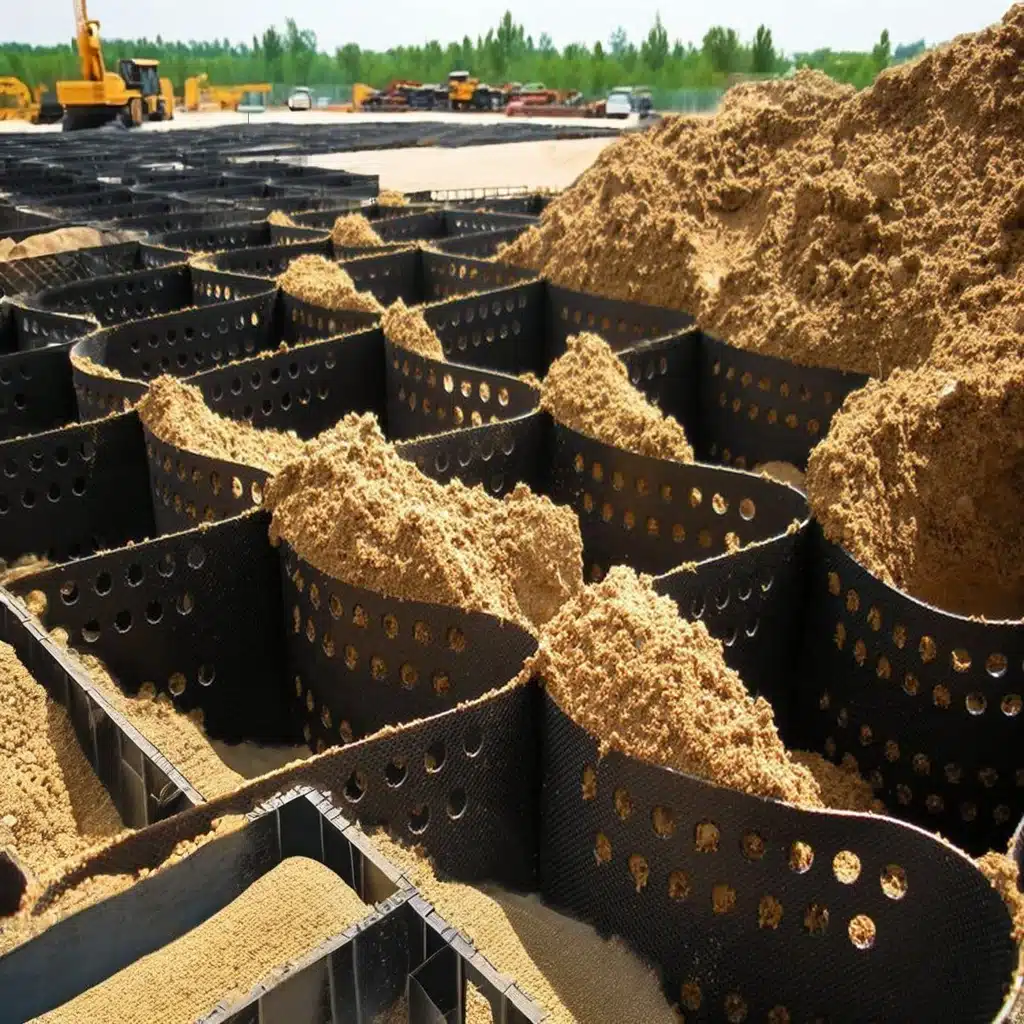
- Roads, yards, and working platforms – Stabilize soft subgrades, reduce undercut, keep schedules.
- Geocell driveway & parking – Build rut-free drive lanes; optional gravel driveway grid finish.
- Slope protection & embankments – Hold topsoil/seed on grades; control sheet flow.
- Channels & shorelines – Armor with stone or concrete; pair with geotextile for filtration.
- Retaining backfill / MSE – Confine granular layers; improve facing stability.
- Trails & green parking – Vegetated cells create durable driveway gravel mesh / grass surfaces.
Geocell Installation—Field-Proven Sequence
- Subgrade: Strip organics, proof-roll, set 1–2% crossfall, compact (92–95% Mod/Proctor typical).
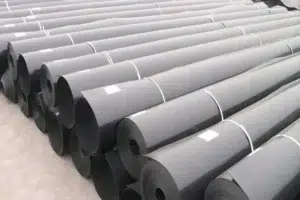
- Separator: Lay nonwoven geotextile with 6–12” overlaps to stop fines migration.
- Deploy & connect: Expand panels square to traffic; connect with keys/clips/UV ties—no gaps.
- Anchor: Pin perimeters, corners, and seams first; field pins at ~3–5 ft; tighten at curves and crowns.
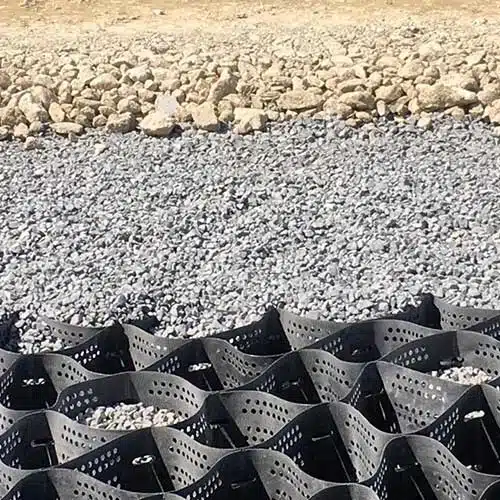
- Infill & compact: Place 4–6” lifts; compact to refusal; finish flush with cell tops (no overfill).
- Finish:
- Aggregate surface → add a thin choke for smoothness.
- Vegetated surface → sandy loam + seed and protect while roots establish.
- Hardscape tie-ins → tuck 6–12” under asphalt/concrete to prevent edge shoving.
Avoid: skipping geotextile, sparse anchoring, overfilling cells, and ignoring drainage. Those four drive most callbacks.
Quick Comparison—Geocells vs. Unconfined Aggregate
| Criterion | Geocells | Unconfined Aggregate |
|---|---|---|
| Base thickness | Thinner for same duty | Thicker to achieve stiffness |
| Rutting/settlement | Significantly reduced | Common under traffic/turns |
| Construction speed | Fast (expand, pin, fill) | Slower (more import/compaction) |
| Drainage behavior | Predictable with separator | Fines pumping over time |
| Lifecycle cost | Lower with fewer repairs | Higher due to maintenance |
Procurement & QA—What U Should Specify
- Resin & UV package: HDPE with carbon black/UV stabilization; documented weld strength.
- Dimensional control: Cell height tolerance, expanded area per sheet, seam performance.
- System accessories: Nonwoven geotextile, anchors, connectors, edge restraints.
- Submittals: Test data, method statement for geocell installation, and O&M notes.
- Logistics: Palletization, coverage per load, and lead time fit to your schedule.
Work With the Right Partner (Factory-Direct)
- geocell suppliers mjy provide ISO-aligned production, CNC-controlled welding, custom geocell types, and matched geotextile/anchor kits.
- U get take-offs from expanded coverage, application notes for your geocell applications, and on-site guidance for first installs.
Conclusion
If U need faster builds, thinner sections, and predictable performance on weak or weather-challenged ground, geocells are the smart lever. Pick the right geocell types, follow the sequence for clean geocell installation, and lock in drainage, anchoring, and compaction. With a capable factory partner like geocell suppliers mjy, U standardize materials, cut risk, and deliver stable roads, slopes, yards, and geocell driveway projects that last.