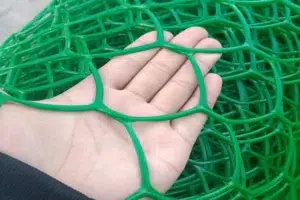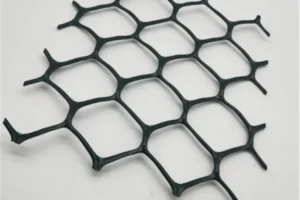
Geocells look simple when they are folded in a bundle. But once they are expanded, filled, and compacted on site, they become a three-dimensional soil confinement system.
Geocells are three-dimensional honeycomb geosynthetic materials used to confine soil, gravel, sand, or concrete. They work by reducing lateral movement of infill material, improving load distribution, increasing surface stability, and supporting roads, slopes, channels, retaining walls, and erosion-control projects.
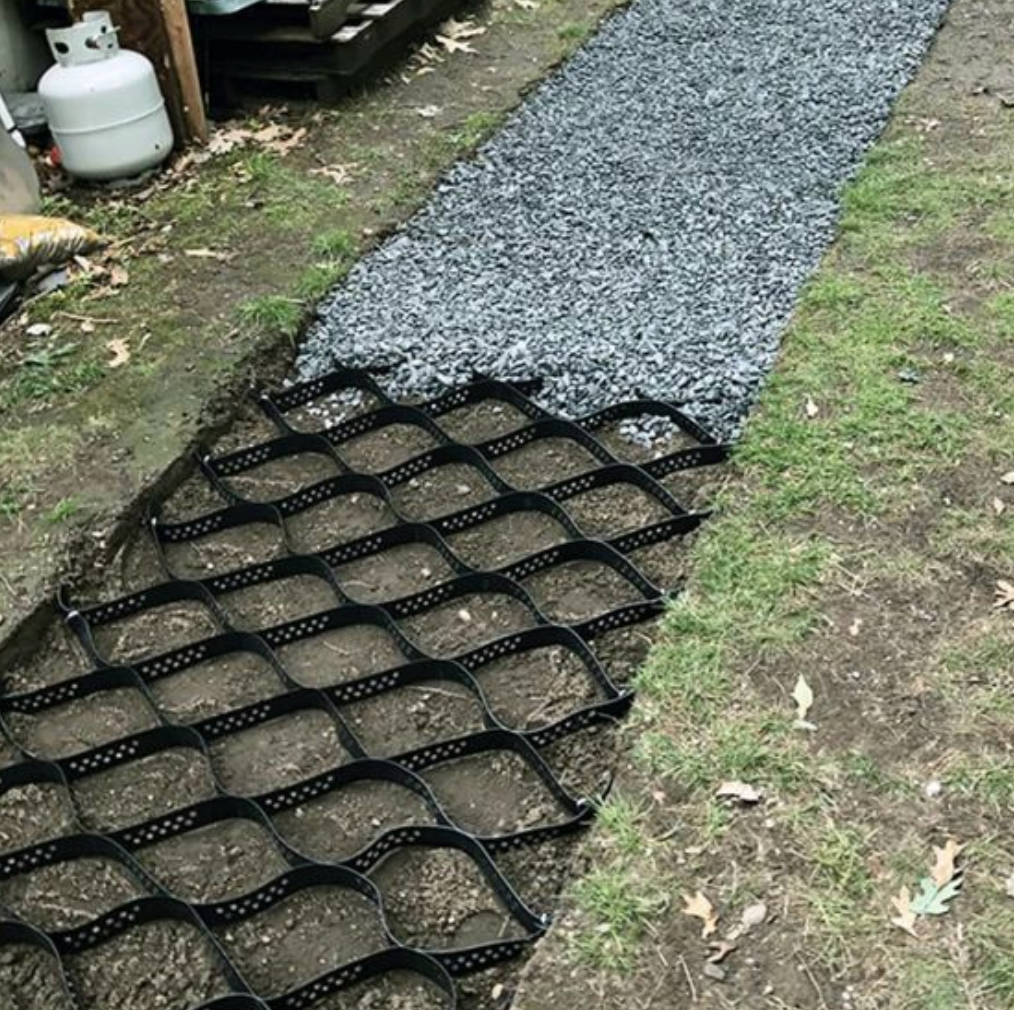
Image Suggestion
Use a real no-logo image showing black HDPE geocell panels fully expanded on a construction site before infill placement.
Recommended real image type: close-up HDPE geocell honeycomb panel on prepared soil or subgrade
No-logo requirement: avoid supplier watermarks, printed logos, and product catalog images
Suggested alt: HDPE geocell honeycomb structure for soil stabilization
Suggested title: Geocell Structure
Suggested placement: after the snippet paragraph
For buyers, the key point is not only knowing what geocells are. The real value is understanding how material, cell height, weld strength, infill, and installation decide the final project result.
Understanding Cellular Confinement Technology
Many buyers think geocell is just a plastic grid. That is not accurate. Geocell is a cellular confinement system, and its performance comes from the interaction between the cell wall and the infill material.
Cellular confinement technology works by placing a three-dimensional cell structure over soil, expanding it on site, filling the cells with suitable material, and compacting the infill. The cell walls restrict sideways movement and help the filled layer act as a stronger, more stable structure.

Image Suggestion
Use a real no-logo image showing workers expanding geocell panels on a prepared road base, slope, or construction subgrade.
Recommended real image type: workers pulling and expanding black HDPE geocell panels on a prepared subgrade
No-logo requirement: no brand watermark, no machinery logo focus, no supplier catalog frame
Suggested alt: cellular confinement technology with geocell panels on prepared subgrade
Suggested title: Cellular Confinement
Suggested placement: directly under this H2 snippet answer
Professional Explanation
Geocells belong to the wider family of geosynthetics. A neutral technical overview explains that cellular confinement systems, also called geocells, are expanded on site into a honeycomb-like structure and filled with soil, sand, rock, gravel, or concrete. cellular confinement systems[^1]
From a factory-side view, the product is not only about shape. The important production points include HDPE or PP resin quality, sheet thickness, weld spacing, weld strength, perforation, surface texture, and panel dimension.
A geocell panel must be flexible enough to fold and expand. It must also be strong enough to hold the infill after anchoring, filling, and compaction. If the material is weak or the weld points are unstable, the cell structure may fail during installation or long-term use.
Construction Details
On site, geocells are usually placed over a prepared subgrade. In road projects, a geotextile may be placed below the geocell to separate soft soil from aggregate. In slope projects, the panels are often anchored from the top and expanded downward.
After expansion, the cells are filled. Roads usually use gravel or crushed stone. Green slopes may use topsoil. Drainage channels may use stone or concrete. The infill must match the cell size and project purpose.
For contractors, this means installation is not only “open the panel and fill it.” The base, drainage, anchor layout, infill, and compaction all decide whether the geocell performs correctly.
| Cellular Confinement Point | What It Means | Buyer Should Check |
|---|---|---|
| Cell Structure | 3D honeycomb confinement layer | Cell height and weld spacing |
| Polymer Sheet | Strip material forming cell walls | HDPE / PP quality and thickness |
| Welded Joint | Connection between strips | Weld strength and consistency |
| Infill Material | Soil, gravel, sand, stone, or concrete | Match to project use |
| Site Contact | Panel sits on prepared surface | Subgrade and drainage condition |
| Final Performance | Reinforced confined layer | Installation and compaction quality |
For buyers reviewing geocell options, start with the main geocell product page and confirm which specification fits the project before comparing price.
How the Honeycomb Structure Creates Soil Stability
The honeycomb shape is not only for appearance. It is the main reason geocell can improve soil and aggregate behavior under load or water movement.
The honeycomb structure creates soil stability by confining the infill in each cell. When load or water flow pushes the material, the cell walls reduce lateral movement, maintain compaction, increase shear resistance, and help distribute stress over a wider area.
Image Suggestion
Use a real no-logo close-up image showing geocell cells filled with gravel, crushed stone, or compacted soil.
Recommended real image type: close-up of HDPE geocell cells partially filled with gravel or aggregate
No-logo requirement: avoid supplier watermark, product label, or staged catalog background
Suggested alt: geocell honeycomb structure filled with gravel for soil stability
Suggested title: Honeycomb Stability
Suggested placement: directly under this H2 snippet answer
Professional Explanation
Loose aggregate or soil can move under pressure. In a road base, traffic pushes aggregate downward and sideways. On a slope, gravity and rainfall pull soil downward. In a channel, water can wash material away.
Geocell reduces these movements by dividing the surface into many smaller confined units. Each cell holds infill. Adjacent cells support each other. The final layer behaves more like a stabilized mattress than loose material.
The geosynthetics overview also describes geocells as three-dimensional honeycombed structures that form a confinement system when filled with compacted soil. It notes that confinement reduces lateral movement and helps distribute loads over a wider area. geocells in geosynthetics[^2]
For factory buyers, this means the geometry must be stable. If the weld spacing is wrong, the cell size may not match the aggregate. If the weld strength is weak, the structure can open. If the sheet thickness is too low for the load, the cell wall may deform.
Construction Details
For road construction, the honeycomb structure should be expanded evenly before filling. If cells are overstretched, the cell size changes. If the panel is loose, confinement is reduced.
For slope protection, the honeycomb system must be anchored well. The top edge, middle section, and side edges need enough support. Otherwise, the cells may move during filling or after rain.
For erosion control, infill choice is critical. Soil works for vegetated slopes. Gravel works for drainage and surface protection. Concrete works for strong water-flow areas. The same geocell may behave differently with different infill materials.
| Application | How Honeycomb Structure Helps | Key Selection Detail |
|---|---|---|
| Road Base | Reduces aggregate spreading | Cell height, thickness, weld strength |
| Soft Subgrade | Spreads load over wider area | Geotextile + suitable aggregate |
| Slope Protection | Holds soil or gravel on slope | Anchoring, perforation, UV resistance |
| Channel Protection | Reduces washout from water flow | Infill type and edge fixing |
| Retaining Wall | Confines soil or aggregate structure | Design, drainage, weld strength |
| Green Slope | Holds planting soil before roots grow | Soil depth and perforation |
If a road project needs separation under the geocell layer, buyers can also review geotextile materials to prevent aggregate and soft soil from mixing.
History and Innovation in Geocell Engineering
Geocell technology has moved from simple confinement products to more engineered systems. The main direction is not only making a plastic cell. The industry now pays more attention to material stiffness, weld quality, long-term deformation, and application-based design.
Geocell engineering has developed from early cellular confinement for soil stabilization and erosion control into more advanced systems for road bases, slopes, channels, retaining walls, and load-support projects. Innovation now focuses on polymer performance, weld strength, cell geometry, durability, and project-specific design.

Image Suggestion
Use a real no-logo project image showing geocell used in a road base, slope, channel, or erosion-control project.
Recommended real image type: wide construction-site photo showing geocell panels installed on a road embankment or slope
No-logo requirement: no supplier watermark, no logo on image corner, no catalog screenshot
Suggested alt: geocell engineering application for road and slope stabilization
Suggested title: Geocell Engineering
Suggested placement: directly under this H2 snippet answer
Professional Explanation
Early geocell use focused strongly on soil confinement and erosion control. Over time, more buyers began using geocells for roads, access routes, railway support areas, retaining structures, and channels.
The technical focus also changed. In older purchasing conversations, many buyers only asked about height and price. In more professional projects, buyers now ask about material modulus, weld strength, creep behavior, UV resistance, perforation, surface texture, and long-term performance.
This change is important. A geocell is not a one-grade product. A temporary access road, a heavy-duty haul road, a vegetated slope, and a concrete-filled channel do not need the same specification.
Some public image libraries, such as Wikimedia Commons, also show no-logo geocell application images that can help buyers understand real field appearance. geocell image examples[^3]
Construction Details
In modern road projects, geocell is often used with compacted aggregate and sometimes geotextile. The goal is to reduce lateral spreading and improve base stability.
In slope projects, geocell may be combined with vegetation, anchors, and drainage design. The product must resist surface movement before plants become established.
In retaining wall or erosion-control work, the design becomes more sensitive. The buyer must confirm wall height, water flow, fill type, anchoring, and project risk before selecting the geocell.
For factory sourcing, innovation also includes better production control. Stable sheet extrusion, accurate weld spacing, stronger weld joints, consistent perforation, and export-ready packing all matter for overseas buyers.
| Engineering Development | What Changed | Buyer Benefit |
|---|---|---|
| Early Confinement Use | Basic soil stabilization | Simple erosion and surface control |
| Road Base Use | Load-support applications increased | Better base stability |
| Slope Systems | Vegetation and anchoring improved | Better erosion resistance |
| Material Improvement | More focus on polymer behavior | Better long-term durability |
| Welding Control | More attention to joint strength | Lower risk of cell separation |
| Application Design | More project-specific selection | Less wrong-spec buying |
For projects where load reinforcement is the main purpose, buyers may also compare geocell with geogrid reinforcement products because the two materials work differently.
Real No-Logo Image Selection Guide
Image selection affects both SEO and buyer trust. A real construction image is usually stronger than a staged product catalog image.
Image Suggestion
Use a real no-logo image collage or a set of 3 section images showing different geocell applications.
Recommended real image types:
| Section | Best Real Image Type | Suggested Alt | Suggested Title |
|---|---|---|---|
| Opening | Expanded geocell on prepared subgrade | HDPE geocell honeycomb structure for soil stabilization | Geocell Structure |
| Cellular Confinement | Workers expanding geocell panels on site | cellular confinement technology with geocell panels on prepared subgrade | Cellular Confinement |
| Honeycomb Stability | Geocell cells filled with gravel or soil | geocell honeycomb structure filled with gravel for soil stability | Honeycomb Stability |
| Engineering Innovation | Wide project image of road or slope geocell | geocell engineering application for road and slope stabilization | Geocell Engineering |
My View
When I explain geocells to buyers, I do not describe them as a simple plastic honeycomb. That explanation is too shallow for real construction purchasing.
A geocell is a confinement system. Its performance comes from material, welding, geometry, infill, installation, and project fit. If one of these points is weak, the final result can be weaker than expected.
For contractors, the biggest risk is wrong installation. For distributors, the biggest risk is unstable product quality between batches. For project buyers, the biggest risk is choosing a product based only on square-meter price.
My suggestion is clear. Treat geocell as an engineered geosynthetic product. Confirm the application first, then confirm material, thickness, cell height, weld strength, infill, and packing. Price should come after these points, not before.
Conclusion
Geocells work by confining infill inside a three-dimensional honeycomb structure. The right product can improve soil stability, but only when material, weld quality, infill, and installation match the project.
FAQs
What are geocells made of?
Most geocells are made from HDPE or PP polymer strips. HDPE is commonly used because it offers good flexibility, chemical resistance, and field handling performance.
How do geocells stabilize soil?
Geocells stabilize soil by confining infill material inside each cell. This reduces lateral movement, maintains compaction, improves load distribution, and helps control erosion.
Are geocells the same as geogrids?
No. Geocells are three-dimensional cellular confinement systems. Geogrids are usually flat reinforcement materials that work through tensile strength and soil interlock.
Where are geocells commonly used?
Geocells are used in road bases, soft soil stabilization, slope protection, retaining walls, drainage channels, erosion control, riverbanks, and temporary access roads.
What should buyers check before ordering geocells?
Buyers should check material, sheet thickness, cell height, weld spacing, weld strength, perforation, surface texture, panel size, packing, and project application.
Footnotes
[^1]: This Wikipedia page is used to support the basic explanation of cellular confinement systems, also known as geocells, and how they are expanded and filled on site.
[^2]: This Wikipedia page is used to explain geocells within the wider geosynthetics category and their function as three-dimensional honeycombed confinement systems.
[^3]: This Wikimedia Commons category is used as a neutral source for real geocell image examples that can help buyers understand field appearance without linking to competing manufacturer product pages.