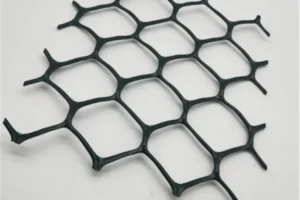
Geocells are often described as honeycomb panels, but that is only the surface. For contractors, distributors, and project buyers, the real value is how geocells reduce soil movement, improve load support, and help control project cost.
Geocells provide cost-effective ground stabilization, eco-friendly construction support, and long-term durability by confining soil, gravel, sand, or concrete inside a three-dimensional cellular structure. They are widely used for road bases, slopes, erosion control, retaining structures, channels, and weak subgrade improvement.
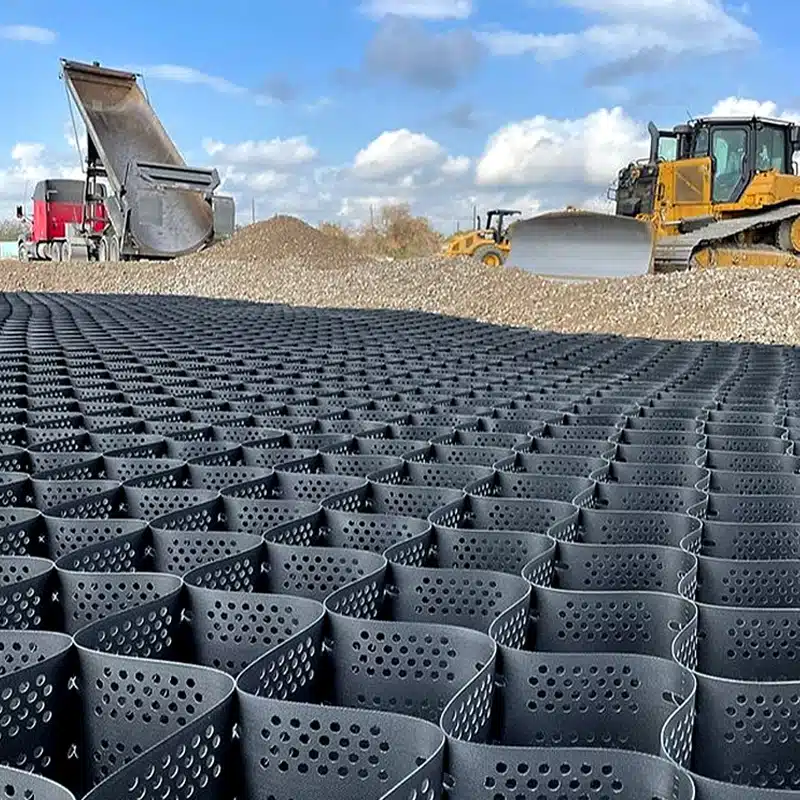
Image Suggestion
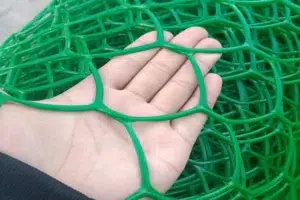
Use a real no-logo image showing expanded HDPE geocell panels installed on a road base or construction subgrade before aggregate filling.
Recommended real image type: black HDPE geocell panels expanded on prepared soil or gravel base
No-logo requirement: no supplier watermark, no printed brand, no catalog-style product image
Suggested alt: HDPE geocell installed for ground stabilization
Suggested title: Geocell Benefits
Suggested placement: after the snippet answer
A buyer should not treat geocell as a simple plastic product. Its advantage comes from the complete system: raw material, cell geometry, weld strength, infill choice, installation, and project matching.
Cost-Effective Ground Stabilization
Ground stabilization often becomes expensive when the subgrade is weak, aggregate demand is high, or maintenance happens too often. Geocell can reduce these problems by improving how the base layer carries load.
Geocells provide cost-effective ground stabilization by confining infill material, reducing lateral spreading, improving load distribution, and helping lower aggregate loss. This can reduce project waste, improve base stability, and support roads, access routes, slopes, and working platforms.
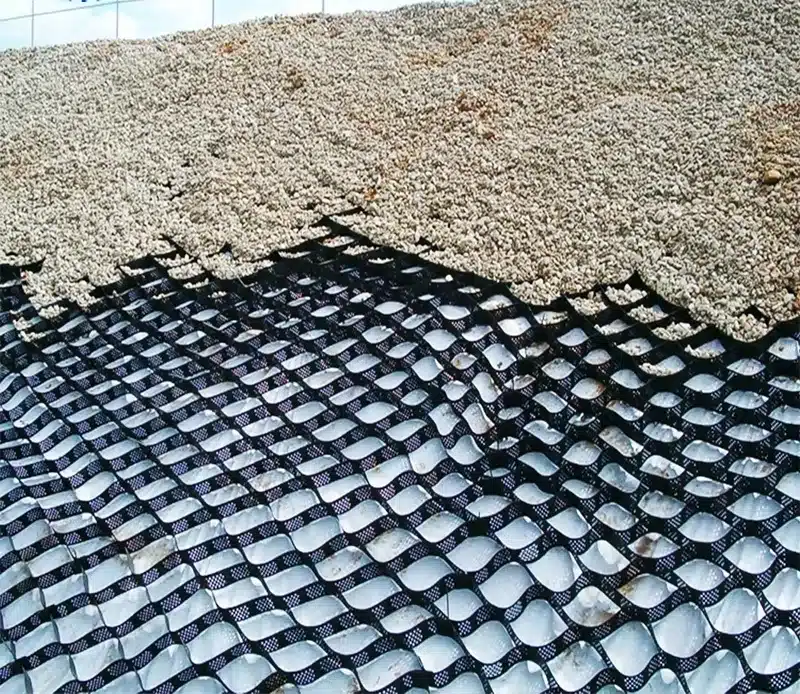
Image Suggestion
Use a real no-logo image showing geocell filled with gravel or crushed stone on a road base construction site.
Recommended real image type: geocell cells filled with crushed stone for road base reinforcement
No-logo requirement: avoid watermarks, supplier banners, and brand labels on machinery
Suggested alt: geocell ground stabilization for road base construction
Suggested title: Ground Stabilization
Suggested placement: directly below this H2 snippet paragraph
Professional Explanation
Geocell works by creating a cellular confinement layer. When the cells are filled with aggregate, sand, soil, or concrete, the cell walls restrict sideways movement. This helps the fill material stay in position under load.
A neutral technical source explains that cellular confinement systems, also called geocells, are expanded on site into a honeycomb-like structure and filled with soil, sand, rock, gravel, or concrete. They are used for erosion control, soil stabilization, channel protection, load support, and earth retention. cellular confinement systems[^1]
For ground stabilization, this matters because weak soil often fails by deformation. The load pushes downward, then the base material spreads sideways. Once the aggregate moves, the surface can rut, settle, or lose bearing support.
A geocell layer helps reduce this movement. It does not replace engineering design, but it can improve the behavior of the infill layer when the product is selected and installed correctly.
Construction Details
For road base stabilization, the subgrade should be leveled and compacted first. If the soil is soft or fine, a geotextile separation layer may be placed under the geocell. This helps prevent subgrade soil from mixing with aggregate.
The geocell panel is then expanded, anchored, connected, filled, and compacted. Aggregate is usually preferred for higher load roads because it gives better interlock and drainage. Local soil may be used in some lower-load or temporary applications, but it must be checked first.
The cost advantage comes from system performance. If geocell helps reduce aggregate movement, the project may reduce base repair, material loss, and repeated maintenance. But if the buyer chooses weak material, wrong cell height, or poor weld strength, the cost advantage can disappear.
For road and weak subgrade projects, buyers can review geocell product specifications before comparing quotations.
| Cost Factor | How Geocell Helps | Buyer Should Check |
|---|---|---|
| Aggregate Loss | Keeps fill material confined | Cell height and cell size |
| Weak Subgrade | Spreads load over a wider area | Subgrade condition and geotextile need |
| Rutting Risk | Reduces lateral movement | Infill quality and compaction |
| Maintenance Cost | Improves base stability | Project load and service life |
| Installation Waste | Panels expand on site | Panel size and packing method |
| Local Material Use | May support suitable local infill | Soil quality and compaction behavior |
Selection Table
| Project Type | Recommended Focus | Better Buying Logic |
|---|---|---|
| Temporary Access Road | Fast installation and moderate confinement | Choose practical cell height and easy packing |
| Rural Road | Stable base and aggregate retention | Check HDPE quality, weld strength, and infill |
| Heavy Haul Road | Higher load support | Use stronger thickness, weld strength, and aggregate |
| Soft Ground Platform | Load distribution | Combine geocell with geotextile if needed |
| Construction Yard | Surface stability | Match cell height to equipment load |
Image SEO Note
For this section, a real site photo works better than a clean product photo. Buyers want to see how the geocell performs in ground stabilization, not only how it looks in a factory.
Eco-Friendly and Sustainable Construction
Sustainable construction is not only about using green words in marketing. It is about reducing material waste, limiting aggregate hauling, using available fill wisely, and improving long-term project behavior.
Geocells support eco-friendly construction by helping reduce aggregate consumption, supporting local or recycled infill in suitable projects, controlling erosion, supporting vegetation on slopes, and reducing repeated repair work. These benefits depend on correct material selection and project design.
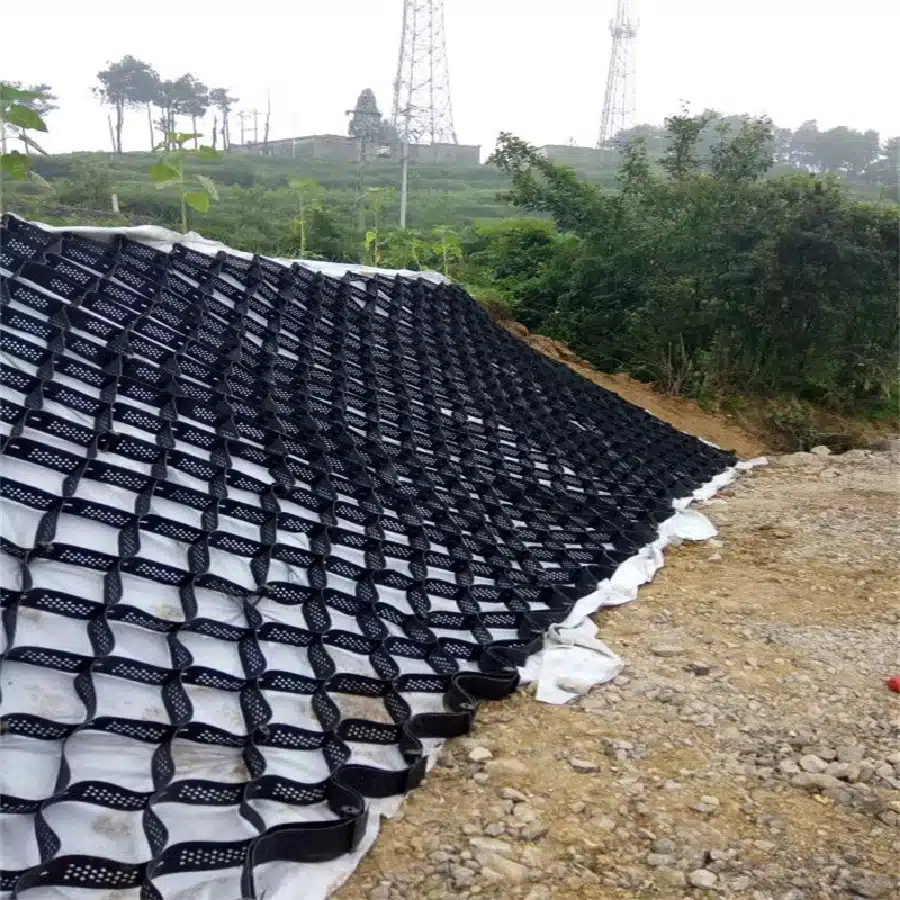
Image Suggestion
Use a real no-logo image showing geocell used on a vegetated slope, green embankment, or erosion-control project.
Recommended real image type: geocell slope protection project with soil and early vegetation growth
No-logo requirement: no company watermark, no staged advertising text, no product logo
Suggested alt: geocell eco friendly slope protection with vegetation
Suggested title: Sustainable Geocell
Suggested placement: directly below this H2 snippet paragraph
Professional Explanation
Geocell can support sustainable construction because it improves how available fill materials behave. In some projects, this can reduce the need for large amounts of imported aggregate. It can also reduce erosion and help vegetation establish on slopes.
Geosynthetics are synthetic materials used to stabilize terrain, contain liquids, drain liquids, and filter particles. They are widely used in civil, transportation, hydraulic, environmental, and geotechnical applications. geosynthetics in civil engineering[^2]
For buyers, the sustainability point must be practical. A geocell is not automatically eco-friendly just because it uses less material in one part of the project. The product must be durable, correctly installed, and suitable for the application. If it fails early, the repair work creates more waste, more transport, and more cost.
This is why factory-side quality still matters. A stable HDPE sheet, proper UV resistance, strong welds, and suitable cell design help the material stay useful through the service period.
Construction Details
For slope protection, geocell can hold topsoil in place while grass or plants grow. This is useful for road embankments, riverbanks, landscaping slopes, and ecological restoration projects.
For erosion-control areas, the cells can be filled with soil, gravel, stone, or concrete depending on water flow. A green slope may use soil and seed. A drainage channel may need gravel or concrete. The environmental value depends on choosing the right infill.
For road construction, geocell may allow better use of local fill or lower-quality aggregate in some designs. But this should be confirmed by the project engineer. Local material still needs to compact well and remain stable inside the cells.
If the project also needs separation, filtration, or drainage, buyers may combine geocell with geotextile materials. This helps protect the system from soil migration and drainage problems.
| Sustainability Point | How Geocell Helps | Buyer Should Avoid |
|---|---|---|
| Less Aggregate Waste | Confines fill and reduces movement | Using poor fill without testing |
| Local Infill Use | May reduce transport demand | Assuming all local soil is suitable |
| Vegetated Slopes | Holds soil for plant growth | Ignoring water and maintenance |
| Erosion Control | Reduces surface washout | Choosing wrong cell height |
| Lower Repair Frequency | Improves surface stability | Buying weak low-price material |
| Better Site Efficiency | Folded panels are easier to transport | Poor packing and unclear labels |
Selection Table
| Sustainable Application | Recommended Geocell Feature | Reason |
|---|---|---|
| Green Slope | Perforated HDPE geocell | Helps drainage and root interaction |
| Road Base With Local Fill | Suitable cell height and geotextile layer | Supports fill confinement and separation |
| Riverbank Protection | Strong welds and stable anchoring | Resists water and soil movement |
| Erosion-Control Channel | Gravel or concrete infill option | Matches stronger runoff conditions |
| Landscape Embankment | UV-resistant material | Handles outdoor exposure before vegetation grows |
Image SEO Note
For this section, avoid using a plain warehouse product image. Use a real no-logo slope or vegetation project image because it better supports the “eco-friendly and sustainable construction” search intent.
Long-Term Performance and Durability
Durability is not only about material thickness. A geocell must keep its structure, welds, and confinement ability through installation, load, weather, water, and time.
Geocell durability depends on polymer quality, sheet thickness, weld strength, UV resistance, chemical resistance, cell geometry, infill compatibility, and installation quality. A durable geocell system can support long-term performance in roads, slopes, erosion control, retaining walls, and channels.
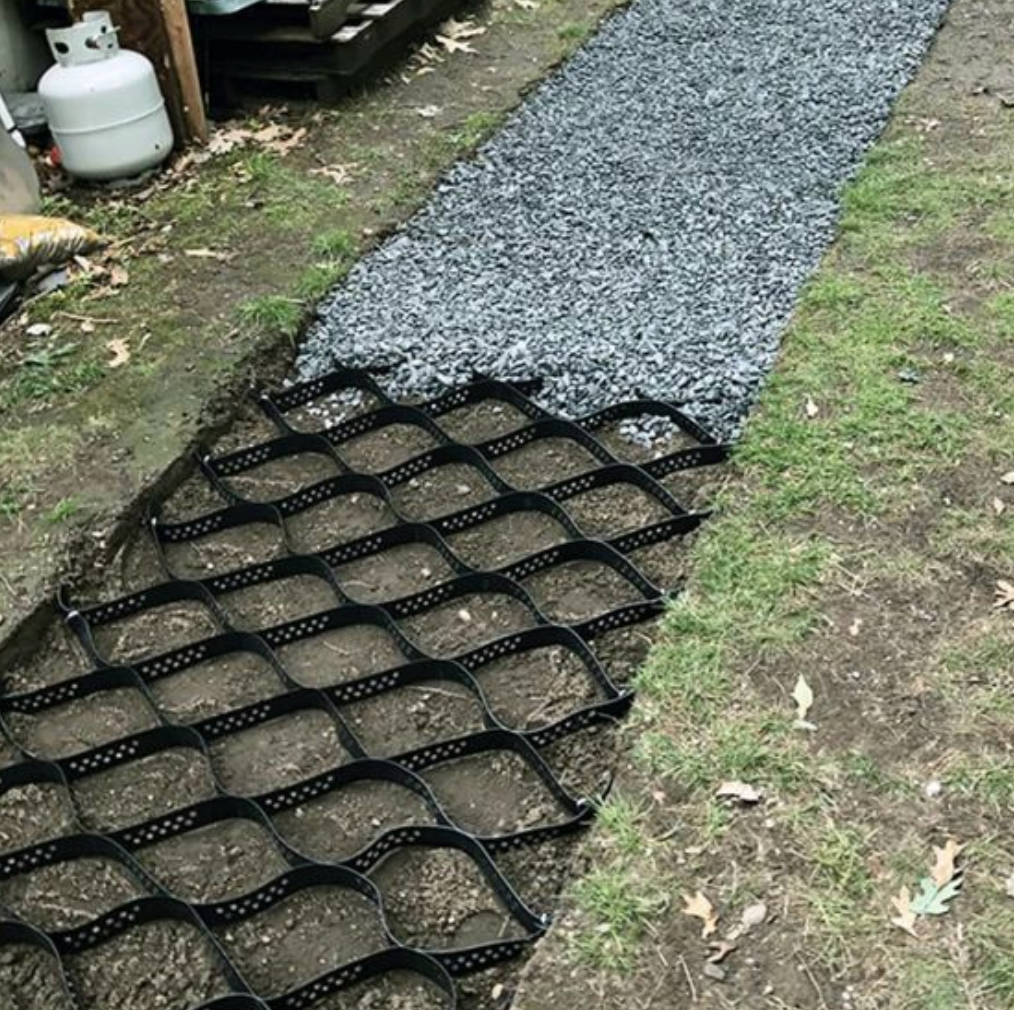
Image Suggestion
Use a real no-logo image showing installed geocell in a completed or partially completed road, slope, or erosion-control project.
Recommended real image type: HDPE geocell filled and compacted in a road base or slope protection project
No-logo requirement: no watermark, no brand signboard, no close-up of printed supplier marks
Suggested alt: durable HDPE geocell for long term construction performance
Suggested title: Geocell Durability
Suggested placement: directly below this H2 snippet paragraph
Professional Explanation
Long-term geocell performance starts from the factory. If the raw material is unstable, the sheet may age faster. If the thickness is inconsistent, the welded joints may not perform evenly. If the weld strength is weak, the panel may open under stress.
This matters because geocells are often used in projects where repair is not simple. A road base is buried. A slope may be covered with vegetation. A channel may be exposed to water flow. Once the project is completed, replacing weak material can become expensive.
A geocell must survive installation first. It is pulled during expansion, fixed by anchors, loaded by infill, and sometimes compacted by equipment. Then it must survive the service period. That is why buyers should ask about resin quality, weld strength, thickness tolerance, and UV package before bulk order.
The benefit is clear. A stable geocell system can reduce deformation, control erosion, maintain infill position, and support longer project performance. But the durability does not come from the word “HDPE” alone. It comes from the complete production and installation chain.
Construction Details
For road projects, durability depends on the relationship between geocell, aggregate, compaction, and subgrade condition. If the subgrade is wet or weak, drainage and separation must be considered.
For slope projects, the system must resist gravity, rainfall, surface runoff, and sometimes vegetation establishment time. Anchoring and infill type are critical.
For retaining walls or channels, the buyer should confirm whether the geocell is suitable for the project load, water condition, and design requirement. Stronger applications need more careful specification control.
If buyers are comparing geocell with other reinforcement products, they can review geogrid reinforcement products to understand when a flat reinforcement layer or a 3D confinement system is more suitable.
| Durability Factor | Why It Matters | Buyer Checkpoint |
|---|---|---|
| HDPE Resin Quality | Affects aging and toughness | Ask about material grade |
| Sheet Thickness | Affects strength and stiffness | Confirm actual thickness tolerance |
| Weld Strength | Keeps cells connected | Ask about welding control |
| UV Resistance | Protects exposed material | Needed for outdoor exposure |
| Cell Height | Affects confinement depth | Match to load and slope condition |
| Infill Quality | Affects system behavior | Use suitable soil, gravel, or concrete |
| Installation Quality | Controls final performance | Follow anchoring and compaction plan |
Selection Table
| Project Condition | Durability Risk | Better Product Choice |
|---|---|---|
| Heavy Traffic Road | Repeated load and aggregate movement | Higher weld strength and suitable cell height |
| Steep Slope | Gravity and runoff | Strong anchoring, UV-resistant material |
| Riverbank | Water erosion | Stable cell structure and suitable infill |
| Exposed Storage Before Use | UV aging | UV-resistant HDPE geocell |
| Retaining Wall | Long-term soil pressure | Design-matched cell height and weld quality |
| Temporary Access | Fast wear and equipment movement | Practical grade with proper aggregate fill |
Image SEO Note
For this section, choose a real project image that shows the geocell after filling. It helps readers understand long-term performance better than a folded-panel product photo.
Real No-Logo Image Selection Guide
Images should help buyers understand the product in real construction use. They should not look like generic stock photos or supplier catalog screenshots.
Recommended Image Set
| Article Section | Real Image Type | Suggested Alt | Suggested Title |
|---|---|---|---|
| Opening | Expanded HDPE geocell on construction ground | HDPE geocell installed for ground stabilization | Geocell Benefits |
| Cost-Effective Ground Stabilization | Geocell filled with aggregate on road base | geocell ground stabilization for road base construction | Ground Stabilization |
| Eco-Friendly Construction | Geocell slope with soil and vegetation | geocell eco friendly slope protection with vegetation | Sustainable Geocell |
| Long-Term Durability | Filled geocell in road, slope, or channel project | durable HDPE geocell for long term construction performance | Geocell Durability |
My View
When I explain geocell benefits to buyers, I do not start with general words like “strong” or “cost-effective.” Those words are too broad.
I look at what the geocell does in the project. Does it reduce aggregate movement? Does it help the slope hold soil? Does it improve the use of local infill? Does the weld strength match the load? Does the material have enough durability for the site?
For contractors, the benefit is fewer site problems. For distributors, the benefit is a clearer product to sell and reorder. For project buyers, the benefit is lower long-term risk when the right specification is selected.
My suggestion is simple. Do not buy geocell only because the price looks low. Buy the specification that fits the ground, load, water condition, and service life. That is where the real advantage comes from.
Conclusion
Geocells offer cost savings, sustainable construction support, and long-term performance when the material, weld strength, cell design, infill, and installation match the project.
FAQs
What is the main advantage of geocell?
The main advantage of geocell is soil confinement. It reduces lateral movement of infill material and helps improve load distribution, surface stability, and erosion resistance.
How does geocell reduce project cost?
Geocell can reduce cost by improving aggregate performance, limiting material loss, supporting local infill in suitable projects, and reducing repeated maintenance. The final saving depends on correct design and installation.
Is geocell environmentally friendly?
Geocell can support sustainable construction by reducing aggregate demand, helping control erosion, supporting vegetation on slopes, and reducing repair work. It must be selected and installed correctly.
What affects geocell durability?
Geocell durability depends on raw material quality, sheet thickness, weld strength, UV resistance, cell height, infill material, installation method, and site conditions.
Can geocell be used for both roads and slopes?
Yes. Geocell can be used for road bases, slopes, erosion control, channels, retaining structures, and soft ground stabilization. Each application needs a suitable specification.
Footnotes
[^1]: This Wikipedia page is used to support the explanation of cellular confinement systems and their use in soil stabilization, erosion control, channel protection, load support, and earth retention.
[^2]: This Wikipedia page is used to support the broader explanation of geosynthetics and their use in civil, transportation, hydraulic, environmental, and geotechnical applications.