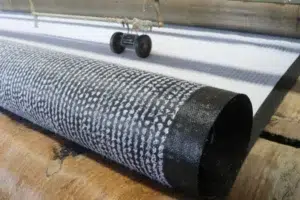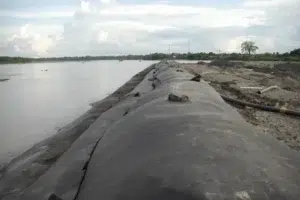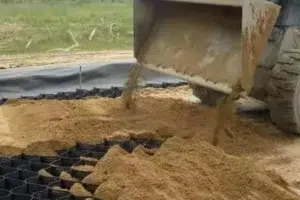
A bentonite liner can look intact at the end of a shift yet suffer an avoidable exposure problem before the protective cover arrives.
GCL overlap and hydration control must follow the approved product and project detail. Keep rolls protected, prepare a smooth subgrade, deploy only what can be covered, and inspect overlaps before placing soil or another geosynthetic. A nominal overlap width alone does not prove barrier continuity after rain, movement or installation damage.
The practical purchase decision includes weather windows and cover logistics, not only the clay mass printed on a data sheet.
Send your project drawings, technical specifications, quantities and destination for material-fit review before quotation.
Send drawings and specificationsWhy Can Early Hydration Be a Problem?
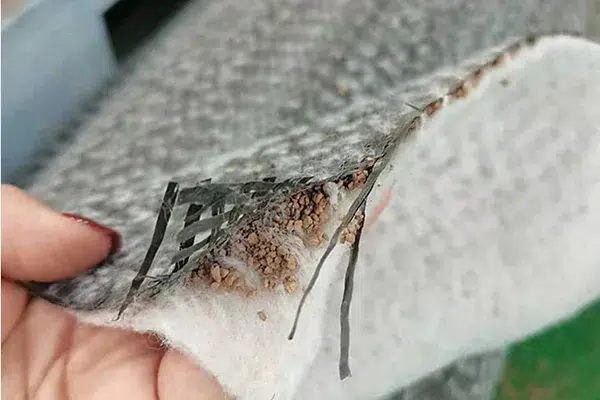
Sodium bentonite swells when it takes up water. In a controlled, confined liner system that contributes to low hydraulic conductivity; before confinement, wetting can disturb overlap geometry and complicate handling. EPA guidance warns about premature hydration during and after installation and recommends prompt cover. The risk is conditional: product construction, subgrade moisture, rainfall and cover sequence all matter. Do not publish a universal number of safe exposed hours. The site team should define a weather stop, an emergency cover method and how wet material will be assessed before work resumes. [1]
How Should Overlaps Be Detailed?
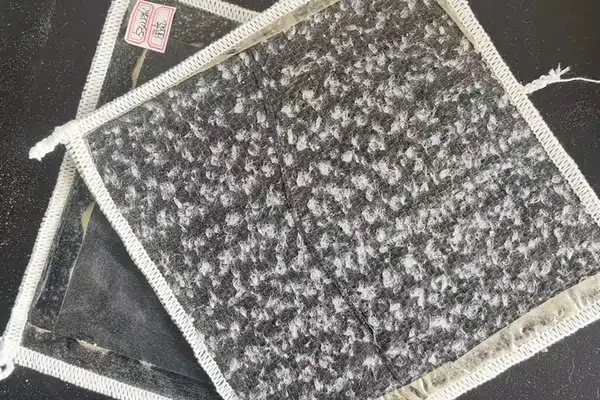
The direction and width of the overlap should be taken from the approved GCL product instruction and project specification, especially on slopes and at penetrations. EPA guidance notes that overlap recommendations vary by product. Lay adjacent panels without wrinkles or tension, protect the edge from traffic, and check that granular bentonite or supplemental material is used where the detail calls for it. Photograph seams with roll IDs before cover. A buyer who orders area without allowing for overlaps and cutoffs may discover a shortage at the worst point in the weather window. [1]
| Check | What it tells you | What it does not prove |
|---|---|---|
| ASTM D5993 | Dry mass per unit area | Not seam continuity |
| ASTM D5887/D5887M | Index flux of specimen | Not a field overlap test |
| ASTM D5888 | Storage and handling guide | Needs product-specific installation detail |
The comparison is a procurement screen, not a replacement for the approved engineering design. A test method defines how a property is measured; acceptance thresholds and the site detail must come from the project specification.
Which Tests and Certificates Matter?
ASTM D5993 measures dry mass per unit area of a GCL sample for quality comparison; it does not by itself prove a finished seam is watertight. ASTM D5887/D5887M measures index flux through saturated specimens under a specified laboratory method. Ask for the product construction, bentonite content, test basis and batch traceability. Compare the submitted data with the design requirement and site liquid, since chemical compatibility may need separate review. A certificate for a different grade should not be treated as evidence for the delivered roll. [2] [4]
What Must Be Organized Before Delivery?
Confirm wrapped storage, lifting equipment, a clean and compacted subgrade, panel orientation, weather forecast, overlap crew and cover material on site. ASTM D5888 gives storage and handling guidance. A low sheet price is poor value if rolls sit unprotected while the cover contractor is delayed. Identify damaged-roll quarantine and wet-panel inspection procedures before unloading. Include the roll layout, slopes, anchor trenches and penetrations in the takeoff so procurement orders a realistic quantity rather than the plan area alone. [3]
What Should the Site Team Verify Before Work Starts?
Before a work shift starts, check the weather window and calculate the area that can be placed, inspected and covered with the crew and materials actually available. Mark roll numbers and seam directions on a layout drawing. At each change of grade, verify the overlap faces the intended direction and cannot be opened by surface runoff. Keep a dry staging area for unused rolls, and give the foreman a clear stop-work rule for rain. If panels get wet before confinement, isolate the affected area, record photographs and ask the project engineer and product supplier for a disposition. Do not let a later crew bury the condition simply because the schedule is tight. The record protects both barrier performance and procurement accountability.
What Should Be in the RFQ?
Share liner section, subgrade description, liquid chemistry, approved GCL grade, overlap and bentonite detail, expected weather window, cover sequence, roll quantity, required test reports and destination. MJY can discuss geomembrane barrier layer options where a composite system is specified; GCL grade and final barrier design must be confirmed by the project engineer.
For the connected design check, review our GCL versus HDPE geomembrane barrier comparison guide before approving a material substitution.
For a fair quotation, ask each supplier to state the proposed grade, tested properties, test edition, usable roll dimensions, packaging, batch identification, lead time and exclusions. Put the drawing revision and destination on the inquiry. If a proposed substitute changes an engineered detail, request written design approval rather than treating it as a price-only decision.
Factory Tip and Buyer Check
Buyer Check: Put the cover material and crew on the same delivery calendar as the GCL. A specification that says ‘cover promptly’ is not executable if the cover contractor has not been booked or the material is still at port.
Before bulk production, compare the labelled sample or approved data sheet against the purchase specification. At goods receipt, keep roll IDs and packaging photographs. These small controls make a later site question traceable instead of turning it into an argument about what was ordered.
FAQs
Is one overlap width right for every GCL?
No. Use the approved product and project detail.
Does higher bentonite mass guarantee a watertight field seam?
No. Placement, overlap and confinement still matter.
Can rain-wetted GCL always be reused?
Do not assume so; inspect and follow the approved product and project acceptance procedure.
Conclusion
The liner is only as reliable as its installation window and cover sequence. Send project drawings, liquid data and specifications for material review, and have the engineer approve overlap and wet-weather decisions before release.