What is geonet?
You manage water, pressure, and deadlines. You want drains that keep flowing under load, not promises that collapse in the field.
Geonet is a high-flow polymer core engineered to transmit liquid or gas in-plane under sustained pressure. You use it alone or as a geonet-geotextile drainage composite to collect, convey, and relieve pore water or leachate in civil works. With the right spec and QC, it cuts thickness, speeds installation, and passes inspection.
You will see what geonet is, how it works, where it fits, how to size it, and what to ask for in an RFQ. References to mjy help you source factory-direct options when you need scale and documentation.
What exactly is a geonet?
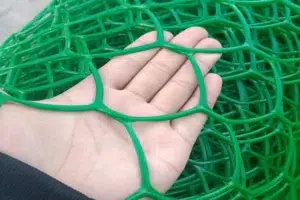
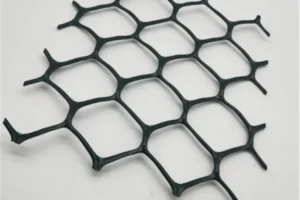
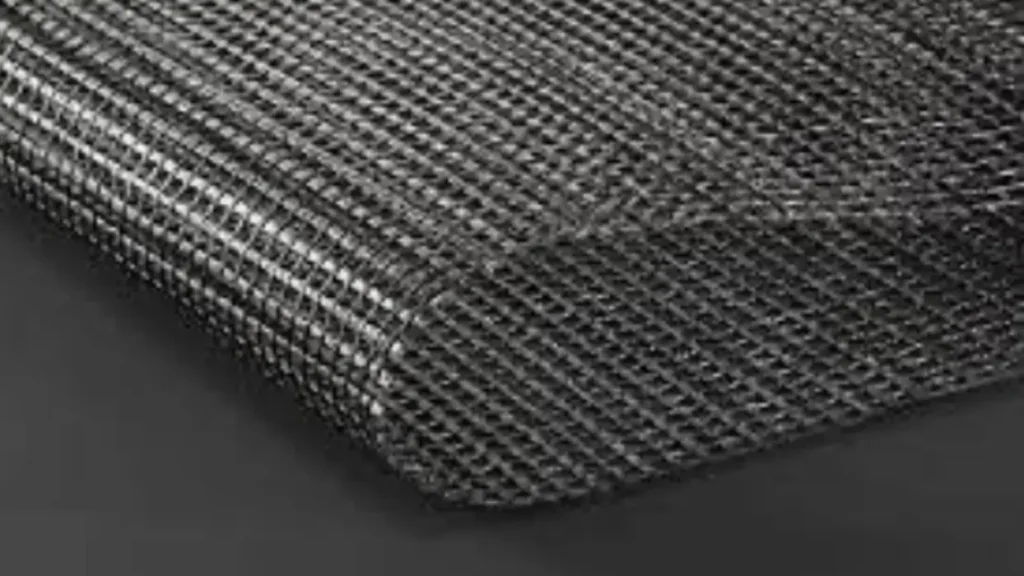
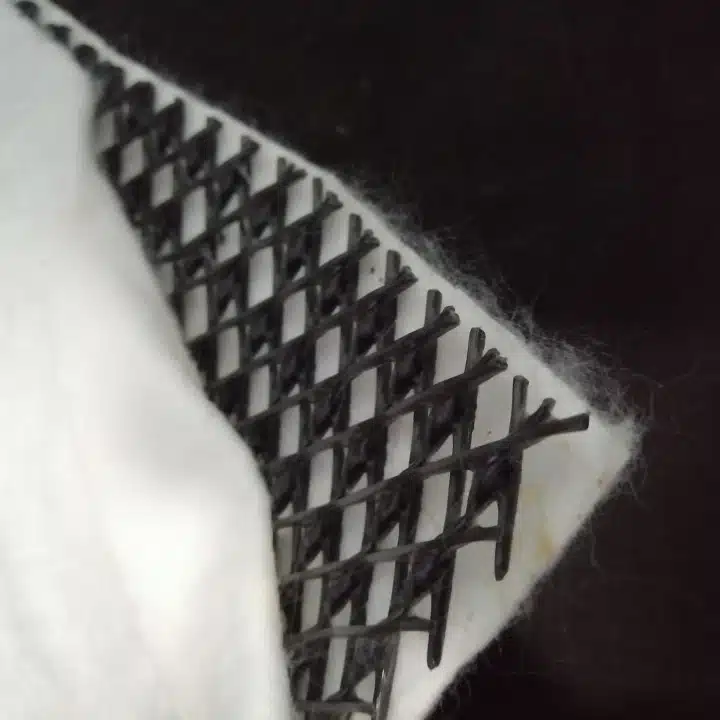
Geonet is a stiff, open polymer core that moves liquid within its plane. Most cores use HDPE. The profile can be bi-planar (two intersecting rib sets) or tri-planar (three rib sets with a primary flow channel). You often laminate nonwoven geotextiles to one or both sides to form a drainage composite. That composite filters soil fines, protects membranes, and maintains in-plane transmissivity.
Key roles:
- Drainage: relief and collection under or over geomembranes, behind walls, and across decks
- Venting: gas vent layers under covers and caps
- Protection: load sharing above waterproofing with a geotextile cushion
How geonets work in plain language
You need high in-plane flow under real pressure, temperature, and time. The rib geometry creates continuous channels. The channels stay open when soil and overburden compress the system. The geotextile faces (when present) stop soil fines, keep the core clean, and spread load. The result is a thin drain that replaces thick granular layers, reduces dead load, and speeds crews.
Common constructions:
- Bi-planar: two rib directions; good for general drainage
- Tri-planar: major and minor ribs; higher flow under higher load
- Geonet + single geotextile: drainage to one side
- Geonet + double geotextile: sandwich filter, most common on decks and tunnels
Typical applications
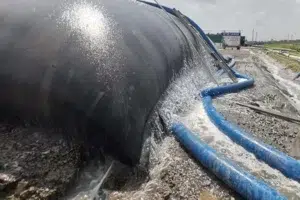
- Landfills and mining: leachate collection and leak detection beneath geomembranes; gas venting in caps
- Tunnels and underground works: behind waterproofing membranes to carry seepage to collection galleries
- Podiums, green roofs, plazas: drainage and root-safe layers above waterproofing
- Retaining walls and bridge abutments: back-drains that keep hydrostatic pressure low
- Roadways and rail: edge drains and separation of fine soils from free-draining zones
- Sports fields and landscape: sub-surface drainage mats for fast dewatering
Selection guide: the fast way to get it right
Match four things: load, flow, time, and interface.
- Confining stress: estimate from soil depth, surcharge, and traffic. More stress needs stiffer ribs and tri-planar flow paths.
- Required flow: calculate design discharge with safety factors. Pick transmissivity that meets it at your confining stress and gradient.
- Time and temperature: consider creep and hot climates. Check long-term transmissivity at service temperature.
- Interfaces: choose single- or double-faced composites. Set geotextile AOS and permittivity to match soil.
Quick property map
| Property | What you ask for | Why it matters |
|---|---|---|
| Transmissivity (in-plane) | At confining stress X kPa, gradient i, temp T, long-term | Ensures flow under real conditions |
| Compressive creep | % loss vs time at X kPa and T | Keeps channels open for design life |
| Core thickness | At X kPa | Correlates with flow and survivability |
| Geotextile AOS / permittivity | Matched to soil D85–D90 and gradient | Stops soil intrusion, maintains flow |
| Interface shear | Core/membrane and soil/geotextile | Controls veneer stability on slopes |
| Chemical and UV notes | HDPE resin with stabilizers | Service in leachate, sun during install |
Common test methods you will see in submittals:
- Transmissivity: ASTM D4716 or ISO 12958
- Thickness: ASTM D5199
- Mass per unit area: ASTM D5261
- Compressive creep: ASTM D7361 or product-specific long-term flow data
- Interface shear: ASTM D5321 (as applicable)
- Geotextile filter tests: ASTM D4491 (permittivity), ASTM D4751 or ISO 12956 (AOS)
Installation basics that prevent callbacks
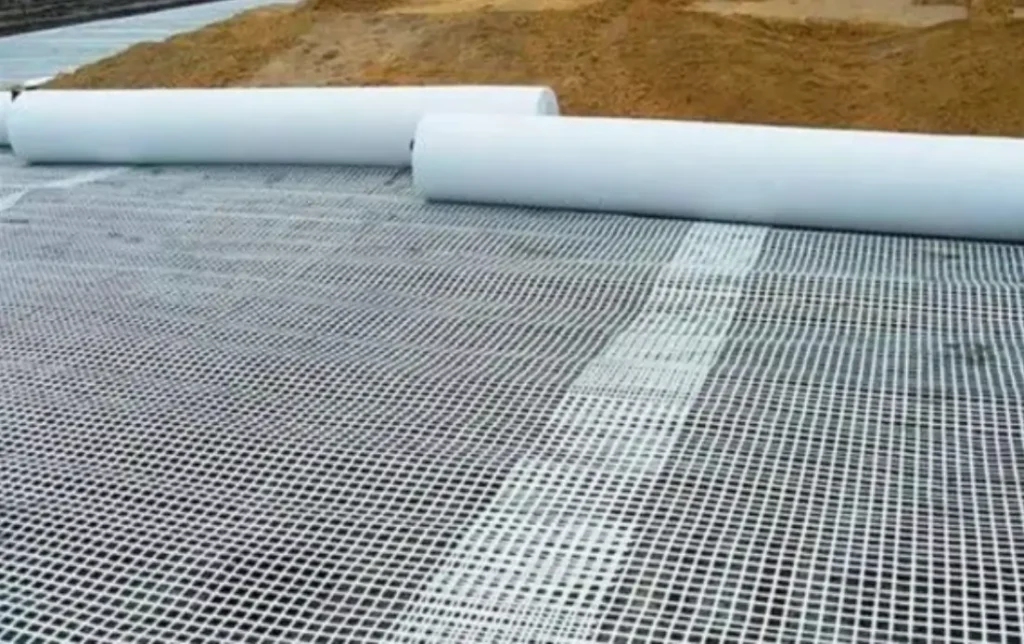
- Substrate: prepare a smooth, firm surface; remove sharp points that can dent the core
- Orientation: run channels to collection points; maintain overlaps per supplier details
- Joints: shingle laps in flow direction; use tape or adhesive where drawings require
- Protection: place cover layers without point loads; avoid direct heavy traffic on exposed core
- Outlets: keep outlets free and daylighted; protect weep points from blockage
- QA/QC: record roll numbers, lot labels, ambient conditions, and anchor details
Common mistakes and quick fixes
- Underspec’d transmissivity: designs based on index values, not at stress and temperature. Fix by requesting long-term values at your confining stress and T.
- Wrong geotextile face: AOS too tight or too open. Fix by matching to soil gradation and hydraulic gradient.
- Flat spots and crushed ribs: point loads during cover placement. Fix with placement mats and lift thickness controls.
- Blocked outlets: missing sediment control. Fix with cleanouts and protected weeps.
RFQ template you can paste into emails
| RFQ field | Target entry |
|---|---|
| Product | HDPE geonet core or geonet-geotextile drainage composite |
| Core geometry | Bi-planar or tri-planar; nominal thickness |
| Transmissivity | ≥ ___ m²/s at ___ kPa, i = ___, T = ___ °C, long-term |
| Geotextile faces | One-side / two-side; nonwoven PP/PET; AOS ___; permittivity ___ |
| Interface data | Interface shear against specified geomembrane and soil |
| Roll size | Width ___ m; length ___ m |
| Documentation | Mill certs per lot; third-party reports matching supplied product |
| Packaging | Edge protection; moisture wrap; labeled with lot/roll IDs |
| Delivery | Lead time ___ days; Incoterms ___ |
| Accessories | Connection tape/adhesive; outlet fittings if required |
Why buyers choose MJY for geonet and drainage composites
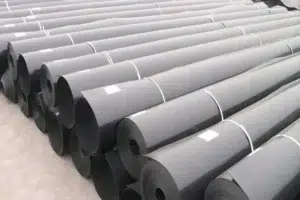
- One-stop package: geonet cores, single- and double-faced drainage composites, matching geotextiles, and accessories
- Factory documentation: lot-linked mill certs, recent third-party tests at specified stress, gradient, and temperature
- Scale and lead time: multiple lines for stable output and phased deliveries for large sites
- Technical support: submittal sets, interface shear data against common geomembranes, and installer checklists
If your tender calls for landfill LCRS, tunnel liners, podium drainage, or wall back-drains, you set the test points, mjy matches them with long-term transmissivity data, and your approval path stays smooth.
FAQ
Q: Is geonet a replacement for gravel drains?
A: Yes for many cases. Geonet composites replace thick granular layers, reduce dead load, and install faster. You still confirm flow at service stress and temperature.
Q: Do you need geotextile on both sides?
A: Use double-faced composites when water can arrive from either side or when the core must be isolated from soil on both faces. Use single-faced when only one interface needs a filter.
Q: How do you size transmissivity?
A: Calculate required discharge, add safety factors, then pick geonet long-term transmissivity at your confining stress, gradient, and temperature from certified data.
Q: Can geonet sit against a geomembrane?
A: Yes. Many systems place geonet directly against a geomembrane with a geotextile on the soil side. Check interface shear if the layer sits on a slope.
Conclusion
Define flow and stress, then choose core geometry and geotextile faces that keep channels open for the design life. Demand long-term transmissivity data at your conditions. With a clean RFQ and a documented supply partner like mjy, your drains stay thin, fast, and reliable.