A pond liner installation looks simple until the project starts leaking, wrinkling, tearing, or floating after water pressure changes. For engineering buyers and contractors, the real work is not only placing a liner in a pond. It is controlling subgrade, liner material, seam quality, anchoring, protection layers, and water filling sequence.
To install a pond liner, prepare and compact the pond base, remove sharp objects, add geotextile protection if needed, unfold the geomembrane liner carefully, allow proper overlap, weld or seam the panels, anchor the edges, inspect the seams, protect the liner, and fill the pond slowly while checking for movement or leaks.
%
For B2B pond, reservoir, aquaculture, wastewater, and irrigation projects, liner installation should be planned before the material arrives. The liner grade, panel layout, welding method, anchor trench, and quality inspection all affect long-term containment performance.
Site Preparation and Pond Base Inspection
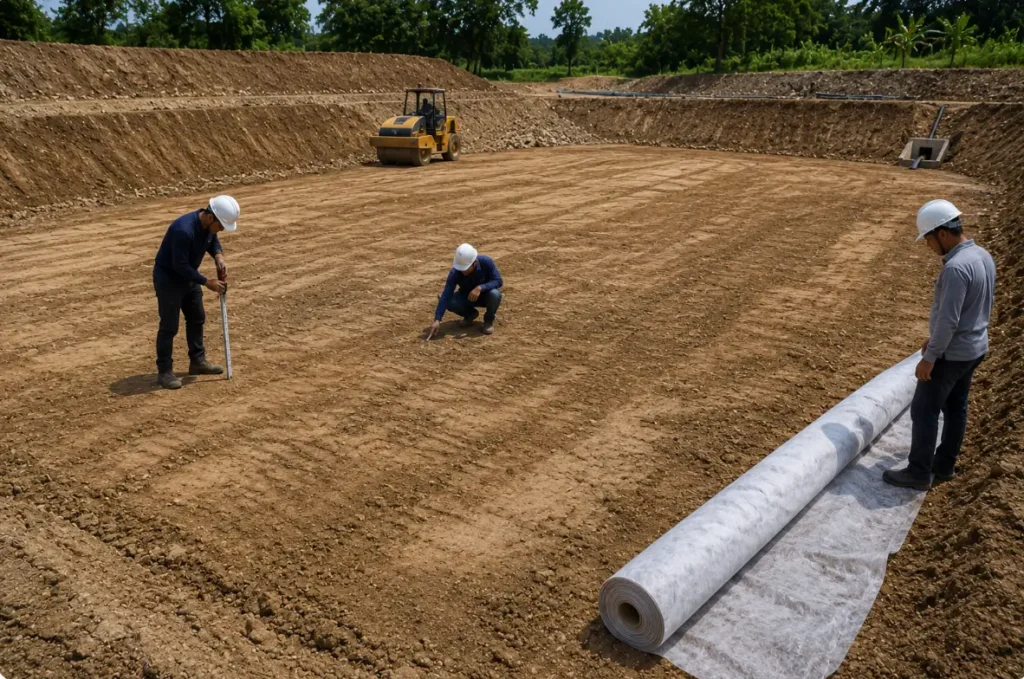
Poor base preparation is one of the fastest ways to damage a pond liner. A good liner can still fail if it is installed over roots, sharp stones, soft pockets, standing water, or unstable soil.
Before installing a pond liner, the pond base should be shaped, cleared, compacted, drained, and inspected. The surface must be free from sharp stones, roots, debris, soft spots, and sudden level changes. If the soil is rough or weak, a geotextile underlayer should be used to protect the liner.
Professional Explanation
A pond liner works as a low-permeability barrier. In engineering terms, most pond liners used for commercial ponds, aquaculture ponds, reservoirs, and wastewater lagoons are geomembranes. A geomembrane is a synthetic membrane liner or barrier used with geotechnical materials to control fluid or gas migration in a man-made project or system. [1]
From a factory-side view, the liner is only one part of the containment system. The subgrade below the liner is just as important. If the foundation has sharp points, uneven settlement, or trapped water, the liner may face puncture, stress concentration, or floating problems.
For buyers, this means the material should not be ordered only by thickness and price. The project should first confirm pond size, slope ratio, soil condition, water depth, expected chemical exposure, and whether the liner will be exposed to sunlight.
Construction Details
The pond base should be excavated and shaped according to the design. The bottom should be smooth and stable. Side slopes should be trimmed evenly. Sudden corners should be avoided because they can create stress on the liner during placement and filling.
All sharp stones, roots, metal scraps, construction debris, and hard clods should be removed. The base should be compacted enough to reduce later settlement. If the soil is loose, wet, or unstable, the weak areas should be repaired before liner placement.
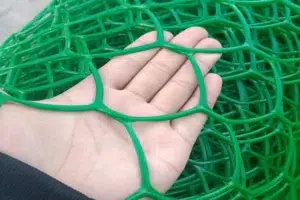
For many pond projects, a nonwoven geotextile layer is placed below the geomembrane. This helps protect the liner from puncture and abrasion. It is especially useful when the base soil is coarse, rocky, or uneven.
Buyers can review suitable geotextile materials when the pond base needs puncture protection or separation support.
| Site Condition | Installation Risk | Better Preparation Method |
|---|---|---|
| Sharp stones or roots | Liner puncture | Remove debris and add geotextile protection |
| Soft soil pockets | Settlement and wrinkles | Replace or compact weak zones |
| Standing water | Liner floating or movement | Drain and stabilize before placement |
| Uneven slope | Stress concentration | Trim and smooth side slopes |
| Loose surface soil | Poor liner support | Compact base before installation |
| Rough subgrade | Abrasion under liner | Use protective geotextile layer |
Selection Table
| Project Type | Base Preparation Focus | Buyer Checkpoint |
|---|---|---|
| Fish pond | Smooth bottom and safe liner contact | Check geotextile need and liner thickness |
| Irrigation pond | Stable slope and water depth | Confirm anchor trench and liner grade |
| Wastewater pond | Chemical exposure and seam control | Confirm HDPE quality and welding plan |
| Decorative pond | Shape control and wrinkle reduction | Confirm flexible liner type if needed |
| Reservoir | Large-area subgrade stability | Confirm panel layout and installation crew |
| Aquaculture pond | Durability and easy cleaning | Confirm smooth surface and UV resistance |
Liner Placement, Panel Layout, and Anchoring
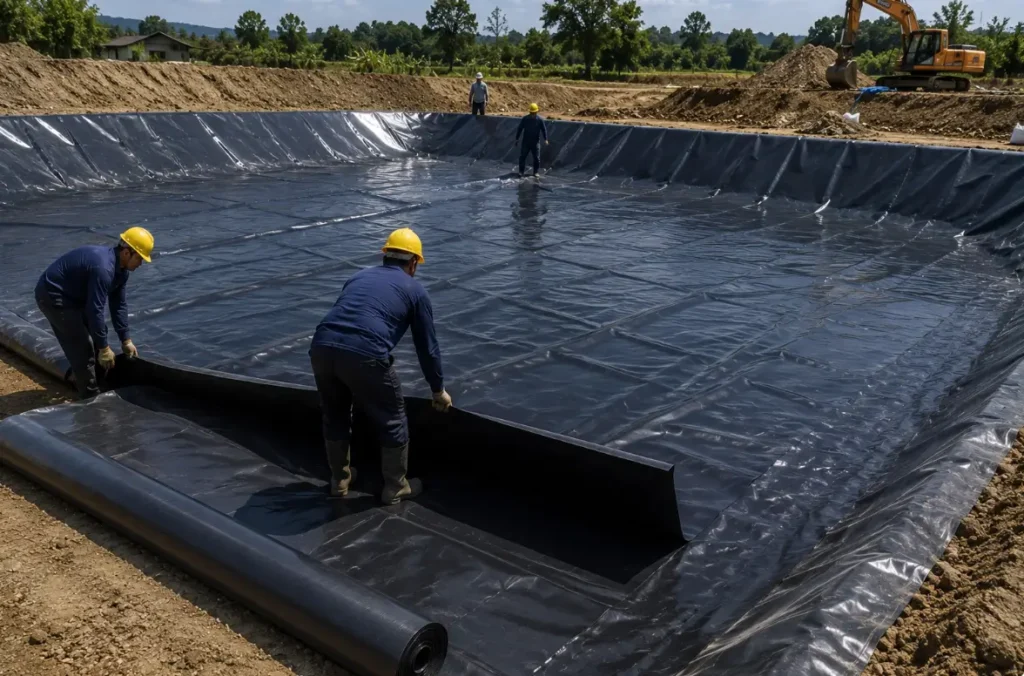
The liner should not be dragged, stretched, or forced into the pond shape. Placement should follow a layout plan so seams, overlaps, slopes, and anchor trenches can be controlled.
Pond liner placement should start with a clear panel layout. The liner should be unfolded carefully, positioned without overstretching, overlapped correctly for welding, and fixed in an anchor trench around the pond edge. Anchor trenches help prevent liner movement, sliding, wind uplift, and edge pullout.
Professional Explanation
Panel layout affects both installation speed and seam risk. Every seam is a quality-control point. A poor layout can create too many seams, difficult welding areas, or high-stress seams on slopes and corners.
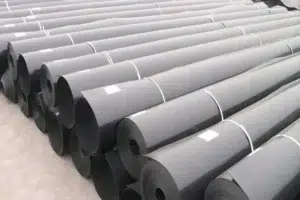
For HDPE and LLDPE pond liners, large panels are often welded on site. The installer should plan seam direction, overlap width, slope placement, and access routes before deployment. Liner rolls should be moved with proper equipment to avoid scratches or folding damage.
Anchor trenches are also important. The edge of the liner must be held in place before and during filling. Without good edge anchoring, the liner can slip, move under wind, or pull down the slope during water filling.
Construction Details
The liner should be placed during suitable weather. Strong wind can make liner handling unsafe. Rain can soften the subgrade and affect welding conditions. Very high or low temperature can affect liner expansion, contraction, and welding adjustment.
When unfolding the liner, workers should avoid dragging it over sharp surfaces. The liner should sit naturally on the base and side slopes. Some slack should be allowed because the liner will move slightly during filling and temperature change.
The anchor trench is usually excavated around the pond perimeter. The liner edge is placed into the trench and backfilled after inspection. The exact trench size depends on pond size, slope, soil condition, water depth, and engineering design.
For buyers sourcing the liner itself, geomembrane liner products should be selected by water depth, exposure condition, chemical condition, and installation method.
| Placement Point | Why It Matters | Buyer / Contractor Check |
|---|---|---|
| Panel Layout | Reduces unnecessary seams | Confirm drawing before installation |
| Seam Direction | Affects welding access and stress | Avoid difficult seam positions |
| Overlap Area | Supports proper welding | Follow installer and project requirements |
| Weather Condition | Affects handling and welding | Avoid strong wind and wet subgrade |
| Anchor Trench | Holds liner edge in place | Confirm trench design before deployment |
| Liner Slack | Allows movement during filling | Do not overstretch liner |
Selection Table
| Project Condition | Placement Priority | Better Decision |
|---|---|---|
| Small pond | Simple layout and fewer seams | Use manageable panel sizes |
| Large reservoir | Planned panel deployment | Use professional welding crew |
| Steep side slope | Strong edge anchoring | Confirm anchor trench and slope stability |
| Exposed liner | UV and thermal movement | Use UV-resistant liner grade |
| Irregular pond shape | Wrinkle and stress control | Use careful cutting and fitting |
| Windy site | Safe deployment | Schedule placement in calm weather |
Welding, Seaming, and Quality Inspection
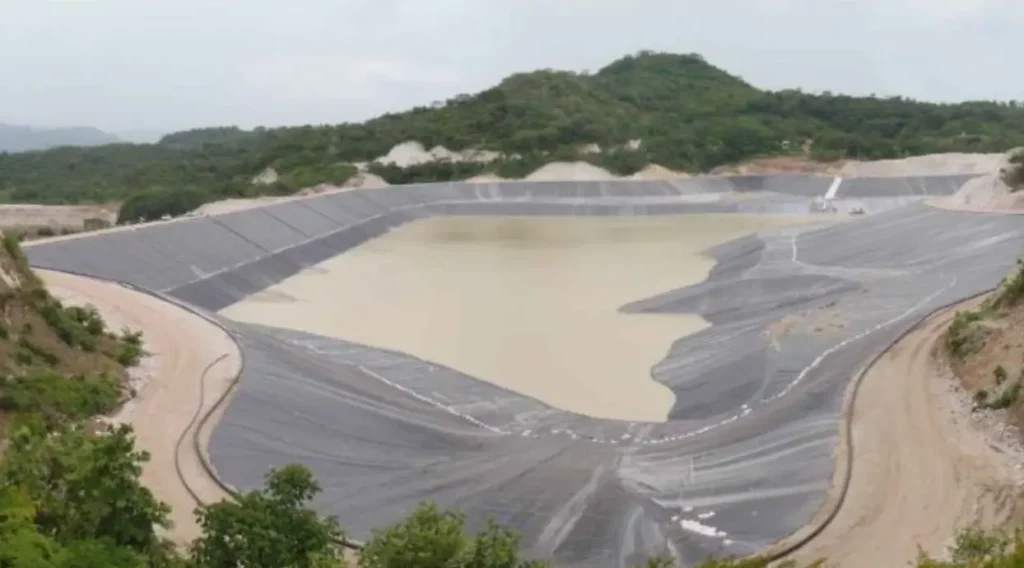
A pond liner is only as reliable as its seams. Many leakage problems come from poor welding, poor surface preparation, weak overlap, or insufficient inspection.
For HDPE pond liner installation, seams are usually joined by hot wedge welding or extrusion welding. The seam area must be clean and dry, overlaps must be correct, test welds should be made before production welding, and seams should be inspected by visual checks, air pressure tests, vacuum box tests, or other project-approved methods.
Professional Explanation
In pond liner projects, the field seam is a critical quality point. A factory can produce a good geomembrane roll, but the installation crew creates the final containment system on site. If the seam fails, the liner system can leak even when the sheet material is good.
EPA technical guidance on geomembrane field seams focuses on inspection techniques for field seam fabrication and explains construction quality control and construction quality assurance concepts for seam work. [2] This is important because seam inspection is not a decorative step. It is part of installation risk control.
HDPE liner quality should also be checked before installation. GRI GM13 covers HDPE geomembranes with a formulated sheet density of 0.940 g/ml or higher and provides test methods, required properties, and testing frequency guidance for smooth and textured HDPE geomembranes. [3]
Construction Details
Before welding, seam areas should be clean, dry, and free from dust, mud, oil, and water. The liner overlap should be consistent. The welding machine settings should match liner thickness, ambient temperature, wind, and site conditions.
Hot wedge welding is commonly used for long straight seams. Extrusion welding is often used for details, patches, pipe penetrations, repairs, corners, and small areas. The installer should make trial welds before production welding and adjust the machine if conditions change.
Seam testing should follow project requirements. Visual inspection can find obvious defects, but it does not prove every seam is watertight. Air pressure testing is often used for dual-track fusion seams. Vacuum box testing can be used for certain seams or repairs. Destructive seam samples may be required for critical projects.
For projects needing a full containment package, buyers may also compare HDPE geomembrane solutions based on thickness, surface type, UV exposure, and chemical resistance.
| Welding / Inspection Item | Why It Matters | Buyer Checkpoint |
|---|---|---|
| Clean Seam Area | Prevents weak bonding | Remove dust, mud, and moisture |
| Correct Overlap | Supports stable welding | Follow project and machine requirements |
| Trial Weld | Confirms settings | Test before production welding |
| Hot Wedge Welding | Efficient for long seams | Use trained operators |
| Extrusion Welding | Useful for details and repairs | Control surface preparation |
| Seam Testing | Finds leakage risk | Use approved test methods |
Selection Table
| Project Type | Seam Quality Focus | Recommended Control |
|---|---|---|
| Fish pond | Leak prevention and clean finish | Visual check and seam testing |
| Wastewater pond | Chemical containment | HDPE grade and strict seam inspection |
| Large reservoir | Long seam consistency | Professional welding and QC records |
| Irrigation pond | Durability and cost control | Correct thickness and anchor trench |
| Industrial pond | Chemical and temperature exposure | Confirm liner formulation and test data |
| Repair project | Local seam reliability | Extrusion welding and patch inspection |
Infill, Protection Layer, and Water Filling Sequence
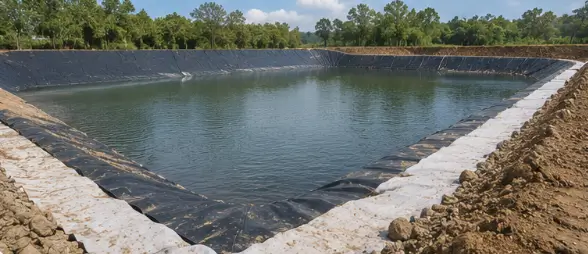
After the liner is installed and welded, the project is not finished. The protection layer, backfill, and filling sequence can still damage or move the liner.
After pond liner welding and inspection, the liner should be protected from puncture, wind uplift, equipment damage, and sudden water pressure. A geotextile cushion, soil cover, gravel protection, or concrete layer may be used depending on the project, and water should be filled gradually while checking liner movement.
Professional Explanation
A pond liner is designed to control water migration, but it can still be damaged by construction activity. Workers, equipment, stones, and backfill can puncture or scratch the liner if the protection plan is weak.
Some ponds keep the liner exposed. Others cover it with soil, geotextile, concrete, or other protective layers. The choice depends on water depth, pond use, maintenance method, UV exposure, animal activity, and expected service life.
For aquaculture ponds, the liner surface may need to be smooth and easy to clean. For wastewater ponds, chemical resistance and seam quality may matter more. For irrigation reservoirs, UV exposure and slope stability can be major concerns.
Construction Details
If a protection layer is used, it should be placed carefully. Heavy equipment should not drive directly on the exposed liner unless a suitable protection layer and method are approved.
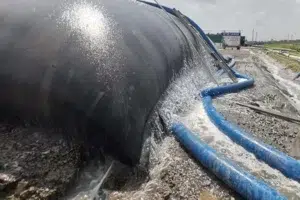
When filling water, the pond should be filled gradually. This allows the liner to settle into the shape of the base and side slopes. During filling, workers should check wrinkles, edge movement, anchor trench behavior, and seam areas.
If soil cover is placed over the liner, it should be free from sharp stones and should be placed gently. If concrete is used, the design should prevent concentrated stress and liner damage.
The liner should not be cut or penetrated randomly after installation. Pipe penetrations, outlets, and structures should be planned and sealed with proper detail welding or accessories.
| Protection / Filling Item | Main Purpose | Risk If Ignored |
|---|---|---|
| Geotextile Cushion | Protects liner from puncture | Stone or soil damage |
| Soil Cover | Protects liner from UV and traffic | Sharp fill can puncture liner |
| Gravel Layer | Adds protection or drainage | Poor placement can damage liner |
| Concrete Cover | Hard protection | Stress or cracking can damage liner |
| Gradual Water Filling | Allows liner to settle | Sudden movement or edge pull |
| Pipe Details | Maintains watertight system | Leakage at penetrations |
Selection Table
| Pond Type | Protection Focus | Buyer / Contractor Check |
|---|---|---|
| Aquaculture Pond | Smooth surface and cleaning | Use suitable exposed liner grade |
| Irrigation Pond | UV and slope stability | Confirm anchor trench and liner thickness |
| Wastewater Pond | Chemical resistance and seam quality | Confirm HDPE grade and QC inspection |
| Decorative Pond | Shape and visible finish | Control wrinkles and edge details |
| Reservoir | Large water pressure and exposure | Plan protection and filling sequence |
| Industrial Pond | Containment and safety | Use stricter QA and documentation |
A proper protection plan often costs less than repairing a damaged liner after water filling.
My View
When I help buyers plan pond liner installation, I do not start with the cheapest liner thickness. I start with the pond purpose, subgrade condition, water depth, exposure, and welding requirement.
For a small decorative pond, flexibility and shape control may be important. For an aquaculture pond, cleaning, durability, and seam quality matter. For wastewater or industrial ponds, chemical resistance and installation QA become critical.
The biggest mistake is buying geomembrane first and planning the installation later. That often leads to wrong panel layout, missing geotextile, weak edge anchoring, or seam problems.
A reliable supplier should help buyers confirm liner type, thickness, roll size, welding method, geotextile protection, anchor trench details, and shipment packing before the order leaves the factory.
Conclusion
A pond liner installation works best when the subgrade, liner material, seam welding, anchoring, protection layer, and water filling sequence are planned together. The liner should be selected for the pond condition, not only for price.
FAQs
What is the best material for a pond liner?
HDPE and LLDPE geomembranes are common for engineering pond liners. HDPE is often used for strong chemical resistance and long-term durability, while LLDPE can offer better flexibility for some shaped ponds.
Do I need geotextile under a pond liner?
Geotextile is recommended when the base soil is rough, rocky, uneven, or at risk of puncturing the liner. It works as a cushion layer between the subgrade and the geomembrane.
Can I install a pond liner without welding?
Small flexible pond liners may be installed without field welding, but large HDPE or LLDPE geomembrane pond liners usually require professional seam welding to create a watertight system.
How do I prevent pond liner leaks?
Prevent leaks by preparing the base properly, using suitable liner thickness, controlling seams, testing welds, protecting the liner from puncture, anchoring the edges, and filling water gradually.
What thickness pond liner should I choose?
The right thickness depends on pond size, water depth, subgrade condition, liner exposure, chemical exposure, and project risk. Commercial ponds often need thicker and more durable geomembranes than small decorative ponds.
Key Takeaways
- Pond liner installation should start with subgrade preparation, not liner placement.
- HDPE and LLDPE geomembrane liners need correct panel layout, welding, anchoring, and seam inspection.
- Geotextile protection is important when the pond base is rough, rocky, or unstable.
- Anchor trenches, edge fixing, and gradual water filling help reduce liner movement and installation stress.
- A reliable geomembrane supplier should help buyers confirm liner type, thickness, roll size, welding method, protection layer, and export packing before shipment.