
Civil projects rarely need a generic geosynthetic. They need one material function matched to soil, water, load, geometry, and installation conditions.
Geosynthetic materials include geotextiles, geomembranes, geogrids, geocells, geonets, drainage composites, and related products. Choose them by the required function, such as separation, filtration, drainage, reinforcement, confinement, or containment, then verify the project conditions and specification basis.
Before a purchase order is released, compare the section drawing, site condition, material function, performance basis, dimensions, installation method, packaging, delivery scope, and acceptance documents. This helps buyers confirm that quotations describe the same engineering system rather than products that merely share a similar name.
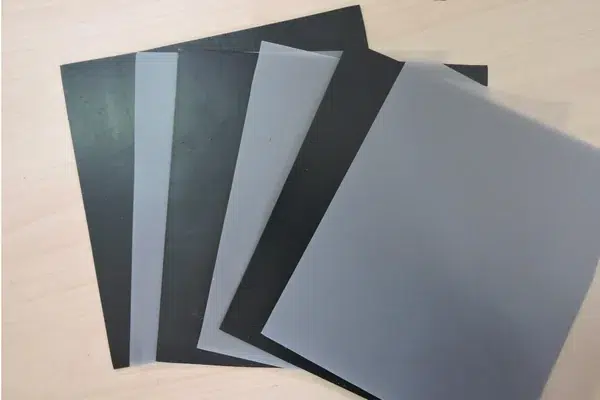
Send the project section, soil or subgrade information, water condition, loads, application, quantity, and destination. We can help structure the material questions for an RFQ.
Request a civil-work geosynthetic selection checklistStart With the Function, Not the Product Name
The first selection question is what the material must do in the section: separate soil from aggregate, filter water, drain liquid, reinforce a fill mass, confine aggregate, or contain liquids. One product can sometimes support more than one function, but not every product in the same category is interchangeable.
For example, a nonwoven geotextile may be selected for filtration and protection, while a geogrid may be selected for reinforcement or aggregate interlock. A geomembrane is a barrier, not a drainage layer. Starting with the function prevents an RFQ from asking for a generic ‘geosynthetic sheet’ that suppliers interpret differently. [1]
Main Types of Geosynthetic Materials
Geotextiles, geomembranes, geogrids, geocells, and drainage products each address different engineering conditions. The material category should be paired with measurable selection variables rather than a visual description alone.
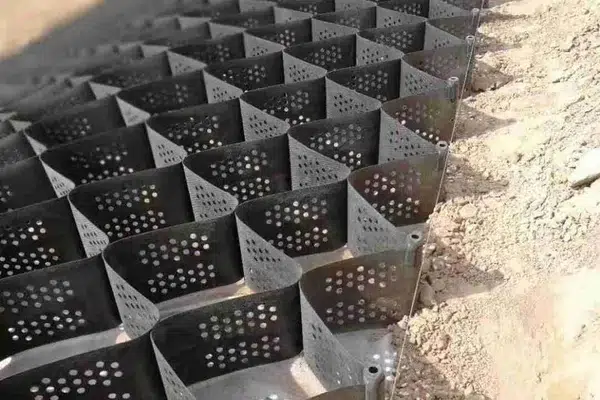
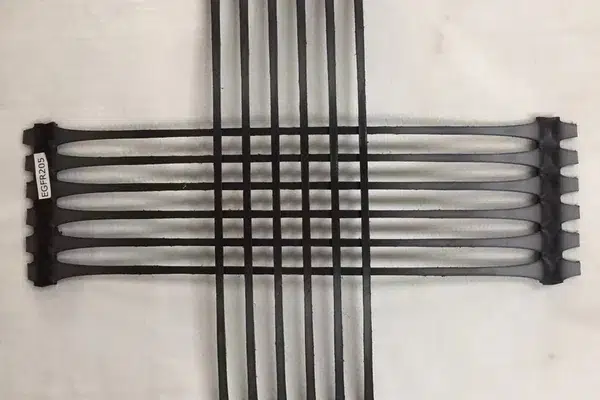
Geotextile choices can involve apparent opening size, permittivity, CBR puncture resistance, and tensile behavior. Geomembranes can involve thickness, seam strength, puncture resistance, interface friction, and chemical exposure. Geogrids and geocells can involve tensile direction, aperture or cell geometry, aggregate confinement, and subgrade condition. The International Geosynthetics Society provides broad education on these functions. [2]
| cURL Too many subrequests by single Worker invocation. To configure this limit, refer to https://developers.cloudflare.com/workers/wrangler/configuration/#limits | Typical function | Selection variable |
|---|---|---|
| نسيج جيوتكستايل | Separation, filtration, protection | Soil, opening size, permittivity, puncture risk |
| الجيوميمبران | الاحتواء | Thickness, seams, chemical exposure, protection |
| شبكة جيوتكستايل | Reinforcement or stabilization | Tensile direction, aperture, fill interaction |
| جيوسيلي | Aggregate or soil confinement | Cell depth, infill, subgrade, anchoring |
| Geonet / composite | In-plane drainage | Flow under load, filter, outlet detail |
How Soil, Water, and Load Change the Choice
The same material can be appropriate in one section and unsuitable in another because soil fines, groundwater, loading, slope, climate, and construction equipment change the risk. A good selection begins with the site information, not the warehouse inventory.
A drainage fabric needs filtration stability with the adjacent soil, not only a high mass per square meter. A liner requires protection against subgrade or aggregate damage, not only the desired thickness. Reinforcement products require the correct load direction and interaction with the fill. ASTM D4751 is commonly used for geotextile apparent opening size, which is useful only when read alongside the soil and filtration requirement. [3]
Common Material Mix-Ups That Create Rework
Common mistakes include using a barrier where drainage is required, treating a reinforcement grid as a filter, or choosing a geotextile by GSM without considering its intended function and interface. These are design and procurement problems, not merely product-name problems.
Manufacturer Perspective: we see RFQs that compare rolls by unit price while leaving out soil condition, water path, load, and installation method. That can lead to unnecessary overlaps, avoidable site cutting, puncture risk, poor drainage, or a material that the contractor cannot install as planned. A practical request defines the function first, then the performance or drawing requirement. Expert Insight: a request for ‘200 gsm fabric’ does not identify whether the fabric is expected to filter fine soil, cushion a liner, or separate weak subgrade from aggregate. The same mass can be supplied with different relevant properties. A buyer should connect the function to the adjacent material, test method, minimum required value, roll dimensions, and installation sequence before comparing quotations.
A Short Selection Matrix for Civil Works
A concise selection matrix helps teams connect the civil-work problem to the material function before discussing product grade or price. It should be used as a starting point, not as a substitute for design verification.
cURL Too many subrequests by single Worker invocation. To configure this limit, refer to https://developers.cloudflare.com/workers/wrangler/configuration/#limits [4]
cURL Too many subrequests by single Worker invocation. To configure this limit, refer to https://developers.cloudflare.com/workers/wrangler/configuration/#limits
cURL Too many subrequests by single Worker invocation. To configure this limit, refer to https://developers.cloudflare.com/workers/wrangler/configuration/#limits cURL Too many subrequests by single Worker invocation. To configure this limit, refer to https://developers.cloudflare.com/workers/wrangler/configuration/#limits
cURL Too many subrequests by single Worker invocation. To configure this limit, refer to https://developers.cloudflare.com/workers/wrangler/configuration/#limits cURL Too many subrequests by single Worker invocation. To configure this limit, refer to https://developers.cloudflare.com/workers/wrangler/configuration/#limits, منتجات تعزيز الجيوبريد، و cURL Too many subrequests by single Worker invocation. To configure this limit, refer to https://developers.cloudflare.com/workers/wrangler/configuration/#limitscURL Too many subrequests by single Worker invocation. To configure this limit, refer to https://developers.cloudflare.com/workers/wrangler/configuration/#limits
الخاتمة
cURL Too many subrequests by single Worker invocation. To configure this limit, refer to https://developers.cloudflare.com/workers/wrangler/configuration/#limits
الأسئلة الشائعة
cURL Too many subrequests by single Worker invocation. To configure this limit, refer to https://developers.cloudflare.com/workers/wrangler/configuration/#limits
cURL Too many subrequests by single Worker invocation. To configure this limit, refer to https://developers.cloudflare.com/workers/wrangler/configuration/#limits
cURL Too many subrequests by single Worker invocation. To configure this limit, refer to https://developers.cloudflare.com/workers/wrangler/configuration/#limits
cURL Too many subrequests by single Worker invocation. To configure this limit, refer to https://developers.cloudflare.com/workers/wrangler/configuration/#limits
cURL Too many subrequests by single Worker invocation. To configure this limit, refer to https://developers.cloudflare.com/workers/wrangler/configuration/#limits
cURL Too many subrequests by single Worker invocation. To configure this limit, refer to https://developers.cloudflare.com/workers/wrangler/configuration/#limits
المراجع
- إرشادات تصميم وبناء المواد الجيوسيليكونية من FHWA ↩
- cURL Too many subrequests by single Worker invocation. To configure this limit, refer to https://developers.cloudflare.com/workers/wrangler/configuration/#limits ↩
- طريقة اختبار ASTM D4751 لمقاس الفتح الظاهر للجيوتكستايلات ↩
- cURL Too many subrequests by single Worker invocation. To configure this limit, refer to https://developers.cloudflare.com/workers/wrangler/configuration/#limits ↩



 Arabic
  English
  Spanish