A geocell driveway fails when the base is treated as an afterthought.
Is Geocell Good for Driveway Installation?
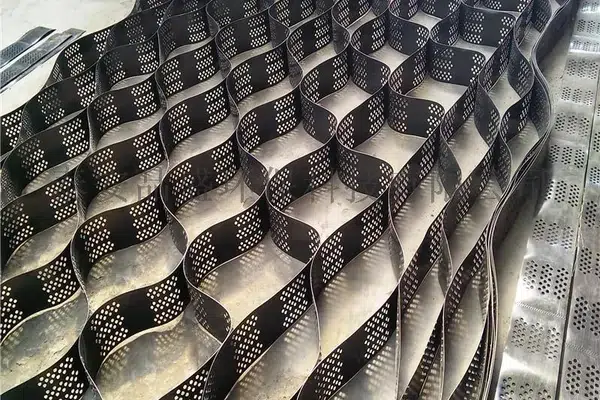
Yes, geocell can be good for driveway installation when the subgrade is prepared, the cell depth matches traffic, the infill is compacted, and the edges are restrained. It is especially useful for gravel driveways, soft ground, sloped access, and areas where rutting keeps returning.
Geocell belongs to the broader family of geosynthetics used for reinforcement and separation functions. International Geosynthetics Society resources describe geosynthetics as engineered polymer products used to improve soil-related construction works. [3]
For a driveway buyer, the core issue is not whether the panel is called heavy duty. It is whether the base depth, aggregate, drainage, and restraint can handle cars, trucks, turning, braking, and water.
That early check prevents most small-site mistakes before material is even ordered.
Send your driveway length, vehicle type, slope, and gravel size to check cell depth and base preparation before ordering.
Request a driveway geocell checklistBase Depth and Cell Height
Most driveway complaints come from movement: rutting, gravel migration, edge collapse, or soft pockets after rain. Geocell helps by confining the aggregate, but it still needs a prepared base underneath.
Cell depth should be selected around vehicle load and subgrade strength. Light residential driveways do not always need the same panel as construction access roads. On the other hand, frequent delivery trucks, trailers, or turning areas should not be treated like light foot traffic.
| Driveway condition | Likely geocell concern | What to check |
|---|---|---|
| Firm subgrade, light cars | Avoid over-specifying | Moderate cell depth and good edge restraint |
| Soft clay or wet soil | Settlement and pumping | Subgrade repair and possible geotextile separation |
| Steep driveway | Downslope gravel movement | Anchoring, surface cover, and drainage |
| Truck traffic | Rutting under repeated loads | Deeper cells, angular aggregate, and compaction |
Infill Choice and Compaction
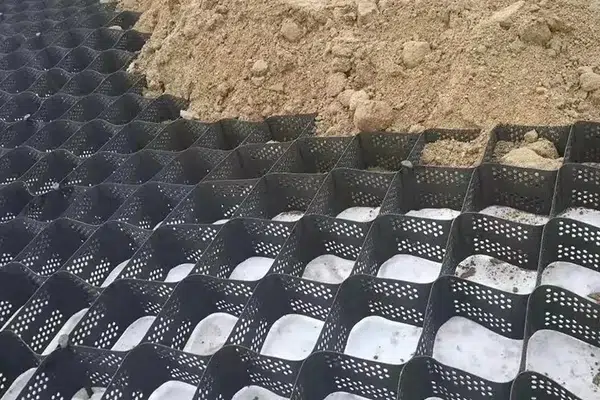
Angular crushed stone usually performs better than rounded gravel because it interlocks more effectively inside the cell. Fine material can choke drainage, while oversized stone can be hard to compact and may not seat well in shallow cells.
Field Note: Many small driveway buyers ask if they can fill geocell with whatever gravel is already on site. Sometimes yes, but when the stone is rounded, dirty, or poorly graded, the panel cannot deliver the same confinement benefit. The cheapest infill can become the most expensive part of the job.
ASTM D8269 is useful because it does not treat geocell as a one-size product; it points buyers toward material properties, design principles, mechanisms, and project conditions. [1]
Driveway projects also sit inside the same basic geosynthetic logic used in larger civil works. One material may reinforce, another may separate, and another may drain. Industry education resources explain these functions separately, which helps buyers avoid expecting geocell to solve every base problem by itself. [3]
If the driveway has fine soil below the gravel, a separation geotextile can be more important than many buyers expect. Without it, traffic can push aggregate down and pull fines up, leaving the surface soft again. The geocell may still be intact, but the base below it is no longer doing its job.
Mistakes That Cause Driveway Rework
| Mistake | What happens | Better practice |
|---|---|---|
| No edge restraint | Panels and gravel move outward | Fix edges before final filling |
| Underfilled cells | Cell walls are exposed to tires | Fill slightly above the cell and compact |
| Poor drainage | Water softens the base | Shape the driveway and manage runoff |
| Skipping subgrade prep | Soft spots return through the surface | Remove weak areas before panel placement |
Expert Insight: Do not leave the geocell wall as the wearing surface. Tire contact and UV exposure are not the point of the product. The panel should confine the infill, while the compacted gravel surface carries traffic.

Factory and Ordering Checks
Factory Tips: Ask for cell depth, expanded panel size, weld spacing, strip thickness, surface texture, and the number of panels per bundle. For a driveway, panel connection details are important because short sections and edges create more opportunities for movement.
If you are buying for resale or installation service, also ask how many square meters one crew can open, anchor, fill, and compact per day. This helps you quote the job honestly instead of only selling material by area.
FHWA guidance for geosynthetic construction is written for larger engineered systems, but the same lesson applies at driveway scale: performance depends on design assumptions, material verification, and installation control. [4] A driveway may be smaller than a road, but the wheel load still punishes weak edges, loose panels, and wet subgrade.
Where the driveway connects to a retaining edge or reinforced slope, review the transition carefully. FHWA reinforced slope guidance is a reminder that soil reinforcement and surface stabilization are part of a system, not isolated product layers. [2] For a sloped driveway, that can mean checking runoff, edge restraint, and toe support before deciding the final panel height.
MJY can support driveway and access-road buyers with geocell panels for ground stabilization. For stronger project requirements, compare HDPE geocell specifications and consider geotextile separation fabric under the base when fines migration is a risk.
Final Takeaway
Geocell driveway installation works when the base is prepared, drainage is controlled, cells are fully filled, and the edges are restrained. The panel is only one part of the driveway system.
## References
References
- ASTM D8269-21 Standard Guide for the Use of Geocells in Geotechnical and Roadway Projects ↩
- FHWA GEC 011 Design and Construction of Mechanically Stabilized Earth Walls and Reinforced Soil Slopes ↩
- International Geosynthetics Society: Geosynthetics Education Resources ↩
- FHWA Geosynthetic Design and Construction Guidelines ↩