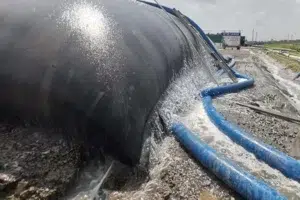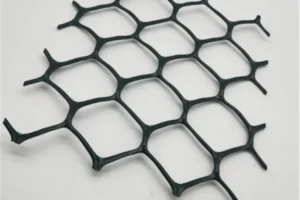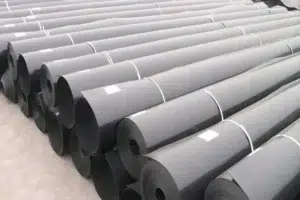
Geocell is useful when soil or aggregate needs confinement, not just coverage.
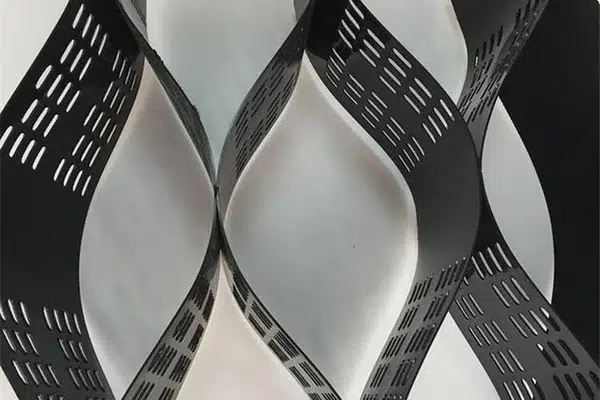
What Is Geocell Used For?
Geocell is used for road base stabilization, slope protection, driveway reinforcement, erosion control, working platforms, and channels because its three-dimensional cells confine soil or aggregate. It works best when the cell depth, weld strength, infill, drainage, and anchoring match the actual site load.
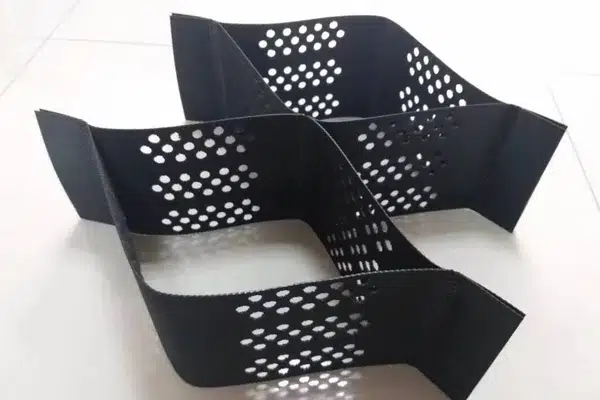
A geocell, also called a cellular confinement system, is expanded on site into a honeycomb panel and filled with aggregate, soil, sand, or concrete. ASTM D8269 describes geocell use across roadway and geotechnical applications, including load support, subgrade improvement, retaining works, and slope or channel protection. [1]
For buyers, the practical question is not whether geocell is strong. The question is whether the selected panel can keep the infill stable under the expected load, slope angle, water flow, and construction method.
Send your application, subgrade condition, target cell depth, and project area to get a practical panel and infill recommendation.
Request a geocell project spec checkWhere Geocell Works Best
| Application | Main purpose | Buyer check before ordering |
|---|---|---|
| Access roads | Confine aggregate over weak subgrade | Traffic load, subgrade strength, and infill type |
| Slopes | Reduce erosion and hold soil or stone | Slope angle, anchoring, drainage, and vegetation plan |
| Driveways | Stabilize gravel and reduce rutting | Base depth, edge restraint, and compaction |
| Channels | Protect surfaces under water flow | Flow velocity, infill, and lining requirement |
The biggest purchasing myth is that geocell is only a plastic grid. It is actually a confinement system. If the cell walls are underfilled, poorly anchored, or placed on a soft wet subgrade without preparation, the buyer paid for geometry but did not get the design benefit.
Road Base and Working Platform Uses
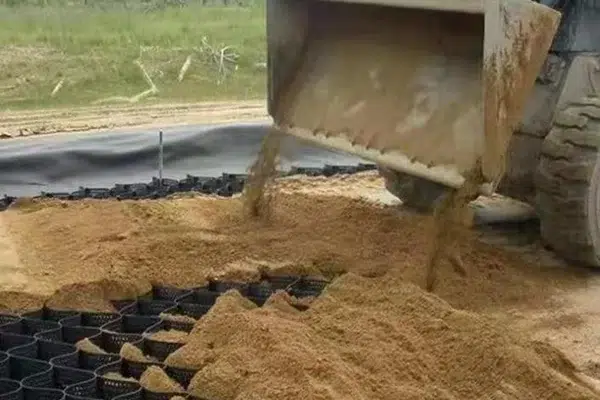
For road construction, geocell helps reduce lateral aggregate movement. The confined layer behaves more like a mattress, spreading wheel load over a wider area. This is useful for access roads, temporary construction roads, haul roads, and low-volume pavement support.
FHWA reinforced soil guidance is mainly written for mechanically stabilized earth and slopes, but it reinforces a useful procurement lesson: reinforcement products must be selected around design function, construction control, and site-specific conditions, not product name alone. [2]
Field Note: We often see access-road buyers ask for the thinnest geocell because the road is temporary. That can work for very light traffic, but it becomes false economy when trucks turn in the same spot every day. Rutting repairs can cost more than the panel upgrade.
Slope Protection and Erosion Control Uses
On slopes, geocell holds topsoil, aggregate, or concrete in place. The cell walls limit downslope movement, while perforations can help drainage and vegetation when the panel is designed for green slope protection.
Do not choose slope geocell only by panel height. Ask about slope angle, expected runoff, anchoring pattern, toe treatment, and whether the infill will be soil, gravel, or concrete. A taller cell without proper anchoring can still move.
How Geocell Fits the Wider Geosynthetics System
Geocell is rarely the only geosynthetic on a well-planned job. A driveway or access road may need geotextile below the panel to separate aggregate from fine soil. A slope may need drainage control behind the surface. A channel may need a liner or concrete-filled cells depending on water flow. The International Geosynthetics Society describes geosynthetics by function, including reinforcement, separation, filtration, drainage, and containment, which is a practical way to avoid buying one product for every problem. [3]
For example, a buyer may ask for geocell because the road is rutting. If the real cause is water pumping fines into the aggregate, a geotextile separation layer may be needed below the geocell. If the real cause is a steep slope washing out after storms, anchoring and drainage become as important as cell depth.
FHWA geosynthetic guidance is also useful here because it pushes the same discipline: confirm the function first, then choose the product and installation method. [4] In supplier discussions, this means the inquiry should not only say ‘I need geocell.’ It should include site use, soil condition, slope or traffic, water condition, and the available infill.
Factory Tips for Checking Geocell Before Shipment
Factory Tips: Ask for panel size, cell depth, weld spacing, strip thickness, surface texture, perforation style, and packing method. For export orders, check the expanded area per panel and folded bundle size, because installation teams need to know how many panels can be opened and fixed per day.
A serious supplier should not quote only by square meter. Geocell cost and performance depend on resin quality, weld consistency, cell depth, texture, perforation, and roll or bundle packing. If the supplier cannot explain these points, compare carefully before ordering.
For factory orders, one detail I like to check is whether the panel dimensions are quoted as folded bundle dimensions or expanded working area. These numbers are often confused in early inquiries. A buyer may think he ordered enough square meters, then discover on site that overlap, trimming, slope anchoring, or edge losses were not included in the calculation.
How to Choose the Right Geocell
| Question | Why it matters |
|---|---|
| What is the load? | Traffic, foot load, and hydraulic force change the cell depth and infill choice. |
| What is the subgrade? | Soft, wet, or uneven soil may need preparation or geotextile separation. |
| What infill is available? | Angular aggregate, soil, sand, and concrete behave differently inside the cells. |
| How will it be anchored? | Slopes and edges need restraint so the system does not creep or open. |
For product selection, review MJY’s geocell product options and, for heavier panels, compare the HDPE geocell specification range. Related soil reinforcement applications are also listed under soil reinforcement solutions.
Final Takeaway
Geocell is best used where confinement solves a real site problem: rutting, erosion, weak subgrade, slope washout, or unstable gravel. Match the panel to the site, not just the product name.
## References
References
- ASTM D8269-21 Standard Guide for the Use of Geocells in Geotechnical and Roadway Projects ↩
- FHWA GEC 011 Design and Construction of Mechanically Stabilized Earth Walls and Reinforced Soil Slopes ↩
- International Geosynthetics Society: Geosynthetics Education Resources ↩
- FHWA Geosynthetic Design and Construction Guidelines ↩