A retaining wall can lose alignment during backfill even when the reinforcement roll meets its tensile specification.
Near-face compaction in a geogrid-reinforced retaining wall needs a controlled equipment and lift sequence. Heavy plant close to the facing can displace units or disturb connections, while inadequate compaction can leave settlement risk. The wall designer must define the near-face zone, fill properties, lift thickness and acceptance testing before construction.
This is where material procurement and the construction method meet: the grid cannot compensate for an undefined compaction plan.
Send your project drawings, technical specifications, quantities and destination for material-fit review before quotation.
Send drawings and specificationsWhy Is the Area Beside the Facing Different?
The outer part of a reinforced soil mass is constrained by the facing and its connectors. Heavy equipment can push the facing outward, disturb blocks or panels and locally damage reinforcement. Light equipment may be needed in a defined near-face strip, but the exact width and compaction target are project-specific. FHWA guidance on mechanically stabilized earth walls discusses staged fill placement and face control. Buyers should obtain the approved wall section and installation manual, not assume the same roller and lift apply from face to the back of the reinforcement zone. [1]
What Should the Reinforcement Supplier Confirm?
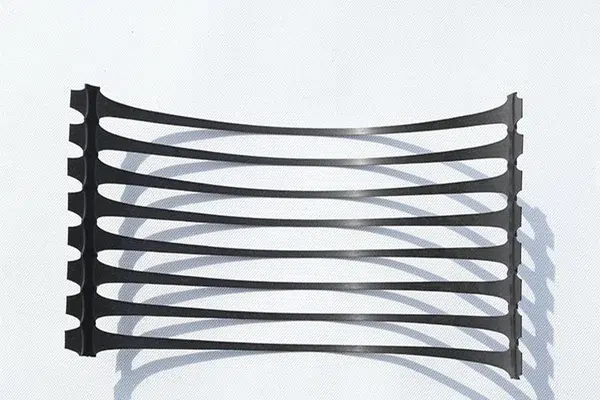
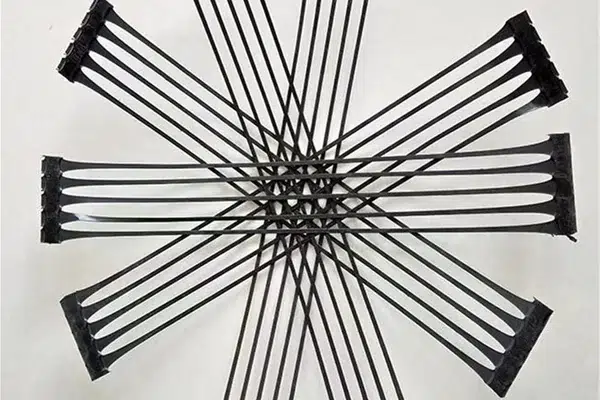
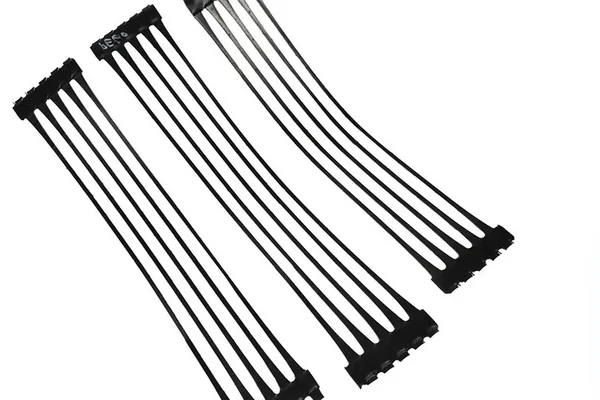
Ask for grid type, principal tensile direction, roll dimensions, connection compatibility and specified long-term design strength basis. ASTM D6637/D6637M provides a laboratory tensile method; it does not alone establish design strength after creep, installation damage and durability reductions. The wall engineer should set those factors and the connection detail. A shorter roll may be easier to handle but create extra joints or waste. Make sure the ordered lengths correspond to the approved reinforcement schedule at each wall elevation, rather than a single average length. [2]
| Check | What it tells you | What it does not prove |
|---|---|---|
| Near-face zone | Facing alignment and light-equipment plan | Displacement or under-compaction |
| Reinforcement zone | Grid direction and lift sequence | Wrinkles or installation damage |
| ASTM D6637/D6637M | Index tensile property | Not long-term design strength |
The comparison is a procurement screen, not a replacement for the approved engineering design. A test method defines how a property is measured; acceptance thresholds and the site detail must come from the project specification.
Which Backfill Errors Cause Rework?
A truck tipping directly onto exposed grid, a sharp oversized particle at the facing or a lift compacted in the wrong direction can change the intended geometry. The contractor should spread fill in a controlled way, maintain grid alignment and remove wrinkles before burial. Check moisture and gradation against the approved backfill specification. Keep connection areas visible for inspection and record the lift elevation. A contractor who discovers wall movement after several lifts has a more expensive problem than one who stops at the first out-of-tolerance course. [1] [3]
How Should a Wall RFQ Be Structured?
Request a reinforcement schedule, design drawing, facing system, connection requirements, backfill grading, wall height, surcharge, groundwater assumptions and construction sequence. Identify whether the supply package includes grid only or also connectors and facing elements. Compare quotations by the required grade and length at each elevation, not by a generic price per roll. If a bidder changes the grid type or connection detail, that is a design substitution requiring written engineering review. Procurement should not approve it as a simple commercial equivalent. [1]
What Should the Site Team Verify Before Work Starts?
For the first wall course, run a hold-point inspection with the facing installer, earthworks crew and engineer present. Confirm the reinforcement elevation, connection method, direction, length and backfill level on one marked drawing. Identify the line where the near-face compactor changes to heavier equipment and how density will be verified in both zones. A density result from the back of the reinforced mass should not be used as proof that the face zone received suitable compaction. If the face moves during the first lifts, stop and measure it before hiding the movement under more fill. The cost of correcting one course is usually far lower than dismantling a completed face after survey finds excessive bulging.
What Should Be in the RFQ?
Provide the wall elevation, layer schedule, reinforcement lengths, facing and connector drawings, backfill spec, groundwater information, required test basis, total quantity and delivery destination. MJY can review geogrid for retaining wall reinforcement against the schedule; final wall stability and compaction criteria belong to the designer.
For the connected design check, review our geogrid long-term design strength guide before approving a material substitution.
For a fair quotation, ask each supplier to state the proposed grade, tested properties, test edition, usable roll dimensions, packaging, batch identification, lead time and exclusions. Put the drawing revision and destination on the inquiry. If a proposed substitute changes an engineered detail, request written design approval rather than treating it as a price-only decision.
Factory Tip and Buyer Check
QC Check: Before the first production lift, lay one grid length from the actual order against the approved facing detail. Check connection, roll direction and usable length with the site engineer. One short trial can expose a wrong roll orientation before hundreds of metres are buried.
Before bulk production, compare the labelled sample or approved data sheet against the purchase specification. At goods receipt, keep roll IDs and packaging photographs. These small controls make a later site question traceable instead of turning it into an argument about what was ordered.
FAQs
Can a passing tensile test approve the wall design?
No. Long-term factors, connections and soil interaction require design review.
Should the same roller work against the facing?
Not necessarily. The near-face zone may require different equipment and a specific method.
Can all grid layers use one roll length?
Only if the approved reinforcement schedule says so.
Conclusion
The safe procurement question is not simply how strong the roll is. Send wall drawings, reinforcement schedules and specifications to MJY for material review, then have the engineer approve the fill and compaction sequence.