A smooth liner can become a costly slope decision when interface friction, cover soil, drainage, and construction traffic were never checked before the material was ordered.
Textured geomembrane is usually considered when a liner must work on a slope or against another material where interface friction affects stability. The final selection still depends on slope geometry, cover material, normal load, subgrade, drainage, seam layout, and the approved project design.
Before choosing a textured surface, buyers should separate a real stability requirement from a cosmetic preference and compare the full liner system rather than texture alone.
Send the slope section, cover material, drainage detail, liner thickness, quantity, destination, and required documents for a practical RFQ review.
Request a textured liner checkA useful textured-geomembrane RFQ states the application, slope angle, adjacent material, liner thickness, surface requirement, panel size, seam plan, roll dimensions, quantity, destination, packaging, test requirements, and construction sequence. That information lets a supplier quote a material fit rather than a generic black sheet.
When Does Texture Add Engineering Value?
Texture can add value when the liner interface is part of the slope-stability or placement decision. It is not automatically required for every pond, landfill cell, or flat containment area.
A textured surface is commonly reviewed where soil, geotextile, geocomposite, concrete, or another layer must remain stable against the liner under the project loading condition. The controlling issue is interface shear behavior, not whether the liner looks rough to the hand.
ASTM D5321 is a direct-shear test method used to evaluate soil-geosynthetic and geosynthetic-geosynthetic interfaces under stated conditions. A laboratory result is useful evidence, but the project engineer still needs to confirm the actual materials, normal stress, drainage condition, slope geometry, and design factors. [2]
For a flat liner protected by stable cover and without a critical interface, texture may add cost and handling considerations without solving a real project problem. The approved design should define whether one-sided or two-sided texture is needed.
Which Site Conditions Change the Recommendation?
Slope angle, cover soil, geotextile or drainage layer, water condition, construction equipment, anchorage, and long-term loading can all change whether texture is appropriate.
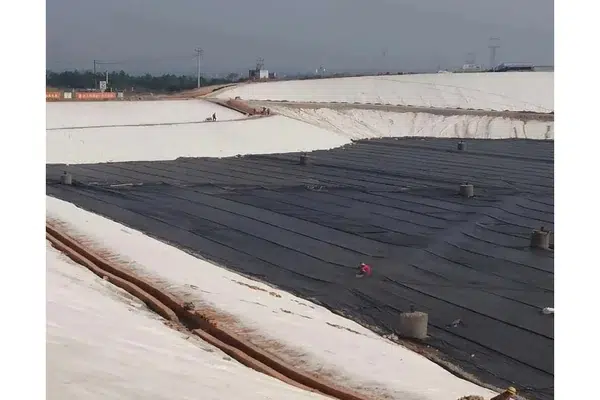
A landfill side slope, a capping system, and a mining containment slope may all use a liner, but they do not have the same interface stack. A granular drainage layer, cohesive cover soil, or geocomposite can behave differently against the membrane.
The review should include hydrostatic pressure or seepage where relevant, because water can change effective stress and the drainage requirement. It should also include temporary construction conditions, since loaded equipment, uncovered panels, and wet soil can govern the practical installation window.
US EPA describes landfill systems as combinations of barrier, drainage, leachate collection, and cover components. A liner choice should be checked within that system rather than treated as an isolated product. [4]
| Project condition | What to confirm | Risk if missed |
|---|---|---|
| Steep cover slope | Interface testing, cover soil, anchorage | Sliding or difficult placement |
| Landfill side slope | Drainage layer, seam layout, panel direction | Water control or seam access issues |
| Flat pond floor | Puncture protection and seam plan | Unnecessary surface cost |
| Traffic during cover placement | Protection layer and placement method | Scuffing or mechanical damage |
How Do Thickness and Texture Work Together?
Texture does not replace thickness selection, puncture protection, seam planning, or resin-quality review. These decisions must work together for the selected application.
Thicker material can improve some handling and puncture-resistance considerations, but it is not an automatic slope solution. The liner must still be compatible with the site handling method, welding equipment, panel geometry, and the specified seam-testing program.
GRI GM13 is a specification reference for HDPE geomembrane properties and test frequencies. Buyers should compare the project requirement, data sheet, test method, minimum value basis, resin statement where required, and any project-specific acceptance documentation before approving bulk supply. [1]
An honest quotation comparison should show surface type and thickness separately. A buyer who compares only price per square meter may miss a change from one-sided to two-sided texture, a different roll width, or a different panel layout that affects installed coverage.
What Installation Risks Need Attention?
The main risks are damaged texture, poorly planned seams, unstable cover placement, trapped water, weak anchorage, and treating a slope liner as though it were a flat floor liner.
Panel direction and seam layout should be coordinated before deployment. Long seams placed in difficult access areas, or a layout that forces unnecessary cross-slope welding, can slow inspection and create avoidable repair work.
ASTM D6392 addresses destructive testing of nonreinforced geomembrane seams. The project quality plan should state what seam tests, trial seams, non-destructive checks, repair records, and acceptance procedures apply; a product data sheet does not replace field seam control. [3]
Field Note: Many quotation requests specify textured HDPE but omit the cover sequence and panel dimensions. Those details affect roll handling, the anchorage allowance, seam access, and the amount of material that becomes unusable offcut on a complex slope.
What Should Buyers Compare Before Ordering?
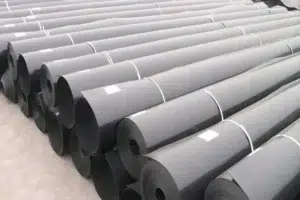
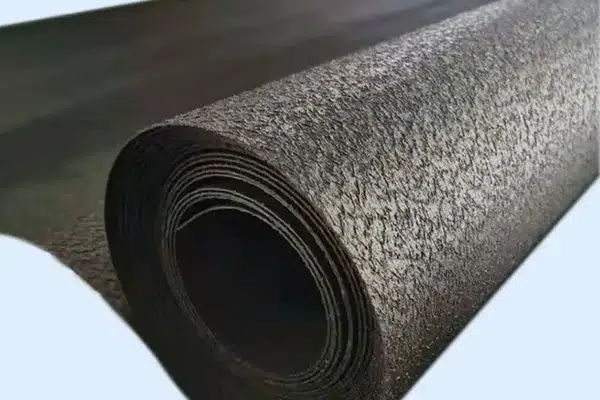
Buyers should compare the full liner interface and installation package: texture side, thickness, roll dimensions, panel layout, seam method, protection layer, documents, packing, destination, and delivery access.
A low price can be misleading if the supplier has quoted a different surface configuration, shorter roll, limited documentation, or a packing method that does not suit site handling. The right comparison is usable installed coverage and documented specification fit, not only the roll price.
QC Check: Request the product data sheet, stated test methods, surface configuration, roll width and length, thickness requirement, labels, batch traceability, packing details, sample approval process, and project-required reports before production is released.
What Should Be Included in a Textured Geomembrane RFQ?
The RFQ should include the project section, slope and layer stack, target thickness, surface requirement, drainage and protection detail, panel or roll preference, quantity, destination, schedule, and required testing documents.
Provide the interface materials rather than only saying “for landfill” or “for slope.” A reliable supplier can then identify whether one-sided texture, two-sided texture, a protective geotextile, a different roll width, or further engineering review may be needed.
Buyers can review an HDPE geomembrane liner, compare the landfill liner application, and send the drawing through the textured liner RFQ form before order release.
FAQs
Is textured geomembrane always better on slopes?
No. Texture is useful when the interface condition and approved slope design call for it. The final choice depends on adjacent materials, normal load, drainage, slope geometry, construction method, and project design.
Can texture replace a geotextile protection layer?
No. Texture addresses an interface characteristic. A protection layer is selected separately for subgrade, aggregate, cover placement, and puncture risk.
Should buyers choose one-sided or two-sided texture?
That depends on which interfaces need review. The layer stack and design should identify whether friction is required on one face or both faces.
Conclusion
Textured geomembrane is a system decision. Confirm the slope interface, surface configuration, thickness, protection, drainage, panel layout, and seam quality plan before comparing quotations.