Weak soil can turn a simple road, slope, or foundation project into a costly repair problem. Geocell helps control that risk.
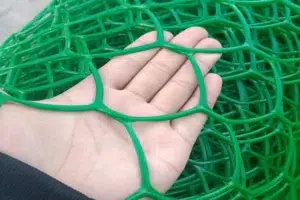
A geocell is a three-dimensional cellular confinement system made from polymer strips. It is expanded on site, filled with soil, sand, gravel, or concrete, and used to improve load support, slope stability, erosion control, and ground reinforcement.
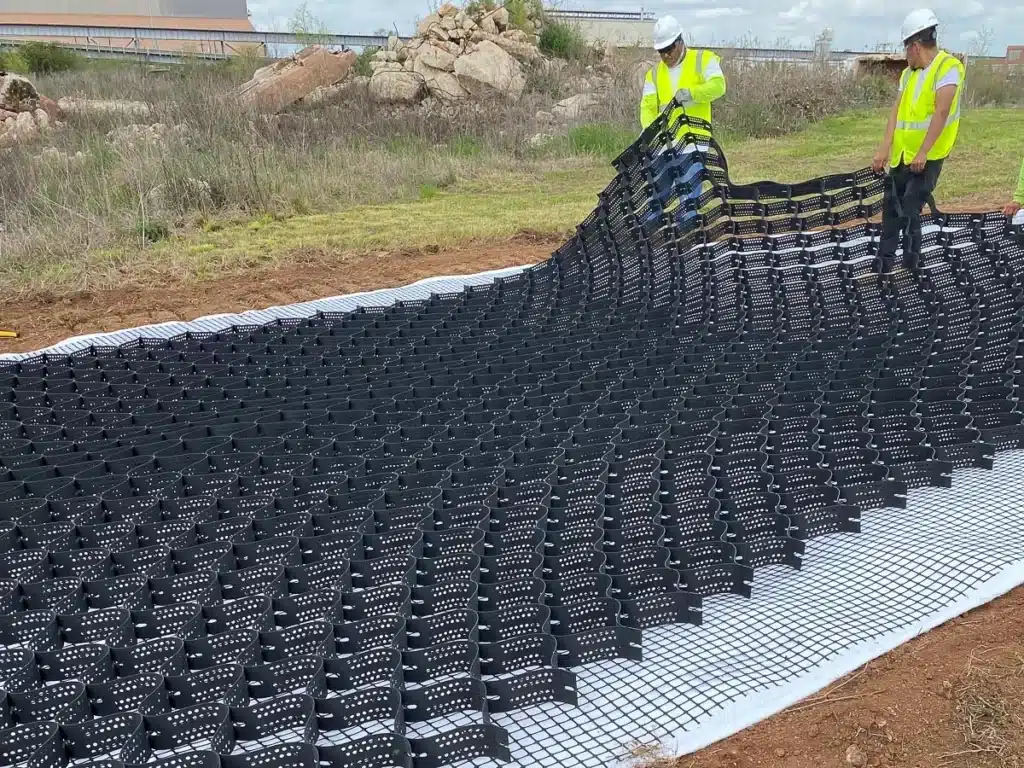
A geocell can turn weak ground into a more stable support platform when the material, cell depth, weld strength, infill, and installation match the project. This guide explains how it works, where it is used, and why buyers choose it.
Introduction: Why Is Geocell Important for Modern Ground Stabilization?
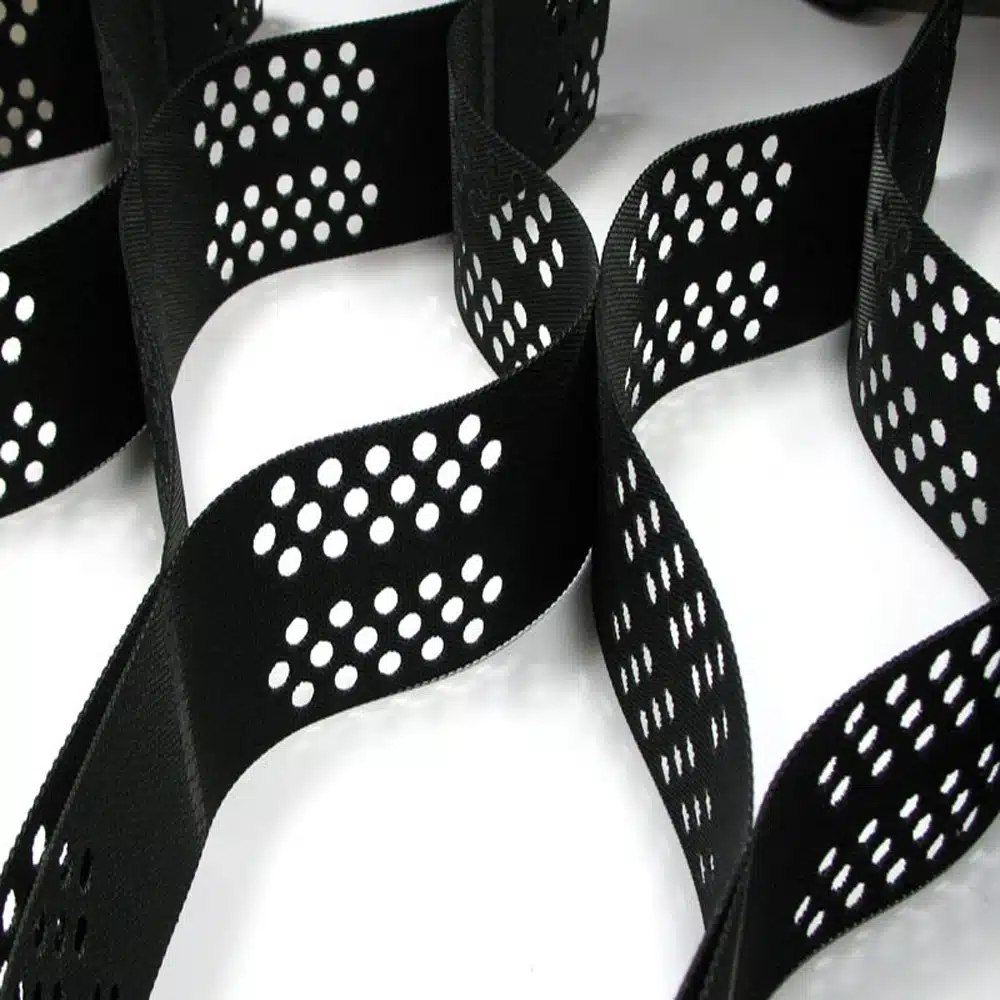
Many ground problems start with movement. Soil shifts, aggregate spreads, and slopes lose surface material under load, rain, or water flow.
Geocell is important because it confines infill material inside a honeycomb structure. This confinement reduces lateral movement, spreads load, improves surface stability, and helps weak soil work as a stronger support layer.
Professional Explanation
Geocell is often hidden after installation. Buyers may only see the road surface, slope cover, or channel lining. But the geocell layer works below or within the system to control movement.
The main value comes from cellular confinement. Loose soil or aggregate can move sideways under pressure. Geocell limits that movement. The infill and cell walls work together as a composite layer.
A public technical source describes cellular confinement systems as honeycomb-like structures expanded on site and filled with soil, sand, rock, gravel, or concrete. It also lists load support, soil stabilization, slope protection, channel protection, and earth retention as common uses. [1]
For engineering buyers, this means geocell should not be purchased as a general plastic grid. It should be selected as a ground improvement system.
Construction Details
A geocell system usually starts with site preparation. Workers grade and compact the base, place geotextile if needed, expand the geocell panels, anchor them, connect sections, fill the cells, and finish the surface.
The project decides the details. A road base needs compactable aggregate. A green slope needs soil and vegetation. A channel may need gravel, stone, or concrete.
For buyers comparing product options, suitable geocell product specifications should be checked before price comparison.
| Project Problem | How Geocell Helps | Buyer Should Check |
|---|---|---|
| Weak subgrade | Spreads load over a wider area | Cell depth and infill quality |
| Aggregate movement | Reduces lateral spreading | Weld strength and cell size |
| Slope erosion | Holds surface soil or gravel | Anchoring and perforation |
| Channel washout | Confines stone or concrete | Edge fixing and water flow |
| Earth retention | Supports confined fill | Drainage and design requirement |
Selection Table
| Buyer Situation | Geocell Value | Practical Check |
|---|---|---|
| Road over weak soil | Better base support | Check subgrade and aggregate |
| Slope with runoff | Better erosion control | Check slope angle and anchors |
| Drainage channel | Better lining stability | Check infill and flow condition |
| Temporary access road | Faster ground support | Check panel size and packing |
| Green wall or embankment | Soil retention | Check vegetation and drainage |
Understanding the Basics: What Exactly Is a Geocell?
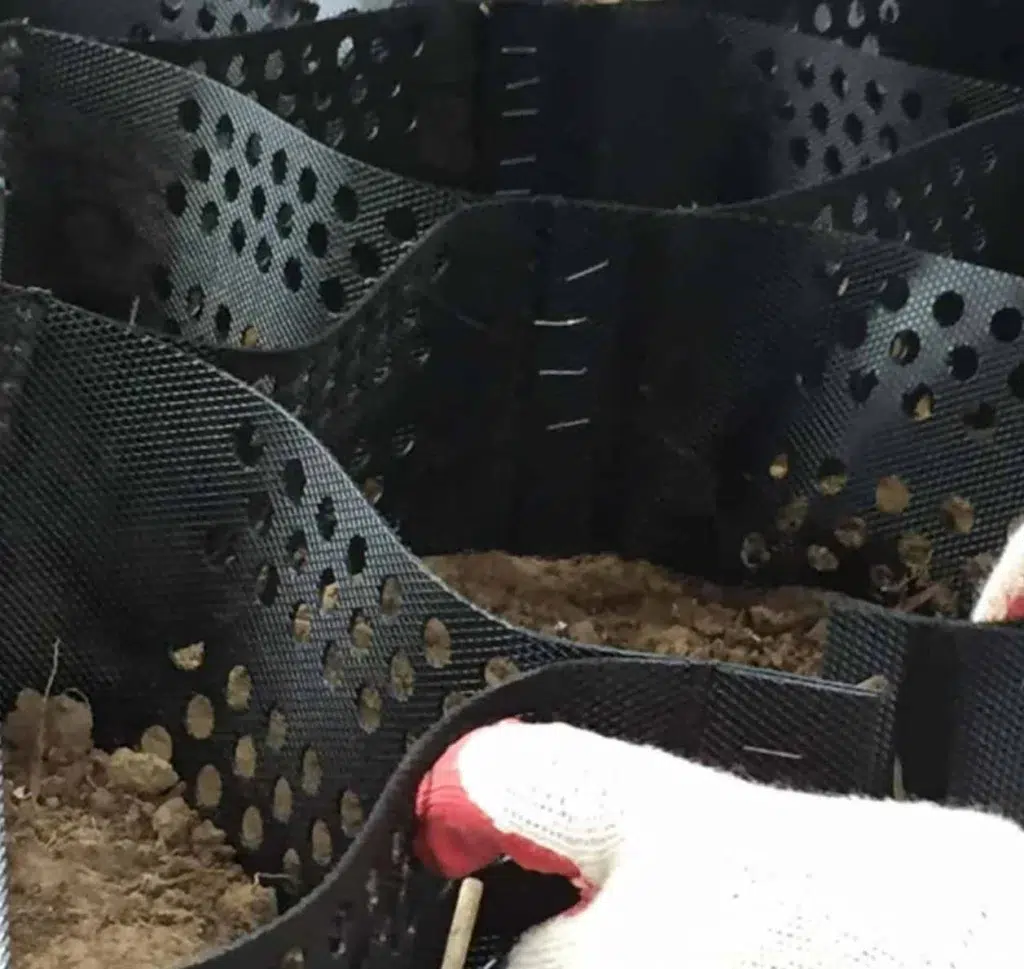
A geocell looks simple when folded, but the expanded structure is engineered. Its performance depends on material, welding, cell geometry, and infill.
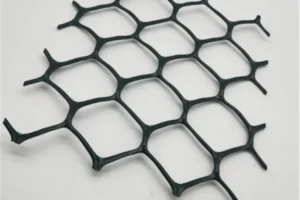
A geocell is made from HDPE or other polymer strips welded into panels. The panels ship folded, expand into a honeycomb structure on site, and form a confined layer after being filled with soil, sand, gravel, or concrete.
Professional Explanation
Most engineering geocells are made from HDPE or other polymer materials. HDPE is common because it offers strong durability, chemical resistance, and outdoor performance when properly formulated.
The strips are welded at regular intervals. When workers expand the folded panel, the welded strips open into a three-dimensional honeycomb. Common cell heights vary by project demand. Light-duty projects use lower cells. Roads, slopes, and heavy-load areas may require deeper cells.
The key principle is cellular confinement. The cell wall limits lateral movement of the infill. The infill carries load. The geocell holds the infill in shape. Together, they create a composite support layer.
A geocell should not be judged only by height. Buyers should also check sheet thickness, weld spacing, weld strength, UV resistance, perforation, surface texture, and panel dimensions.
Construction Details
For road projects, crushed stone or gravel is common. For slope projects, soil or topsoil is common. For channel projects, stone or concrete may be used.
If the subgrade is soft or fine-grained, geotextile can be placed below the geocell. This helps reduce mixing between aggregate and soil. Buyers can review geotextile materials when separation or filtration is needed.
The final layer depends on correct installation. If the panel is overstretched, cell size changes. If welds are weak, the cells may open. If infill is poor, the system may still deform.
| Geocell Feature | What It Means | Why It Matters |
|---|---|---|
| HDPE or polymer strip | Main cell wall material | Affects durability and flexibility |
| Welded joint | Connection between strips | Controls cell stability |
| Cell height | Vertical depth of the cell | Controls infill depth |
| Weld spacing | Distance between weld points | Controls cell opening |
| Perforation | Holes in cell wall | Supports drainage and root growth |
| Surface texture | Roughened surface | Improves friction with infill |
Selection Table
| Specification | Buyer Question | Better Factory-Side Answer |
|---|---|---|
| Material | Is it HDPE or PP? | Match material to project exposure |
| Cell Height | How deep should the cell be? | Match to load, slope, or flow |
| Weld Strength | Can joints hold under stress? | Ask for QC control |
| Infill Type | What material will fill the cells? | Match cell size and depth |
| UV Resistance | Will the material be exposed? | Confirm additive package |
| Panel Size | How much area does it cover? | Confirm expanded dimensions |
Key Applications: Where Are Geocells Used?

Geocell is used in many ground improvement projects, but each application has a different stress condition. A road, slope, channel, and wall need different selection logic.
Geocells are used for load support, foundation reinforcement, erosion control, slope protection, channel protection, shoreline protection, earth retention, retaining walls, terracing, embankments, and vegetated green wall systems.
Load Support and Foundation Reinforcement
Roads, parking lots, railbeds, working platforms, and weak subgrade projects often need better load distribution. Geocell confines the aggregate layer and helps reduce rutting and settlement.
When traffic load pushes downward, the base material also wants to move sideways. Geocell limits that movement. This helps improve service life when the product and infill are selected correctly.
ASTM D8269-21 covers basic considerations for geocell use in geotechnical and roadway projects, including load support for pavements, subgrade improvement, slope stability, retaining walls, earth retention, and slope and channel protection. [2]
Erosion Control and Slope Protection
Slopes lose soil when rain, runoff, wind, or gravity moves surface material. Geocell holds soil, gravel, or concrete inside cells.
For green slopes, the cells hold topsoil while vegetation develops. For high-risk slopes, gravel or concrete may provide stronger erosion resistance. The buyer should confirm slope angle, water flow, anchor system, and infill type.
Channel and Shoreline Protection
Riverbanks, canals, drainage ditches, coastal edges, and shorelines face hydraulic erosion and wave action. Geocell can hold stone, gravel, soil, or concrete in place.
Edge fixing is important. Water often attacks side edges, toe areas, and transitions first.
Earth Retention and Walls
Geocell can support retaining walls, terracing, embankments, and green walls with vegetated fill. The confined soil can form a stable structure in low and medium applications.
But earth retention still needs design review. Wall height, backfill, drainage, foundation, and surcharge load must be checked.
For projects where tensile reinforcement is the main need, buyers may compare geocell with geogrid reinforcement products.
| Application | Main Site Problem | Geocell Function |
|---|---|---|
| Roads | Aggregate movement and rutting | Confines base material |
| Parking lots | Surface deformation | Improves base stability |
| Railbeds | Base support and settlement | Reduces lateral movement |
| Slopes | Surface erosion | Holds soil or gravel |
| Channels | Hydraulic erosion | Confines stone or concrete |
| Retaining walls | Soil pressure | Supports confined fill |
Selection Table
| Application | Key Specification | Buyer Checkpoint |
|---|---|---|
| Road base | Cell depth and weld strength | Match traffic load |
| Parking lot | Base support and drainage | Match aggregate and compaction |
| Slope protection | Anchoring and perforation | Match slope angle |
| Shoreline | Water resistance and edge fixing | Match wave or flow condition |
| Retaining wall | Design fit and drainage | Confirm engineering requirement |
| Green wall | Soil depth and vegetation | Confirm root growth and drainage |
The Advantages: Why Choose a Geocell Confinement System?
Geocell advantages do not come from the honeycomb shape alone. They come from how the shape controls infill movement under real site stress.
A geocell confinement system offers better load distribution, stronger slope stability, faster installation, possible material savings, environmental support, drainage compatibility, vegetation support, and long service life when the product grade and installation match the project.
Superior Load Distribution
Geocell spreads vertical loads laterally through the confined infill. This reduces stress on weak subsoil and helps the base layer keep its shape.
This advantage is important for access roads, parking lots, railbeds, working platforms, and weak subgrade reinforcement.
Exceptional Slope Stability
Geocell provides both erosion control and mechanical stabilization. It holds soil or aggregate in each cell and reduces shallow surface movement.
This helps slopes resist rainfall, runoff, and gravity. It can also support longer-term vegetation growth.
Cost and Time Efficiency
Geocell can reduce imported aggregate demand in some projects because it improves the behavior of available fill. It is also lightweight and modular. Panels ship folded and expand on site.
This can reduce transport, storage, and installation time. But the cost benefit depends on correct specification. Weak material can create later repair cost.
Environmental Sustainability
Geocell can support vegetation growth on slopes. It can also allow drainage and groundwater recharge when suitable infill and perforated cells are used.
The broader geosynthetics category includes polymeric products used to solve civil engineering problems such as stabilization, containment, drainage, filtration, and reinforcement. [3]
Geocell may also reduce quarrying and transport demand when local fill can be used safely.
Proven Durability
UV-stabilized HDPE geocell can resist many chemical, biological, and environmental conditions. Its service life depends on resin quality, UV package, sheet thickness, weld strength, exposure, and installation quality.
Buyers should not accept the word “durable” alone. They should ask what makes the product durable.
| Advantage | What It Means | Buyer Should Confirm |
|---|---|---|
| Load Distribution | Spreads pressure across confined infill | Cell depth and aggregate quality |
| Slope Stability | Holds surface material | Anchoring and infill |
| Cost Efficiency | May reduce aggregate waste | Project design and local fill suitability |
| Faster Installation | Folded panels expand on site | Panel size and crew plan |
| Sustainability | Supports vegetation and drainage | Perforation and soil type |
| Durability | Resists site exposure | HDPE quality and UV resistance |
Selection Table
| Buyer Goal | Geocell Advantage | Practical Check |
|---|---|---|
| Reduce rutting | Better base confinement | Use suitable aggregate |
| Control erosion | Surface material retention | Use correct cell height |
| Build faster | Modular panel deployment | Plan panel layout |
| Support green slope | Soil and root support | Use soil and seeding plan |
| Reduce import fill | Better local fill use | Test local material |
| Improve service life | Stable confinement system | Check weld strength |
Installation Overview: How Is a Geocell System Deployed?
Geocell installation is simple in concept, but poor site practice can weaken the result. The main risks are weak base preparation, poor anchoring, wrong infill, and poor compaction.
A geocell system is deployed by preparing the site, placing support layers if needed, expanding the panels, anchoring them with stakes or pins, connecting adjacent panels, filling the cells with specified material, compacting the infill, and finishing with capping, seeding, or cover layers if required.
Site Preparation
The contractor should grade and compact the site. Workers should remove vegetation, roots, sharp stones, debris, and soft pockets.
The goal is a smooth and stable subgrade. For road projects, compaction matters. For slope projects, trimming and top fixing matter. For channel projects, the water path matters.
Anchoring and Deployment
Panels ship folded to save space. Workers place them on site, expand them, and stretch them to the designed shape. The cells should open evenly.
Anchors, stakes, or pins hold the system in place. Flat areas may need basic fixing. Slopes and channels need stronger anchoring, especially at top edges, side edges, and toe areas.
Filling the Cells
Workers fill the cells with the specified material. Roads often use crushed stone or gravel. Slopes may use soil or topsoil. Channels may use gravel, stone, or concrete.
The infill should be placed evenly. Heavy equipment should not drive over empty cells. Compaction should follow project requirements.
Capping and Seeding
For load support, the filled geocell may be covered with asphalt, pavers, or a base course. For vegetated slopes, workers may add topsoil, hydroseeding, or planting.
The final treatment should match the application. A road needs a strong wearing surface. A green slope needs plant growth. A channel needs flow resistance.
| Installation Step | Purpose | Common Risk |
|---|---|---|
| Site Preparation | Creates stable base | Installing over weak soil |
| Panel Deployment | Opens cell structure | Overstretching cells |
| Anchoring | Holds panels in position | Too few anchors |
| Filling | Builds confined layer | Wrong infill |
| Compaction | Improves final stability | Poor compaction |
| Capping / Seeding | Completes the surface | Wrong finishing method |
Selection Table
| Project Type | Installation Priority | Buyer Should Confirm |
|---|---|---|
| Road base | Aggregate and compaction | Cell depth and infill size |
| Slope protection | Anchoring and drainage | Slope angle and anchor plan |
| Channel protection | Edge fixing and water flow | Toe fixing and infill |
| Green slope | Soil retention and seeding | Perforation and vegetation plan |
| Retaining wall | Design and drainage | Backfill and wall height |
| Temporary access | Fast deployment | Panel size and packing |
Buyers can review HDPE geocell options when outdoor durability and stronger project use are required.
My View
When I explain geocell to new buyers, I do not call it a simple grid. That description is too weak for engineering procurement.
A geocell is a confinement system. Its value comes from material, weld strength, cell depth, infill, anchoring, and installation. If one part is wrong, the project result can change.
Contractors should focus on site conditions. Distributors should build clear product grades. Project buyers should match the geocell to the application before asking for the lowest price.
A reliable factory should help buyers confirm material, cell height, sheet thickness, weld strength, panel size, infill, packing, and project fit before production.
Conclusion
Geocell is more than a grid. It is a cellular confinement system that improves ground stability when product grade, infill, and installation match the project.
FAQs
What is a geocell?
A geocell is a three-dimensional cellular confinement system made from polymer strips. It is expanded on site and filled with soil, gravel, sand, or concrete.
What is geocell used for?
Geocell is used for road base stabilization, weak subgrade reinforcement, slope protection, erosion control, channel lining, shoreline protection, retaining walls, and earth retention.
What material is geocell made from?
Most engineering geocells are made from HDPE or other polymer materials. HDPE is common because it offers strong durability and outdoor performance.
How does geocell improve soil stability?
Geocell confines infill material inside each cell. This reduces lateral movement, spreads load, and helps soil or aggregate act as a stronger composite layer.
Can geocell support vegetation?
Yes. Geocell can hold topsoil on slopes and support seeding or planting when the system is designed for vegetation and drainage.
Key Takeaways
- Geocell is a three-dimensional cellular confinement system used for soil stabilization and load support.
- Geocell performance depends on material quality, weld strength, cell depth, infill, anchoring, and installation.
- Roads, slopes, channels, shorelines, and retaining walls need different geocell specifications.
- Geocell can improve load distribution, slope stability, erosion control, installation speed, and environmental value.
- A reliable supplier should help buyers match geocell grade to project conditions before quotation.
References
- Cellular confinement systems ↩
- ASTM D8269-21 Standard Guide for Use of Geocells in Geotechnical and Roadway Projects ↩
- Geosynthetics ↩