Pond liner underlay is often ignored because it is hidden under the liner. But in real pond projects, this hidden layer can decide whether the liner stays protected or gets damaged by stones, roots, soil pressure, or construction traffic.
To lay pond liner underlay, prepare and smooth the pond base, remove sharp objects, roll out the geotextile underlay over the bottom and side slopes, overlap adjacent sheets, keep the underlay flat without hard wrinkles, secure it temporarily, then place the pond liner above it before seaming, anchoring, and filling the pond.
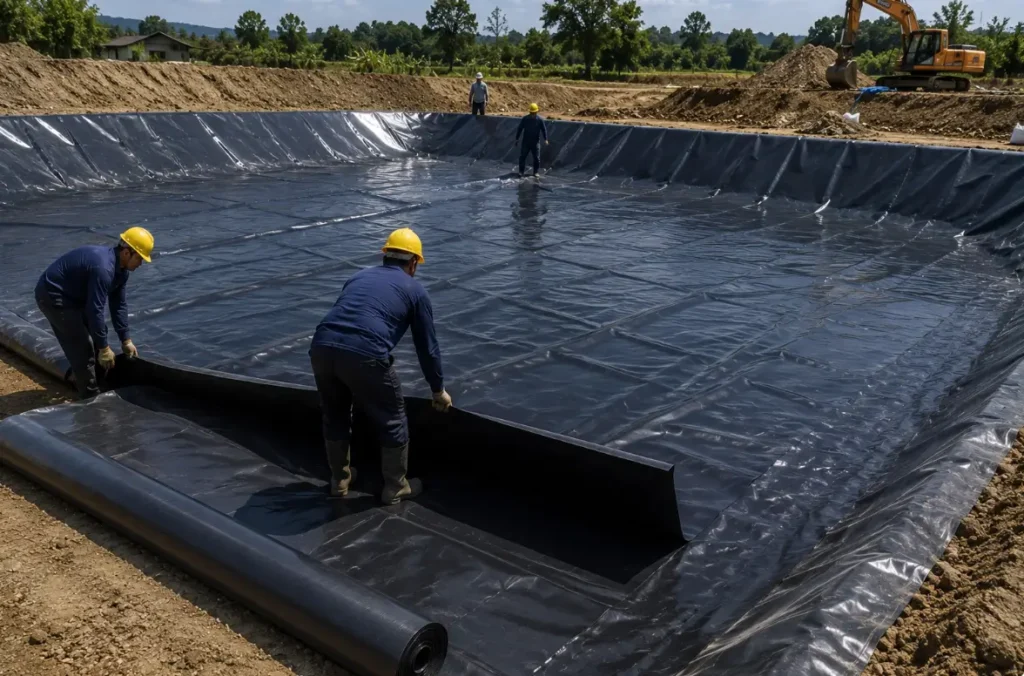
For engineering buyers, pond liner underlay should not be treated as a low-value accessory. It is a protection layer that helps reduce puncture, abrasion, and stress concentration between the subgrade and the geomembrane liner.
Why Pond Liner Underlay Matters Before Liner Installation

The pond liner is the waterproof barrier, but the underlay is often the first layer that protects it from ground damage. If the underlay is skipped on a rough base, the liner may fail even when the geomembrane material is good.
Pond liner underlay matters because it creates a cushion layer between the pond base and the liner. It helps protect the geomembrane from stones, roots, rough soil, settlement pressure, abrasion, and installation damage. It is especially important for rocky, uneven, compacted, or commercial pond projects.
Professional Explanation
In construction use, pond liner underlay is usually a geotextile layer. It is placed under the geomembrane liner to reduce puncture and abrasion risk. A pond liner is an impermeable geomembrane used to retain liquids in ponds, reservoirs, retention basins, and similar water-holding systems. It needs protection from sharp objects below the liner and from puncture risks inside the pond. [1]
A geomembrane is designed to control fluid migration. But it is not designed to act like a thick structural slab. When it sits directly on stones, hard clods, roots, or uneven soil, localized pressure can damage the sheet.
This is why underlay is important. It spreads contact stress, reduces abrasion, and gives the liner a safer surface. For B2B buyers, this can reduce leakage claims, repair cost, and site delays.
Construction Details
Before laying underlay, the pond base should be shaped and compacted. Workers should remove sharp stones, roots, construction debris, and standing water. Underlay should not be used to hide major base defects. It protects the liner, but it cannot correct a badly prepared pond foundation.
The underlay should cover the full pond bottom and side slopes. It should also extend into the edge area where the liner will be anchored. If the pond has shelves, corners, or pipe areas, the underlay should follow the shape without bunching.
For large ponds, rolls should be installed in a planned direction. This reduces cutting waste and makes it easier to place the geomembrane liner on top.
Buyers can review suitable geotextile materials when the project needs pond liner protection, separation, or cushion support.
| Underlay Function | Why It Matters | Buyer / Contractor Check |
|---|---|---|
| Puncture Protection | Reduces damage from stones and roots | Match geotextile weight to site risk |
| Abrasion Control | Protects liner during movement | Use underlay on rough subgrade |
| Stress Cushioning | Reduces pressure points | Smooth base before laying underlay |
| Separation | Keeps liner away from poor soil contact | Use when subgrade is unstable |
| Installation Support | Gives workers a safer liner base | Avoid wrinkles and hard folds |
| Edge Protection | Supports liner near anchor trench | Extend underlay to edge areas |
Selection Table
| Pond Condition | Underlay Need | Better Decision |
|---|---|---|
| Smooth garden pond base | Moderate | Use underlay if liner is flexible or thin |
| Rocky soil | High | Use stronger nonwoven geotextile |
| Commercial fish pond | High | Use full-surface protection layer |
| Wastewater pond | High | Combine underlay with strict seam QA |
| Irrigation reservoir | Medium to high | Confirm slope and base roughness |
| Concrete base | Depends on surface | Use underlay if surface is rough or abrasive |
Site Preparation Before Laying Pond Liner Underlay
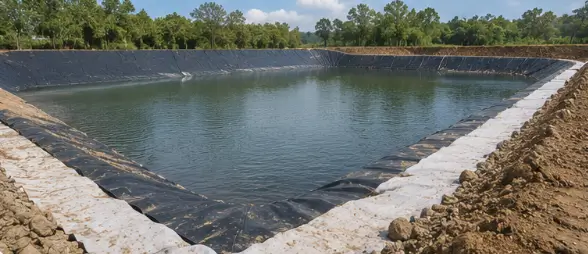
A good underlay installation starts before the geotextile roll is opened. The pond base must be stable enough to support the whole liner system.
Before laying pond liner underlay, clear the pond base, remove sharp objects, trim side slopes, compact loose soil, drain standing water, repair soft pockets, and check the anchor trench area. The underlay should be placed on a clean, stable, and shaped foundation.
Professional Explanation
Many buyers think underlay can solve all base problems. That is not correct. Underlay protects the liner from reasonable surface contact risk, but it cannot solve settlement, bad drainage, unstable slopes, or large sharp objects left under the system.
A geomembrane is a very low permeability synthetic membrane liner or barrier used with geotechnical materials to control fluid or gas migration in human-made projects, structures, or systems. [2] Because its main job is containment, the foundation and protection layers must help prevent mechanical damage.
For a factory-side recommendation, I would always ask about soil type, pond depth, slope angle, liner thickness, and whether the liner will be exposed or covered. These details decide the underlay grade.
Construction Details
Start by grading the pond base to the design profile. The bottom should be smooth and stable. The side slopes should be shaped without sudden changes. Any sharp transition can create stress on both the underlay and the liner.
Remove stones, roots, metal scraps, wood pieces, and hard soil lumps. If the soil has soft pockets, replace or compact those areas. If water is trapped in the base, remove it before placing underlay.
The anchor trench should also be prepared before underlay placement. The underlay and liner should extend to the edge properly. If the trench is prepared late, workers may damage the liner system during rework.
| Site Preparation Step | Purpose | Risk If Ignored |
|---|---|---|
| Remove sharp objects | Prevent puncture points | Liner damage after filling |
| Compact loose soil | Reduce settlement | Wrinkles and stress movement |
| Trim slopes | Improve liner contact | Sliding or hard folds |
| Drain standing water | Prevent floating and softening | Liner movement during filling |
| Repair soft pockets | Improve support | Local deformation |
| Prepare anchor trench | Secure edge system | Rework and edge damage |
Selection Table
| Base Condition | Underlay Strategy | Buyer Checkpoint |
|---|---|---|
| Fine smooth soil | Standard geotextile underlay | Confirm liner thickness and use |
| Rocky subgrade | Heavier underlay | Check puncture protection need |
| Steep slope | Underlay plus careful anchoring | Avoid slipping during installation |
| Large commercial pond | Full underlay coverage | Plan roll layout before delivery |
| Wastewater pond | Underlay plus QA control | Confirm chemical and seam requirements |
| Irregular pond shape | Flexible underlay layout | Control folds and overlaps |
For commercial pond liner systems, buyers can also review geomembrane liner products to match liner type with underlay protection.
Step-by-Step Process for Laying Pond Liner Underlay
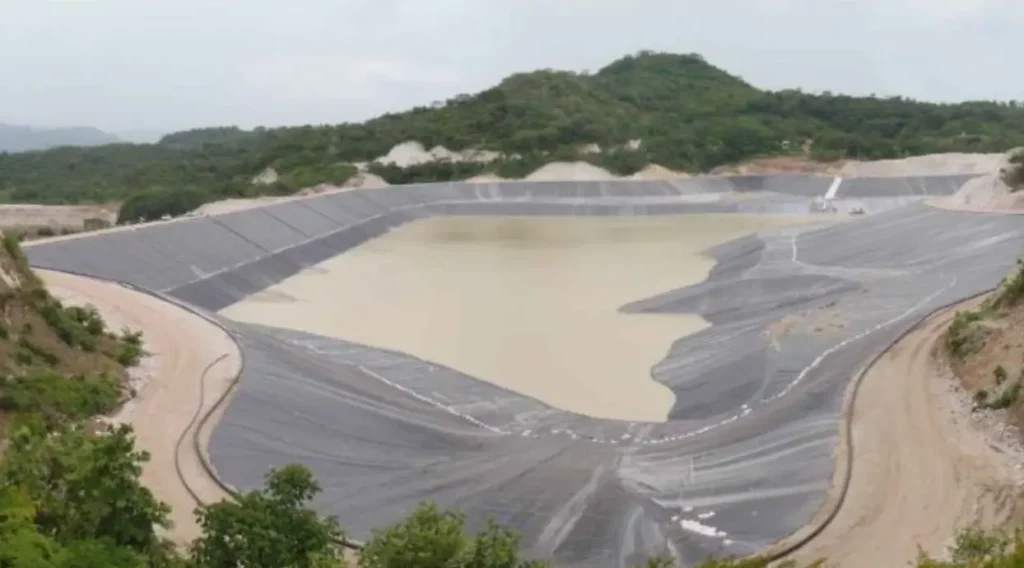
Underlay should be laid before the liner, but it should not be installed carelessly. Poor underlay placement can create folds, gaps, and stress points under the pond liner.
The basic process is to prepare the pond base, roll out the underlay from one side, cover the bottom and side slopes, overlap adjacent sheets, trim only where needed, secure the underlay temporarily, check for folds or gaps, and then place the pond liner above it.
Professional Explanation
Underlay installation is simple, but the sequence matters. The underlay must remain flat and continuous enough to protect the liner. It should not bunch under the geomembrane, especially on slopes, corners, shelves, and pipe areas.
For large projects, underlay rolls should be placed according to the site layout. Random placement can increase waste and create unnecessary overlaps. For small ponds, the installer should still avoid hard folds because they can transfer stress to the liner.
Technical guidance for geomembrane field seams focuses on field seam inspection and construction quality assurance. [3] Even though underlay is not the seam itself, its placement affects whether the liner can be welded and inspected cleanly.
Construction Details
First, place the underlay roll near the pond edge. Roll it down the slope and across the base instead of dragging it roughly. On slopes, workers may need temporary holding pins, sandbags, or other non-damaging methods to keep it in position.
Second, overlap adjacent underlay sheets. The overlap should be enough to prevent gaps from opening when the liner is placed above it. The exact overlap depends on material weight, slope angle, and project requirement.
Third, trim carefully around corners, pipes, outlets, and anchor trench areas. Avoid cutting too close. The underlay should protect these detail areas because many liner failures happen near penetrations or edges.
Fourth, inspect the underlay before placing the liner. Check for exposed subgrade, hard folds, stones trapped on top, and damaged geotextile areas.
| Installation Step | Main Purpose | Common Mistake |
|---|---|---|
| Roll out underlay | Cover pond base | Dragging and tearing material |
| Cover slopes | Protect side liner contact | Leaving gaps on slope face |
| Overlap sheets | Maintain continuous protection | Too little overlap |
| Temporarily secure | Stop movement before liner placement | Using sharp pins carelessly |
| Trim details | Fit pipes and edges | Cutting too short |
| Final inspection | Remove trapped stones and folds | Placing liner too quickly |
Selection Table
| Area | Underlay Placement Focus | Better Practice |
|---|---|---|
| Pond bottom | Smooth full coverage | Avoid hard wrinkles |
| Side slope | Stable placement | Secure temporarily before liner |
| Shelves | Fold control | Shape underlay without bunching |
| Anchor trench | Edge protection | Extend underlay to trench area |
| Pipe penetration | Local protection | Add extra patch protection if needed |
| Large pond panel area | Roll layout | Reduce waste and overlaps |
Choosing the Right Pond Liner Underlay Material
Not all underlay materials perform the same. For engineering ponds, nonwoven geotextile is often preferred because it offers cushion, puncture protection, and flexibility over irregular surfaces.
The right pond liner underlay material depends on soil roughness, liner thickness, pond depth, slope angle, water pressure, installation traffic, and project risk. Nonwoven geotextile is commonly used because it provides cushioning and puncture protection under HDPE, LLDPE, EPDM, and other pond liners.
Professional Explanation
Pond liner underlay is often made from synthetic geotextile materials such as polypropylene or polyester. These materials are used because they do not rot easily in soil contact and can provide long-term protection under the liner.
The underlay grade should match the risk level. A small decorative pond on smooth soil may use lighter underlay. A large aquaculture pond, irrigation reservoir, or wastewater pond may need stronger geotextile protection.
For HDPE geomembrane projects, material quality also matters. GRI GM13 covers HDPE geomembranes with a formulated sheet density of 0.940 g/ml or higher and provides required property and testing frequency guidance for smooth and textured HDPE geomembranes. [4] This is a liner specification reference, but it reminds buyers that underlay and liner quality should be considered together.
Construction Details
For underlay selection, the buyer should first check the base. Rocky ground, compacted gravel, rough concrete, and steep slopes usually need stronger underlay. Smooth fine soil may need less.
The underlay should also match the liner. A thinner or more flexible liner usually benefits from better cushion support. A thicker HDPE geomembrane may still need underlay when the subgrade is rough.
In some high-risk projects, underlay may be used both below and above the liner. The upper layer can protect the liner from cover soil, gravel, concrete, or maintenance traffic. This decision should follow project design and site risk.
| Underlay Material | Main Advantage | Common Use |
|---|---|---|
| Nonwoven PP Geotextile | Good cushion and puncture protection | Most pond liner underlay projects |
| Nonwoven PET Geotextile | Stable strength and protection | Larger engineering projects |
| Sand Cushion | Smooth surface support | Some simple ponds or covered systems |
| Old Carpet / Improvised Material | Low cost | Not recommended for professional projects |
| Upper Protection Geotextile | Protects liner from cover material | Soil-covered or gravel-covered ponds |
| Composite Protection Layer | Stronger protection package | High-risk containment projects |
Selection Table
| Project Type | Underlay Recommendation | Buyer Checkpoint |
|---|---|---|
| Garden pond | Light to medium geotextile | Check base smoothness |
| Fish pond | Medium geotextile | Protect liner and maintain clean base |
| Aquaculture pond | Medium to heavy geotextile | Confirm liner thickness and cleaning plan |
| Irrigation pond | Medium to heavy geotextile | Check slope and water depth |
| Wastewater pond | Heavy-duty protection layer | Confirm chemical and QA requirements |
| Reservoir | Project-designed geotextile | Confirm puncture, slope, and pressure risk |
Common Mistakes When Laying Pond Liner Underlay
Most underlay mistakes happen because the material is hidden after installation. Contractors may rush the step and only discover the problem when the liner wrinkles, leaks, or pulls under water pressure.
Common mistakes include laying underlay over sharp objects, using too light a geotextile, leaving gaps between sheets, creating hard wrinkles, failing to protect slopes and edges, cutting too close around pipes, and placing the liner before inspecting the underlay layer.
Professional Explanation
Underlay mistakes are often small at first. A small stone left under the geotextile may not look serious. A short overlap may not be visible after the liner is installed. A hard fold may seem harmless. But when water pressure increases, these details can create stress points.
The underlay should be inspected before the liner is placed. Once the liner covers it, correction becomes harder. If seams are already welded or water has already been added, repair cost becomes much higher.
For procurement buyers, this is also a supplier issue. If the project needs underlay but the supplier only quotes the liner, the order may be incomplete. A responsible supplier should ask about subgrade condition and suggest underlay when needed.
Construction Details
Do not install underlay on muddy, unstable, or sharp ground. Do not leave open gaps between underlay sheets. Do not place stones or tools on top of underlay before liner placement.
On slopes, do not let underlay slide or bunch. Use temporary fixing methods that do not damage the underlay or liner. Around pipes and corners, use extra care because these areas are common leakage points.
For covered ponds, do not place coarse soil or gravel directly above the liner without considering upper protection. If the liner needs protection from both sides, plan lower and upper geotextile layers before ordering.
| Mistake | Possible Result | Better Practice |
|---|---|---|
| Skipping base cleaning | Hidden puncture risk | Remove stones and roots first |
| Using thin underlay on rocky soil | Weak protection | Use heavier geotextile |
| Leaving gaps | Exposed liner contact with subgrade | Overlap underlay sheets |
| Hard wrinkles | Stress points under liner | Smooth underlay before liner placement |
| Poor slope fixing | Underlay movement | Secure temporarily |
| Cutting too close | Unprotected pipe or edge area | Leave enough coverage and add patches |
Selection Table
| Risk Area | Common Problem | Control Method |
|---|---|---|
| Pond bottom | Stones trapped under liner | Final cleaning before underlay |
| Side slope | Underlay sliding | Temporary fixing and overlap control |
| Anchor trench | Edge damage | Extend underlay into edge area |
| Pipe penetration | Cut too tight | Add local protection patch |
| Cover soil area | Sharp backfill damage | Use upper protection layer |
| Large pond | Roll waste and gaps | Plan layout before installation |
A small underlay mistake can become a large liner repair problem later. This is why inspection before liner placement is not optional in professional projects.
My View
When I help buyers choose pond liner underlay, I do not treat it as an optional accessory. I treat it as part of the liner protection system.
A good geomembrane can still fail if the base is rough, the underlay is too light, or the installer leaves gaps under the liner. This is especially true for commercial fish ponds, irrigation ponds, reservoirs, and wastewater ponds.
For contractors, underlay reduces installation risk. For distributors, it helps create a more complete material package. For project buyers, it lowers the chance of leakage claims after water filling.
My suggestion is simple. Check the pond base first. Then choose liner thickness and underlay grade together. After that, plan underlay layout, overlap, edge protection, and liner placement as one system.
Conclusion
Pond liner underlay protects the liner from puncture, abrasion, and base pressure. A reliable installation depends on base preparation, correct geotextile selection, continuous coverage, overlap control, and inspection before liner placement.
FAQs
Do you need underlay under a pond liner?
Yes, underlay is recommended when the base is rocky, rough, uneven, compacted, or at risk of puncturing the liner. It is especially important for commercial and engineering pond projects.
What is the best underlay for pond liner?
Nonwoven geotextile is commonly used as pond liner underlay because it provides cushioning, puncture protection, and flexible contact over irregular surfaces.
Can I use sand instead of pond liner underlay?
Sand can help smooth the base in some simple ponds, but it does not provide the same puncture protection as geotextile. For rocky or commercial ponds, geotextile is usually safer.
How much should pond liner underlay overlap?
Overlap depends on project requirements, slope angle, and underlay weight. The key is to prevent gaps from opening when the liner is placed above it.
Should pond liner underlay go up the sides?
Yes. Underlay should cover both the bottom and side slopes. It should also extend into edge areas and anchor trench zones where liner movement or abrasion may occur.
Key Takeaways
- Pond liner underlay should be selected based on base condition, liner thickness, water depth, and project risk.
- Nonwoven geotextile is commonly used because it provides cushion and puncture protection under the liner.
- Underlay cannot replace proper pond base preparation, clearing, grading, and compaction.
- Underlay sheets should overlap properly and cover bottom, slopes, edges, and detail areas.
- A complete pond liner system should include liner, underlay, seam method, anchor trench, protection plan, and inspection process.
References
- Pond liner ↩
- Geomembrane ↩
- EPA Technical Guidance Document: Inspection Techniques for Geomembrane Field Seams ↩
- GRI GM13 Standard Specification for HDPE Geomembranes ↩